Continuous Glucose Monitor vs. Fingerstick: Which Option Fits Travel, Cost, and Control?
Key Takeaways
- CGMs provide trend information throughout the day, while fingersticks give a point-in-time blood sugar reading.
- Fingerstick testing is often less expensive up front and may still be the most practical option for some travelers and patients.
- CGMs can reduce the need for repeated finger pricks, but they require sensors, supplies, and attention to device alerts.
- The best choice depends on diabetes type, treatment plan, access to supplies, comfort with technology, and whether frequent travel is expected.
- People using insulin, experiencing symptoms that do not match readings, or planning a major trip should discuss monitoring plans with a clinician.
Medically reviewed by the Acıbadem clinical team — June 13, 2026
Choosing between a continuous glucose monitor and fingerstick testing is often less about picking a “better” device and more about matching monitoring to daily life, travel plans, budget, and treatment goals. Both methods can support safe diabetes care when used correctly, and many people benefit from using them together.
Overview
For many people living with diabetes, glucose monitoring is not just a routine task; it is part of how meals, medication, exercise, and travel are managed from one day to the next. The choice between a continuous glucose monitor (CGM) and fingerstick testing depends on what kind of information is needed, how often checks are done, and how much flexibility is required in real life.
A CGM measures glucose at regular intervals through a small sensor worn on the body, giving a picture of how levels are changing over time. Fingerstick testing, also called self-monitoring of blood glucose, uses a drop of capillary blood and a meter to show a single reading at that moment. Both approaches can be useful, and many care plans use one as the main method and the other as a backup or confirmation tool.
For people planning international travel or long trips, the choice may also involve practical questions: how easy it is to carry supplies, how often calibration or replacement is needed, whether airport security affects the device, and how simple it is to respond to changing time zones, meals, and activity levels. A well-matched monitoring strategy can make diabetes management feel more predictable away from home.
Symptoms and What Monitoring Helps Detect
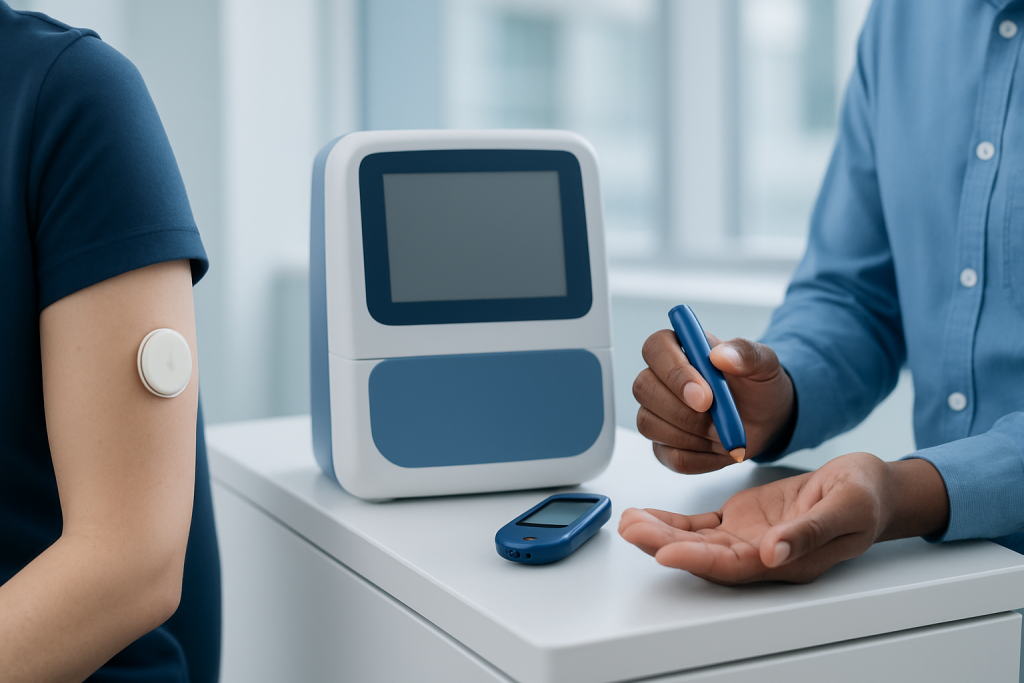
Monitoring does not treat diabetes by itself, but it helps people notice patterns that would otherwise be easy to miss. A CGM can show rising or falling trends before a person feels symptoms, which may be especially helpful overnight or during exercise. Fingerstick testing, on the other hand, provides a clear reading when symptoms such as shakiness, sweating, thirst, fatigue, or confusion appear.
Both tools can help detect hypoglycemia, hyperglycemia, and day-to-day fluctuations related to food, stress, illness, or medication timing. A CGM is often appreciated by people who want to understand how quickly glucose is changing after meals or during travel days with irregular schedules. Fingersticks may be preferred when a person wants a simple, immediate check without wearing a sensor or managing alarms.
It is important to remember that symptoms and readings do not always match perfectly. If a CGM value seems unexpected, or if symptoms of low blood sugar feel stronger than a meter result suggests, a confirmatory fingerstick may be recommended by the care team. This is one reason many clinicians view the two methods as complementary rather than competing.
Causes & Risk Factors
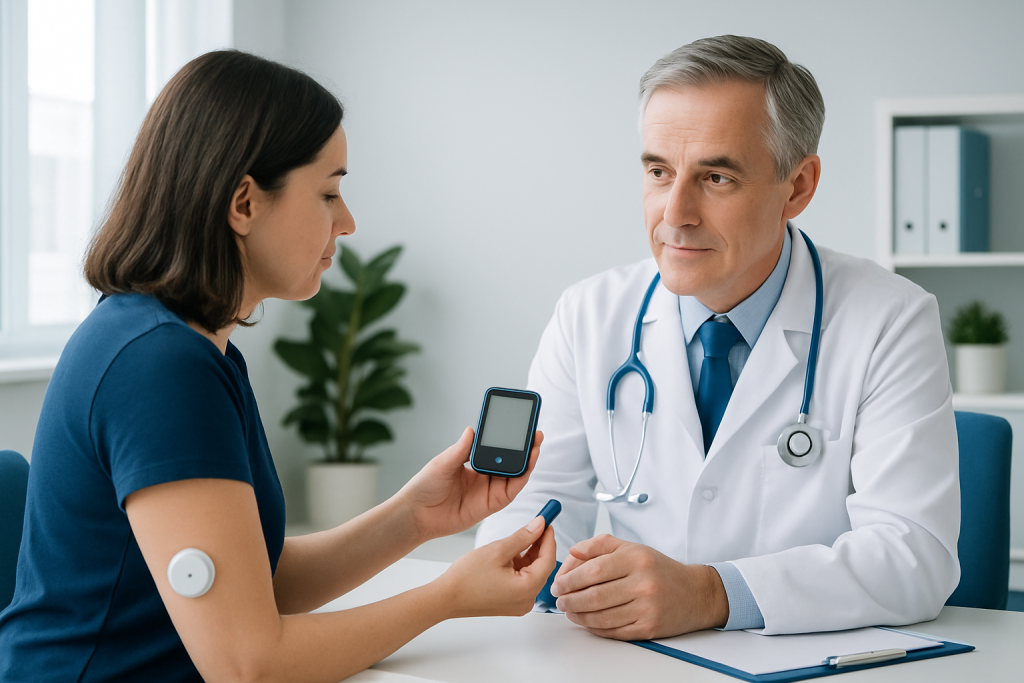
The need for glucose monitoring is shaped by the type of diabetes, the treatment plan, and the level of glucose variability. People who use insulin, especially multiple daily injections or an insulin pump, often benefit from more frequent monitoring because treatment decisions depend on current glucose levels and trends. Those with type 1 diabetes commonly need continuous attention to changing glucose patterns, while some people with type 2 diabetes may only need periodic checks depending on therapy and overall control.
Certain situations make one approach more practical than the other. Frequent travel, shifting meal times, overnight work, or a history of hypoglycemia may favor CGM because of its trend data and alerts. Limited access to devices, concerns about sensor adhesion, skin sensitivity, or tighter budgets may make fingerstick testing more realistic. Some people also prefer the familiarity and discretion of a meter, especially when they do not want another device attached to the body.
Risk factors for glucose swings include illness, stress, alcohol use, changes in activity, missed medications, and differences in food availability while traveling. In these settings, monitoring is not merely a formality; it becomes a way to keep decisions grounded in current information rather than guesswork. The best device is often the one a person can use consistently and confidently.
Diagnosis and How Clinicians Decide Which Method Fits
Deciding between CGM and fingerstick testing is usually part of a broader diabetes management review. Clinicians consider the diagnosis itself, A1C results, frequency of lows or highs, medication type, lifestyle, hand dexterity, vision, and comfort with digital devices. For some people, the decision is straightforward; for others, a short trial of one method may help clarify what feels sustainable.
A CGM may be recommended when more detailed information is needed about trends, overnight patterns, or glucose variability. Fingerstick testing may be enough when glucose checks are needed less often or when a person is not ready for a wearable device. In many cases, the clinician explains how to interpret results, when to test, and how to record readings so the data can be used meaningfully at follow-up.
Travel plans also matter during this discussion. A patient who is leaving for a long stay abroad may need a monitoring plan that accounts for airport screening, local supply access, climate, time-zone changes, and backup options in case a sensor fails or a meter battery runs out. Good planning before departure can prevent small problems from becoming stressful interruptions later.
Treatment Options: CGM, Fingerstick, or Both
There is no single “best” monitoring method for every person. CGMs offer near-continuous information, trend arrows, and alerts that may help users recognize rising or falling glucose earlier. This can support more timely food, activity, or medication decisions, especially for people who need frequent adjustments or who want better overnight visibility.
Fingerstick testing remains an important and reliable option. It is often less expensive to start, does not require a worn sensor, and can be useful for people who only need occasional checks or prefer a simple routine. For some patients, especially those with stable control or limited access to technology, a meter is the most practical tool for everyday monitoring.
Many clinicians advise using both methods in certain situations. A fingerstick may be used to confirm a CGM value if symptoms do not match the reading, if the CGM signal is lost, or if the device is still warming up. During travel, having both can offer reassurance: the CGM provides trends, while the meter serves as a dependable backup if supplies are delayed or the sensor stops working.
- CGM may fit people who want trends, alerts, and fewer routine fingersticks.
- Fingerstick testing may fit people seeking lower upfront cost and simpler equipment.
- Using both can be helpful when readings need confirmation or backup is important.
Cost, Access, and Practicality During Travel
Cost is often the deciding factor, and it is not limited to the device itself. CGMs usually involve sensors, transmitters or readers, adhesive supplies, and replacement schedules. Fingerstick testing requires a meter, test strips, lancets, and sometimes control solutions. Depending on insurance coverage, local pricing, and how often testing is done, the long-term expense of either option may vary significantly.
Travel adds another layer. CGM users may need to carry extra sensors, adhesives, chargers, and written device information, ideally in hand luggage rather than checked baggage. Fingerstick users may need to pack enough test strips and lancets for the trip, plus a backup meter and spare batteries if needed. In both cases, planning ahead matters because international pharmacies may not stock the same brands or may require prescriptions that differ from home-country rules.
Comfort and convenience matter as much as cost. Some travelers prefer a CGM because it can reduce the need to stop and test in public places. Others prefer fingersticks because the routine is familiar and less dependent on sensors or apps. A practical choice is often the one that can be maintained across workdays, holidays, flight delays, and unpredictable meal schedules.
Prevention & Self-care
Good glucose monitoring works best when it is paired with everyday self-care. That includes taking medicines as prescribed, keeping meals reasonably consistent when possible, staying hydrated, and adjusting activity plans with guidance from the care team. Monitoring data becomes more useful when people also note what they ate, when they exercised, and whether they were ill or under unusual stress.
CGM users can improve comfort and reliability by placing sensors as instructed, watching for skin irritation, and learning how to respond to alerts without overcorrecting. Fingerstick users can improve accuracy by washing and drying hands before testing, storing strips properly, and checking expiration dates. For both groups, having a written plan for low blood sugar is an important part of self-care, especially when traveling far from familiar pharmacies or clinics.
It also helps to prepare for disruptions. Pack extra supplies, keep them in original packaging when possible, and carry a summary of the diabetes plan in case medical help is needed abroad. If time zones are changing, ask a clinician in advance how to handle medication timing and when to check glucose more often. A little preparation can reduce stress and make monitoring feel steadier in unfamiliar settings.
When to See a Doctor
A healthcare professional should be consulted if glucose readings are often outside the target range, if lows are frequent, or if a person is unsure how to interpret CGM trends or fingerstick results. Medical advice is also important when symptoms do not match the numbers, because that mismatch may signal a problem with technique, device function, or the diabetes plan itself.
Before a major trip, it is wise to review monitoring needs with a clinician, especially for insulin users, pregnant patients, children, older adults, and anyone with Kidney Disease Treatment" class="ahp-ilk">kidney disease, heart disease, or a history of severe hypoglycemia. A travel review can include backup supplies, prescriptions, local emergency planning, and what to do if a sensor fails or test strips run low.
For international patients seeking coordinated diabetes care, Acibadem Health Point’s multidisciplinary specialists and JCI-accredited hospitals can help evaluate monitoring options and support treatment planning before and after travel.
FAQ
Is a CGM always better than fingerstick testing?
Not always. A CGM offers more continuous information, but fingerstick testing may be simpler, less expensive, and easier to manage for some people. The better choice depends on goals, treatment type, and how the device fits daily life.
Can a CGM replace fingersticks completely?
For some people and some devices, routine fingersticks may be reduced significantly, but confirmation testing is still sometimes needed. If symptoms do not match a CGM reading, a clinician may advise checking with a fingerstick.
Which option is easier for travel?
That depends on the traveler. A CGM can reduce the need for repeated testing on the move, while fingerstick testing can be easier if supplies, charging, or sensor replacement are concerns. The best travel setup is the one with a clear backup plan.
What should be packed for diabetes monitoring when traveling?
People should pack extra supplies, prescriptions or medical documentation, and a backup device if possible. It is also sensible to carry glucose treatment for lows, such as fast-acting carbohydrates, and to keep supplies in carry-on luggage.
Do CGMs and meters give the exact same results?
No. CGMs measure glucose in interstitial fluid and show trends, while fingerstick meters measure blood glucose at a single moment. Small differences are expected, especially when glucose is changing quickly.
How does cost influence the choice?
CGMs often have higher ongoing supply costs, while fingerstick testing may have lower upfront costs depending on strip pricing and coverage. Insurance, travel frequency, and how often checks are needed all influence the final decision.
Should someone change monitoring methods without medical advice?
It is better to discuss any change with a qualified clinician, especially when insulin is involved. A monitoring method should support safe decisions, not create confusion or gaps in care.
References
- American Diabetes Association
- Centers for Disease Control and Prevention
- National Institute of Diabetes and Digestive and Kidney Diseases
- International Diabetes Federation
- World Health Organization
This article is for general information only and is not a substitute for professional medical advice. Please consult a qualified doctor about your individual situation.
More from the Health Library

HbA1c, Fasting Glucose, and OGTT: Which Test Best Answers Your Diabetes Question?

Cushing’s Syndrome Workup: Which Tests Usually Confirm the Diagnosis First?