

Choosing Between Implants and Fat Transfer for a Natural-Looking Breast Change

Key Takeaways
- Breast implants usually offer a more predictable increase in size and shape, while fat transfer can create a softer, subtler result.
- Fat transfer uses the person’s own tissue, but it depends on having enough donor fat and some of the transferred fat may not survive.
- Implants may involve more long-term maintenance, including the possibility of future revision surgery.
- The best option depends on anatomy, lifestyle, desired breast size, and whether the goal is enhancement, symmetry, or reconstruction.
- A qualified plastic surgeon can explain the trade-offs clearly and help match the procedure to the individual’s priorities.
Medically reviewed by the Acıbadem clinical team — June 13, 2026
Choosing between breast implants and fat transfer is often about matching the method to the person’s goals, body type, and long-term expectations. Both options can create a natural-looking change, but they differ in feel, recovery, maintenance, and the amount of size increase they can realistically provide.
Overview
For many people considering a breast change, the most important question is not simply how much bigger the breasts will become, but how they will look and feel afterward. A natural-looking result depends on body proportions, skin quality, tissue thickness, chest shape, and the specific technique used. That is why breast implants and fat transfer are often discussed side by side rather than as interchangeable choices.
Breast implants add volume with a silicone or saline device placed under the breast tissue or chest muscle. Fat transfer breast augmentation, sometimes called autologous fat grafting, uses fat taken from another part of the body, such as the abdomen or thighs, and places it into the breasts. Both can improve contour, but they do so in very different ways.
People travel for breast surgery for many reasons: they may want a more discreet change, a more defined curve, or a result that fits their figure without looking overdone. In an international-patient setting, the decision also includes practical considerations such as time available for recovery, follow-up planning after returning home, and whether the procedure is meant to stand alone or complement another surgery.
Symptoms and Goals People Often Bring to the Consultation
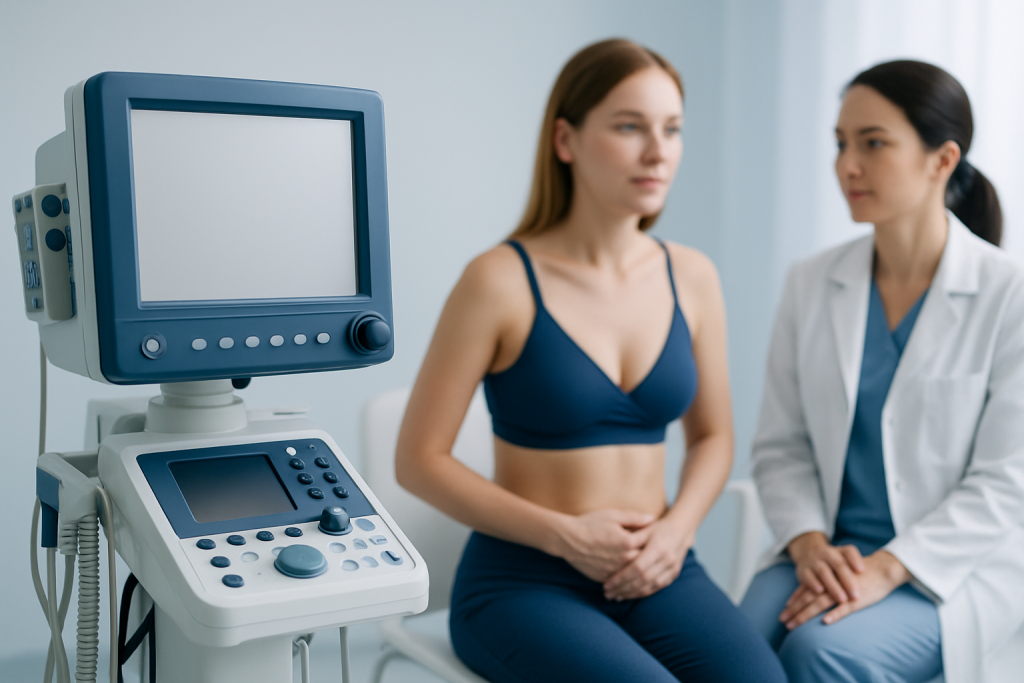
This is not a condition with symptoms in the medical sense, but rather a set of personal goals and concerns that usually bring someone to a specialist. Some people want to restore volume after pregnancy, weight loss, or aging. Others are looking for better symmetry between the breasts or a modest increase that feels more proportional to their frame.
Implants are often chosen when the goal is a more noticeable size change or a clearly shaped upper breast contour. Fat transfer is often preferred when the goal is subtle enhancement, softer tissue feel, or refinement of shape rather than a large increase in volume.
People may also care about how clothing fits, whether cleavage can be improved, whether a prior surgery needs correction, or whether the breast should look and feel as natural as possible in motion. These goals matter because the best option is not always the one with the biggest visual change; it is the one that aligns with the individual’s priorities and anatomy.
During consultation, it helps to discuss not only desired cup size or appearance, but also the desired level of change, willingness for repeat procedures, and comfort with having a device versus using the body’s own fat.
Causes and Risk Factors That Shape the Choice
There is no single “cause” for choosing one method over the other, but several physical and lifestyle factors strongly influence which procedure is suitable. Someone with very little body fat may not have enough donor tissue for meaningful fat transfer. Another person may have enough donor fat but want a larger increase than fat transfer can reliably provide in one session.
Implants may be more appropriate when a person wants a predictable volume change, especially if the breasts are very flat or if a significant asymmetry needs correction. Fat transfer may be more appealing for those seeking a gentle enhancement and who also want body contouring in areas where fat is removed.
Medical history also matters. Prior breast surgery, scarring, radiation treatment, smoking, connective tissue conditions, or changes in skin elasticity can affect healing and final shape. Age itself is not the only issue; tissue quality, general health, and future pregnancy plans may be more relevant in deciding timing and technique.
Because the breasts continue to change over time, the surgeon also considers long-term factors such as weight fluctuation, aging of skin, and whether the person may later want a lift, a revision, or a different size.
How Doctors Decide: The Evaluation and Diagnosis Process
There is no laboratory test that tells a person whether implants or fat transfer is the better choice. Instead, the decision is made through a detailed clinical evaluation. The surgeon assesses chest width, breast base diameter, skin stretch, breast position, existing asymmetry, and the thickness of natural tissue covering the chest.
For fat transfer, the surgeon also examines donor sites to estimate how much usable fat may be available and whether it can be harvested safely. For implants, the surgeon discusses implant type, placement plane, size range, and whether an implant alone is enough or whether a lift may also be needed for the best shape.
Imaging and breast health screening may be recommended depending on age, family history, and prior findings. This is especially important before any cosmetic breast procedure so that baseline breast health is clear and future changes can be interpreted appropriately.
For international patients, consultations may be spread across video review, in-person examination, imaging review, and pre-operative testing. Clear communication is especially important when follow-up will occur across borders, because the plan should include not only the surgery itself, but also recovery milestones, travel timing, and who will monitor healing after return home.
Treatment Options: Implants, Fat Transfer, or a Combination
Breast implants are typically chosen when a person wants a reliable increase in size and more defined shaping. They can produce a fuller upper breast appearance and are available in different forms that allow the surgeon to tailor projection and contour. The trade-off is that implants are foreign devices, so they may require monitoring over time and may eventually need revision or replacement.
Fat transfer offers a softer, tissue-like result because the added volume comes from the person’s own fat. It may be ideal for modest enhancement, contour refinement, or correcting mild asymmetry. However, not all transferred fat survives, so some of the volume may settle after healing. For that reason, the final result is usually more subtle than what implants can achieve.
In some cases, a combination approach makes sense. A surgeon may use an implant for structure and add fat transfer to soften edges, improve cleavage contours, or create a more natural transition at the upper breast. This can be useful for slim patients with thin tissue coverage or for people who want the implant to be less detectable.
The choice is not only about appearance. It also involves scar location, anesthesia, surgery time, downtime, and the patient’s preference for a one-time larger change versus a more gradual, tissue-based enhancement. A careful surgeon explains each option in plain language, including what it can and cannot realistically accomplish.
What Recovery Usually Looks Like
Recovery differs between the two procedures. After implants, swelling, tightness, and a feeling of pressure are common early on. The body needs time to adjust to the implant, and activity restrictions are important while the tissues settle. Discomfort is often temporary, but the chest may feel firm before it softens.
After fat transfer, the donor sites may be sore as well as the breasts. People often notice that the liposuction areas can be more uncomfortable than expected because healing involves both the breast and the area where fat was removed. Some swelling is normal, and the surgeon usually explains that the early size seen after surgery is not the final size.
Both procedures require patience. The breasts gradually settle into a more natural position, and the final shape may take weeks to months to become clear. Travel plans should be conservative, especially for international patients, because follow-up appointments are important for checking healing, managing activity, and identifying issues early.
Recovery also includes practical self-care: wearing the recommended support garment, avoiding pressure on treated areas, sleeping in the advised position, and attending scheduled reviews. The safest recovery plan is the one that is individualized rather than rushed.
Prevention and Self-care Before and After Surgery
Good preparation does not prevent every complication, but it can meaningfully support healing and help protect the result. Stopping smoking is especially important because nicotine can interfere with circulation and tissue survival, which matters for both implants and fat transfer. Keeping weight stable before surgery is also helpful, since major weight changes can alter breast volume and shape.
Before surgery, it is useful to clarify expectations. A person who wants a very large increase may be disappointed by fat transfer, while someone hoping to avoid a device may feel more comfortable with it. Honest planning prevents avoidable frustration later and helps the surgeon recommend the safest, most realistic option.
After surgery, following instructions carefully matters more than trying to speed the process. Gentle walking is usually encouraged, but strenuous exercise, heavy lifting, and pressure on the breasts should wait until the surgeon confirms it is safe. Adequate hydration, balanced nutrition, and rest support healing in a general way.
For patients returning to another country, the care plan should include written post-operative instructions, warning signs to watch for, contact details for questions, and a clear timeline for resuming travel, work, and exercise. Good aftercare is part of the procedure, not an extra step.
When to See a Doctor
A plastic surgeon should be consulted before choosing either procedure, especially when the goal is a natural-looking result rather than a dramatic change. A visit is also important if there is breast asymmetry, prior surgery, a history of breast disease, or uncertainty about whether a lift is needed in addition to volume enhancement.
After surgery, the patient should contact the care team if there is increasing pain instead of gradual improvement, marked redness, fever, unusual swelling, drainage, or a sudden change in breast shape. These signs do not always indicate a serious problem, but they deserve prompt medical review.
It is also wise to seek advice if the result seems uneven after healing, if one breast feels significantly different from the other, or if there are concerns about implant position or fat retention. Timely review can often clarify whether the finding is part of normal healing or needs treatment.
For people considering care abroad, it helps to choose a center that can coordinate pre-op assessment, surgery, and post-op follow-up smoothly. Acibadem Health Point’s multidisciplinary specialists and JCI-accredited hospitals support international patients through diagnosis, treatment, and recovery planning in a structured way.
Choosing the Right Path for a Natural Result
The best breast enhancement method is the one that fits the body as well as the person’s hopes. Implants can create a more defined and predictable size change, while fat transfer can produce a softer, subtler improvement using the body’s own tissue. Neither is automatically better; each serves a different set of goals.
A thoughtful consultation usually compares anatomy, desired outcome, recovery tolerance, and long-term maintenance. When those factors are discussed openly, the result is more likely to look natural and feel appropriate for the person’s lifestyle.
For many patients, the most useful question is not “Which is more popular?” but “Which is most suitable for my shape, my goals, and my plans after surgery?” That framing leads to clearer decisions and more satisfying outcomes.
Frequently asked questions
Which option looks more natural: implants or fat transfer?
That depends on the person’s body type and what is meant by natural. Fat transfer often feels softer and blends well in thinner volume changes, while implants can still look natural when chosen and placed carefully. The surgeon’s assessment of tissue coverage and breast proportions is usually what determines the most natural result.
Can fat transfer replace implants for a bigger breast change?
Usually not if a large increase is desired. Fat transfer is better suited to modest enhancement or contour refinement because only a portion of transferred fat survives. Implants are typically more predictable for a larger volume change.
Will implants need to be replaced in the future?
Implants are not considered lifetime devices, so future monitoring is important. Some people never need another operation for many years, while others may choose revision for aesthetic reasons or because of implant-related changes over time. Regular follow-up helps guide that decision.
How long does it take to see the final result after fat transfer?
The early swelling does not represent the final outcome. Some transferred fat is absorbed during healing, and the shape continues to settle over time. The surgeon usually explains when to expect the most stable result based on the individual plan.
Can someone with very little body fat have fat transfer breast augmentation?
Sometimes, but only if there is enough donor fat to harvest safely. People with very low body fat may not be good candidates for meaningful volume gain through fat transfer alone. In those cases, implants or a combination approach may be more suitable.
Is it safe to travel soon after breast surgery abroad?
Travel timing should be discussed before the procedure because it depends on the surgery performed, healing progress, and overall health. It is usually safer to wait until the surgeon confirms that early recovery is on track and that travel will not interfere with follow-up care. Written instructions and a clear contact plan are especially important for international patients.
References
- American Society of Plastic Surgeons
- International Society of Aesthetic Plastic Surgery
- U.S. Food and Drug Administration
- National Health Service
- Mayo Clinic
This article is for general information only and is not a substitute for professional medical advice. Please consult a qualified doctor about your individual situation.
More from the Health Library

Follow-Up After Surgery From Another Country: How Remote Care Usually Works

Rhinoplasty Abroad: When Functional Goals Matter as Much as Shape


