Celebrities With Fragile X Syndrome

Key Takeaways
- Fragile X syndrome is a genetic condition and not something that can be confirmed by appearance or online rumors.
- Signs often involve learning differences, speech delays, social anxiety, attention challenges, and sometimes features of autism.
- Diagnosis usually requires a genetic test, along with developmental and neurological assessment.
- There is no cure, but supportive therapies and individualized care can make a meaningful difference.
- Families benefit from early evaluation, genetic counseling, and long-term follow-up tailored to changing needs.
Medically reviewed by the Acıbadem clinical team — July 13, 2026
Fragile X syndrome is a genetic condition that can affect learning, behavior, and development. Public curiosity about celebrities should be handled carefully, because many claims are unconfirmed and a diagnosis can only be made through medical evaluation.
Overview
Fragile X syndrome often enters public conversation through curiosity about well-known people, but the condition itself is better understood as a lifelong genetic difference that can influence development, learning, and behavior. It is caused by a change in the FMR1 gene, which affects how the brain develops and communicates.
When people search for celebrities with Fragile X syndrome, they often find lists that mix verified facts with speculation. That is why it is important to separate medical evidence from rumor: a diagnosis cannot be made from interviews, photos, or social media posts. Only a qualified clinician, usually with genetic testing and developmental assessment, can confirm Fragile X syndrome.
For families, the more practical question is not whether a public figure has the condition, but what support a child, teenager, or adult may need. Care often includes therapy, educational planning, behavioral support, and medical follow-up that adapts over time. In an international care setting, families may also consider whether they need coordinated neurology, genetics, pediatrics, and rehabilitation services during travel and after returning home.
Symptoms
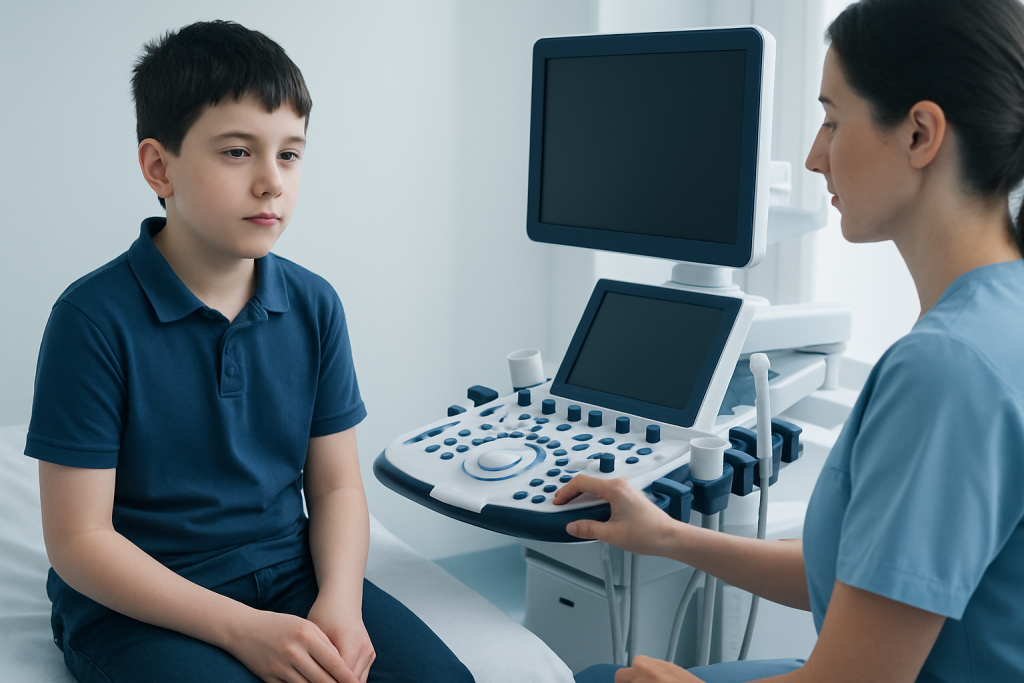
Fragile X syndrome can look different from one person to another, but certain patterns are common. Many children show delays in speech and language, difficulty with attention, learning challenges, and sensitivity to sound, touch, or changes in routine. Some also have social anxiety, hand-flapping, repetitive movements, or behaviors that overlap with autism spectrum features.
Physical features may become more noticeable with age, but they are not the main way the condition is identified. These can include a long face, large ears, flexible joints, flat feet, or in males after puberty, larger testes. Still, the absence of these features does not rule Fragile X syndrome out, and their presence alone does not confirm it.
- Developmental delay, especially in speech and language
- Learning difficulties or intellectual disability of varying degree
- Anxiety, hyperactivity, or attention problems
- Sensory sensitivity and repetitive behaviors
- Autism-like social communication differences
In some families, the earliest clue is not a facial feature or a behavior label, but a child who is not meeting milestones in the expected way. That is often the moment when a careful evaluation can be most helpful.
Causes & Risk Factors
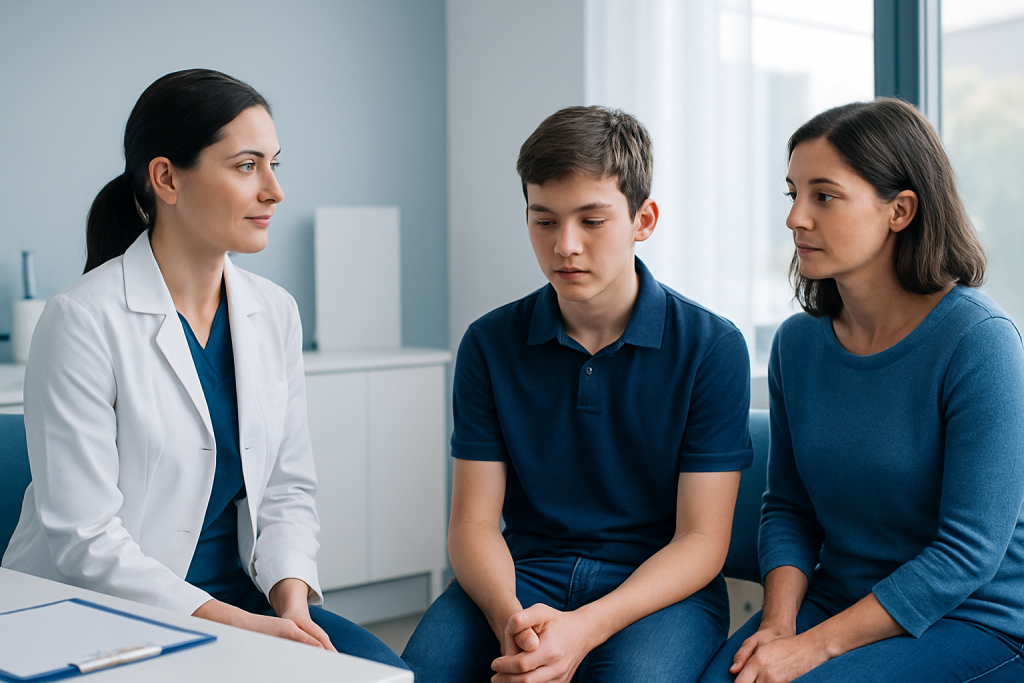
Fragile X syndrome is caused by a change in the FMR1 gene on the X chromosome. In many cases, the gene contains an expanded segment of DNA called a CGG repeat. When the repeat becomes too long, the gene may stop working properly, which affects the production of a protein needed for healthy brain development.
Because the gene is on the X chromosome, the condition can affect males and females differently. Males often have more noticeable symptoms, while females may have milder effects or may be less clearly recognized. The presentation also varies depending on whether a person has a full mutation or a premutation, which can be relevant for family planning and genetic counseling.
The main risk factor is family history. Fragile X syndrome is inherited, so relatives may carry the gene change without knowing it. That is why testing can be important not only for the person with symptoms, but also for parents and extended family members who may want clearer reproductive information.
Diagnosis
Diagnosis usually begins with a developmental history and a physical examination. A clinician may ask about language milestones, learning progress, behavior, social interaction, and any family history of intellectual disability, autism, premature ovarian insufficiency, or tremor and coordination problems in older adults.
The confirming test is genetic testing of the FMR1 gene. This can identify whether the gene has a full mutation, a premutation, or a typical repeat number. Because Fragile X syndrome can be missed when symptoms are subtle, genetic testing is often considered when a child has developmental delays, autism-like features, or unexplained intellectual disability.
Additional assessments may include hearing and vision checks, speech and language evaluation, psychological testing, and school-based developmental review. For families traveling for care, it is helpful to bring prior reports, genetic results, therapy notes, and school evaluations so the team can build a complete picture without repeating every step from scratch.
Treatment Options
There is no cure that reverses the underlying gene change, but treatment can support development and everyday function. Care is usually individualized and may include speech therapy, occupational therapy, behavioral therapy, educational support, and treatment for associated concerns such as anxiety, attention difficulties, sleep problems, or seizures when present.
Medication may sometimes be used to help manage specific symptoms, but it is not a one-size-fits-all solution. The best plan is usually built around the person’s strengths, communication style, learning needs, and family goals. For some children, a highly structured classroom plan and predictable routines are as important as any therapy session.
Support for the family matters too. Genetic counseling can help explain inheritance, testing options, and future pregnancy considerations. In a coordinated care setting, neurology, pediatrics, psychology, rehabilitation, and genetics teams may work together so that follow-up continues smoothly after the initial diagnosis, including when patients return home to another country.
Prevention & Self-care
Fragile X syndrome itself cannot be prevented after inheritance has occurred, but families can take steps to reduce uncertainty and improve planning. Genetic counseling is especially valuable when there is a family history of Fragile X-related conditions or unexplained developmental differences. It can clarify who in the family may benefit from testing and what the results could mean for future children.
At home, self-care is often about creating a setting that helps the person feel safe and successful. Predictable routines, clear instructions, reduced sensory overload, and positive reinforcement can make daily life easier. School teams and therapists can often suggest strategies that fit the child’s needs and personality.
- Keep a written record of milestones, concerns, and test results
- Ask for speech, occupational, and educational supports early
- Use consistent routines and visual cues when helpful
- Seek genetic counseling before future pregnancies if Fragile X is in the family
- Plan follow-up appointments so care does not stop after the first diagnosis
Families traveling internationally for evaluation or therapy often find it helpful to prepare a folder with reports in English, a medication list, and questions about long-term follow-up. That can make visits more efficient and less stressful.
When To See a Doctor
A doctor should be consulted if a child is not meeting developmental milestones, if there are persistent learning or behavior concerns, or if autism-like features appear alongside speech delay or intellectual disability. The earlier the assessment happens, the sooner supportive services can begin.
Medical advice is also important when there is a family history of Fragile X syndrome or related genetic findings. Even if a person appears healthy, family members may still want to discuss carrier testing or reproductive counseling with a genetics specialist.
Adults should seek evaluation if they have an unexplained family pattern of developmental disability, tremor and coordination problems, or reproductive concerns that could be related to a Fragile X premutation. For international patients, Acibadem Health Point can connect families with multidisciplinary specialists and JCI-accredited hospitals for diagnosis and treatment planning, with care designed to support both local and traveling patients.
Because symptoms can overlap with many other developmental and neurological conditions, a qualified clinician is the best person to interpret the full picture and recommend the next step.
A note on celebrities and public claims
Public interest in whether a celebrity has Fragile X syndrome is understandable, but it is rarely responsible to treat online claims as medical fact. Many people may have developmental or behavioral differences for unrelated reasons, and some public figures choose not to share private health information at all.
A more helpful approach is to use celebrity discussions as a prompt to learn about the condition, understand its genetic basis, and recognize when a child or adult may need assessment. Facts about Fragile X syndrome are more useful than unverified labels attached to famous names.
For families, clarity usually comes from testing, counseling, and follow-up rather than from speculation. That is where accurate information can replace confusion and guide meaningful support.
Frequently asked questions
Can a doctor tell if someone has Fragile X syndrome just by looking at them?
No. Some people may have physical features that suggest Fragile X syndrome, but those signs are not enough to diagnose it. A genetic test is needed to confirm the condition.
Is Fragile X syndrome the same as autism?
No, but the two can overlap. Some people with Fragile X syndrome have autism spectrum features, while others do not. A specialist can help distinguish the conditions and identify all the support needs involved.
Why do people search for celebrities with Fragile X syndrome?
People often look for relatable public examples, but celebrity claims are frequently unverified. It is safer to focus on medically confirmed information rather than online rumors or assumptions.
What kind of doctor diagnoses Fragile X syndrome?
A pediatrician, neurologist, geneticist, or developmental specialist may be involved, often with the help of a genetic counselor. Diagnosis is usually confirmed with laboratory testing of the FMR1 gene.
Is there treatment that helps?
Yes. While there is no cure, therapies and symptom-focused care can improve communication, learning, behavior, and daily function. The plan is usually tailored to the person’s age and needs.
Should family members also be tested?
They may benefit from genetic counseling and, in some cases, testing. This is especially important when there is a family history of Fragile X syndrome or related reproductive concerns.
References
- National Institute of Child Health and Human Development
- National Fragile X Foundation
- MedlinePlus Genetics
- Genetics Home Reference
- American Academy of Pediatrics
This article is for general information only and is not a substitute for professional medical advice. Please consult a qualified doctor about your individual situation.