Cauda Equina

Key Takeaways
- Cauda equina syndrome is a medical emergency that needs prompt evaluation.
- New bladder changes, saddle numbness, or leg weakness are important warning signs.
- A spinal MRI is often used to confirm nerve compression and identify the cause.
- Treatment usually focuses on urgent surgery and supportive care, followed by rehabilitation.
- Recovery can take time, and follow-up is important even after the first treatment.
Cauda equina syndrome is a serious condition caused by compression of the bundle of nerves at the lower end of the spinal cord. Early recognition and urgent treatment are important because fast care can help protect bladder, bowel, and leg function.
Overview
Cauda equina syndrome happens when the nerve roots at the lower end of the spinal cord are squeezed. These nerves help control sensation and movement in the legs, as well as bladder, bowel, and sexual function. When they are compressed, symptoms can develop quickly and deserve immediate medical attention.
The condition is sometimes compared to a traffic jam at the base of the spine: signals that should move freely between the brain and the lower body start to slow down or stop. Because those nerves are responsible for such important functions, delays in care can affect recovery. For people traveling for treatment, it is important to know that this is not a condition to monitor for days at home or to wait out after a long flight.
Cauda equina syndrome is not a diagnosis a person can confirm by self-check alone. It is identified by a clinician using the symptom pattern, an examination, and usually imaging. In a well-organized hospital setting, rapid assessment can help determine whether compression is present and what is causing it.
Symptoms
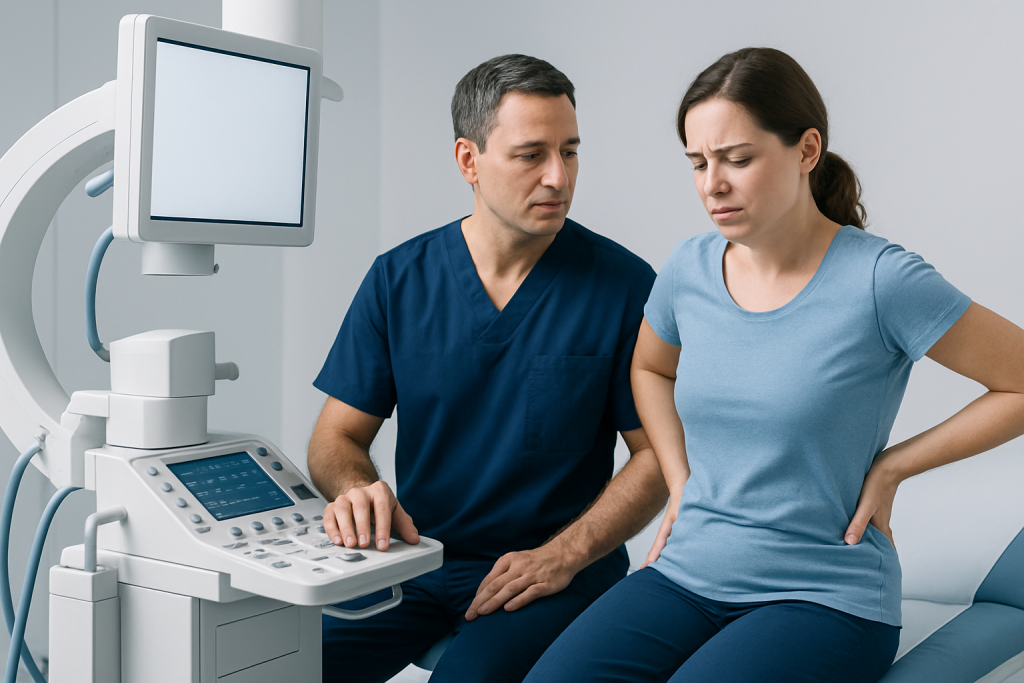
The first clues often involve changes that feel unusual or hard to explain. A person may notice severe low back pain, pain that shoots into one or both legs, or new numbness in the inner thighs, buttocks, or genital area. Some people describe a feeling of sitting on a cushion or “missing” sensation when wiping after using the toilet.
Bladder and bowel changes are especially important. These can include difficulty starting urination, reduced urine flow, loss of bladder control, constipation with new bowel control problems, or a sense that the bladder is not emptying fully. Sexual changes may also appear, including reduced sensation.
- Numbness around the groin, anus, inner thighs, or buttocks
- Weakness in one or both legs
- Difficulty walking or feeling unsteady
- New urinary retention or incontinence
- Loss of bowel control or reduced awareness of bowel movements
Not every person has every symptom, and symptoms do not need to be severe to be important. A sudden combination of back pain, leg symptoms, and bladder or saddle-area numbness should be treated as urgent.
Causes & Risk Factors

Cauda equina syndrome is usually caused by something compressing the nerve roots at the bottom of the spinal canal. A large lumbar disc herniation is one of the most common causes. Other possible causes include spinal tumors, infection, bleeding, trauma, severe spinal stenosis, or complications after surgery or procedures involving the spine.
Some people are more likely to develop it because of pre-existing spine problems, prior back injury, or conditions that narrow the spinal canal. Infections can also play a role, especially when there is fever, recent illness, or reduced immunity. For international patients who already have spine symptoms before travel, it is sensible to arrange medical review before long-distance movement rather than waiting until arriving in another country.
There is usually not one single lifestyle cause. The key issue is the way a structural problem narrows the space available for the nerve roots. Because the underlying cause may be different from one person to another, treatment planning depends heavily on imaging and clinical findings.
Diagnosis
Diagnosis begins with a careful medical history and neurological examination. A doctor will ask about the pattern and timing of pain, numbness, weakness, and bladder or bowel changes, and will check leg strength, sensation, reflexes, and areas of reduced feeling. A rectal exam may be considered in some situations to assess nerve function, though it is only one part of the assessment.
An MRI scan of the spine is often the most important test because it shows soft tissue and nerve compression clearly. If MRI is not available or cannot be done, other imaging may be used depending on the setting. Blood tests may also be ordered if infection or inflammation is suspected.
For people who are seeking care while away from home, bringing previous spine scans, medication lists, and records of past operations can speed up the assessment. Even when prior tests exist, new symptoms usually need fresh evaluation because the situation may have changed.
Treatment Options
Treatment aims to relieve pressure on the cauda equina as quickly as possible and address the cause of the compression. In many cases, surgery is needed urgently, especially when there is significant nerve compression, bladder dysfunction, or progressive weakness. The procedure chosen depends on what is pressing on the nerves, such as a disc fragment, tumor, abscess, or bleeding.
Medication alone is usually not enough when true cauda equina syndrome is present. Pain relief and supportive measures may be used while the patient is being assessed and prepared for definitive treatment, but they do not replace urgent decompression when it is required. If an infection is involved, antibiotics may be part of the plan alongside drainage or surgery.
After the urgent phase, rehabilitation can become very important. Physiotherapy, bladder training, bowel management, and occupational therapy may help the person regain confidence and function. Recovery may be gradual, and some nerve-related symptoms can improve slowly over weeks or months rather than immediately.
In a coordinated international-care setting, treatment usually works best when imaging, spine surgery, anesthesia, nursing, and rehabilitation teams communicate closely. That continuity matters after discharge as well, especially for patients who must return to another country and continue follow-up locally.
Prevention & Self-care
Not every case can be prevented, but timely attention to spine symptoms can reduce the risk of lasting harm. A person with known severe back pain, increasing leg weakness, or new numbness should not assume that rest alone will solve the problem. Seeking early medical assessment is the safest approach.
For people recovering after treatment, self-care usually focuses on protecting the back, following movement advice from the medical team, and keeping all rehabilitation appointments. If bladder or bowel function has changed, the care team may recommend a specific plan for monitoring, catheter care, hydration, diet, or pelvic floor support.
- Follow post-operative instructions carefully
- Report any return of numbness, weakness, or bladder problems promptly
- Avoid heavy lifting until cleared by the clinician
- Keep a list of symptoms to share at follow-up visits
- Arrange practical support for travel if mobility is limited
For patients who received care abroad, it can help to leave the hospital with clear written discharge documents, imaging summaries, and instructions for follow-up. That makes it easier for a local doctor to continue care without delay.
When to See a Doctor
Cauda equina syndrome should be treated as urgent when there is new saddle numbness, sudden bladder trouble, bowel control changes, or weakness in the legs. The person should seek emergency medical care immediately rather than waiting for a routine appointment. If symptoms begin while traveling, the priority is to reach the nearest emergency department or spine-capable hospital.
Even if symptoms seem to improve, they should still be assessed quickly because nerve compression can fluctuate. A person with severe low back pain plus any new neurological change deserves same-day evaluation. It is better to be examined and reassured than to miss a time-sensitive problem.
After treatment, a doctor should also be contacted if pain suddenly worsens, fever develops, the wound looks concerning, or bladder and bowel function changes again. Follow-up helps confirm that recovery is on track and that rehabilitation is matching the person’s needs. Acibadem Health Point’s multidisciplinary specialists and JCI-accredited hospitals diagnose and treat cauda equina syndrome for international patients with coordinated care from first assessment through recovery.
Living With Recovery and Follow-up
Recovery after cauda equina syndrome is often a stepwise process. Some people regain bladder, bowel, leg, or sensory function quickly, while others need a longer period of rehabilitation and adjustment. It is common for the pace of improvement to vary across different functions, so one symptom improving faster than another does not necessarily mean the outcome is fixed.
Follow-up visits allow the care team to monitor nerve recovery, review pain control, and adjust rehabilitation goals. If a person is returning home after treatment abroad, the medical record should include imaging reports, operative notes if surgery was done, and instructions for local follow-up. Those documents make continued care much smoother and reduce the chance of repeated testing.
Emotional recovery matters too. Sudden nerve symptoms and emergency treatment can be unsettling, especially when they happen far from home. Clear communication, realistic expectations, and a structured rehabilitation plan can help the person feel more secure while they regain function.
Frequently asked questions
Is cauda equina syndrome always an emergency?
Yes. It is considered a medical emergency because the compressed nerves can affect bladder, bowel, and leg function. Prompt assessment gives the best chance of limiting lasting nerve damage.
Can cauda equina syndrome go away on its own?
It should not be assumed to go away on its own. Even if pain changes or briefly eases, the underlying compression may still be present and can worsen without treatment.
What test is most commonly used to diagnose it?
An MRI scan is often the key test because it shows the nerves and surrounding tissues clearly. A doctor will also use the history and neurological examination to decide how urgent the situation is.
Does everyone with low back pain have to worry about cauda equina syndrome?
No, most low back pain is not caused by cauda equina syndrome. The concern rises when back pain is combined with saddle numbness, leg weakness, or bladder or bowel changes.
What kind of treatment is usually needed?
Treatment often involves urgent surgery to relieve pressure on the nerves, depending on the cause. Other care, such as pain relief, antibiotics for infection, or rehabilitation, may also be part of the plan.
Can recovery continue after the hospital stay?
Yes. Many people need ongoing rehabilitation and follow-up after discharge. Recovery may continue for weeks or months, and some nerve symptoms can improve gradually over time.
References
- National Institute of Neurological Disorders and Stroke
- Mayo Clinic
- NHS
- American Association of Neurological Surgeons
- Cleveland Clinic
This article is for general information only and is not a substitute for professional medical advice. Please consult a qualified doctor about your individual situation.