Auditory Processing Disorder: Symptoms, Causes and Treatment

Key Takeaways
- Auditory processing disorder affects how the brain interprets sound, not the ears' ability to detect it.
- People may hear speech but struggle to understand it, especially in background noise or when instructions are long.
- Diagnosis usually involves hearing tests and specialized listening assessments, often after other causes are ruled out.
- Treatment focuses on practical communication strategies, school or workplace accommodations, and sometimes auditory training.
- Early support can reduce frustration and help children and adults participate more comfortably in learning, work, and social life.
Medically reviewed by the Acıbadem clinical team — August 19, 2026
Auditory processing disorder can make it hard to understand speech, especially in noisy places, even when hearing itself is normal. With the right assessment and support, children and adults can improve communication, confidence, and day-to-day function.
Overview
Auditory processing disorder, often shortened to APD, describes difficulty making sense of sounds after they reach the ear. The ears may detect sound normally, yet the brain has a harder time organizing, distinguishing, or interpreting what was heard. For many people, the problem becomes most noticeable when speech is fast, instructions are layered, or the environment is noisy.
This condition is not the same as hearing loss, although the two can be confused. A person with APD may pass a basic hearing screening and still struggle to follow classroom teaching, group conversations, or announcements in busy places. That mismatch often leads families, teachers, or coworkers to suspect inattention before anyone thinks about a listening disorder.
APD can be identified in children and adults, but it is often noticed first during school years, when listening demands rise sharply. For international families seeking care, a careful evaluation can be especially helpful when a child has been misunderstood in multiple settings, or when previous advice has focused only on behavior rather than listening skills.
Symptoms
The signs of auditory processing disorder can look different from one person to another. Some people hear sounds clearly but miss pieces of speech, while others are easily overwhelmed by competing noises. The common thread is that listening takes extra effort and often leaves the person tired, frustrated, or unsure.
In children, APD may show up as difficulty following multi-step directions, frequently asking for repetition, confusing similar-sounding words, or seeming to “tune out” when spoken to. Teachers may notice that a child does better with written instructions than spoken ones, or that classroom performance drops when there is noise, group work, or rapid discussion.
Adults may describe trouble understanding voices on the phone, keeping up with meetings, or separating one speaker from another in restaurants and social gatherings. Some people also find that they mishear speech when they are tired or distracted. Common features can include:
- Frequently asking people to repeat themselves
- Needing longer to respond to spoken information
- Difficulty locating where a sound is coming from
- Problems remembering spoken instructions
- Struggling to understand speech with background noise
- Confusing words that sound similar
These symptoms can overlap with attention differences, language disorders, learning challenges, and certain developmental conditions. That overlap is one reason a structured evaluation matters, rather than assuming the cause from symptoms alone.
Causes & Risk Factors
APD does not usually have one simple cause. In many cases, it appears to reflect differences in how the central auditory pathways and related brain networks process sound. These differences may be present from childhood, or they may become more apparent when listening demands increase.
Several factors may raise the likelihood of auditory processing difficulties. A history of recurrent ear infections, early language delays, developmental differences, head injury, or certain neurological conditions may be relevant. However, having one of these factors does not mean APD will develop, and many people with APD do not have a single clear trigger.
It is also important to know that other issues can mimic or accompany APD. Attention-deficit/hyperactivity disorder, language disorders, dyslexia, autism spectrum disorder, and anxiety can all affect how a person follows spoken information. A careful specialist assessment helps sort out which difficulties are present and which supports are likely to help most.
Diagnosis
Diagnosis starts with a full conversation about listening concerns, development, school or work performance, medical history, and any problems with speech, language, or attention. Because APD is about processing, not simply hearing, clinicians first need to rule out hearing loss or other ear-related problems that could explain the symptoms.
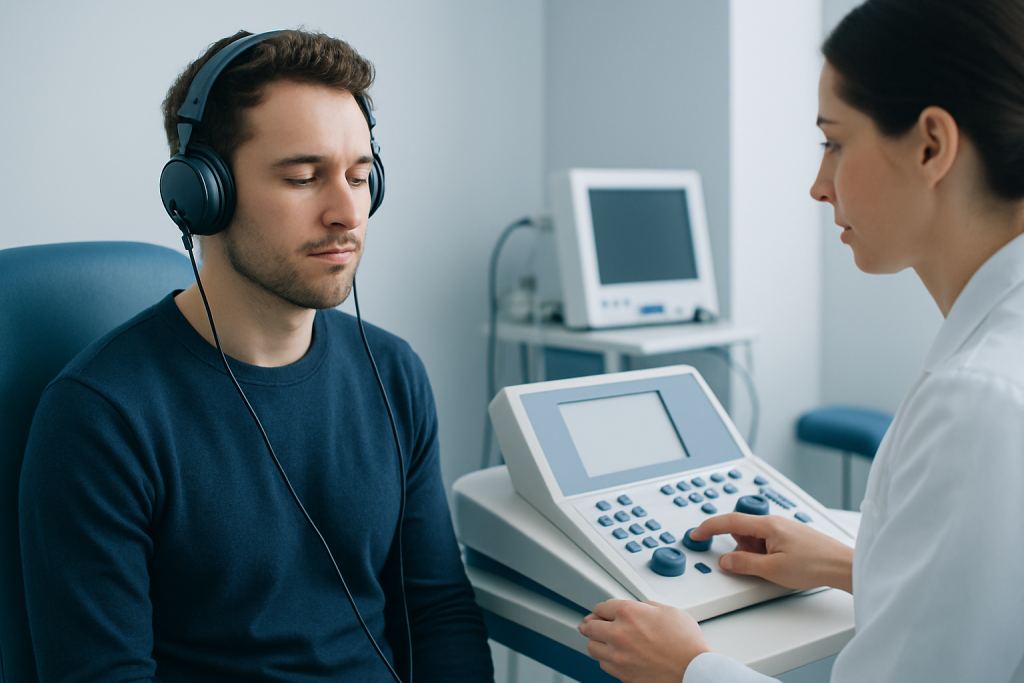
Audiologists commonly perform hearing tests and specialized assessments that examine how well a person recognizes speech in quiet and noisy conditions, distinguishes similar sounds, or processes rapid auditory information. Depending on the situation, other professionals such as ENT specialists, speech-language therapists, psychologists, or pediatricians may be involved to build a clearer picture.
Testing is usually tailored to age and communication level. In children, cooperation, language development, and attention can influence results, so the evaluation often works best when it is part of a broader developmental review. For families traveling from abroad, this coordinated approach can save time and help avoid repeat testing that does not answer the real question.
Because no single test defines every case, diagnosis is based on the pattern of findings rather than one score alone. The goal is to identify practical listening weaknesses and separate them from hearing loss, language delay, or attention-related difficulties.
Treatment Options
There is no one-size-fits-all cure for APD, and care is usually built around the person’s daily listening challenges. The most useful plan often combines environmental changes, communication strategies, and targeted training rather than relying on a single device or therapy.
At school or work, supportive adjustments can make a meaningful difference. These may include seating closer to the speaker, reducing background noise, using written instructions, breaking tasks into smaller steps, and confirming understanding before moving on. In some settings, assistive listening systems can improve access to speech by helping the voice of interest stand out from surrounding noise.
Auditory training and related therapy approaches may be recommended for selected patients. These programs aim to strengthen skills such as sound discrimination, listening in noise, and following rapid speech. Their usefulness varies, so they are best chosen after a specialist explains the person’s profile and goals.
Speech-language therapy, learning support, or counseling may also be helpful when APD affects communication confidence, classroom participation, or social relationships. When APD occurs alongside another condition, treatment often works best when that condition is managed too. The most practical plans are usually the ones that fit real-life routines and can continue after the patient returns home, including for international patients who need clear follow-up instructions from a distance.
Prevention & Self-care
APD cannot always be prevented, especially when it is linked to development or neurological differences. Still, people can reduce the impact of listening challenges by making communication more predictable and less demanding. Small changes often matter more than dramatic ones.
Helpful self-care strategies include choosing quieter spaces for important conversations, asking speakers to face the listener, and confirming key details in writing when possible. It can also help to pause, summarize what was heard, and ask for repetition of only the missed part rather than the whole message. These habits reduce fatigue and misunderstandings.
For children, families and teachers can support listening by keeping routines consistent, giving one instruction at a time when needed, and allowing extra response time. Older children and adults may benefit from learning how to advocate for themselves, such as requesting captioning, note-taking support, or a seat away from noise. Good sleep, stress management, and treating any coexisting attention or language concerns can also improve listening stamina.
When to See a Doctor
A medical evaluation is worthwhile when listening problems are persistent, affect school or work performance, or seem out of proportion to the results of a basic hearing test. It is especially important to seek assessment if a child is falling behind academically, frequently mishears instructions, or appears unusually exhausted after listening-heavy tasks.
Adults should also consider an evaluation if they struggle to follow conversations in meetings, avoid social situations because of listening effort, or notice that repeated misunderstandings are affecting confidence. These concerns deserve attention even when the ears themselves seem healthy.
Prompt assessment is helpful if symptoms appear after a head injury, neurological illness, or a significant change in hearing. A qualified clinician can determine whether APD is likely, whether another condition better explains the problem, and what support will make communication easier. Acibadem Health Point’s multidisciplinary specialists and JCI-accredited hospitals can diagnose and treat this condition for international patients, with care plans designed to be followed safely after travel.
Living Well With APD
Many people with APD do best when the condition is understood in practical terms: what situations are difficult, what helps, and how support can be adjusted over time. That perspective shifts the focus away from blame and toward workable solutions in school, at home, and at work.
Children may need accommodations that evolve as reading, language, and classroom demands change. Adults may need strategies tailored to their workplace, commute, or family life. Periodic review is often useful, because listening needs can change with age, health, and environment.
With the right assessment and a realistic support plan, APD does not have to dominate daily life. The aim is not to make every listening environment perfect, but to reduce strain enough that communication feels manageable and confidence can return.
Frequently asked questions
Is auditory processing disorder the same as hearing loss?
No. Hearing loss affects how well sound is detected by the ear, while APD affects how the brain interprets what was heard. A person can have normal hearing thresholds and still struggle to understand speech, especially in noise.
Can adults develop auditory processing disorder?
Yes. Some adults recognize symptoms only later in life, while others have had listening difficulties since childhood. Symptoms may become more obvious when work, noise, fatigue, or other health issues increase listening demands.
How is APD diagnosed in children?
Diagnosis usually begins with hearing testing and a detailed history, then moves to specialized listening assessments when appropriate. Clinicians also consider language, attention, and developmental factors so the results are interpreted correctly.
What helps most with APD at school?
Clear, structured communication is often helpful, including written instructions, reduced background noise, and seating that supports listening. Some children also benefit from assistive listening systems or targeted therapy, depending on their evaluation.
Does APD go away on its own?
Some children improve as they grow and develop stronger language and learning strategies, but APD should not be assumed to resolve without support. Even when symptoms lessen, practical accommodations can still make learning and communication easier.
Should someone with suspected APD see an ENT or an audiologist first?
Either can be part of the pathway, but an audiologist is often central to the listening evaluation. An ENT specialist may be involved to rule out ear disease or other medical causes, especially when symptoms are new or there are additional ear concerns.
References
- American Speech-Language-Hearing Association
- National Institute on Deafness and Other Communication Disorders
- British Society of Audiology
- Mayo Clinic
- World Health Organization
This article is for general information only and is not a substitute for professional medical advice. Please consult a qualified doctor about your individual situation.
Explore treatments in Turkey — costs, top hospitals & a free quote
JCI-accredited · board-certified surgeons · reply within 24h
Add us as a Preferred Source to see more of our trusted health content across Google Search, AI Overviews and Discover.