Arm Lift vs. Thigh Lift: Which Area Should Be Treated First?

Key Takeaways
- Arm lift and thigh lift surgery address different areas, so the choice is usually guided by which area causes more discomfort or concern.
- A surgeon may recommend treating one area first or combining procedures if safety and recovery allow it.
- Both operations can improve hygiene, clothing fit, and confidence, but they do not replace weight management or skin care.
- Recovery, scar placement, and mobility needs should be discussed before deciding on the sequence of surgery.
- A personalized consultation is the safest way to match the surgical plan with health status and long-term goals.
Arm lift and thigh lift surgery are both body-contouring procedures designed to remove excess skin and improve comfort and shape after weight loss or aging-related changes. The best first step depends on the person’s anatomy, daily symptoms, recovery time, and overall surgical plan.
Overview
When excess skin remains after major weight loss or after years of natural tissue changes, two operations often come up in the same conversation: arm lift surgery and thigh lift surgery. Both are body-contouring procedures, but they solve different problems. An arm lift, also called brachioplasty, focuses on the upper arms. A thigh lift, or thighplasty, reshapes the inner or outer thighs.
The question, “Which area should be treated first?” does not have a single correct answer. For many people, the better starting point is the area that creates the most daily friction, hygiene difficulty, clothing limitation, or emotional distress. For others, the decision is shaped by healing time, walking needs, work demands, or whether a second surgery may be needed later.
These procedures are often considered by international patients who have completed weight loss elsewhere and are now planning the next stage of care. In that setting, the order of treatment matters because travel, postoperative support, and follow-up appointments all need to fit together smoothly. A thoughtful surgical plan is not only about appearance; it is also about recovery that can realistically be managed at home or in a hotel, and then continued with local or remote follow-up.
Symptoms and Concerns That Lead to Surgery

People usually do not seek arm lift or thigh lift surgery because of pain alone. More often, they describe a collection of practical and emotional concerns. Loose skin may rub against clothing, fold over itself, or trap moisture. In the arms, that can make short sleeves feel uncomfortable or limit movement during exercise. In the thighs, skin irritation may affect walking, sitting, or simply finding clothes that fit well.
Common reasons people consider an arm lift include visible hanging tissue from the upper arm, difficulty wearing fitted tops, and repeated chafing in warm weather. A thigh lift may be chosen when inner-thigh skin causes rubbing while walking, when trousers fit unevenly, or when skin folds make hygiene harder to maintain. In both areas, the issue is often not only cosmetic; it can also be functional.
Some people are bothered more by how they feel in public, while others are troubled by the daily routine of dressing, bathing, or moving comfortably. A surgeon’s role is to help identify which concern is most significant and whether it is better addressed first on the arms, the thighs, or in a staged plan that treats both areas over time.
Causes and Risk Factors
Excess skin in the upper arms or thighs usually develops after the skin has been stretched for a long time and does not fully retract. Major weight loss is one of the most common causes. Age-related loss of skin elasticity, genetics, and repeated weight changes can also contribute. In some people, the lower body retains more skin laxity after weight loss, while in others the upper arms are more affected.
Not everyone is a good candidate for surgery at the same moment. Risk factors that may influence timing include smoking, uncontrolled chronic illness, poor nutrition, unstable weight, and a history of wound-healing problems. If a patient is planning to travel for surgery, the surgeon also considers how much help will be available during the first days of recovery and whether the patient can move safely after the operation.
There are also procedure-specific considerations. An arm lift may be less comfortable for people who rely heavily on their arms for work, lifting, or mobility aids. A thigh lift may be more demanding for someone who needs to walk frequently or climb stairs early in recovery. This is why the “first” procedure is often chosen based on lifestyle and healing needs, not simply on which area looks most noticeable in the mirror.
How Doctors Decide Which Area to Treat First
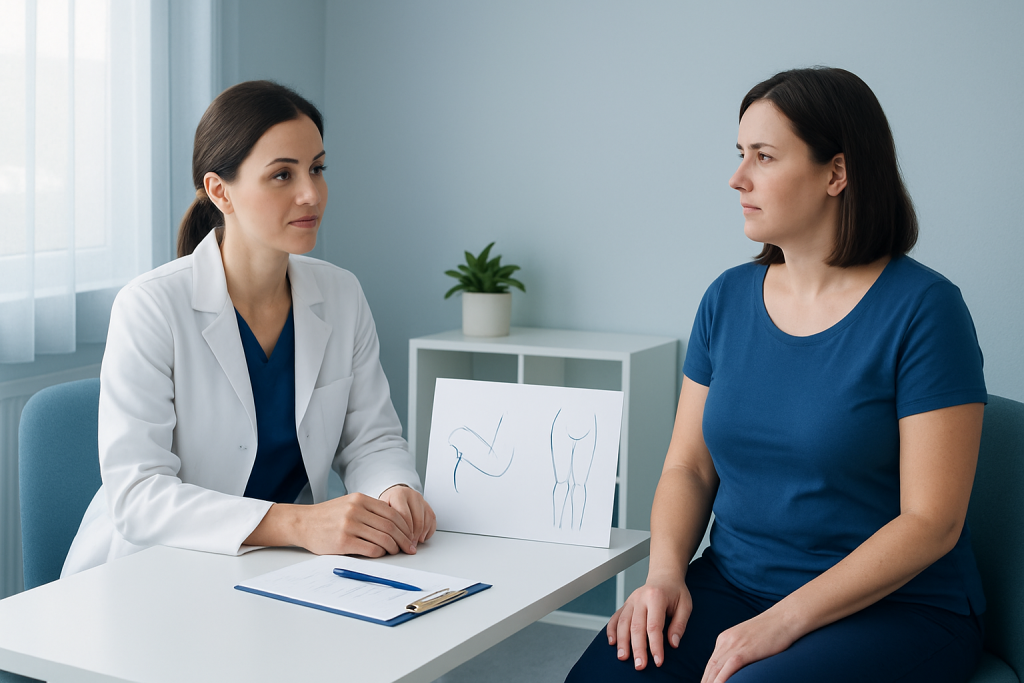
The decision usually begins with a physical examination and a detailed conversation about priorities. A surgeon looks at where the skin excess is greatest, how much fat remains, how the tissue behaves when the person moves, and whether there is asymmetry between sides. The discussion then turns to daily life: Which area causes more chafing? Which clothing problem is most frustrating? Which recovery would be easier to manage first?
Sometimes the answer is straightforward. If the upper arms create the most visible concern and the patient’s work is mostly sedentary, an arm lift may be the better first step. If thigh rubbing interferes with walking or exercise, the thigh may take priority. In other cases, the surgeon may advise treating the area that carries the lower recovery burden first, especially if the patient is traveling internationally and wants one operation to recover from before deciding on the next.
Combining procedures can be possible for some patients, but it is not the right choice for everyone. More extensive surgery may mean a longer operative time and a more demanding recovery. A staged approach often allows the patient to heal, reassess body shape, and decide whether the second procedure is still necessary. That step-by-step process can be especially practical when the person is coordinating care from another country.
Diagnosis and Preoperative Evaluation
There is no lab test that “diagnoses” the need for an arm lift or thigh lift. Instead, the evaluation is clinical and personalized. The surgeon reviews the patient’s medical history, current medications, previous operations, weight stability, and any skin conditions such as rashes or recurrent irritation in the target area. Photographs may be taken for planning purposes, and measurements help determine how much tissue can be removed safely.
Preoperative testing is often used to make surgery safer. Depending on age and health status, this may include blood tests, heart evaluation, or other checks recommended by the surgical team. The surgeon also explains scar placement, expected contour changes, and the limits of what surgery can achieve. Patients should understand that body-contouring surgery improves shape and comfort, but it does not create complete symmetry or permanently prevent future skin loosening.
For international patients, planning includes more than the operation itself. The team may discuss the ideal length of stay, the timing of follow-up visits, compression garment use, and how long it is best to remain close to the surgical center before traveling home. Clear planning helps reduce stress and supports safer healing after discharge.
Treatment Options
An arm lift removes extra skin and, in some cases, a modest amount of fat from the upper arm. Incisions are typically placed along the inner or back part of the arm, where they can be less visible in everyday positions. A thigh lift removes and tightens tissue in the thigh area, usually with incisions along the inner thigh, groin crease, or lateral thigh depending on the technique and the pattern of skin excess.
Neither procedure is identical from patient to patient. The surgical method depends on how much loose skin is present, whether the concern is mostly on the inner surface or extends around the limb, and whether there is a need to address body contour more broadly. Some patients also need liposuction as part of the plan, but that depends on tissue quality and the surgeon’s judgment. The goal is a smoother contour, not an artificial or overly tight look.
Recovery after either operation includes wound care, activity limits, and follow-up checks. Swelling and bruising are expected. Movement is usually encouraged in a careful, guided way to support circulation, but strenuous exercise and heavy lifting are delayed until the surgeon confirms healing. If both areas are to be treated, the surgeon may recommend doing one procedure first so that the patient can recover with better mobility and a clearer sense of the final result before proceeding.
Prevention and Self-care
Surgery cannot always be avoided when excess skin is substantial, but good preparation can make the outcome more predictable. Stable weight is one of the most important factors. Patients are usually advised to complete major weight-loss efforts before body-contouring surgery whenever possible, because ongoing weight change can affect the final shape. Adequate nutrition, hydration, and protein intake also support wound healing.
Before surgery, it is helpful to stop smoking and follow the surgeon’s instructions about medications and supplements that may affect bleeding or healing. After surgery, patients should wear compression garments if prescribed, keep follow-up appointments, and watch the incisions as directed. Gentle walking is often encouraged early on, while movements that strain the arms or legs are limited for a period of time.
Self-care also includes planning for real-life needs. Patients should arrange help with meals, transportation, and household tasks, especially if the first procedure is expected to limit reach, lifting, or prolonged walking. For those recovering away from home, it is wise to organize a comfortable place to rest, secure all medicines and supplies in advance, and confirm how to reach the surgical team if questions arise.
When to See a Doctor
A consultation is worthwhile when loose skin is causing physical discomfort, repeated skin irritation, trouble exercising, or embarrassment that affects day-to-day life. It is also important to see a qualified plastic surgeon if a person is considering surgery after weight loss and wants to know whether an arm lift, thigh lift, or a staged combination is the better first step.
Medical review is especially important if there are chronic health conditions, a history of slow healing, or concerns about traveling for surgery. The surgeon can explain what is realistically possible, how long recovery may take, and whether the patient should begin with the upper arms, the thighs, or postpone surgery until weight and health are more stable.
For patients seeking treatment abroad, a coordinated consultation can reduce uncertainty. Acibadem Health Point works with multidisciplinary specialists and JCI-accredited hospitals to evaluate and treat body-contouring concerns for international patients, while keeping planning, surgery, and follow-up aligned as carefully as possible. Even so, the final decision should always be made with a qualified doctor after an individual examination.
Frequently asked questions
Is an arm lift or thigh lift usually done first after weight loss?
It depends on which area causes the greatest daily problem and which recovery is easier to manage. Some patients choose the arms first because upper-body movement is simpler during healing, while others choose the thighs first because walking discomfort is the bigger issue. A surgeon can help compare both options in the context of the patient’s body and travel plans.
Can both surgeries be done at the same time?
In some patients, yes, but it depends on overall health, the amount of tissue being removed, and how demanding the combined recovery would be. A longer operation and a more limited recovery period may not be suitable for everyone. Many surgeons prefer a staged plan when safety or comfort is a concern.
Which surgery has the easier recovery?
That varies by patient and by how much correction is needed. An arm lift may be simpler for someone who can rest the arms easily, while a thigh lift may be less comfortable for someone who needs to walk often. The best option is the one that fits the patient’s routine and support system most safely.
Will the scars be very visible?
Both procedures leave scars, and scar placement is planned to be as discreet as possible. Over time, scars usually soften and fade, but they do not disappear completely. The surgeon should explain where the scars will sit and how they may look once healing is complete.
How stable should weight be before these operations?
Weight should ideally be stable before body-contouring surgery, because ongoing loss or gain can change the result. A stable weight helps the surgeon plan more accurately and may improve the long-term shape. Patients should ask their doctor how long their weight should remain steady before surgery is scheduled.
Are these procedures only cosmetic?
No. While appearance is part of the decision, many patients seek surgery because loose skin causes rubbing, hygiene difficulties, or limits clothing choices and movement. The procedures can improve comfort and function as well as contour.
References
- American Society of Plastic Surgeons
- International Society of Aesthetic Plastic Surgery
- Mayo Clinic
- National Health Service
- American Board of Plastic Surgery
This article is for general information only and is not a substitute for professional medical advice. Please consult a qualified doctor about your individual situation.
More from the Health Library

Stretch Marks, Loose Skin, or Fat: Which Cosmetic Treatment Helps Which Problem?

Mommy Makeover on a Short Trip: What Can Realistically Fit Into One Stay?