Abdominal Ultrasound Before Travel: What It Can Show That Blood Tests Cannot

Key Takeaways
- An abdominal ultrasound looks at the structure of organs, while blood tests mainly reflect how the body is functioning.
- It may identify gallstones, kidney stones, cysts, fluid, enlargement, or bile duct changes before they cause clear symptoms.
- A normal blood test does not always mean the abdomen is completely healthy, especially when symptoms are mild or intermittent.
- It is often useful before travel if there is a history of abdominal pain, prior gallstones, kidney issues, unexplained bloating, or abnormal labs.
- Preparation is usually simple, but instructions may differ depending on whether the scan focuses on the upper abdomen or includes the kidneys and bladder.
An abdominal ultrasound can offer a practical picture of the liver, gallbladder, kidneys, spleen, and nearby vessels before an international trip. Unlike blood tests, it can show structural changes such as stones, cysts, swelling, or blockage that may not yet affect lab results.
Overview
An abdominal ultrasound is a non-invasive imaging test that uses sound waves to create pictures of the organs inside the abdomen. For many people planning a trip, it can be a practical way to check for problems that would not necessarily appear in routine blood work.
Blood tests are useful because they can point to inflammation, infection, anemia, liver irritation, kidney strain, or other internal changes. But they do not show the shape, size, or surface of organs. A person may have normal blood results and still have a gallstone, a cyst, a kidney stone, or an enlarged organ that deserves attention before leaving home.
That difference matters when travel is approaching. A scan can help a doctor decide whether a known issue is stable enough for travel, whether further tests are needed, or whether treatment should happen before a long flight or an extended stay abroad. In that sense, abdominal ultrasound is less about replacing blood tests and more about filling in the missing picture.
What an Abdominal Ultrasound Can Show
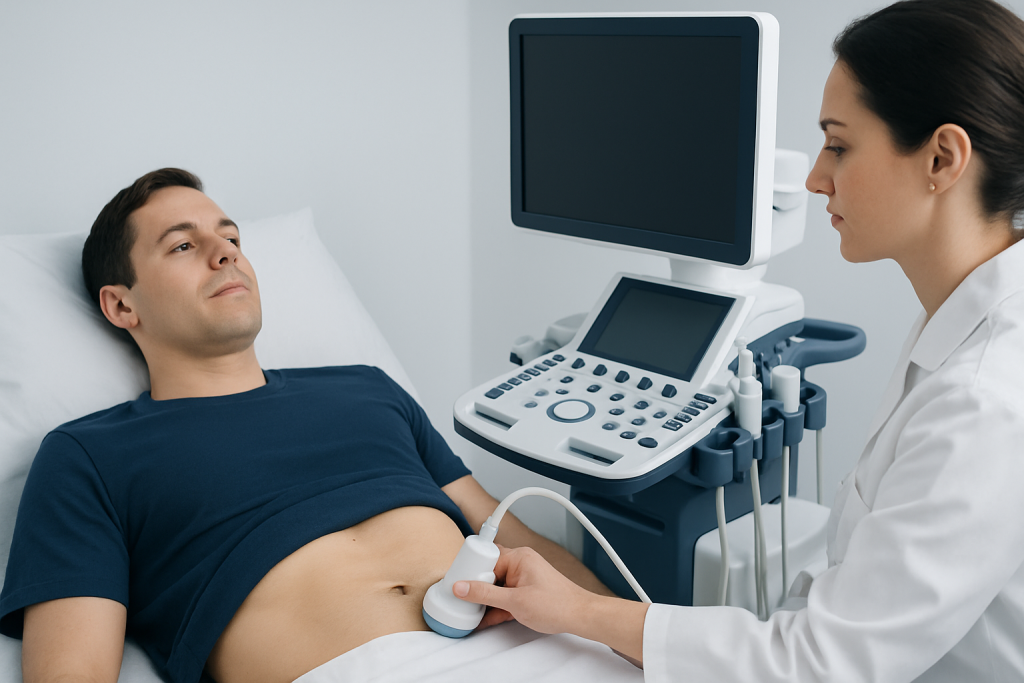
An ultrasound can reveal details that are visible only when the body is being looked at directly. It can show the liver’s size and texture, gallbladder stones or sludge, swelling of the bile ducts, kidney stones, cysts, fluid around organs, and enlargement of the spleen or other structures. In some cases, it may also detect abdominal aortic widening or other changes in large vessels, depending on what is included in the scan.
This structural information can be important even when a person feels mostly well. For example, a mild ache after meals may relate to gallbladder disease, while intermittent flank discomfort may point to a kidney stone that has not yet changed blood results. An ultrasound can also help explain vague symptoms such as bloating, fullness, or pressure when physical examination and laboratory tests are not enough.
In travel planning, these findings can influence timing. If a doctor sees signs of a blocked bile duct, inflamed gallbladder, or a stone that could move, the safest plan may be to investigate further before departure. If the scan is reassuring, it can provide confidence that a trip is less likely to be interrupted by an unexpected abdominal emergency.
Why Blood Tests Cannot Tell the Whole Story

Blood tests measure substances circulating in the body. They can suggest that an organ is stressed, infected, or not working as expected, but they do not show the organ itself. A person can have liver enzymes within the reference range and still have a fatty liver, a cyst, or a mass that does not yet affect those values.
The same is true for gallbladder and kidney conditions. Gallstones may not alter blood tests unless they are causing obstruction or inflammation. Kidney stones can sit quietly in the urinary tract without changing creatinine or other lab markers, especially early on. Small changes in the bile ducts, pancreas, or abdominal blood vessels may also be invisible in routine laboratory screening.
This is why imaging and laboratory tests are usually complementary. Blood tests answer one set of questions, while ultrasound answers another. For a traveler, combining both can be especially useful because it reduces the chance of boarding a plane with an undetected structural problem that later becomes painful or urgent far from home.
When a Scan Is Particularly Helpful Before Travel
Not everyone needs an abdominal ultrasound before a trip, but it may be worth discussing with a doctor in certain situations. People with recurring upper abdominal pain, a history of gallstones, previous kidney stones, unexplained nausea, ongoing bloating, or abnormal liver or kidney tests may benefit from imaging before they travel.
It can also be helpful if symptoms have been changing slowly rather than dramatically. Gradual fullness, intermittent right-sided discomfort, or repeated indigestion may not feel serious enough to seek urgent care, yet they can still reflect a condition that is easier to manage before departure. For someone who will be far from their usual medical team, early clarity often makes travel decisions simpler.
- Ongoing or recurrent abdominal pain
- Past gallbladder, liver, or kidney concerns
- Unexplained nausea, bloating, or early satiety
- Abnormal blood tests that need a structural explanation
- Planned travel to areas where medical follow-up may be difficult
For international patients, this kind of imaging can support a more organized care plan. It gives the doctor a better basis for advising whether it is safe to travel, whether treatment should happen first, or whether a follow-up scan should be arranged after arrival or upon return.
How the Examination Is Done
An abdominal ultrasound is usually quick and painless. A technologist or clinician places gel on the skin and moves a small probe over the abdomen to capture images. Depending on the organs being examined, the patient may be asked to fast for a few hours beforehand so the gallbladder and upper abdominal structures are easier to see.
Sometimes the scan is targeted to the upper abdomen; in other cases it includes the kidneys, bladder, or blood vessels. The exact preparation can vary, so patients are best served by following the instructions from the imaging center rather than relying on general advice alone. It is also helpful to bring prior scans or recent blood tests, because comparison often makes the result more meaningful.
The test does not use radiation, which makes it suitable for many adults who need an efficient check before travel. Most people return to normal activities immediately afterward. The main limitation is that ultrasound cannot see every part of the abdomen equally well, and some findings may require additional imaging if the doctor wants a clearer answer.
What Happens After the Results
After the scan, the doctor interprets the images together with symptoms, examination findings, and blood tests. A normal ultrasound can be reassuring, but it does not erase the need for medical review if symptoms continue. Likewise, an abnormal result does not always mean a serious problem; sometimes it simply shows a change that needs monitoring or a second test.
If a stone, cyst, enlarged organ, or ductal widening is seen, the next step depends on the type, size, location, and the person’s symptoms. Some findings call for lifestyle guidance and follow-up imaging, while others may need medication, further lab work, or a specialist opinion. For a traveler, the timing of treatment is often as important as the treatment itself.
When planning care from another country, it is wise to ask for a written report and, if possible, the actual image files. These make it easier for doctors abroad to continue the evaluation without repeating the same tests unnecessarily. Clear documentation can save time and reduce uncertainty if symptoms occur while traveling.
Prevention, Self-care, and Practical Travel Planning
An ultrasound is not a preventive measure by itself, but it can support prevention by identifying issues early. People with gallstone disease, fatty liver, kidney stone history, or recurrent digestive symptoms may reduce the chance of an unexpected flare by addressing these problems before a trip and following medical guidance carefully.
Simple self-care still matters. Staying hydrated, avoiding heavy meals if they trigger symptoms, and not ignoring persistent abdominal discomfort are sensible steps. If a doctor has already recommended a specific diet, medicine, or repeat test, it is better to complete that plan before long-distance travel whenever possible. Bringing prescriptions, reports, and a list of current medications can also make later care smoother.
Travel does not need to be postponed for every abdominal finding, but it should be planned thoughtfully. The goal is not to eliminate uncertainty completely; it is to reduce avoidable surprises. When symptoms, blood tests, and imaging are considered together, doctors can usually give more tailored advice about whether to travel now, adjust the itinerary, or treat first and travel later.
When to See a Doctor
A doctor should be consulted if abdominal discomfort keeps returning, if blood tests have been abnormal without a clear explanation, or if a person has a known abdominal condition and an important trip is approaching. A pre-travel conversation is especially useful when the journey will be long, remote, or difficult to interrupt.
Urgent evaluation is appropriate if there is severe or worsening pain, vomiting that prevents drinking fluids, yellowing of the skin or eyes, fever, black or bloody stools, fainting, or a swollen abdomen. These symptoms do not always indicate a serious illness, but they do deserve prompt medical attention rather than watchful waiting.
For patients who are arranging care from abroad, a coordinated workup can make a major difference. Acibadem Health Point’s multidisciplinary specialists and JCI-accredited hospitals diagnose and treat abdominal conditions for international patients, with attention to clear reporting and follow-up planning. The aim is to help each patient understand what the scan shows, what it does not show, and what the safest next step may be.
A Final Practical Note
Abdominal ultrasound is most useful when it is treated as one part of a broader assessment rather than a stand-alone answer. Before travel, that broader view can be especially valuable because time, distance, and access to follow-up all affect decision-making.
For some people, a normal scan can provide the green light they need to travel with confidence. For others, it may uncover a problem early enough to address before departure. Either way, the test helps turn uncertainty into a more informed plan.
Frequently asked questions
Can an abdominal ultrasound replace blood tests before travel?
No. The two tests answer different questions. Blood tests show how the body is functioning, while ultrasound shows the shape and structure of organs. Doctors often use them together to get a fuller picture.
What problems can be missed by blood tests but seen on ultrasound?
Gallstones, kidney stones, cysts, fluid collections, organ enlargement, and some bile duct changes may be visible on ultrasound even when blood tests are normal. That is why imaging can be useful if symptoms are present or travel is approaching.
Do I need to fast before an abdominal ultrasound?
Sometimes, but not always. Fasting is often requested for scans that focus on the upper abdomen, especially the gallbladder. The imaging center should provide exact instructions based on the type of exam.
Is an abdominal ultrasound painful?
It is usually not painful. Most people feel only gentle pressure from the probe and the cool sensation of the gel. The test is generally well tolerated and does not require recovery time.
If my ultrasound is normal, does that mean I can travel safely?
A normal scan is reassuring, but it does not guarantee that no symptoms will occur later. The doctor will interpret the result alongside the person’s history, current symptoms, and blood tests before giving travel advice.
When should someone seek medical advice before a trip?
Medical advice is sensible if there is recurring abdominal pain, previous gallbladder or kidney disease, unexplained nausea or bloating, or abnormal blood work. It is also important if travel will make follow-up difficult or if symptoms have recently changed.
References
- World Health Organization
- American College of Radiology
- Radiological Society of North America
- NHS
This article is for general information only and is not a substitute for professional medical advice. Please consult a qualified doctor about your individual situation.
More from the Health Library

Sleep Checkups Abroad: When Snoring Is a Symptom and When It Needs Testing

Cholesterol Results Explained for Travelers: What Should Prompt a Follow-Up Visit?