37.5 C To F

Key Takeaways
- 37.5°C converts to 99.5°F.
- A single temperature reading should be interpreted with symptoms, age, and measurement method in mind.
- Mild temperature elevations can happen with infection, exercise, warm environments, or dehydration.
- Persistent or worsening symptoms deserve medical review, especially in babies, older adults, and people with chronic illness.
- Simple home care and careful monitoring are often enough for a mild, short-lived rise in temperature.
37.5°C equals 99.5°F. For many people, that reading sits just above a typical normal temperature and may reflect a mild rise rather than a clear fever, depending on the person and how the temperature was measured.
Overview
37.5°C is equal to 99.5°F. For many adults, that number is close to the upper end of a normal body temperature range, so it does not automatically mean a fever. What it means in practice depends on where the temperature was taken, what time of day it was measured, and whether other symptoms are present.
Body temperature is not fixed throughout the day. It can rise a little in the late afternoon, after physical activity, after eating, or in a warm room. A reading of 37.5°C may therefore be harmless in one situation and more meaningful in another, especially if a person feels unwell or the temperature keeps climbing.
For travelers and international patients comparing readings across units and countries, it helps to convert the number first and then look at the full picture. A temperature alone is only one clue; the rest comes from symptoms, hydration, energy level, and overall recovery.
Symptoms and What a Mild Temperature Rise Can Feel Like
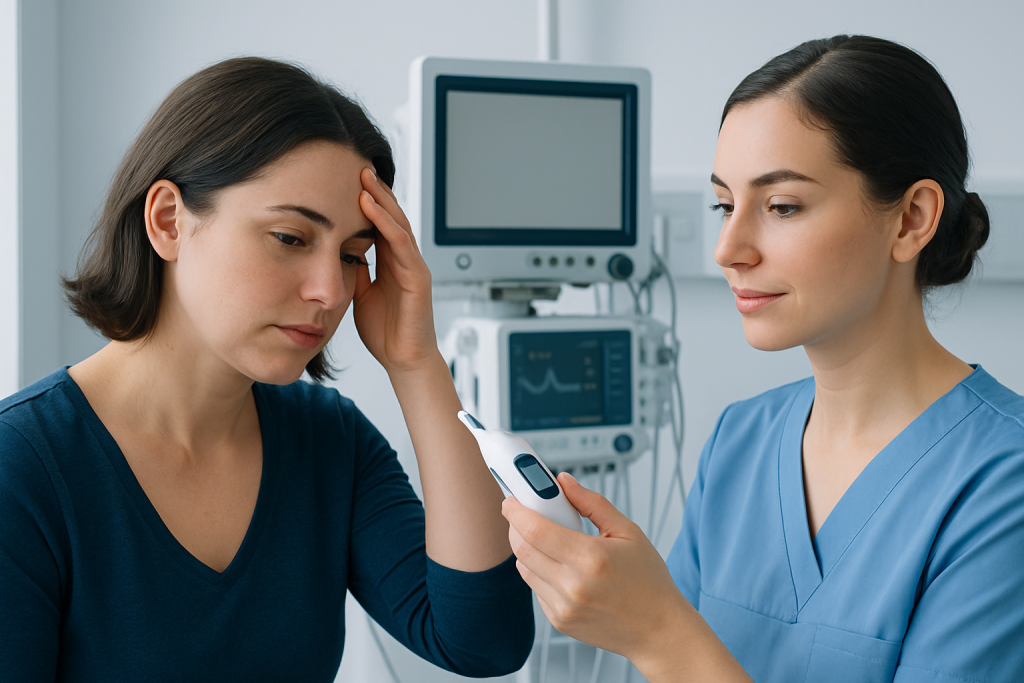
Some people notice very little at 37.5°C, while others feel slightly warm, tired, or “off.” Mild temperature elevations may come with flushed skin, a mild headache, reduced appetite, or a sense of body aches. In children, the signs can be less specific and may include clinginess, reduced play, or a change in sleep.
It is useful to separate a number on the thermometer from the way the person is functioning. If someone is drinking fluids, breathing comfortably, and staying alert, a 37.5°C reading is often something to monitor rather than panic over. If the person appears more unwell than the number suggests, the reading should be repeated and the symptoms considered together.
Temperature is also easier to interpret when it is tracked over time. A single 37.5°C reading after being outdoors or exercising may settle on its own, but repeated readings that climb higher or are paired with cough, sore throat, urinary symptoms, rash, or pain deserve attention.
Causes & Risk Factors

A temperature of 37.5°C can have many explanations. Infection is one of the most common, but not the only one. A person may also see a mild rise after exercise, a hot bath, emotional stress, dehydration, menstrual changes, vaccination, or simply because the body’s temperature naturally varies during the day.
The way the temperature is measured matters as well. Oral, ear, forehead, and armpit readings can differ from one another, and each method has its own margin of error. A reading of 37.5°C on one device may not match exactly on another, which is why patterns are more useful than a single isolated result.
Some people are more likely to need medical review for even a mild increase. This includes infants, older adults, people with weakened immune systems, and those with chronic medical conditions. In these groups, a small temperature change may be an early sign that should not be ignored.
Diagnosis
When clinicians evaluate a mild temperature rise, they do not focus on the number alone. They ask when it started, how it was measured, what other symptoms are present, and whether the person has recently traveled, been exposed to illness, or undergone a procedure. That history helps determine whether the temperature is likely to be temporary or part of something that needs treatment.
A physical examination may look for signs such as throat redness, chest findings, abdominal tenderness, ear symptoms, dehydration, or skin changes. If the situation suggests infection or another medical problem, tests may be ordered. These can include urine testing, blood work, viral testing, or imaging, depending on the suspected cause.
For people traveling for care, it can be helpful to bring a record of temperature readings, medication use, recent vaccinations, and any prior diagnoses. Clear details help the medical team compare symptoms across time and decide whether follow-up should happen locally or after return home.
Treatment Options
Not every 37.5°C reading needs treatment. If the person feels well, the priority is usually observation, rest, and fluids rather than medication. When a mild temperature rise is linked to a clear cause such as a viral illness, care often focuses on comfort measures while the body recovers.
Doctors may recommend treatment based on the underlying reason, not just the temperature itself. For example, a bacterial infection may need antibiotics, while dehydration may improve with oral fluids or, in some cases, medical rehydration. If a procedure, medication reaction, or inflammatory condition is involved, the plan will differ again.
It is best not to use medicines automatically just to make the number look normal. The goal is to support the person’s comfort and safety. Anyone unsure about whether a medicine is appropriate should ask a qualified clinician, especially children, pregnant people, and patients with liver, kidney, or heart conditions.
Prevention & Self-care
Simple self-care can make a mild temperature rise easier to manage. Rest, adequate fluids, and light clothing are often enough when the person is otherwise stable. Rechecking the temperature after a period of quiet rest can also help show whether the reading was temporary.
Good technique matters. Temperature should be taken according to the device instructions, at the same site each time when possible, and away from very hot or cold drinks if an oral thermometer is used. Comparing repeated readings taken under similar conditions gives a more reliable picture than relying on one number.
For international patients recovering away from home, keeping a small written log can be especially useful. Note the time, the device, the reading in Celsius or Fahrenheit, and any symptoms. That record can help a doctor interpret the pattern during an in-person visit or a follow-up call from another country.
When to See a Doctor
Medical advice is important if the temperature keeps rising, lasts more than a short period, or comes with symptoms that suggest a more serious problem. Trouble breathing, confusion, severe weakness, chest pain, dehydration, repeated vomiting, severe headache, or a new rash all warrant prompt assessment. The same is true if the person has recently had surgery or an invasive procedure.
Babies, older adults, pregnant people, and individuals with reduced immunity should be assessed more readily, even when the increase is modest. In these groups, the body may not show classic symptoms, so a mild temperature rise may deserve closer attention. If there is uncertainty, it is safer to speak with a doctor than to wait and hope.
Acibadem Health Point’s multidisciplinary specialists and JCI-accredited hospitals diagnose and treat conditions linked to temperature changes for international patients, with care that can be coordinated across testing, consultation, and follow-up.
Frequently asked questions
What is 37.5 C in F?
37.5°C is 99.5°F. It is close to the upper edge of many normal temperature ranges, so the meaning depends on the person and the symptoms present. A single reading should not be judged in isolation.
Is 37.5 C a fever?
It may be considered a mild temperature rise, but not always a definite fever. Different devices and measurement sites can give slightly different results. If the number persists or the person feels unwell, medical advice may be appropriate.
Should medicine be taken for 37.5 C?
Not necessarily. If the person feels comfortable and is otherwise well, rest and fluids may be enough. A doctor can advise whether treatment is needed based on the underlying cause and the person’s age and health status.
Does the way temperature is measured matter?
Yes. Oral, ear, forehead, and armpit readings can differ, and each method has its own limitations. For the clearest picture, use the same method consistently and follow the thermometer instructions carefully.
When should someone with 37.5 C seek medical help?
Help is important if the temperature rises further, lasts, or comes with symptoms such as breathing difficulty, confusion, severe weakness, dehydration, or a rash. Babies, older adults, pregnant people, and immunocompromised patients should be assessed sooner.
Can exercise or hot weather cause 37.5 C?
Yes. Physical activity, warm surroundings, dehydration, and even the time of day can raise body temperature a little. It is often helpful to rest, drink fluids, and repeat the reading later under calmer conditions.
References
- World Health Organization
- NHS
- Mayo Clinic
- Centers for Disease Control and Prevention
This article is for general information only and is not a substitute for professional medical advice. Please consult a qualified doctor about your individual situation.