Will Seborrheic Dermatitis Cause Hair Loss?

Key Takeaways
- Seborrheic dermatitis can lead to temporary shedding, especially when the scalp is inflamed or scratched often.
- It does not usually destroy hair follicles, so permanent hair loss is uncommon unless another condition is present.
- Treatment focuses on reducing yeast overgrowth, calming inflammation, and easing flaking and itching.
- Hair care habits matter: gentle cleansing, avoiding harsh products, and not scratching can help protect the scalp.
- Persistent patchy loss, pain, pus, or sudden thinning should be checked by a doctor because another diagnosis may be involved.
Seborrheic dermatitis can be associated with temporary hair shedding, but it usually does not cause permanent hair loss by itself. Hair often grows back once the scalp inflammation, itching, and scratching are brought under control.
Overview
The short answer to will seborrheic dermatitis cause hair loss is that it can cause temporary hair shedding, but it usually does not cause permanent baldness. The scalp irritation, redness, and scaling linked to the condition may make hair fall out more easily, and repeated scratching can add to the problem.
Seborrheic dermatitis is a common inflammatory skin condition that often appears on the scalp, eyebrows, sides of the nose, ears, chest, and other oily areas. On the scalp, it may look like dandruff at first, but in some people it becomes more persistent, itchy, and uncomfortable. When someone is deciding whether to seek care, the key question is not only whether hair is falling out, but why it is happening and whether there is another scalp disorder alongside it.
For international patients, the practical concern is often timing: how to manage symptoms before travel, what treatments are available abroad, and how follow-up will work once home. A clear diagnosis helps because seborrheic dermatitis is usually manageable, and hair commonly improves after the scalp settles down.
Symptoms
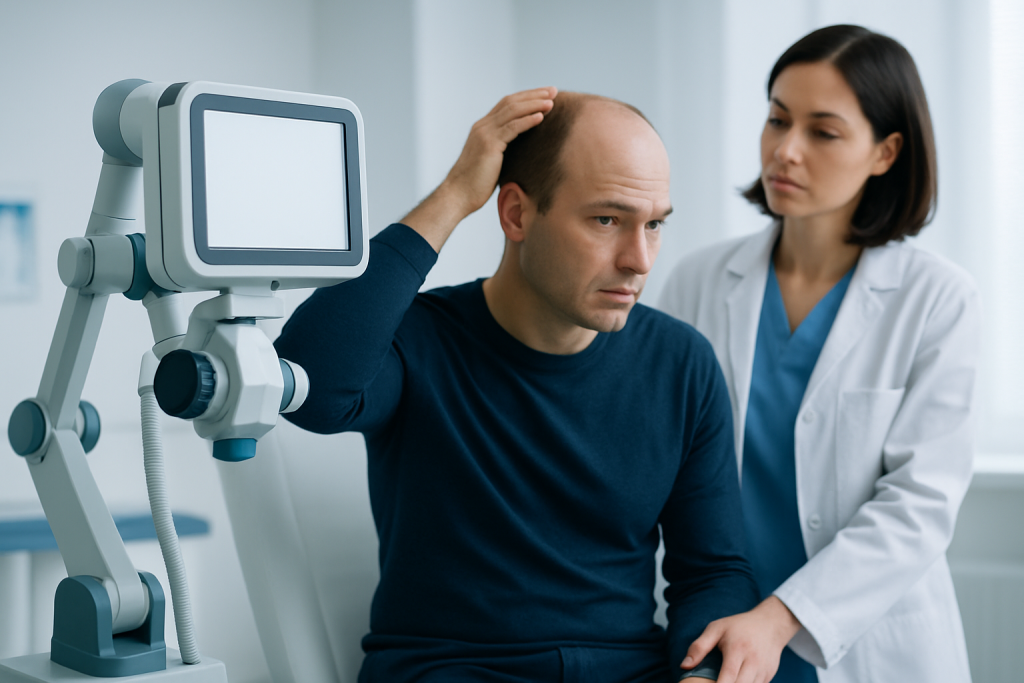
Seborrheic dermatitis on the scalp often causes flaking, greasy or dry scale, redness, and itching. Some people notice white flakes on dark clothing, while others see yellowish, crusted scale that sticks to the scalp. The symptoms may come and go, and flare-ups can be triggered by stress, weather changes, illness, or changes in skin care routines.
Hair shedding may happen for several reasons. The scalp can become irritated enough that hairs loosen more easily, and scratching can physically break hairs or pull them out before they are ready to shed. Inflammation around the hair shaft may also make the scalp feel tender or sensitive, which can lead to more touching and more irritation.
It is helpful to distinguish shedding from scarring loss. In seborrheic dermatitis, the hair follicles are usually still intact, so the hair can often regrow once the skin condition improves. Patchy areas of complete loss, smooth bald spots, pain, or pus are not typical and should prompt medical assessment.
- Common scalp symptoms: flaking, itching, redness, and oily or crusted scale
- Possible hair-related symptoms: increased shedding, broken hairs, and temporary thinning
- Less typical findings: scarring, sharply defined bald patches, or drainage
Causes & Risk Factors

Seborrheic dermatitis is thought to result from a combination of factors rather than a single cause. A natural yeast called Malassezia, which lives on the skin in many people, appears to play a role in triggering inflammation in susceptible individuals. The skin’s barrier, immune response, and oil production also seem to influence how active the condition becomes.
Several factors can make flares more likely. These include oily skin, stress, fatigue, cold or dry weather, certain neurologic conditions, and some medical illnesses that affect the immune system. Seborrheic dermatitis is not caused by poor hygiene, although infrequent washing can sometimes allow scale and oil to build up and make symptoms look worse.
Hair shedding is more likely when the scalp is frequently inflamed or scratched. However, if hair loss is substantial, a clinician will often consider other contributors such as telogen effluvium, androgenetic alopecia, psoriasis, fungal infection, thyroid problems, nutritional deficiencies, or autoimmune hair loss. In other words, seborrheic dermatitis may be part of the picture, but it is not always the whole explanation.
Diagnosis
Diagnosis usually begins with a medical history and a close look at the skin and scalp. A clinician will ask about itching, flaking, how long symptoms have been present, whether other areas of the body are involved, and whether hair loss is diffuse or patchy. The pattern of scale and inflammation often gives strong clues.
Most people do not need complex testing for seborrheic dermatitis. When the appearance is typical, the diagnosis is usually clinical. If the scalp findings are unclear, or if hair loss seems out of proportion to the skin symptoms, a doctor may suggest additional tests to rule out other causes. These may include a scalp exam with magnification, a scraping or culture if fungal infection is suspected, or blood tests when an internal cause of shedding is possible.
This step matters before treatment is chosen, especially for patients travelling internationally for care. A precise diagnosis avoids treating the wrong problem and helps create a practical plan for medications, hair care, and follow-up once the patient returns home.
Treatment Options
Treatment aims to calm inflammation, reduce scale, and control yeast overgrowth on the scalp. Medicated shampoos are commonly used and may include ingredients such as ketoconazole, selenium sulfide, zinc pyrithione, salicylic acid, or tar-based formulations. A doctor may recommend rotating products or using them on a schedule that fits the severity of symptoms.
For more irritated flares, a clinician may prescribe an anti-inflammatory scalp treatment, often for short-term use. In some cases, antifungal creams or lotions are added for areas beyond the scalp. The exact plan depends on where the rash appears, how sensitive the skin is, and whether the patient has other conditions affecting the scalp.
Hair loss related to seborrheic dermatitis is usually treated indirectly by controlling the scalp disease. Once itching and inflammation improve, shedding often slows and regrowth can follow over time. If another hair-loss condition is present, treatment may need to address both problems together.
People planning treatment abroad may benefit from a coordinated approach that includes dermatology review, scalp examination, and advice for ongoing care after travel. Acibadem Health Point’s multidisciplinary specialists and JCI-accredited hospitals diagnose and treat seborrheic dermatitis for international patients, with attention to both symptom control and continuity of care.
Prevention & Self-care
Daily habits can make a meaningful difference, especially when scalp symptoms are mild to moderate. Gentle, regular cleansing helps remove excess scale and oil without stripping the skin. Many people do best when they avoid harsh styling products, overly hot water, and aggressive brushing or scratching.
Because scratching can worsen inflammation and contribute to hair breakage, keeping nails short and using the fingertips rather than the nails when applying shampoo may help. It can also be useful to let medicated shampoos sit on the scalp for the recommended time before rinsing, since contact time often matters more than frequency alone.
Stress management, adequate sleep, and noticing flare triggers can also be helpful. Some patients find that flares worsen during seasonal changes or after illness, so it is reasonable to discuss a maintenance plan with a doctor rather than waiting until symptoms become severe. If hair is shedding, a gentle routine is usually better than frequent product changes, heat styling, or tight hairstyles that add traction.
- Use a mild, fragrance-free shampoo between medicated washes if advised
- Avoid scratching, picking, and heavy scalp oils unless specifically recommended
- Choose loose hairstyles that do not pull on the roots
- Track flare-ups to identify triggers and treatment response
When to See a Doctor
A doctor should evaluate the scalp if flaking and itching are persistent, if symptoms are spreading beyond the scalp, or if over-the-counter shampoos are not helping. Medical review is also important when hair loss is becoming noticeable, because the cause may not be seborrheic dermatitis alone.
Prompt assessment is especially wise if hair loss is patchy, the scalp is painful, there are crusts or pus, or the skin looks smooth and scarred. These features may point to another condition that needs different treatment. Even when the concern is cosmetic, an early visit can prevent a longer period of shedding and uncertainty.
People who plan to travel for specialty care may want to bring photos of flare-ups, a list of products already tried, and information about how long the shedding has been going on. That preparation helps the clinician compare patterns over time and build a more accurate plan.
With the right diagnosis, seborrheic dermatitis is usually manageable, and the hair outcome is often reassuring. The main goal is to settle the scalp inflammation early enough that hair can recover without ongoing irritation.
Related Questions Patients Often Ask
One common question is whether dandruff and seborrheic dermatitis are the same. They overlap, but seborrheic dermatitis is usually more inflamed and can extend beyond simple flaking. Dandruff is often considered a milder form on the same spectrum, though a doctor may use the terms differently depending on the case.
Another frequent concern is whether hair will grow back. In many people, yes, because the follicles are not permanently damaged. Regrowth may take time, especially if the scalp has been irritated for weeks or months, and it can be slower if another hair-loss condition is present at the same time.
Patients also ask whether shampooing worsens the condition. In general, the opposite is true when the right products are used. Gentle, regular washing with a suitable medicated shampoo often helps reduce scale and make the scalp less inflamed, which can indirectly support healthier hair.
Outlook
For most people, seborrheic dermatitis is a recurring but manageable skin condition. Hair loss linked to it is usually temporary and related to inflammation, scratching, or breakage rather than permanent follicle damage. The outlook becomes more reassuring when symptoms are recognized early and treatment is used consistently.
If hair thinning continues after the scalp has calmed down, the next step is to look for another cause rather than assuming it is still only seborrheic dermatitis. That approach is especially important for patients who are travelling or seeking specialist care across borders, because a broader evaluation can prevent delays in treatment.
With the right plan, many patients can reduce flares, protect the scalp, and regain confidence in how their hair looks and feels. A qualified doctor can help confirm the diagnosis and tailor care to the individual’s pattern of symptoms.
Frequently asked questions
01Will seborrheic dermatitis cause hair loss permanently?
Usually, no. Seborrheic dermatitis more often causes temporary shedding or breakage related to inflammation and scratching. Permanent loss is uncommon unless another scalp condition is also present.
02Why does hair fall out when the scalp is itchy and flaky?
Inflamed skin can make hairs loosen more easily, and repeated scratching can break or pull out hairs. The follicles are usually still alive, so the hair often improves once the scalp is treated.
03Can medicated shampoos help with hair shedding?
They can help indirectly by calming the scalp inflammation that contributes to shedding. The most useful product depends on the person’s symptoms, skin sensitivity, and how severe the flare is.
04How can someone tell if the hair loss is from something else?
Patchy bald spots, pain, scarring, pus, or rapid thinning are not classic features of seborrheic dermatitis alone. A doctor may look for fungal infection, psoriasis, telogen effluvium, autoimmune hair loss, or other causes.
05Is it okay to wash hair more often when seborrheic dermatitis flares?
Often, yes, if a gentle routine is used and the scalp tolerates it. Many people actually do better with regular cleansing, especially when medicated shampoo is part of the plan.
06When should a person see a dermatologist?
A dermatologist should be seen if symptoms are persistent, treatments are not working, or hair loss is becoming noticeable. Medical review is also important if the scalp is painful, scarring, or draining.
This article is for general information only and is not a substitute for professional medical advice. Please consult a qualified doctor about your individual situation.
Hair transplant in Turkey — costs, graft counts & a free assessment
JCI-accredited · board-certified surgeons · reply within 24h
Add us as a Preferred Source to see more of our trusted health content across Google Search, AI Overviews and Discover.