What Is Doxycycline Hair Loss? A Complete Medical Guide

Key Takeaways
- Doxycycline-related hair shedding is uncommon and is often temporary.
- Hair loss during treatment may be due to telogen effluvium, illness, stress, or another medication rather than doxycycline alone.
- A doctor can review timing, symptoms, and other medicines to help find the real cause.
- Stopping doxycycline should only be done after speaking with the prescribing clinician.
- Hair usually improves once the trigger is addressed, but regrowth can take several months.
Doxycycline hair loss usually refers to temporary hair shedding that may happen while taking doxycycline or soon after a course ends. It is not common, and other causes of shedding often need to be considered before doxycycline is blamed.
Overview
When people search for doxycycline hair loss, they are usually asking whether this antibiotic can make hair thin, shed, or stop growing normally. The short answer is that hair loss is not a common doxycycline side effect, but it can appear around the same time for reasons that are easy to confuse with the medicine itself.
Doxycycline is a tetracycline antibiotic used for a range of infections and inflammatory skin conditions. If hair shedding starts while someone is taking it, doctors often look at the bigger picture: the underlying illness, recent fever, weight loss, stress, changes in nutrition, and other medicines can all affect the hair cycle.
Hair growth happens in phases, and many factors can push a larger number of hairs into the resting phase at once. This pattern, called telogen effluvium, is one of the most common explanations for sudden, diffuse shedding. It can be unsettling, but it is often reversible once the trigger is identified and managed.
For international patients who are trying to decide whether the shedding is medication-related, a structured medical review is helpful. A dermatologist can examine the scalp, review the treatment timeline, and separate temporary shedding from conditions that need long-term care.
Symptoms
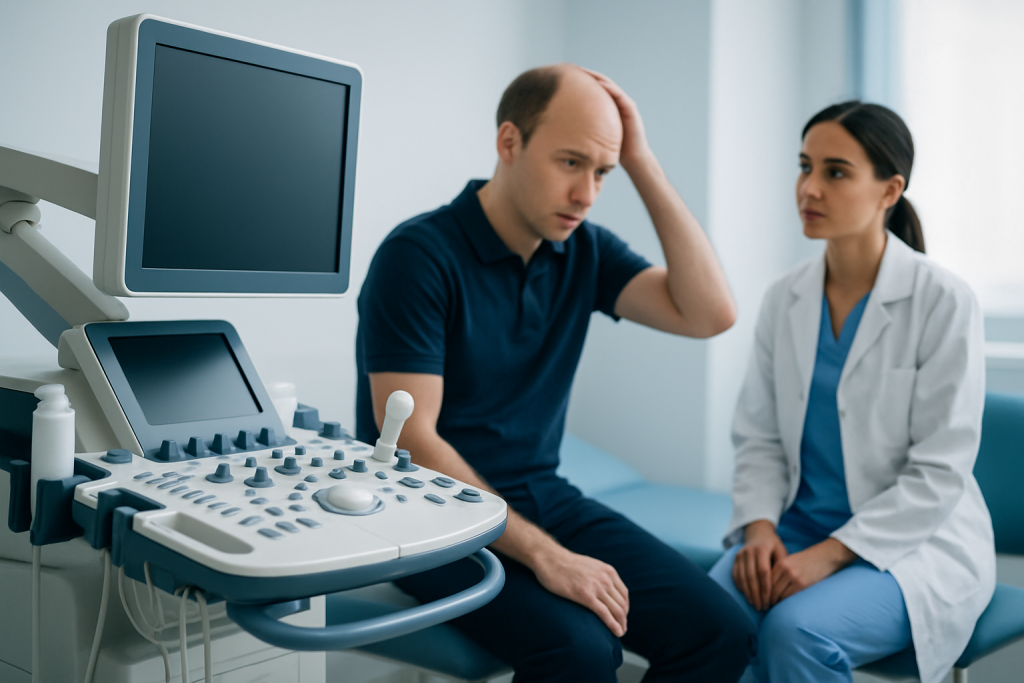
Medication-related hair loss usually looks like generalized shedding rather than bald patches. A person may notice extra hair on the pillow, in the shower drain, on a brush, or in the hands after styling. The hair may feel thinner overall, even if the scalp still looks normal.
In many cases, the shedding begins several weeks to a few months after a trigger, not immediately. That timing matters because patients often connect the change to the most recent medicine they remember, while the true trigger may have started earlier.
Signs that suggest something more than ordinary shedding include:
- Patchy hair loss with clear borders
- Itching, scaling, redness, or pain on the scalp
- Broken hairs rather than hairs shedding from the root
- Eyebrow, eyelash, or body hair loss
- Fatigue, weight change, menstrual changes, or other whole-body symptoms
These features can point to other causes such as alopecia areata, thyroid disease, iron deficiency, or a scalp disorder. A careful exam helps determine whether doxycycline is relevant or simply present at the same time.
Causes & Risk Factors

Doxycycline itself is not a frequent cause of hair loss, but there are several ways a person taking it may experience shedding. In some people, an antibiotic is started during an illness that already places stress on the body. In others, a skin condition, infection, or inflammatory disease may be the real driver of the hair change.
Possible reasons hair loss may be noticed around doxycycline treatment include:
- Telogen effluvium: A temporary shift of hairs into the shedding phase after illness, fever, surgery, emotional stress, or medication changes
- Underlying condition: Acne, rosacea, infection, or another inflammatory problem that affects the body more broadly
- Nutrition or weight changes: Reduced intake, low protein intake, or deficiencies such as iron
- Other medicines: Hair shedding may be linked to another prescription or over-the-counter product
- Individual sensitivity: Rare, idiosyncratic reactions can happen with many medicines
Risk is not the same for everyone. People with a recent major illness, pregnancy, significant stress, restrictive diets, thyroid problems, or a history of hair shedding may be more likely to notice a change during or after treatment. Because hair loss often has multiple contributors, the best approach is to look for the full pattern rather than a single suspect.
Diagnosis
Diagnosing doxycycline hair loss begins with a timeline. A doctor will usually ask when the medicine was started, when shedding began, whether the dose changed, and whether any other medicines or health events occurred around the same time. This history is often the most useful part of the evaluation.
The scalp examination helps determine whether the issue is diffuse shedding, pattern thinning, patchy loss, or inflammation. A dermatologist may gently test hair pull, look for broken hairs, examine the scalp under magnification, or check for signs of dandruff, scarring, or infection.
Depending on the findings, tests may be ordered to look for common contributors such as iron deficiency, thyroid imbalance, or vitamin deficiencies. In some cases, a skin biopsy is considered if the diagnosis is unclear or if scarring hair loss is suspected.
For patients traveling from another country, bringing a complete medication list and approximate dates of symptom changes can make the visit more efficient. Photographs from before the shedding began are also useful, because hair loss is sometimes easier to assess when there is a comparison.
Treatment Options
Treatment depends on what is actually causing the hair loss. If doxycycline is strongly suspected, the prescribing doctor may decide whether the antibiotic should be continued, changed, or stopped. This decision should not be made alone, especially if the medicine is treating an active infection.
If the shedding is part of telogen effluvium, the main treatment is removing or correcting the trigger and allowing the hair cycle to reset. In many patients, this means treating the illness, improving nutrition, reducing physiologic stress where possible, and monitoring the scalp over time. Regrowth is usually gradual, so early reassurance and follow-up are important.
When another diagnosis is found, treatment targets that condition directly. Examples include iron replacement for deficiency, thyroid treatment for hormonal imbalance, or specific therapies for alopecia areata or inflammatory scalp disease. If topical or oral hair treatments are considered, they should be guided by a clinician who understands the patient’s full health picture.
Supportive care often includes gentle hair handling, avoiding tight hairstyles, minimizing heat and chemical stress, and using mild cleansing products. These measures do not cure the cause, but they can reduce breakage while the scalp recovers.
Prevention & Self-care
There is no guaranteed way to prevent every episode of hair shedding, but a few practical habits may reduce the chance that a temporary problem becomes more distressing. Before starting doxycycline, it helps to tell the prescribing clinician about any prior hair loss, nutritional concerns, thyroid disease, autoimmune illness, or recent major stressors.
While taking the medicine, patients can watch for new diffuse shedding and note the date it began. Keeping a simple record of medications, illnesses, appetite changes, and menstrual changes can help a doctor see patterns that are easy to miss from memory alone.
Helpful self-care steps include:
- Eating regular, balanced meals with adequate protein
- Avoiding harsh bleaching, tight braids, and frequent high-heat styling
- Using gentle shampoo and detangling carefully
- Managing stress and sleep as realistically as possible
- Following the prescription exactly unless a clinician advises otherwise
Patients who are receiving care from another country may find it useful to schedule follow-up before they travel home, especially if the hair loss is ongoing. A plan for review makes it easier to decide whether the shedding is improving or whether further testing is needed.
When to See a Doctor
A doctor should be contacted if hair loss is sudden, extensive, or accompanied by scalp pain, redness, scaling, or patchy bald areas. Medical review is also important if the person has symptoms that point to anemia, thyroid disease, infection, or another systemic problem.
It is especially important not to stop doxycycline on one’s own if it is being used for an infection or an inflammatory condition that could worsen without treatment. A clinician can weigh the benefits and risks and decide whether a different antibiotic or another therapy is more appropriate.
Prompt assessment is also sensible when shedding continues for several months, when eyebrows or eyelashes are involved, or when the diagnosis is uncertain. In complex cases, multidisciplinary care can be valuable; Acibadem Health Point’s specialists and JCI-accredited hospitals diagnose and treat hair and scalp conditions for international patients in a coordinated setting.
Hair shedding can be emotionally difficult, but it is often manageable once the cause is identified. A careful evaluation usually brings more clarity than trying to infer the cause from timing alone.
Recovery and Outlook
Most people who experience temporary medication-related shedding want to know when their hair will look normal again. The answer depends on the trigger, the person’s overall health, and how quickly the underlying issue is addressed. Even after the cause is corrected, the hair cycle takes time to reset.
In telogen effluvium, shedding often improves first, followed by slow regrowth that may be noticed as shorter, finer hairs along the scalp margin. Full cosmetic recovery can take months, and some people experience a lag between feeling better and seeing visible improvement.
If the hair loss turns out to be from another condition, the outlook depends on that diagnosis and how early treatment begins. The encouraging point is that many causes of diffuse hair loss are treatable, and a clear diagnosis usually reduces uncertainty as well as shedding-related anxiety.
Frequently asked questions
01Can doxycycline directly cause hair loss?
Hair loss is not a common doxycycline side effect, but it can be reported in some people. More often, the shedding is related to the illness being treated, another medicine, stress, or a temporary hair-cycle shift such as telogen effluvium.
02How long after starting doxycycline can hair shedding begin?
If shedding is related to a medication or to a body stressor, it often appears weeks to months later rather than right away. The timing can be confusing, so doctors usually compare the medicine timeline with recent illnesses, diet changes, and other triggers.
03Will the hair grow back after stopping doxycycline?
If doxycycline is the main trigger and the hair follicles are not scarred, regrowth is usually expected. Improvement can be slow, however, and visible recovery may take several months after the trigger is removed or treated.
04Should a person stop doxycycline if they notice shedding?
Not without medical advice. Doxycycline may be treating an infection or inflammatory condition that still needs care, so the prescribing clinician should decide whether to continue, switch, or stop it.
05What tests might a doctor order for hair loss during doxycycline treatment?
A doctor may review medications and order blood tests for common causes such as iron deficiency or thyroid imbalance. If the scalp exam suggests another diagnosis, further testing or a dermatology referral may be needed.
06What can help the scalp while the cause is being investigated?
Gentle hair care, balanced nutrition, and avoiding tight hairstyles or harsh treatments can reduce extra breakage. These steps do not replace medical evaluation, but they can make the hair easier to manage while the condition is being clarified.
This article is for general information only and is not a substitute for professional medical advice. Please consult a qualified doctor about your individual situation.
Hair transplant in Turkey — costs, graft counts & a free assessment
JCI-accredited · board-certified surgeons · reply within 24h
Add us as a Preferred Source to see more of our trusted health content across Google Search, AI Overviews and Discover.