Rash or Poison Ivy: What You Need to Know

Key Takeaways
- Poison ivy rash is an allergic skin reaction, not an infection, and it often appears after contact with plant oils.
- The rash commonly causes itching, redness, swelling, and blisters in a streaky or patchy pattern.
- Washing skin and clothing quickly after exposure can reduce the amount of oil that remains on the body.
- Cool compresses, gentle skin care, and over-the-counter treatments may help relieve symptoms.
- A doctor should evaluate severe, widespread, facial, or infected-looking rashes, or any rash with breathing trouble.
A rash or poison ivy reaction is usually a form of allergic contact dermatitis caused by plant oils, especially urushiol. Knowing the typical pattern, timing, and care steps can help someone manage symptoms safely and decide when medical evaluation is needed.
Overview
When someone asks whether a skin problem is a rash or poison ivy, the most useful clue is often the story of exposure. Poison ivy is a plant-related allergic reaction, usually triggered by an oil called urushiol. That reaction is a type of allergic contact dermatitis, and it can look dramatic even when it is not dangerous.
The rash often begins after the skin touches the plant directly, but it can also appear after touching contaminated clothing, tools, pet fur, or outdoor gear. It tends to be very itchy, red, and sometimes blistered. The reaction itself is not contagious, although the oil can spread before it is washed off.
For travelers, hikers, gardeners, and families spending time outdoors, it helps to know that poison ivy, poison oak, and poison sumac can all cause similar reactions. A person does not need to have a large exposure to develop symptoms; some people are highly sensitive, while others react less strongly.
Symptoms
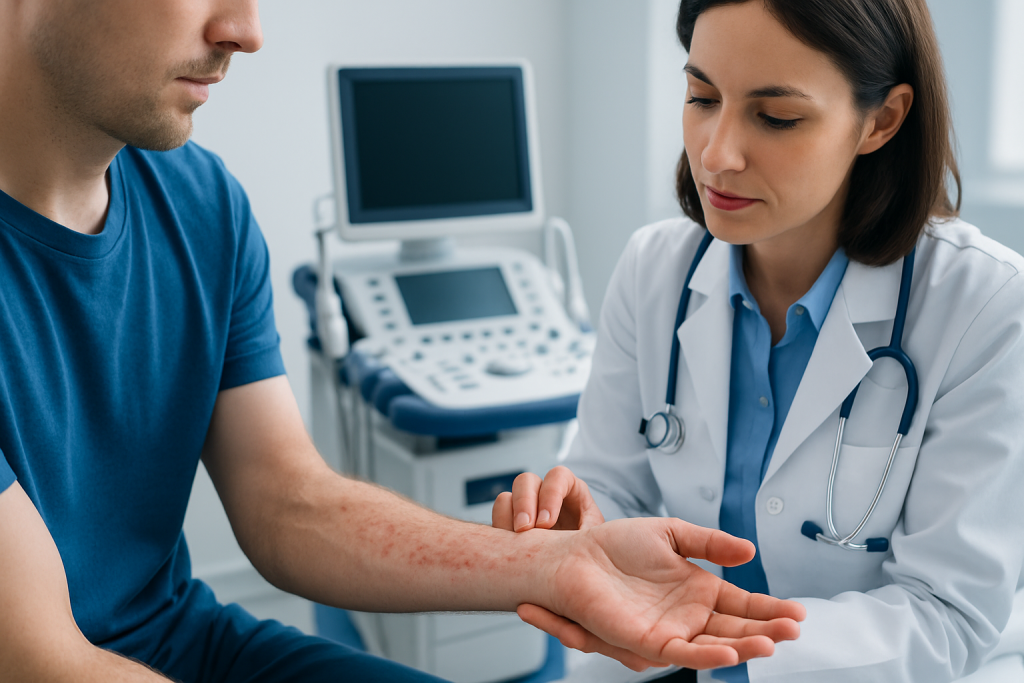
Poison ivy rash usually starts with itching, then redness and mild swelling. Small bumps or fluid-filled blisters may follow, and the rash often appears in lines or streaks where the plant brushed against the skin. The pattern can be a useful clue because it often mirrors the way the oil touched the body.
Common symptoms include:
- Intense itching
- Red or pink patches
- Swelling
- Blisters that may ooze or crust
- Tenderness or a burning feeling
Symptoms may show up within hours or take a few days to appear, depending on past exposure and sensitivity. A rash may also spread over time if more oil remains on the skin or on contaminated items. The rash does not spread from one person to another through the fluid inside the blisters.
Causes & Risk Factors

The main cause is urushiol, an oil found in poison ivy, poison oak, and poison sumac. When the oil touches the skin, the immune system recognizes it as a trigger and creates an inflammatory response. This response is what causes the itch, redness, and blistering.
Risk is higher for people who spend time outdoors, work in landscaping, forestry, construction, or park maintenance, or care for children and pets after outdoor play. The risk also rises when people unknowingly touch contaminated objects, since the oil can remain on clothing, shoes, gloves, tools, camping equipment, and pet coats.
Some people are more sensitive than others, but repeated contact can lead to stronger reactions over time. Heat, sweating, and friction may make the skin feel worse, though they do not cause the reaction on their own. A history of eczema or very sensitive skin may also make the rash feel more irritating.
Diagnosis
Most of the time, a clinician can diagnose poison ivy by asking about recent outdoor exposure and examining the rash pattern. The combination of intense itch, linear streaks, and a history of contact with plants or contaminated items often points to the answer.
Testing is not usually needed for a straightforward case. If the rash is unusual, keeps returning, or does not improve as expected, a doctor may consider other causes such as other forms of contact dermatitis, eczema, insect bites, scabies, fungal infection, or a viral rash.
People who travel internationally for care often benefit from bringing photos of the rash at its worst, a list of recent products used on the skin, and notes about possible exposures. These details can help the medical team distinguish poison ivy from other skin conditions and guide the safest treatment plan.
Treatment Options
Treatment focuses on easing symptoms while the skin heals. The first step, if exposure is recent, is to wash the skin with lukewarm water and mild soap as soon as possible. Clothing, shoes, tools, and other items that may carry urushiol should also be cleaned carefully to reduce repeat exposure.
For symptom relief, a clinician may recommend soothing measures such as cool compresses, calamine lotion, colloidal oatmeal baths, or gentle, fragrance-free moisturizers. Over-the-counter options can help some people, but they should be used according to package directions and with care on sensitive or broken skin.
In more significant reactions, especially when the rash is widespread or affects the face or genitals, a doctor may prescribe stronger anti-inflammatory treatment. If the skin becomes infected from scratching, treatment may also need to address that problem. In all cases, treatment should be individualized, since the right approach depends on age, medical history, and the extent of the rash.
Prevention & Self-care
Prevention starts with learning to recognize poison ivy and avoiding direct contact with unfamiliar plants in wooded, grassy, or overgrown areas. Long sleeves, pants, gloves, and closed shoes can reduce skin exposure during outdoor work or recreation, though clothing should be washed afterward if exposure is possible.
Useful self-care steps include:
- Wash exposed skin promptly after suspected contact
- Clean under fingernails, where plant oil can hide
- Wash clothing, towels, and gear separately if needed
- Keep nails short to reduce skin damage from scratching
- Use cool compresses instead of hot water, which may worsen itching
If someone is traveling for care or recovering away from home, it is wise to bring any prescribed medicines, keep skin care products simple, and avoid trying several new creams at once. A calm, consistent routine often helps the skin settle more comfortably.
When to See a Doctor
Medical evaluation is important if the rash is severe, widespread, or not improving after several days of home care. A doctor should also be seen if the rash affects the face, eyes, mouth, or genitals, or if it is making it hard to sleep, eat, or function comfortably.
Other reasons to seek care include signs of infection such as increasing pain, warmth, pus, or fever, as well as blistering that covers a large area. Any trouble breathing, swelling of the lips or tongue, or rapid worsening should be treated urgently.
For international patients, a dermatology or primary care consultation can help confirm the cause and prevent unnecessary treatments. Acibadem Health Point’s multidisciplinary specialists and JCI-accredited hospitals diagnose and treat skin conditions like poison ivy rash for international patients, with care plans tailored to the individual’s symptoms and travel needs.
Living With the Rash: What Recovery Usually Looks Like
Most poison ivy rashes improve gradually as the skin calms and the immune reaction settles. The itching can linger even after the redness begins to fade, which may tempt a person to scratch more than they should. Keeping the skin cool and protected usually makes this period easier.
Recovery time depends on the amount of exposure and the intensity of the reaction. Some rashes settle in a couple of weeks, while stronger reactions may take longer. If new lesions continue to appear, that can mean the skin is still encountering urushiol from an unwashed object or contaminated surface.
When healing is underway, the goal is to avoid reopening the skin and to keep the area clean and comfortable. If the rash is repeatedly triggered by outdoor activities, a clinician may also discuss prevention strategies that fit the person’s routine, work, and travel plans.
Frequently asked questions
01How can someone tell if a rash is poison ivy?
Poison ivy often causes an itchy red rash with streaks or patches where the plant brushed the skin. Blisters may also appear, especially after a clear outdoor exposure. If the cause is uncertain, a clinician can help rule out other rashes that look similar.
02Is poison ivy rash contagious?
The rash itself is not contagious and cannot spread from one person to another. However, the plant oil can spread from skin, clothing, tools, or pets before it is washed off. Once the oil is removed, the rash cannot be “caught” from the blisters.
03How soon does poison ivy rash appear?
Symptoms often begin within hours to a few days after exposure. People who have been sensitized before may react more quickly. The timing can vary, so a delayed rash does not rule it out.
04What helps poison ivy itch at home?
Cool compresses, gentle cleansing, calamine lotion, and colloidal oatmeal baths may help some people feel better. Scratching should be avoided because it can irritate the skin and raise the risk of infection. If symptoms are strong, a doctor can suggest the most appropriate treatment.
05Can poison ivy go away on its own?
Yes, many cases improve over time as the immune reaction settles. The skin may still need several days to weeks to heal fully. If the rash is severe, widespread, or near sensitive areas, medical care is a good idea.
06When is a rash more than poison ivy?
A rash may be something else if it has no exposure history, appears in an unusual pattern, or comes with fever, significant pain, or other body symptoms. In those situations, a clinician may consider eczema, infection, insect bites, or other causes. An examination helps identify the right treatment.
This article is for general information only and is not a substitute for professional medical advice. Please consult a qualified doctor about your individual situation.
Explore treatments in Turkey — costs, top hospitals & a free quote
JCI-accredited · board-certified surgeons · reply within 24h
Add us as a Preferred Source to see more of our trusted health content across Google Search, AI Overviews and Discover.