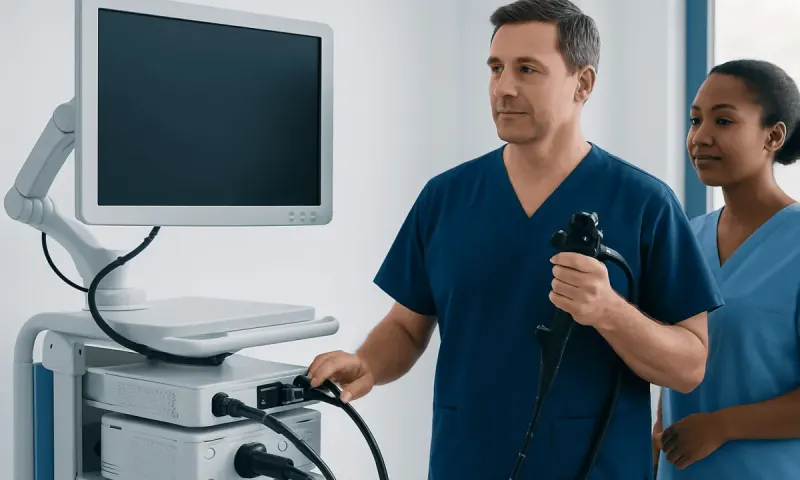
Who May Benefit From Prostate HIFU Treatment?

Prostate high-intensity focused ultrasound (HIFU) is a minimally invasive treatment that uses focused sound-wave energy to destroy prostate tissue containing cancer. It may be an option for carefully selected people with localized prostate cancer, but suitability depends on cancer features, prostate anatomy, imaging results, overall health and personal treatment priorities.
Overview: What Is Prostate HIFU?
High-intensity focused ultrasound, usually called HIFU, is a treatment that uses precisely directed ultrasound energy to heat and destroy prostate tissue. A specialist places an ultrasound probe in the rectum while the person is under anesthesia. The device delivers energy to planned areas of the prostate, without a surgical incision.
HIFU can be used as whole-gland treatment, meaning most or all of the prostate is treated, or as focal therapy. Focal HIFU aims to treat the area containing clinically significant cancer while preserving as much healthy prostate tissue as possible. This approach is intended to balance cancer control with protection of urinary and sexual function where appropriate.
HIFU is not automatically the best treatment for every localized prostate cancer. Standard management options may include active surveillance, surgery, external-beam radiation therapy and brachytherapy. A discussion with a urologist and prostate cancer multidisciplinary team can help a person understand which options are appropriate for their individual diagnosis.
Who May Be a Good Candidate?
The best candidates for prostate HIFU are people whose cancer appears confined to the prostate. In many cases, the cancer is visible on multiparametric magnetic resonance imaging (MRI) and can be matched to biopsy findings. This helps the treatment team identify the exact area to target and assess whether focal therapy is technically realistic.
HIFU may be considered for selected people with low- to intermediate-risk disease, especially when there is a dominant area of clinically significant cancer and limited cancer elsewhere in the gland. Some people with carefully assessed higher-risk features may also be evaluated, but they may be more likely to benefit from established whole-gland treatment or combined treatment approaches.
Good candidacy also involves prostate size and shape, the location of the cancer, urinary symptoms, prior prostate procedures, general health and ability to attend close follow-up. Cancer close to structures that cannot safely receive the required energy, or cancer spread beyond the prostate, may make HIFU less suitable.
- Localized cancer confirmed through staging tests
- High-quality MRI that identifies the cancer location
- Biopsy findings that match the MRI and show the grade and extent of cancer
- A prostate anatomy that can be reached and treated safely
- Understanding and acceptance of the need for long-term monitoring
Who May Not Be a Suitable Candidate?

HIFU is generally not used as the only treatment when prostate cancer has spread to lymph nodes, bones or other organs. It may also be less appropriate if there is clear cancer extension outside the prostate, involvement of the seminal vesicles, or a cancer pattern that is widespread throughout the gland. In these situations, local treatment alone may not provide adequate cancer control.
Some prostate features can make treatment more difficult. A very large prostate, extensive calcifications that block ultrasound energy, or a shape that prevents the ultrasound probe from reaching the planned treatment zone may require another strategy. Significant urinary obstruction may also need assessment and management before focal therapy is considered.
Prior Cancer Radiation Treatment: Options and Outlook" class="ahp-ilk">radiation treatment, surgery or procedures involving the rectum and prostate can affect the safety and expected outcomes of HIFU. HIFU may sometimes be considered after radiation recurrence in highly selected circumstances, but this is a more complex situation with a different risk profile. A specialist should assess such cases at an experienced center.
Tests Used to Assess Candidacy
Choosing HIFU begins with a careful prostate cancer assessment rather than a single test. The care team reviews the prostate-specific antigen (PSA) level and its pattern over time, digital rectal examination findings, biopsy grade group, number of positive biopsy samples and the amount of cancer in each sample. These details help estimate how likely the cancer is to behave aggressively.
Multiparametric MRI is particularly important for focal HIFU planning. It provides detailed images of the prostate and may show whether the cancer is localized, its position within the gland and whether there are suspicious areas not captured by an earlier biopsy. MRI findings are usually combined with targeted and systematic biopsy results because imaging alone cannot confirm all cancer features.
Depending on the risk level, staging may also include advanced imaging such as PSMA PET/CT, computed tomography or bone scanning. The aim is to exclude disease outside the prostate when clinically indicated. The team also discusses baseline urinary, bowel and sexual function, since these can influence both treatment choices and recovery expectations.
What Happens During and After HIFU?
HIFU is performed under general or spinal anesthesia. Using real-time ultrasound guidance and treatment-planning software, the specialist maps the prostate and directs energy to the selected treatment area. The procedure duration varies with the size of the treatment zone and whether focal or whole-gland therapy is planned.
A urinary catheter is commonly placed after treatment because temporary swelling can make it difficult to pass urine. It may remain in place for several days, depending on the procedure and the individual’s recovery. Mild discomfort, blood in the urine or semen, urgency, frequency and temporary urinary difficulty can occur during the healing period.
Follow-up is a central part of HIFU care. PSA levels are checked at scheduled intervals, but PSA does not usually fall to zero after focal treatment because untreated prostate tissue remains. MRI and, in many programs, repeat biopsy are used to look for persistent or recurrent clinically significant cancer. If cancer is found later, further focal treatment, surgery, radiation or other management may be considered.
Benefits, Limits and Possible Side Effects
A potential benefit of focal HIFU is that it treats a defined cancer area while leaving some prostate tissue untreated. For appropriate candidates, this may lower the likelihood of certain side effects compared with removing or irradiating the entire prostate. Preserving urinary continence and erectile function is an important goal, although individual outcomes vary and cannot be guaranteed.
Possible complications include urinary infection, urinary retention, temporary worsening of urinary symptoms, narrowing of the urethra, erectile dysfunction and, less commonly, urinary leakage. Bowel injury and an abnormal connection between the urinary tract and rectum are uncommon but serious complications. Risks may be affected by the treatment area, prostate anatomy, prior procedures and the person’s baseline health.
The main limitation of focal therapy is that prostate cancer can be multifocal, meaning more than one area may contain cancer. Small areas may not be visible on imaging or may be missed by biopsy. For this reason, HIFU requires structured surveillance and a clear plan should additional treatment be needed. It is reasonable to ask how the care team defines treatment success, how follow-up is arranged and what options are available if cancer remains or returns.
Making a Treatment Decision
A treatment decision should consider more than the cancer grade alone. Age, life expectancy, other medical conditions, urinary and sexual function, family history, genetic findings when relevant and personal priorities all matter. Some people with low-risk cancer may be better served by active surveillance, which uses regular testing to monitor cancer and avoid immediate treatment unless there are signs of progression.
For people who need treatment, surgery and radiation have long-term evidence for cancer control in localized prostate cancer. HIFU may be a suitable option in selected circumstances, but its role and follow-up approach should be discussed openly. Asking for review by a multidisciplinary team and considering a second opinion can support an informed decision.
At Acıbadem Health Point, multidisciplinary specialists and JCI-accredited hospitals assess and treat prostate cancer for international patients, including evaluation for appropriate minimally invasive treatment options. A person should bring pathology reports, PSA history, MRI images and prior treatment records to the consultation whenever possible.
Frequently asked questions
01Is HIFU a cure for localized prostate cancer?
HIFU can destroy treated prostate cancer tissue and may provide cancer control for appropriately selected people. However, no treatment can guarantee a cure, and cancer can persist or recur in the treated or untreated prostate tissue. Ongoing PSA tests, MRI and sometimes biopsy are therefore important.
02Is prostate HIFU better than surgery or radiation?
There is no single best treatment for everyone. HIFU may offer a less invasive option and may help preserve function in selected patients, while surgery and radiation have extensive long-term evidence for localized prostate cancer. The most suitable choice depends on cancer risk, imaging and biopsy findings, anatomy and personal preferences.
03Can HIFU treat cancer that has spread outside the prostate?
HIFU targets the prostate, so it is usually not used alone for cancer that has spread beyond it. People with lymph node involvement, bone metastases or other distant spread often need systemic treatment and may need radiation or other approaches. A staging assessment helps guide treatment planning.
04Will HIFU affect erections or urinary control?
HIFU can affect erectile function and urinary control, although focal treatment may reduce these risks compared with whole-gland treatment for some people. Baseline sexual and urinary function, the location of cancer and the amount of prostate treated all influence outcomes. The treating specialist can explain the likely risks in an individual case.
05How is follow-up performed after focal HIFU?
Follow-up typically includes PSA blood tests at regular intervals, along with clinical review and MRI at planned times. Because PSA remains detectable after focal treatment, changes are interpreted in context rather than by one value alone. Many care teams also recommend a repeat biopsy to confirm treatment response and check untreated prostate areas.
06Can HIFU be repeated if prostate cancer returns?
In some cases, HIFU can be repeated for cancer found in or near a previously treated area. Other options, including surgery, radiation or systemic treatment, may also be considered depending on the location and extent of recurrence. The decision should be made after updated imaging, biopsy when needed and specialist review.
This article is for general information only and is not a substitute for professional medical advice. Please consult a qualified doctor about your individual situation.
Oncology care in Turkey — second opinion and treatment plan
JCI-accredited · board-certified surgeons · reply within 24h
Add us as a Preferred Source to see more of our trusted health content across Google Search, AI Overviews and Discover.