White Spot on Eyeball: What You Need to Know

Key Takeaways
- A white spot on the eyeball may involve the cornea, conjunctiva, or a deeper part of the eye, and the cause can vary widely.
- Common reasons include corneal scars, infections, inflammation, and certain growths or deposits on the eye surface.
- Any spot with pain, redness, light sensitivity, discharge, or vision changes should be checked by an eye doctor.
- Diagnosis usually starts with an eye examination and may include a slit-lamp exam, eye pressure check, or imaging.
- Treatment depends on the cause and can range from simple monitoring to medicines or procedures.
- Early evaluation is especially important if the person wears contact lenses, has had eye trauma, or is traveling for care and follow-up.
A white spot on the eyeball can come from several different eye conditions, some mild and some that need prompt treatment. Knowing where the spot is, whether it affects vision, and whether there is pain or redness helps guide the next step.
Overview
A white spot on the eyeball is a descriptive finding, not a diagnosis. It may appear on the clear front window of the eye, the white outer coating, or sometimes look white because of a change inside the eye that is visible through the pupil. The meaning depends on the exact location, size, shape, and whether the spot is new or longstanding.
For many people, the first question is simple: is it harmless or something urgent? The answer is that some white spots are minor and stable, while others reflect infection, injury, inflammation, or a corneal problem that deserves timely treatment. A careful eye examination is the safest way to tell the difference.
Because eye symptoms can affect daily life, reading, driving, and work, it helps to think of the spot in context. A person who has no discomfort may need a routine visit, while a person with pain, blurred vision, redness, or light sensitivity should be assessed sooner.
Symptoms and What the Spot May Look Like
A white spot may look like a tiny dot, a cloudy patch, a raised bump, or a milky area on the eye’s surface. Some people notice it in the mirror, while others are told about it by a family member or clinician. The appearance can offer clues, but it does not reliably identify the cause on its own.
Symptoms that may occur alongside a white spot include blurred vision, eye irritation, tearing, redness, discharge, a foreign-body sensation, and sensitivity to light. If the spot is on the cornea, the person may also feel as if something is stuck in the eye or notice that vision is less sharp.
In some cases, a white spot does not cause symptoms at first. Even then, it is worth paying attention to changes over time, especially if the spot enlarges, becomes raised, or starts affecting the way the eye looks or works.
Common Causes and Risk Factors

One of the most common explanations is a corneal scar. The cornea is the clear front layer of the eye, and it can become cloudy or white after infection, injury, inflammation, or a scratched corneal surface that healed with residual haze. Older scars may remain visible long after the original problem has settled.
Another important possibility is an eye infection, especially if there is pain, redness, or discharge. Corneal infections can be caused by bacteria, viruses, fungi, or parasites, and contact lens wear increases the risk when lenses are not cleaned properly or are worn longer than recommended. Infections need prompt attention because the cornea is sensitive and vision can be affected.
Other causes may include conjunctival growths or deposits, such as a pinguecula, pterygium, or calcium-related surface changes. Less commonly, a white appearance can be linked to inflammation inside the eye, cataract-related changes seen through the pupil, or a more serious condition affecting the retina or optic nerve. Risk is higher after eye trauma, with dry eye disease, in people who wear contact lenses, or in those with autoimmune conditions that can cause eye inflammation.
Diagnosis: How Eye Doctors Identify the Cause
Diagnosis usually starts with a detailed history: when the spot appeared, whether it changed, whether there was an injury, and whether the person uses contact lenses or has had eye surgery. The doctor will also ask about pain, discharge, vision changes, recent infections, and any previous eye disease.
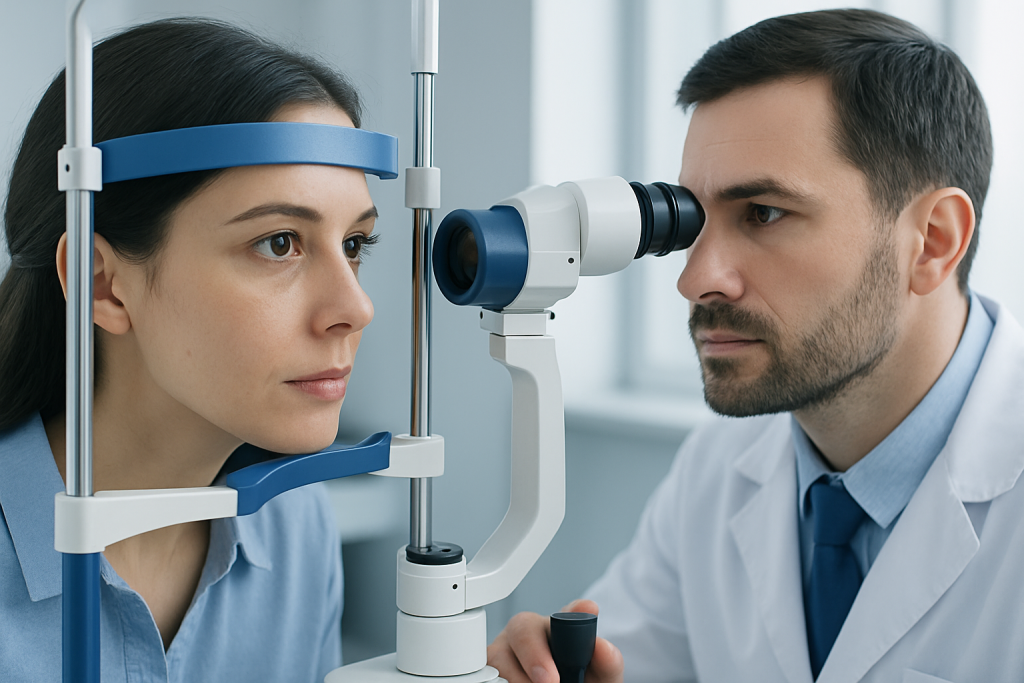
A slit-lamp examination is often the key test. This microscope allows the clinician to inspect the cornea and front of the eye in detail, sometimes after using a special dye that highlights scratches or surface damage. Eye pressure may be checked, and if the spot appears deeper or if vision is affected, additional imaging or dilation may be needed.
For people seeking care across borders, this stage matters because the diagnosis determines what must be treated immediately and what can safely be followed over time. A clear written plan for medications, warning signs, and follow-up timing can make international recovery much smoother.
Treatment Options
Treatment depends entirely on the cause. A stable scar that is not affecting vision may only need observation, while an infection requires targeted medication. Surface irritation or dryness may improve with lubricating drops, treatment of eyelid problems, and avoidance of triggers such as overuse of contact lenses.
If the cause is a corneal infection, treatment may include prescription eye drops or other medicines chosen to match the organism and the severity of the problem. Inflammatory eye disease may require anti-inflammatory treatment under close supervision. Some deposits or growths on the eye surface can be monitored, but if they interfere with vision, cause irritation, or are suspicious in appearance, a procedure may be recommended.
In selected cases, surgery may be considered, such as superficial removal of an abnormal surface lesion or a corneal procedure when scarring significantly affects vision. The best treatment plan is individualized and should be discussed with an eye specialist who can explain expected benefits, risks, and follow-up needs in plain language.
Prevention and Self-care
Not every white spot can be prevented, but several eye-care habits lower the risk of avoidable problems. Contact lens users should clean and replace lenses exactly as instructed, never sleep in lenses unless specifically advised, and stop wearing them if the eye becomes red or painful.
Protecting the eyes from injury is also important. Safety glasses at work, during sports, or during home repairs can reduce the chance of corneal trauma and later scarring. People with dry eyes should not ignore persistent irritation, because chronic surface damage can make the eye more vulnerable to further problems.
Simple self-care may help comfort while waiting for an appointment, but it should not delay assessment when warning signs are present. Avoid rubbing the eye, do not use leftover antibiotic or steroid drops, and do not try to scrape or remove the spot at home.
When to See a Doctor
An eye doctor should evaluate a white spot that is new, enlarging, painful, red, or associated with blurred vision. The same applies if there is light sensitivity, discharge, recent eye injury, or a history of contact lens use with discomfort. These symptoms can point to conditions that improve most safely when treated early.
Urgent care is especially important if vision suddenly worsens, the eye becomes very painful, or the person cannot keep the eye open because of sensitivity. Even a spot that seems small can matter if it sits on the cornea or is linked to infection.
For patients arranging care from another country, a specialist visit before travel may help determine whether the condition needs immediate treatment, routine follow-up, or coordinated monitoring after returning home. Acibadem Health Point’s multidisciplinary specialists and JCI-accredited hospitals diagnose and treat eye conditions for international patients as part of a coordinated care pathway.
Frequently asked questions
01Is a white spot on the eyeball always serious?
No. Some white spots are harmless surface changes or old scars, while others are signs of infection or inflammation. The location of the spot and any symptoms around it are what make the difference.
02Can a white spot on the eye go away on its own?
Some minor surface irritations may improve, but a true white spot caused by scarring, a growth, or infection may not go away without treatment. It is safest to have a clinician identify the cause before assuming it will resolve naturally.
03What if the spot is on the clear part of the eye?
A spot on the cornea deserves careful attention because the cornea is essential for clear vision. Even a small change there can affect sight or signal an infection that needs prompt treatment.
04Can contact lenses cause a white spot on the eyeball?
Yes, contact lens wear can contribute to corneal irritation or infection if lenses are not used correctly. Any contact lens wearer who develops redness, pain, discharge, or a white spot should stop lens use and seek evaluation.
05How do doctors tell whether the spot is a scar or an infection?
They use the eye history and a slit-lamp examination, often with dye to look at the corneal surface. Pain, redness, discharge, and recent onset may suggest infection, while a stable spot after an old injury may suggest a scar.
06Should someone wait to see if the spot gets better?
If the spot is new or comes with vision changes, pain, redness, or light sensitivity, waiting is not recommended. A prompt eye exam helps protect vision and can prevent a small problem from becoming larger.
This article is for general information only and is not a substitute for professional medical advice. Please consult a qualified doctor about your individual situation.
Explore treatments in Turkey — costs, top hospitals & a free quote
JCI-accredited · board-certified surgeons · reply within 24h
Add us as a Preferred Source to see more of our trusted health content across Google Search, AI Overviews and Discover.