

What Is Twisted Ovary? A Complete Medical Guide
- 10 min read
- Published November 27, 2026
Key Takeaways
- A twisted ovary is the same condition as ovarian torsion and needs urgent medical attention.
- Sudden one-sided pelvic pain, nausea, and vomiting are common warning signs.
- It may happen with an ovarian cyst, fertility treatment, pregnancy, or in people with a longer ovarian ligament.
- Ultrasound can suggest the diagnosis, but surgery is often needed to confirm and treat it.
- Fast evaluation matters because delayed treatment can increase the risk of losing the ovary.
A twisted ovary, also called ovarian torsion, happens when the ovary twists around the tissues that support it and can reduce blood flow. It is a medical emergency because prompt treatment helps protect ovarian tissue and relieve sudden pain.
Overview
A twisted ovary, medically called ovarian torsion, occurs when the ovary rotates around the ligaments that hold it in place. That twist can narrow or block the blood vessels that supply the ovary, which is why this condition is treated as an urgent gynecologic problem rather than a routine source of pelvic discomfort.
In practical terms, the issue is not only pain but circulation. When the blood flow is interrupted, the ovary may become swollen and increasingly painful, and tissue damage can develop if the twist is not relieved. For that reason, a person with sudden pelvic pain should not wait for symptoms to “settle” on their own.
The condition can affect any ovary, and it may occur at any age after puberty. It is more likely when the ovary is enlarged, for example because of a cyst or another mass, but it can also happen without an obvious trigger. For Myomectomy Recovery for International Patients: The Usual Travel Timeline" class="ahp-ilk">international patients who are deciding whether symptoms need assessment during travel or soon after arrival, the safest approach is to seek same-day medical evaluation if ovarian torsion is possible.
Symptoms
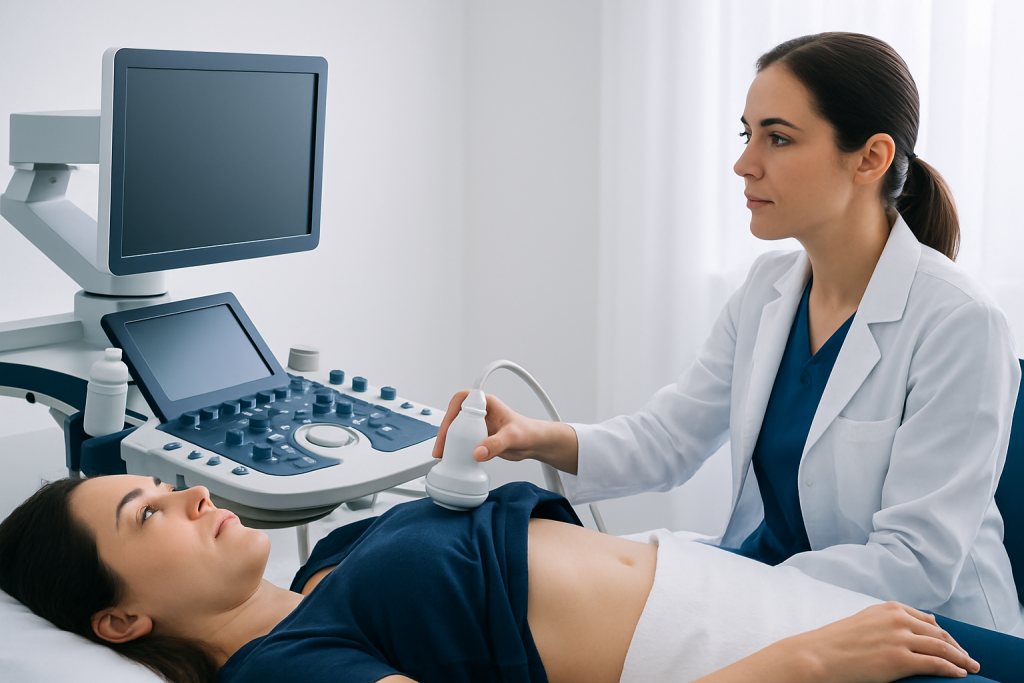
Ovarian torsion often begins with abrupt, one-sided lower abdominal or pelvic pain. The pain may be severe from the start or may build over several hours. Some people describe it as cramping, stabbing, or persistent pressure, and it can spread to the back, flank, or thigh.
Nausea and vomiting are common, especially when pain is intense. The abdomen may feel tender, and movement can worsen the discomfort. Because the symptoms can overlap with other urgent conditions such as appendicitis, kidney stones, ectopic pregnancy, or ruptured ovarian cyst, a medical assessment is important even when the cause is not yet clear.
Symptoms can sometimes come and go if the ovary twists and untwists partially, which may create false reassurance. A person should not assume the problem has passed simply because pain temporarily eases. Any sudden pelvic pain with feeling faint, vomiting, or marked one-sided tenderness deserves prompt evaluation.
- Sudden pelvic or lower abdominal pain, usually on one side
- Nausea or vomiting
- Tenderness when the lower abdomen is touched
- Pain that may worsen with movement
- Occasional intermittent pain if twisting is partial
Causes & Risk Factors
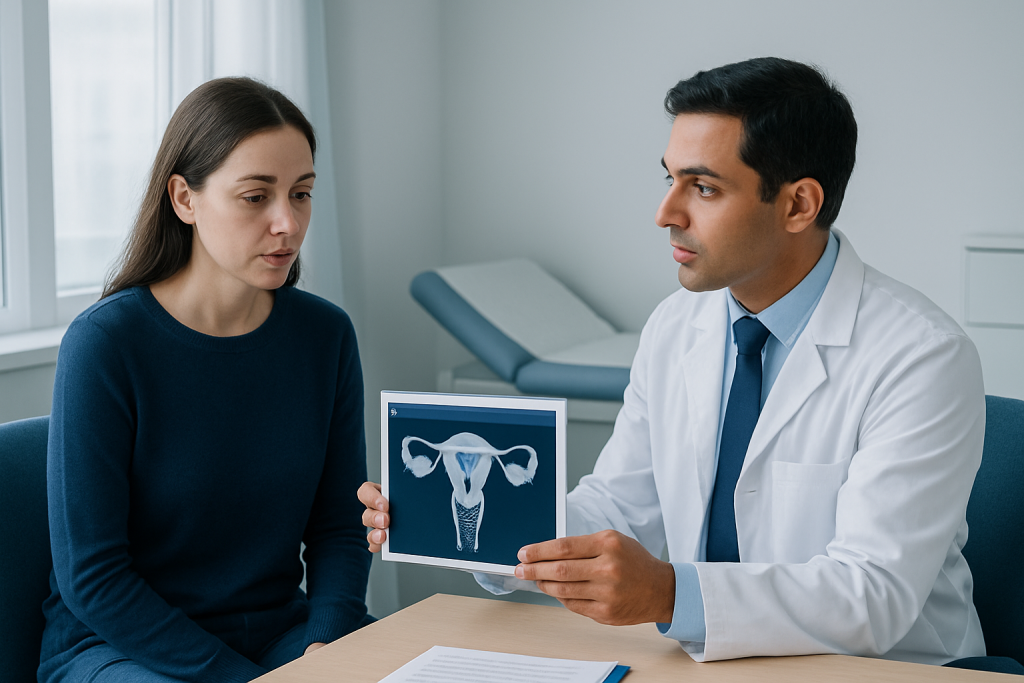
Ovarian torsion usually develops when something makes the ovary heavier or more mobile than usual. An ovarian cyst is one of the most common contributors because it can enlarge the ovary and make it easier to twist. Benign ovarian masses, though less common, can have the same effect.
Other situations may raise the chance of torsion. Fertility treatment can enlarge the ovaries, increasing mobility. Pregnancy, especially in early pregnancy, may also alter the pelvic anatomy in a way that makes twisting more likely. Some people have a longer ovarian ligament or other anatomic factors that allow the ovary to move more freely.
Risk does not mean certainty. Many people with cysts never develop torsion, and some cases occur without a major risk factor. Still, awareness matters because the condition can be mistaken for less urgent causes of pain. People who already know they have ovarian cysts, recently underwent ovarian stimulation, or have had prior torsion should be especially attentive to new sudden pain.
Diagnosis
Diagnosis starts with listening carefully to the symptom pattern and performing a pelvic and abdominal examination. Because the pain of ovarian torsion can resemble many other conditions, clinicians usually also consider pregnancy-related causes, gastrointestinal problems, urinary issues, and other ovarian emergencies at the same time.
Imaging is commonly used, with pelvic ultrasound often being the first test. Ultrasound can show an enlarged ovary, a cyst, reduced or abnormal blood flow, or other signs that support torsion. However, imaging does not always give a definite answer, and a normal-looking blood-flow study does not fully rule the condition out.
For that reason, the diagnosis is sometimes confirmed during surgery, most often through laparoscopy. This approach allows the surgeon to look directly at the ovary and, when appropriate, treat the problem in the same procedure. In a travel or international-care setting, it is helpful to know that rapid imaging and access to surgery may be essential if torsion is strongly suspected.
Treatment Options
The main treatment for ovarian torsion is prompt surgery. The goal is to untwist the ovary and restore blood flow as quickly as possible. When the tissue still looks viable, surgeons often preserve the ovary, which is an important consideration for future hormonal function and fertility.
If a cyst or other mass is present, it may be removed during the same operation. In some cases, the ovary may appear severely damaged, and removal can be necessary. The exact approach depends on the appearance of the ovary, the underlying cause, the person’s age, and whether childbearing plans are relevant. The earlier the condition is treated, the better the chance of preserving the ovary.
Pain relief, fluids, and anti-nausea treatment may be given before surgery, but these are supportive measures rather than definitive care. Because ovarian torsion is time-sensitive, medications alone are not enough. After treatment, follow-up is used to review recovery, pathology results if tissue was removed, and any steps that may lower the chance of recurrence.
- Laparoscopic detorsion to untwist the ovary
- Cyst removal when a cyst is the trigger
- Oophorectomy in cases of nonviable tissue or selected situations
- Supportive care before and after surgery
Prevention & Self-care
There is no guaranteed way to prevent ovarian torsion, but some people can reduce risk by addressing known ovarian cysts or masses under a doctor’s guidance. If a cyst is being followed over time, regular checkups help the care team decide whether observation remains appropriate or whether treatment should be discussed.
Self-care is mainly about recognition and timely action. A person with sudden one-sided pelvic pain should avoid heavy exercise, ignore the pain, or try to “wait it out” for too long. If torsion is suspected, eating and drinking should not delay getting medical care, because evaluation may lead to surgery.
For people recovering after treatment, follow the surgeon’s instructions closely regarding activity, wound care, and return visits. If another country is involved in the care journey, it is wise to keep discharge papers, imaging reports, and operative notes accessible for follow-up with a local gynecologist once home. This helps continuity of care and makes future symptom checks more straightforward.
When to See a Doctor
A doctor should be contacted immediately for sudden, severe, or one-sided pelvic pain, especially if it is accompanied by nausea or vomiting. These symptoms need urgent assessment because ovarian torsion and other emergencies can look similar at first.
Medical care is also important if pain is recurring, worsening, or associated with faintness, fever, unusual vaginal bleeding, or possible pregnancy. Even if the pain seems manageable, a same-day evaluation is safer than assuming it is a simple menstrual or digestive issue.
People with known ovarian cysts, a recent fertility procedure, or prior ovarian torsion should have a low threshold for seeking care. When international patients need evaluation in a new health system, timely access to gynecologic imaging and surgical expertise can make the difference between preserving the ovary and losing precious tissue. Acibadem Health Point’s multidisciplinary specialists and JCI-accredited hospitals diagnose and treat this condition for international patients.
Recovery and Outlook
Recovery depends on what was done during surgery and how quickly treatment occurred. Many people go home after a laparoscopic procedure and improve steadily over days to weeks, while more complex cases may require a longer recovery period. Pain gradually lessens, and activity usually increases as advised by the surgical team.
The outlook is often good when ovarian torsion is treated quickly. If the ovary can be saved, normal function may continue. Even when one ovary is removed, many people still have hormonal function and fertility potential, but individualized counseling is important because the overall situation varies.
After recovery, follow-up visits help confirm healing and discuss whether another cyst, ongoing pain, or a recurring risk factor needs attention. Patients who receive care away from home should keep a copy of all medical records, since that information supports future care in their own country.
Living with the Possibility of Recurrence
Ovarian torsion can recur, especially if the underlying cause is not corrected or if there are ongoing risk factors such as recurrent cysts. That does not mean recurrence is inevitable, but it does mean new pelvic pain should be taken seriously rather than compared casually with a past episode.
People who have had torsion may benefit from a plan with their gynecologist that explains what symptoms should trigger urgent review and how follow-up scans, if any, will be scheduled. This is particularly useful for those who travel frequently or split care between countries, because a clear plan reduces uncertainty when symptoms appear far from home.
The most practical message is simple: sudden pelvic pain is not something to self-diagnose. A timely medical assessment protects both health and future options, and it gives patients a clearer path forward whether they are at home or abroad.
Frequently asked questions
01What is a twisted ovary?
A twisted ovary is another name for ovarian torsion, when the ovary rotates around its supporting structures. This can reduce blood flow and cause sudden pelvic pain. It is treated as an urgent medical condition.
02What are the first signs of ovarian torsion?
The most common first sign is sudden, one-sided lower abdominal or pelvic pain. Nausea and vomiting often occur as well. Some people also notice tenderness or pain that gets worse with movement.
03Can a twisted ovary go away on its own?
The pain may briefly ease if the ovary partly untwists, but that does not mean the problem has resolved. Ovarian torsion can return or continue to damage the ovary. Medical evaluation is still needed right away.
04Is ovarian torsion the same as a ruptured cyst?
No, they are different conditions, although both can cause sudden pelvic pain. A ruptured cyst may improve with observation in some cases, while ovarian torsion usually needs surgery. A doctor uses examination and imaging to help tell them apart.
05Can ovarian torsion affect fertility?
It can, especially if treatment is delayed and the ovary becomes damaged. Many people recover well when the ovary is untwisted quickly. Even if one ovary is removed, fertility may still be possible, depending on the overall situation.
06How is ovarian torsion treated in the hospital?
Doctors usually arrange urgent surgery, most often laparoscopy, to untwist the ovary and restore blood flow. If a cyst is present, it may also be removed. Supportive care such as pain relief and fluids may be given while preparing for surgery.
This article is for general information only and is not a substitute for professional medical advice. Please consult a qualified doctor about your individual situation.
Persistent digestive symptoms? Get evaluated in Turkey
JCI-accredited · board-certified surgeons · reply within 24h
Add us as a Preferred Source to see more of our trusted health content across Google Search, AI Overviews and Discover.



How can we help you today?
Meet an Acibadem specialist by secure video, before you travel.
Book a video visit