What Is Spiral Bone Break? A Complete Medical Guide

Key Takeaways
- A spiral bone break is a fracture caused by twisting force, creating a spiral line through the bone.
- Pain, swelling, bruising, and difficulty using the limb are common warning signs.
- Diagnosis usually includes a physical exam and imaging, most often an X-ray.
- Treatment may include immobilization, casting, bracing, or surgery depending on the fracture pattern and bone involved.
- Rehabilitation is important for restoring movement, strength, and safe return to activity.
A spiral bone break is a type of fracture with a twisting pattern, often caused by rotational force on a bone. It can range from stable to serious, so prompt evaluation helps determine the right treatment and recovery plan.
Overview
A spiral bone break is a fracture pattern that occurs when a bone is twisted with enough force to crack along a curved, spiral line. In simple terms, the bone does not snap straight across; instead, the break wraps around the shaft like a corkscrew. This pattern is commonly seen in long bones such as the tibia, fibula, humerus, or forearm bones.
For patients, the name can sound unusually technical, but the practical question is straightforward: how severe is it, and what happens next? A spiral fracture can be stable in some cases, but it can also be displaced or associated with soft tissue injury. The exact treatment depends on the bone involved, the amount of movement at the fracture site, and whether the injury is open, closed, or part of a more complex injury.
Understanding the basics helps patients make calm, informed decisions. For someone injured while traveling, playing sport, or simply missing a step at home, the first priority is getting the limb assessed properly so that healing starts on the right track.
Symptoms

The symptoms of a spiral bone break often appear immediately after the injury, especially if the twisting force was sudden or strong. Pain is usually the most obvious sign, and it may worsen when the person tries to move, stand, grip, or bear weight on the affected area.
Other common signs include swelling, tenderness, bruising, and visible deformity. Some people hear or feel a crack at the moment of injury, while others only notice that the limb feels unstable or unusable. If the fracture is in the leg, walking may be difficult or impossible; if it is in the arm, lifting or rotating the limb may become painful.
- Sharp pain at the time of injury
- Swelling and bruising around the area
- Difficulty using the limb normally
- Possible deformity or unusual angle
- Pain that increases with movement or pressure
Symptoms can sometimes be less dramatic than expected, especially if the bone remains aligned. Even then, a fracture should not be assumed to be a simple sprain or strain without medical assessment.
Causes & Risk Factors
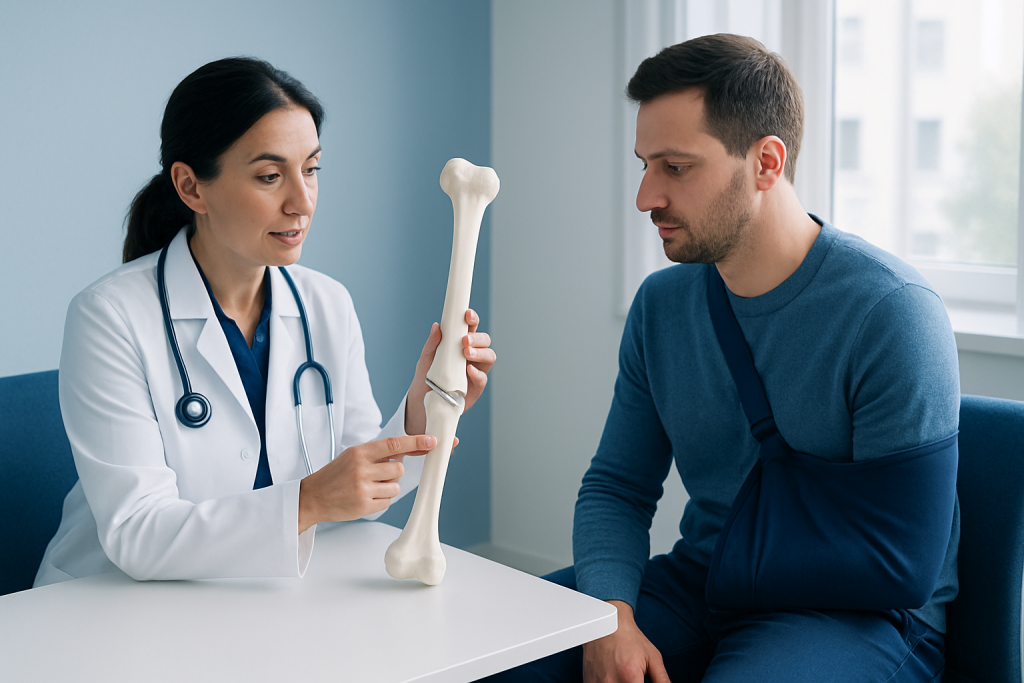
A spiral bone break typically happens when the body part is fixed while the rest of the limb rotates. This twisting force can happen in sports, falls, traffic incidents, or everyday accidents. Skiing, football, gymnastics, and similar activities can place the limbs under sudden rotational stress.
Children can sometimes sustain spiral fractures during play or falls, and older adults may experience them after a lower-energy fall if the bones are weakened. Conditions such as osteoporosis can make fractures more likely, even when the injury does not seem severe. Prior fractures, poor balance, and certain medications or medical conditions may also increase risk.
Risk is influenced not only by the activity, but also by bone strength, coordination, and the force direction. That is why the same type of motion may be harmless in one moment and fracture-producing in another.
Diagnosis
Diagnosis begins with a careful history of how the injury happened, because the mechanism of injury often gives an important clue. A clinician will examine the limb for pain points, swelling, deformity, circulation, sensation, and movement. This assessment helps determine whether there are signs of nerve or blood vessel involvement.
An X-ray is usually the first imaging test used to confirm the fracture and understand its pattern. In some cases, especially when the fracture is small, hidden, or near a joint, additional imaging such as CT or MRI may be recommended. These tests can help define the injury more clearly and guide treatment planning.
For patients seeking care abroad, this stage is especially important because treatment decisions may need to be made quickly and accurately. A clear diagnosis helps avoid unnecessary travel concerns later by showing whether the injury can be managed with a cast or whether orthopedic surgery or follow-up imaging is more appropriate.
Treatment Options
Treatment depends on whether the fracture is aligned, displaced, open, or associated with other injuries. Stable spiral fractures may be treated with immobilization using a cast, splint, or brace. If the bone pieces have moved out of position, the clinician may need to realign them before applying immobilization.
Some spiral fractures require surgery, particularly if the bone is not holding position, if the fracture involves a weight-bearing bone, or if there is a concern about healing in the wrong alignment. Surgical options can include plates, screws, rods, or other fixation methods chosen by an orthopedic specialist. The goal is to restore alignment and create the best environment for healing.
Pain control, swelling reduction, and protection of the injured limb are part of early care. Patients are usually advised to avoid putting weight or strain on the bone until a doctor confirms it is safe. Follow-up visits and repeat imaging may be needed to make sure the fracture is healing properly.
Treatment is not only about the first appointment. For international patients, care planning should also include understanding the expected recovery time, when to return for checkups, and whether a local doctor at home can continue monitoring after travel.
Prevention & Self-care
Not every spiral bone break can be prevented, but risk can be lowered. Strong bones and better balance reduce the chance that a twisting injury becomes a fracture. Regular weight-bearing exercise, adequate nutrition, and attention to bone health are useful long-term measures, especially for people with osteoporosis or a history of fractures.
At home, self-care after a fracture focuses on protecting the injured area and supporting healing. Rest, elevation, and following the clinician’s instructions about movement or weight-bearing are important. A cast or brace should be kept clean and dry, and any changes in swelling, pain, numbness, or skin color should be reported promptly.
- Use supportive footwear and avoid unsafe surfaces when possible
- Address balance problems or fall risks early
- Follow return-to-sport guidance carefully after healing
- Do not remove splints, casts, or braces unless instructed
- Attend all follow-up appointments, even if pain improves
Recovery can be easier when patients plan ahead. If treatment happens away from home, keeping copies of imaging reports, discharge notes, and rehabilitation instructions makes it much simpler to continue care with a local physician after returning.
When to See a Doctor
Medical evaluation is important after any suspected fracture, especially when the injury follows a twisting motion and is accompanied by pain or swelling. A person should seek prompt care if they cannot bear weight, cannot use the limb normally, or notice visible deformity.
Urgent assessment is also needed if the skin is broken, the foot or hand feels cold or numb, or pain is severe and worsening. These signs can indicate complications that need immediate attention. Even when symptoms seem moderate, a fracture should still be confirmed because untreated misalignment can affect healing and function.
If a spiral bone break is diagnosed abroad, patients may benefit from a coordinated orthopedic review to help them understand the next steps before traveling home. Acibadem Health Point’s multidisciplinary specialists and JCI-accredited hospitals diagnose and treat fractures for international patients with coordinated follow-up planning.
Frequently asked questions
01What is a spiral bone break in simple terms?
A spiral bone break is a fracture caused by twisting force, creating a spiral-shaped break through the bone. It most often affects long bones such as the arm or leg. The exact severity depends on whether the bone is aligned and whether nearby tissues are also injured.
02Is a spiral fracture serious?
It can be mild to serious depending on the bone and how far the pieces have moved. Some spiral fractures heal well with a cast or brace, while others need surgery to keep the bone in the correct position. A medical evaluation is the best way to judge severity.
03Can a spiral fracture heal without surgery?
Yes, many spiral fractures can heal without surgery if the bone is stable and well aligned. Doctors may use a cast, splint, or brace and monitor healing with follow-up visits. Surgery is considered when alignment cannot be maintained or when the injury is more complex.
04How long does it take for a spiral bone break to heal?
Healing time varies based on the bone involved, the person’s age, overall health, and the treatment used. Some fractures heal in several weeks, while others need a longer recovery period and rehabilitation. The treating doctor can give the most realistic timeline after reviewing imaging and the exam.
05Can a spiral fracture be mistaken for a sprain?
Yes, especially early on if swelling and pain are the main symptoms. Because fractures and sprains can feel similar, imaging is often needed to confirm the diagnosis. It is safer not to assume the injury is minor without medical assessment.
06What should someone do right after a suspected spiral fracture?
The limb should be kept still and protected, and weight-bearing or heavy use should be avoided. Applying ice wrapped in cloth and elevating the limb may help with swelling while waiting for care. A doctor should evaluate the injury as soon as possible.
This article is for general information only and is not a substitute for professional medical advice. Please consult a qualified doctor about your individual situation.
Joint and spine care in Turkey — expert assessment & treatment
JCI-accredited · board-certified surgeons · reply within 24h
Add us as a Preferred Source to see more of our trusted health content across Google Search, AI Overviews and Discover.