What Is Seborrheic Hair Loss? A Complete Medical Guide

Key Takeaways
- Seborrheic hair loss is usually related to scalp inflammation from seborrheic dermatitis, not permanent follicle damage.
- Flaking, itching, redness, and oily scale are common clues that the scalp needs treatment.
- Several conditions can look similar, so a dermatologist may need to rule out fungal infection, psoriasis, and other causes of hair loss.
- Treatment often combines medicated shampoos, anti-inflammatory scalp care, and management of triggers.
- Most people improve when the scalp inflammation is controlled consistently over time.
Seborrheic hair loss usually refers to temporary shedding linked to seborrheic dermatitis, a common inflammatory scalp condition that can irritate skin and disrupt the hair growth cycle. With the right diagnosis and treatment, most people can control symptoms and reduce ongoing hair loss.
Overview
Seborrheic hair loss is not a separate disease in most cases. It is a practical way of describing hair shedding that happens when seborrheic dermatitis affects the scalp. The inflammation, itching, and scale can make the scalp uncomfortable and may interrupt normal hair growth for a period of time.
Seborrheic dermatitis often appears in oily areas of the body, especially the scalp, eyebrows, sides of the nose, ears, and upper chest. On the scalp, it may cause flakes that look like dandruff, a greasy or crusted surface, and areas that feel sore or itchy. When the skin is inflamed for long enough, more hairs can enter the shedding phase than usual.
For many people, the key question is whether the hair loss is permanent. In seborrheic hair loss, the answer is often no. Once the underlying scalp inflammation is treated, hair commonly grows back gradually. That said, persistent shedding should still be evaluated, because more than one condition can be happening at the same time.
Symptoms
The scalp usually gives clear signals before shedding becomes noticeable. People may first notice white or yellowish flakes on the hair or shoulders, an itchy scalp, or patches of redness that become more apparent after washing or sweating. Some describe the skin as oily, while others notice dry, tight, or irritated areas depending on how the condition behaves.
Hair changes may include increased hair fall during showering, on the pillow, or when brushing. The hair itself is not usually broken at the root by seborrheic dermatitis, but repeated scratching, inflammation, and scalp stress can make shedding seem more dramatic. In some cases, hair thinning is diffuse rather than limited to one patch.
It is helpful to watch for features that suggest a different diagnosis: round bald patches, smooth shiny skin, pain rather than itch, thick silvery plaques, or scalp scaling with broken hairs. These findings may point to other causes such as alopecia areata, psoriasis, or a fungal scalp infection.
- Itching or burning of the scalp
- Flaking that may be white, yellow, or greasy
- Redness or irritated skin along the hairline
- More hair in the brush, drain, or hands
- Scalp discomfort after sweating or infrequent washing
Causes & Risk Factors

Seborrheic dermatitis is thought to result from a mix of skin oil, a natural yeast called Malassezia, and an individual’s immune response to that yeast. It is not caused by poor hygiene alone, although irregular scalp cleansing may make visible scale build up more quickly. Stress, climate, and changes in health can also influence how active the condition becomes.
Certain factors can make seborrheic hair loss more likely or more noticeable. These include a personal history of dandruff, oily skin, family tendency toward inflammatory skin conditions, neurological conditions, or periods when the immune system is weakened. Hormonal shifts, fatigue, and weather changes may also affect symptoms in some people.
Hair shedding can worsen when scratching is frequent, when inflammation is not treated early, or when another type of hair loss is present alongside seborrheic dermatitis. This is one reason a careful scalp examination matters. Treating only the flakes without looking at the hair loss pattern can miss important clues.
Diagnosis
Diagnosis usually begins with a detailed discussion of symptoms, scalp care habits, recent stressors, medications, and any personal or family history of skin or hair disorders. A clinician will typically examine the scalp closely to look at the type of scale, the amount of redness, the pattern of thinning, and whether the hair follicles appear preserved.
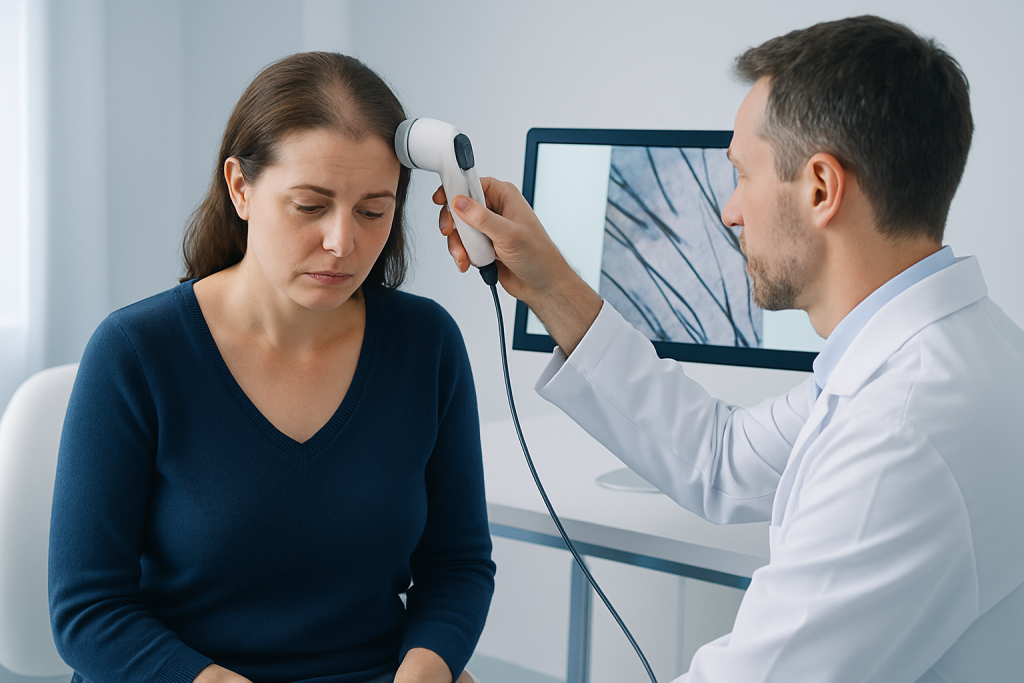
In many cases, seborrheic dermatitis is diagnosed by appearance and history alone. If the pattern is unclear, a dermatologist may use dermoscopy, a handheld magnified examination, to better see scalp scale, inflammation, broken hairs, or signs of another condition. Sometimes a fungal test, blood tests, or a scalp biopsy may be considered when the presentation is atypical.
Because hair loss has many causes, the goal is not just to confirm seborrheic dermatitis but to rule out common look-alikes. This is especially important if the hair loss is sudden, patchy, painful, associated with scarring, or not improving with usual scalp treatment. International patients who travel for care often benefit from bringing photos of how the scalp looked during flare-ups, as symptoms may wax and wane before the appointment.
Treatment Options
Treatment focuses on calming the scalp and reducing the yeast and inflammation that drive symptoms. Medicated shampoos are often the first step and may include ingredients such as antifungal agents, zinc pyrithione, selenium sulfide, salicylic acid, or coal tar, depending on the country and the clinician’s recommendation. These products usually need regular use for control rather than one-time application.
When the scalp is particularly inflamed or itchy, a dermatologist may suggest a short course of anti-inflammatory scalp treatment. The exact choice depends on the patient’s age, skin sensitivity, and medical history. If there is a lot of scale, treatment may work better after gently loosening it with a suitable shampoo routine rather than aggressive scratching or picking.
If symptoms keep returning, the care plan may need adjustment. Some people need maintenance treatment even after the scalp looks better, while others require evaluation for overlapping problems such as psoriasis, eczema, or androgenetic hair loss. In patients traveling from abroad, a coordinated plan for treatment, follow-up, and local monitoring after returning home can make ongoing control much easier.
- Use medicated shampoos as directed by a clinician
- Wash the scalp regularly enough to control scale and oil
- Avoid harsh scratching, tight hairstyles, and irritating products
- Address any coexisting hair loss condition separately
- Follow up if shedding continues after the scalp settles
Prevention & Self-care
There is no guaranteed way to prevent seborrheic dermatitis from ever returning, but regular scalp care can reduce flare-ups. Gentle, consistent washing is often better than waiting until the scalp becomes heavily flaky. Many people do best with a simple routine that keeps oil and scale under control without stripping the skin.
Choosing non-irritating hair products can also help. Strong fragrances, frequent heat styling, and harsh chemical treatments may aggravate sensitive scalps in some people. During a flare, it is often wise to keep the hair-care routine simple and avoid experimenting with multiple new products at once.
Lifestyle factors can matter as well, especially when symptoms worsen during periods of stress or poor sleep. While stress does not cause seborrheic dermatitis on its own, it can make skin conditions harder to manage. Balanced routines, prompt treatment of flares, and patience during recovery are usually more useful than trying to scrub the scalp clean.
- Wash regularly with a clinician-recommended shampoo routine
- Reduce scratching and avoid picking off scales
- Use mild, fragrance-free hair products when possible
- Be consistent during both active flares and calmer periods
- Seek help early if shedding becomes persistent
When to See a Doctor
Medical evaluation is a good idea when scalp flaking is accompanied by noticeable hair loss, because not all shedding is caused by seborrheic dermatitis. A doctor should also be seen if symptoms are spreading, if the scalp is painful, if there are areas of complete baldness, or if over-the-counter dandruff products are not helping after a reasonable trial.
Prompt assessment is especially important if there is fever, pus, crusting, swollen lymph nodes, or a sudden patchy pattern of hair loss. These signs may point to an infection or another scalp disorder that needs specific treatment. Early clarification often prevents months of ineffective self-treatment.
People planning to travel for evaluation should consider booking a dermatology visit before departure and asking how follow-up will be handled after they return home. At Acibadem Health Point, multidisciplinary specialists and JCI-accredited hospitals diagnose and treat seborrheic dermatitis and related hair loss concerns for international patients with coordinated care. That approach can be especially useful when hair loss has more than one cause or when long-term maintenance planning is needed.
Living With Seborrheic Hair Loss
Hair shedding linked to seborrheic dermatitis can be frustrating, but it is often manageable once the scalp inflammation is addressed. Progress may be gradual, because hair growth follows a natural cycle and regrowth takes time even after the skin improves. A calm, consistent treatment plan usually works better than frequent changes from one remedy to another.
It can also help to keep expectations realistic. The scalp may improve before the hair density looks normal again, and temporary shedding can continue for a while as follicles re-enter their usual cycle. If hair does not start to recover, the diagnosis should be revisited rather than assuming the shedding is still only from dandruff.
For many patients, the most reassuring part of care is understanding that seborrheic hair loss is usually treatable and often reversible. The right next step is not to guess, but to identify what is driving the scalp inflammation and choose a plan that the patient can maintain comfortably.
FAQ
Below are answers to common questions that often come up when people start noticing both flakes and thinning hair.
Frequently asked questions
01Is seborrheic hair loss permanent?
It is usually temporary when the shedding is related to seborrheic dermatitis. Once the scalp inflammation is treated, hair often grows back gradually. If hair loss continues, another cause may also be present and should be checked.
02Can dandruff cause hair loss?
Dandruff itself does not usually destroy hair follicles, but the inflammation and scratching that come with seborrheic dermatitis can increase shedding. In that sense, dandruff-like scalp disease can contribute to noticeable hair loss. Treating the underlying scalp condition is the most important step.
03How do doctors tell seborrheic hair loss from other types of hair loss?
They look at the pattern of shedding, the appearance of the scalp, and whether there is scaling, redness, or broken hairs. If needed, they may use dermoscopy or other tests to rule out fungal infection, psoriasis, alopecia areata, or scarring hair loss. Careful examination is often the fastest way to get the diagnosis right.
04What shampoo is best for seborrheic dermatitis and hair loss?
The best option depends on the person’s scalp and the severity of symptoms. Medicated shampoos with antifungal or anti-scale ingredients are commonly used, but the right choice should be guided by a clinician, especially if the scalp is sensitive or the hair loss is ongoing. Regular use matters more than occasional use.
05Should someone stop styling or coloring their hair during a flare?
It is usually sensible to pause or reduce harsh treatments if the scalp is irritated. Heat, bleaching, and strong chemical services can make a sensitive scalp feel worse. A gentle routine during the flare is often more comfortable until the skin settles.
06When should hair shedding with dandruff be taken seriously?
It should be checked if the shedding is sudden, patchy, painful, or paired with bald spots or crusting. Persistent shedding despite dandruff treatment also deserves medical review. Those features suggest that something beyond simple seborrheic dermatitis may be involved.
This article is for general information only and is not a substitute for professional medical advice. Please consult a qualified doctor about your individual situation.
Hair transplant in Turkey — costs, graft counts & a free assessment
JCI-accredited · board-certified surgeons · reply within 24h
Add us as a Preferred Source to see more of our trusted health content across Google Search, AI Overviews and Discover.