What Is Mouth Polyp? A Complete Medical Guide

Key Takeaways
- A mouth polyp usually refers to a benign-looking growth in the mouth, but it should not be assumed to be harmless without assessment.
- Common signs include a painless lump, irritation, bleeding, ulceration, or a growth that does not go away.
- Causes can include irritation, inflammatory changes, minor trauma, cysts, and sometimes conditions that need closer examination.
- Diagnosis often involves a mouth examination and, when needed, imaging or a biopsy to confirm the cause.
- Treatment depends on the underlying problem and may range from monitoring to removal or other targeted care.
A mouth polyp is an uncommon term often used to describe a small growth or lump inside the mouth. While many oral growths are harmless, any persistent change in the mouth deserves a proper dental or medical evaluation.
Overview
The term mouth polyp is not a single medical diagnosis. In everyday language, people may use it to describe a small growth, soft lump, or raised tissue inside the lips, cheeks, gums, tongue, or roof of the mouth. A clinician may instead describe the finding more precisely as an oral lesion, fibroma, cyst, papilloma, or another type of growth.
Most oral growths are not cancer, but they should still be checked if they are new, persistent, changing, or uncomfortable. The mouth is an area where irritation, infection, dental problems, and tissue changes can look similar at first glance, so a professional examination is the safest way to understand what is happening.
For international patients, this often begins with a local dentist or doctor noticing a lesion during a routine visit, then arranging further assessment if the growth does not fit a clearly harmless pattern. A careful review matters because the right treatment depends entirely on the true cause, not on the appearance alone.
Symptoms
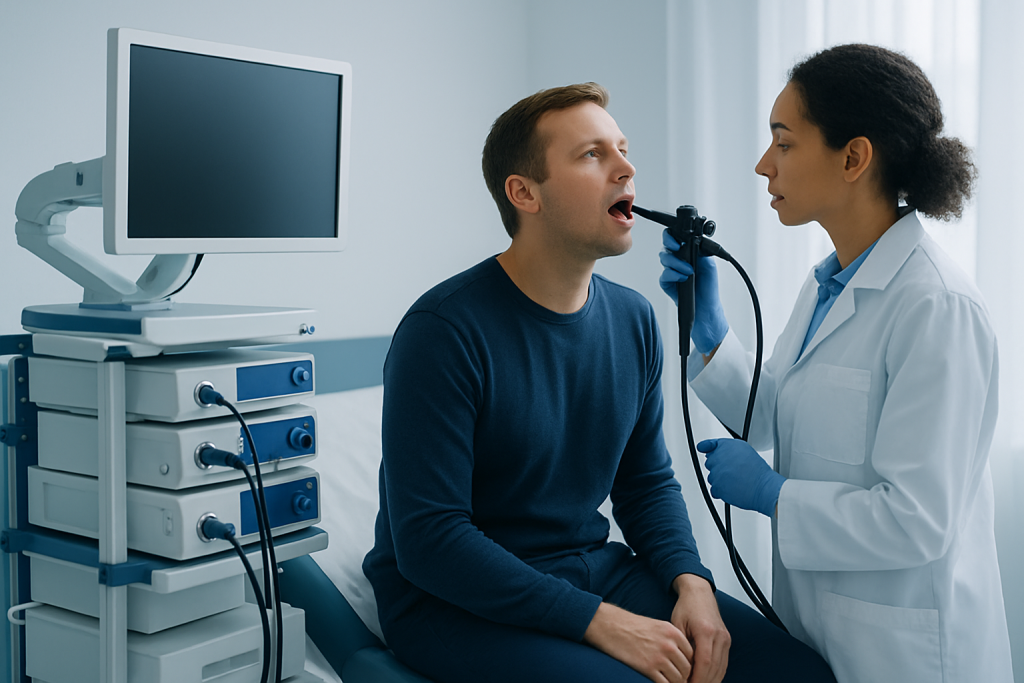
A mouth polyp or similar oral growth may be discovered by accident, especially if it does not cause pain. Some people only notice a slight fullness while brushing teeth, speaking, chewing, or touching the area with the tongue.
Symptoms can vary depending on location and cause. Common features may include:
- A small lump or raised area in the mouth
- Soft, firm, or smooth texture
- Red, pink, white, or similar color to surrounding tissue
- Mild tenderness or discomfort
- Bleeding when brushed or bitten
- Difficulty chewing, speaking, or wearing dentures comfortably
Any oral growth that becomes painful, ulcerated, bleeds repeatedly, enlarges, or does not heal should be examined. A lesion that persists longer than about two weeks, especially without a clear cause such as biting trauma, is worth medical attention.
Causes & Risk Factors

Because “mouth polyp” is a broad label rather than a precise diagnosis, the underlying cause can differ widely. Some growths develop after repeated irritation from sharp teeth, ill-fitting dentures, or habitual cheek biting. Others are linked to minor injury, inflammation, blocked salivary glands, viral changes, or benign tissue overgrowth.
Possible causes and look-alikes include:
- Fibroma from chronic irritation or trauma
- Mucous retention cyst or mucocele from salivary gland blockage or injury
- Papilloma, sometimes associated with viral infection
- Inflammatory tissue overgrowth near a tooth or gum problem
- Benign tumors or cysts in oral tissues
Risk may be higher in people with ongoing mechanical irritation, poor-fitting dental appliances, smoking, poor oral hygiene, or a history of oral lesions. Age and immune status can also influence how oral tissues respond to irritation or infection. Even so, risk factors do not determine the diagnosis; they only help the clinician think through the possibilities.
Diagnosis
Diagnosis usually starts with a detailed mouth examination. A dentist, oral surgeon, ear-nose-throat specialist, or doctor will look at the size, shape, color, location, surface, and firmness of the growth, and ask how long it has been present. They may also ask about pain, bleeding, trauma, dental devices, tobacco use, and previous oral problems.
If the lesion appears clearly irritation-related, the clinician may first remove the source of friction and monitor it closely. If the cause is uncertain, the growth is persistent, or there are any concerning features, additional testing may be advised. This can include imaging for deeper structures or a biopsy, where a small sample or the entire lesion is examined under a microscope.
A biopsy is not a sign that something dangerous is expected; it is simply the most reliable way to identify many oral growths. For patients traveling from another country, it is often helpful to bring dental records, medication lists, and any prior photos of the lesion, since this can speed up the evaluation and reduce repeat testing.
Treatment Options
Treatment depends on what the growth turns out to be. Some small, clearly benign lesions do not need active treatment beyond observation and removal of the cause of irritation. Others may be best treated by simple surgical excision in a clinic or outpatient setting.
Common treatment approaches include:
- Observation if the lesion is stable and judged harmless
- Removal of irritation, such as smoothing a sharp tooth edge or adjusting dentures
- Minor surgical excision for benign growths or cysts
- Biopsy with complete removal when diagnosis is uncertain
- Targeted treatment if an infection, inflammatory condition, or other oral disease is found
Recovery is often straightforward, but the exact plan depends on the tissue involved and whether the lesion has returned before. If pathology testing is performed, the result helps guide the next steps and determine whether any follow-up is needed. When oral lesions are managed by a multidisciplinary team, patients may benefit from coordination between dentistry, oral surgery, and, when appropriate, ENT specialists.
Prevention & Self-care
Not every mouth growth can be prevented, but some oral lesions are linked to repeated irritation that can sometimes be reduced. Good oral hygiene, regular dental checks, and timely repair of broken teeth or dental appliances may lower the chance of certain benign overgrowths.
Helpful self-care habits include:
- Avoiding cheek, lip, or tongue biting
- Keeping dentures and dental appliances well fitted
- Brushing and flossing gently but consistently
- Stopping tobacco use and limiting other oral irritants
- Checking the mouth occasionally in a mirror for new changes
After treatment, the mouth usually needs time to heal without extra trauma. Soft foods, careful oral hygiene, and following the clinician’s instructions can support recovery. Patients traveling home after care should ask for clear written guidance on wound care, follow-up timing, and how to contact the treating team if questions arise later.
When to See a Doctor
Any mouth lump or growth that lasts more than two weeks should be assessed, even if it seems minor. This is especially important if the lesion is growing, painful, repeatedly bleeding, ulcerated, or interfering with eating or speaking.
Prompt medical review is also advisable if there is unexplained numbness, loose teeth near the lesion, swelling in the jaw or neck, or a history of tobacco use and heavy alcohol exposure. These features do not prove a serious problem, but they do make a proper examination more important.
If a patient is planning treatment abroad, it is reasonable to seek a center that can provide both diagnosis and, if needed, same-episode treatment and pathology review. Acibadem Health Point’s multidisciplinary specialists and JCI-accredited hospitals diagnose and treat oral lesions for international patients, with coordinated care from first consultation through follow-up.
Living With an Oral Lesion: Practical Questions to Ask
People often feel uncertain when they notice a growth inside the mouth because it may be hard to tell whether it is a harmless bump, a cyst, or something that needs treatment. A useful approach is to focus on pattern rather than guesswork: when it began, whether it changes, and whether anything in the mouth could be irritating it.
Before an appointment, it helps to note the lesion’s approximate size, how it feels, any bleeding, and whether a sharp tooth, denture edge, or habitual bite could be involved. Photos taken over time can also be useful, especially if the patient is coordinating care across borders or needs to show change before traveling.
Clear communication with the dental or medical team usually makes the process smoother. Asking what the likely possibilities are, whether biopsy is needed, and what follow-up will look like can reduce anxiety and help the patient make informed decisions.
Frequently asked questions
01Is a mouth polyp cancer?
Not necessarily. The phrase is often used for benign oral growths, but it is not a precise diagnosis. Because some oral lesions can look similar, a professional examination is the safest way to confirm what it is.
02Can a mouth polyp go away on its own?
Some small irritation-related lesions may improve if the source of friction is removed. However, a persistent growth should not be assumed to resolve on its own, especially if it bleeds, enlarges, or has been present for more than two weeks.
03Do mouth polyps hurt?
They may be painless, mildly tender, or irritated by chewing and brushing. Pain is not a reliable way to judge whether a lesion is harmless or not, so any lasting change should be checked.
04How is a mouth polyp removed?
If removal is needed, it is often done with a minor outpatient procedure under local anesthesia. The tissue may be sent for microscopic examination so the exact diagnosis is confirmed.
05Should a dentist or doctor see it first?
Either may be appropriate, depending on the location and symptoms. A dentist, oral surgeon, ENT specialist, or primary care doctor can examine the lesion and direct the next steps if needed.
06What should patients bring if they are traveling for treatment?
Prior dental records, medication lists, allergy information, and any photos of the lesion are useful. These details help the treating team understand the timeline and plan care efficiently.
This article is for general information only and is not a substitute for professional medical advice. Please consult a qualified doctor about your individual situation.
Persistent digestive symptoms? Get evaluated in Turkey
JCI-accredited · board-certified surgeons · reply within 24h
Add us as a Preferred Source to see more of our trusted health content across Google Search, AI Overviews and Discover.