What Is Mites on Eyelids? A Complete Medical Guide

Key Takeaways
- Demodex mites are tiny organisms that normally live on human skin and may affect the eyelids.
- Symptoms can include itching, burning, redness, gritty sensation, and crusting around the lashes.
- Diagnosis is usually made through an eye examination and a careful look at the eyelids and eyelashes.
- Treatment often combines eyelid hygiene, targeted products, and care for associated dry eye or blepharitis.
- Good lid hygiene and follow-up help reduce flare-ups and support long-term comfort.
Mites on eyelids usually refers to Demodex mites living in or around the eyelashes and eyelid margins. They are common, but when they overgrow or irritate the skin, they can contribute to itching, redness, crusting, and blepharitis.
Overview
When people search for mites on eyelids, they are often asking about Demodex mites—microscopic organisms that can live in the hair follicles and oil glands around the eyes. In small numbers, they are commonly present on human skin and do not always cause trouble.
Problems begin when the eyelid margin becomes irritated or the mites multiply enough to contribute to inflammation. This can show up as blepharitis, a condition that affects the eyelids and the base of the eyelashes. For many patients, the discomfort is mild but persistent, which makes it easy to overlook at first.
The good news is that eyelid mite-related irritation is usually manageable. With the right diagnosis, patients can learn what is happening, calm the inflammation, and protect the surface of the eye from ongoing irritation.
Symptoms
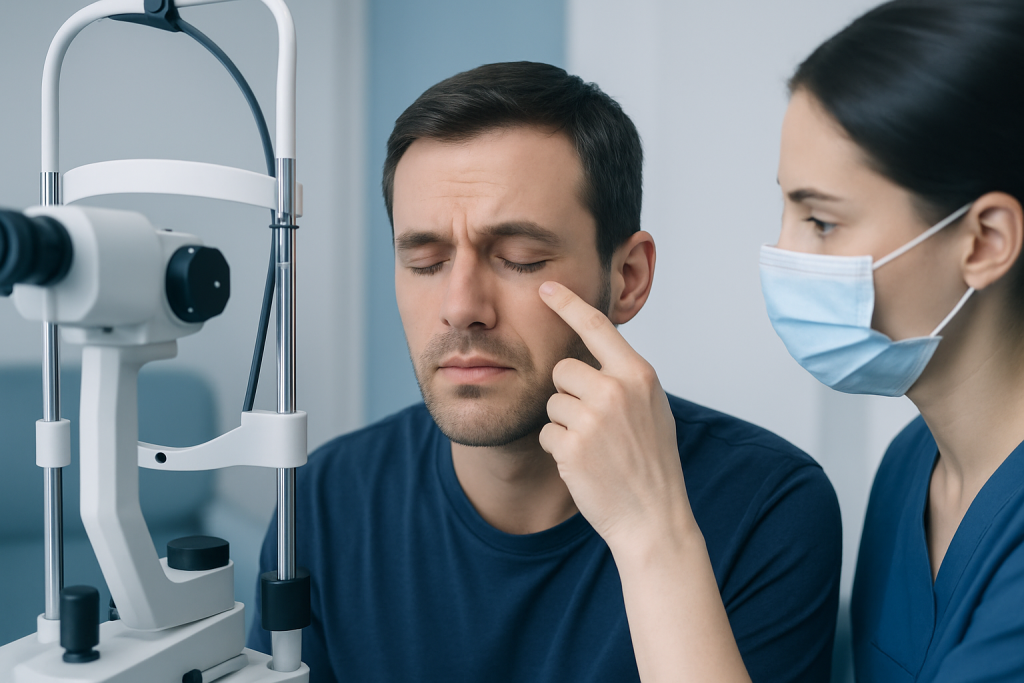
The symptoms are often felt more than seen. Many people notice that their eyes feel scratchy, dry, or as if something is trapped under the lid, especially on waking. Others describe recurring eyelid itching, mild burning, or a tired, heavy feeling in the eyes.
Visible clues can include redness along the eyelid edges, flaky debris or crusting at the base of the lashes, or lashes that appear misshapen or stick together. Some patients also notice that their eyes water more than usual, which can happen when the eye surface is irritated and tries to compensate for dryness.
Symptoms may come and go, and they can overlap with dry eye, allergies, or skin conditions such as rosacea. Because of this overlap, an eye specialist may look beyond the surface symptom and evaluate the eyelids, tears, and surrounding skin together.
Causes & Risk Factors

Demodex mites naturally live on human skin, and they are more likely to be found in areas with oil glands, including the eyelids. The issue is not simply their presence, but how the eyelid environment changes when inflammation, excess oil, or poor eyelid hygiene allows them to accumulate.
Several factors may make eyelid irritation more likely. These include older age, rosacea, oily skin, chronic blepharitis, dry eye disease, and conditions that affect the immune system or skin barrier. People who wear eye makeup regularly or have difficulty cleaning the eyelid margins may also be more prone to irritation.
It is important to understand that this is not a sign of being “unclean.” Many affected patients maintain excellent hygiene. The condition is better understood as an imbalance in the eyelid ecosystem, where the mites, oils, bacteria, and skin inflammation interact.
Diagnosis
Diagnosis usually begins with a detailed conversation about the symptoms, how long they have been present, and whether they are worse in the morning or after prolonged screen use. An eye doctor then examines the eyelids, lashes, tear film, and the eye surface using a slit lamp or similar magnifying instrument.
In some cases, the clinician may look for typical signs such as cylindrical dandruff-like debris at the lash base, eyelid redness, or inflammation of the lid margin. If needed, a few eyelashes may be examined more closely to confirm the presence of mites.
Because other conditions can look similar, the goal is not just to identify mites, but to understand the full cause of the discomfort. This is especially important for patients traveling from another country, since treatment plans work best when they are tailored clearly and followed consistently after returning home.
Treatment Options
Treatment usually focuses on reducing irritation, improving eyelid cleanliness, and addressing any associated blepharitis or dry eye. A common starting point is a structured eyelid hygiene routine, which may include warm compresses, gentle lid cleaning, and careful removal of debris from the lash line as advised by an eye professional.
Depending on the case, a clinician may recommend specific eyelid cleansers or other targeted products designed for Demodex-related irritation. If inflammation is significant, treatment may also include therapies for dry eye or prescription medicines chosen by an eye specialist. The exact plan depends on the patient’s symptoms, exam findings, and medical history.
Some cases require ongoing care rather than a one-time fix. Eyelid mite-related inflammation can recur, so follow-up visits help check whether the symptoms are improving and whether the plan needs adjustment. Patients should not use random home remedies near the eyes without medical guidance, since the eye area is delicate and easily irritated.
Prevention & Self-care
Daily habits can make a meaningful difference. Regular eyelid hygiene, as recommended by a clinician, helps reduce buildup along the lash line and supports comfort over time. Patients should also avoid rubbing the eyes, since friction can worsen irritation and spread inflammation.
It is usually helpful to remove eye makeup thoroughly, replace old cosmetics, and avoid sharing products that touch the eyes. People with chronic dry eye or rosacea may benefit from managing those conditions as part of the same care plan, because the eyelids and eye surface often influence one another.
For patients recovering after an international visit, self-care instructions should be simple enough to continue at home. Clear written guidance, scheduled follow-up, and knowing which symptoms are expected versus concerning can make ongoing care easier and more reassuring.
- Wash hands before touching the eye area.
- Use eyelid cleansing products only as advised.
- Replace old mascara and eyeliner if recommended by a clinician.
- Keep follow-up appointments if symptoms persist.
When to See a Doctor
An eye specialist should evaluate symptoms that last more than a short period, keep coming back, or interfere with daily comfort. Persistent redness, crusting, burning, or a gritty sensation may point to eyelid inflammation that needs a targeted plan rather than self-treatment alone.
Patients should seek prompt medical attention if they develop eye pain, vision changes, marked swelling, light sensitivity, discharge, or symptoms in only one eye that worsen quickly. These features can suggest a different or more urgent eye problem.
If the symptoms started during travel or before an international trip, it can still be worth arranging an assessment. A careful examination can distinguish mite-related irritation from other eyelid or ocular surface conditions and guide a plan that is practical to continue after returning home. At Acibadem Health Point, multidisciplinary specialists and JCI-accredited hospitals diagnose and treat this condition for international patients.
Living Well With Eyelid Mite Irritation
Many patients feel relieved once they learn that eyelid mites are common and that the problem is usually treatable. Understanding the condition removes some of the uncertainty, and that alone can make the symptoms feel more manageable.
Comfort often improves when patients combine medical advice with consistent eyelid care and attention to related issues like dry eye or rosacea. Because eyelid inflammation can be stubborn, progress may be gradual rather than immediate, and that is normal.
The most useful approach is steady and practical: confirm the diagnosis, follow the treatment plan, and return for review if symptoms change. With the right support, most people can keep the condition under control and preserve day-to-day eye comfort.
Frequently asked questions
01What are mites on eyelids, exactly?
They usually refer to Demodex mites, tiny organisms that live in hair follicles and oil glands around the eyes. They are common, but in some people they contribute to eyelid inflammation and blepharitis.
02Are eyelid mites contagious?
Demodex mites can be present on many people’s skin, so the issue is not usually treated like a classic contagious infection. However, symptoms can spread or persist if the eyelid environment continues to favor irritation, which is why hygiene and treatment matter.
03Can eyelid mites cause dry eyes?
They can contribute to dry eye symptoms by irritating the eyelid margin and affecting the tear film. Dry eye and eyelid inflammation often occur together, so both may need to be addressed.
04How do doctors check for eyelid mites?
An eye doctor looks closely at the eyelids and eyelashes using magnification. In some cases, they may examine a few lashes or look for characteristic debris at the lash base.
05Can home remedies get rid of eyelid mites?
Simple home measures may help reduce irritation, but the eyes are sensitive and not all remedies are safe. It is best to use only the eyelid care plan recommended by an eye specialist.
06When should someone worry about the symptoms?
Medical review is important if symptoms are persistent, getting worse, or affecting vision or comfort. Eye pain, light sensitivity, significant swelling, or discharge should be assessed promptly.
This article is for general information only and is not a substitute for professional medical advice. Please consult a qualified doctor about your individual situation.
Hair transplant in Turkey — costs, graft counts & a free assessment
JCI-accredited · board-certified surgeons · reply within 24h
Add us as a Preferred Source to see more of our trusted health content across Google Search, AI Overviews and Discover.