What Is Right Twitching Eyelid? A Complete Medical Guide

Key Takeaways
- Most right eyelid twitching is benign and temporary.
- Stress, sleep loss, eye strain, and caffeine are common triggers.
- Persistent twitching, eyelid drooping, or changes in vision should be assessed by a clinician.
- Simple self-care often helps, including rest, hydration, and reducing stimulants.
- Treatment depends on the cause and may include eye care, lifestyle changes, or specialist evaluation.
A right twitching eyelid is usually a brief, harmless muscle spasm around the eye that often settles on its own. It can be linked to stress, tiredness, caffeine, eye strain, or irritation, but persistent or severe twitching deserves medical review.
Overview
A right twitching eyelid is usually a small, involuntary contraction of the muscles around the right eye. In many people, it feels like a brief flutter or pulsing that comes and goes without affecting vision. Medical professionals often describe this common pattern as eyelid myokymia.
Most of the time, the twitch is not a sign of serious disease. It often appears during periods of stress, poor sleep, heavy screen use, dry eyes, or excess caffeine. For someone deciding whether to wait it out or seek care, the key question is not only what the twitch feels like, but how long it lasts and whether it appears with other symptoms.
Because the right and left eyelids share the same basic muscles and nerve supply, the side involved does not usually point to a unique disease. The fact that it is on the right side is often just how the spasm happens, rather than a sign of a right-sided problem in the brain or eye.
Symptoms
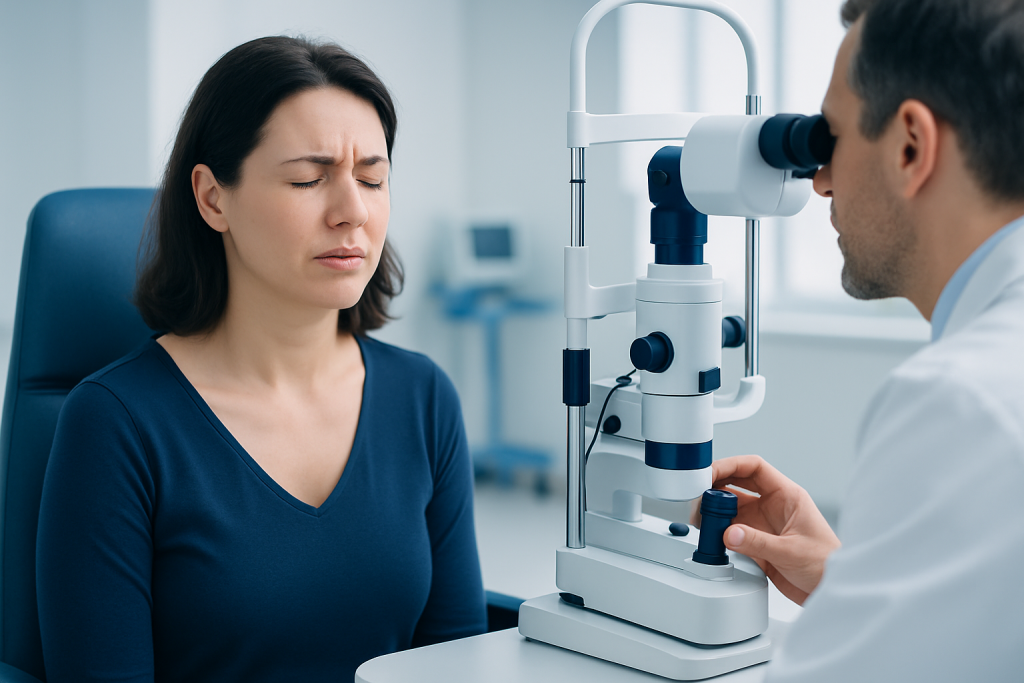
People usually notice the eyelid trembling, pulsing, or lightly closing and opening on its own. The movement may be subtle enough that others cannot see it, or strong enough to be visible in the mirror. It may last seconds, minutes, or appear off and on for days.
Common accompanying sensations can include eye fatigue, mild irritation, and the feeling that the eyelid is “jumping.” Some people also notice a dry or gritty eye, particularly if they spend long hours on digital devices or wear contact lenses. These symptoms often overlap with ordinary eye strain.
It is important to distinguish a simple twitch from more concerning signs. A clinician should take a closer look if the twitch comes with facial weakness, drooping of the eyelid, eye redness with pain, vision changes, swelling, or twitching in other parts of the face.
Causes & Risk Factors

There is no single cause of right twitching eyelid. In most cases, the muscle is responding to everyday triggers rather than to a disease. Stress is a frequent factor, especially when it combines with poor sleep or long hours of concentration. Fatigue can make small muscle contractions more noticeable and harder to ignore.
Eye irritation is another common reason. Dry eyes, allergies, contact lens discomfort, and prolonged screen use may all trigger twitching by increasing strain on the eye surface and the surrounding muscles. Caffeine and other stimulants can also play a role in some people, particularly when intake is high or changes suddenly.
Less commonly, eyelid twitching may be linked to neurological or muscle conditions. These are not the typical explanation, but they are part of the medical assessment when twitching is persistent, intense, or paired with other neurological signs. Risk is higher when there is ongoing sleep deprivation, chronic stress, dry eye disease, or a history of eye irritation.
Diagnosis
Diagnosis usually begins with a conversation about when the twitch started, how often it occurs, and whether anything seems to trigger it. A doctor may ask about sleep, stress, caffeine use, screen time, contact lens wear, allergy symptoms, and any new medicines or supplements. This history often gives the clearest clue.
An eye examination may be done to look for dryness, irritation, inflammation, or problems with the eyelid and eye surface. If the twitch is simple and there are no warning signs, no advanced testing may be needed. In many cases, reassurance and observation are part of the assessment.
If the twitching is persistent or unusual, further evaluation may be recommended. This could include a neurological examination to rule out nerve or muscle disorders, especially if there is facial spasm, eyelid drooping, or weakness. The goal is not to assume the worst, but to confirm that the twitch fits a benign pattern.
Treatment Options
Treatment depends on the likely cause. For uncomplicated eyelid twitching, the first step is often to reduce triggers rather than to use medication. Rest, stress reduction, and a temporary cutback in caffeine may be enough for the eyelid to settle naturally. Many people find that the twitch improves when they sleep more consistently and reduce eye strain.
If dry eyes are part of the picture, lubricating eye drops, environmental changes, and better contact lens habits may help. People who work for long periods on screens may benefit from regular breaks and a conscious effort to blink more often. When allergies are contributing, a clinician may suggest appropriate eye allergy treatment.
For persistent or severe spasms, treatment is directed at the underlying condition. In some neurological eyelid movement disorders, specialists may use therapies such as botulinum toxin injections. These decisions are individualized and usually made after a full examination by an eye specialist or neurologist.
- Improve sleep and reduce fatigue.
- Lower caffeine or stimulant intake if it seems to trigger symptoms.
- Use lubricating eye drops if dry eyes are present.
- Take screen breaks and adjust lighting.
- Seek medical review if the twitch does not settle or new symptoms appear.
Prevention & Self-care
Prevention is mostly about lowering the strain that can irritate the eyelid muscles and eye surface. Balanced rest, regular hydration, and a calmer daily routine can make a practical difference. For international travelers, especially those adjusting to jet lag or new work schedules, sleep disruption can be a hidden trigger for short-term twitching.
Simple eye habits also matter. People who spend much of the day on laptops or phones should use regular pauses, ideally looking away from the screen and blinking fully during breaks. Contact lens wearers should follow proper cleaning and wearing schedules, and anyone with dry eye symptoms should discuss appropriate eye care with a clinician.
It is also sensible to note patterns. If the twitch appears after poor sleep, emotional strain, or heavy coffee intake, tracking that relationship can help identify what to change first. Self-care is usually enough for a brief twitch, but it should never replace professional assessment when symptoms are persistent or unusual.
When to See a Doctor
A doctor should be consulted if the right twitching eyelid lasts for more than a short period and keeps returning, or if it is bothering daily life. Medical review is also wise when the twitch is happening many times a day, becoming stronger, or spreading to the cheek, mouth, or forehead. These patterns can still be treatable, but they deserve evaluation.
More urgent assessment is appropriate if there is eyelid drooping, double vision, vision loss, eye pain, marked redness, swelling, facial weakness, or numbness. A twitch that appears after an injury or alongside a new neurological symptom should not be ignored. The same is true if the person has a condition that affects the nerves, muscles, or immune system.
For patients who need coordinated specialist care, a multidisciplinary eye team can help determine whether the twitch is a simple irritation issue or something that needs further testing. Acibadem Health Point’s multidisciplinary specialists and JCI-accredited hospitals diagnose and treat eye conditions for international patients, with care plans tailored to the person’s symptoms and follow-up needs.
Frequently asked questions
01What does a right twitching eyelid usually mean?
Most often, it means the eyelid muscle is briefly overactive, usually because of stress, fatigue, caffeine, or eye irritation. In many cases, it is temporary and harmless. The side involved does not usually point to a specific disease.
02How long can eyelid twitching last?
A simple twitch may last for seconds, minutes, or come and go over several days. If it persists for weeks, keeps returning, or becomes more intense, a medical review is sensible. Ongoing symptoms may point to dry eye, eyelid irritation, or another underlying issue.
03Can stress really cause eyelid twitching?
Yes, stress is a very common trigger. It often works together with poor sleep, fatigue, and increased caffeine use. Reducing overall strain may help the twitch settle more quickly.
04Does eyelid twitching mean a neurological problem?
Usually not. Most cases are benign and related to everyday triggers. However, if twitching is persistent or occurs with facial weakness, drooping, or other nerve-related symptoms, a doctor should evaluate it.
05What can help a twitching eyelid at home?
Rest, better sleep, hydration, and a short break from caffeine may help. Screen breaks and lubricating eye drops can be useful if the eyes feel dry or strained. If the twitch does not improve, it is better to seek advice than to keep guessing.
06Should someone see an eye doctor or a general doctor first?
Either can be a good starting point, depending on access and symptoms. An eye doctor is often helpful if there is dryness, irritation, redness, or contact lens discomfort. If there are neurological symptoms or facial changes, a general doctor or neurologist may also be involved.
This article is for general information only and is not a substitute for professional medical advice. Please consult a qualified doctor about your individual situation.
Explore treatments in Turkey — costs, top hospitals & a free quote
JCI-accredited · board-certified surgeons · reply within 24h
Add us as a Preferred Source to see more of our trusted health content across Google Search, AI Overviews and Discover.