What Is Fracture Blisters? A Complete Medical Guide

Key Takeaways
- Fracture blisters are a skin complication of significant swelling after a bone fracture, most often near the ankle, wrist, tibia, or foot.
- They may be clear-filled or blood-filled and usually appear hours to days after the injury, as swelling peaks.
- The main goals are to protect the skin, control swelling, and plan fracture treatment safely, especially if surgery is needed.
- Fracture blisters should not be popped at home, because broken skin can raise the risk of infection and delay healing.
- Prompt medical evaluation is important if there is severe pain, numbness, increasing redness, fever, or any concern that circulation is affected.
Fracture blisters are fluid-filled blisters that can develop on swollen skin over a broken bone, usually after a significant injury. They do not mean the fracture is getting worse, but they can affect timing of surgery and require careful skin protection and orthopedic assessment.
Overview
Fracture blisters are tense, fluid-filled blisters that can form on the skin above or near a broken bone after a substantial injury. In practical terms, they are the body’s response to marked swelling and soft-tissue damage, and they are seen most often when a fracture lies close to the skin surface, such as around the ankle, lower leg, wrist, or foot.
They are not the fracture itself, and they do not automatically mean the bone injury is more severe than expected. What they do signal is that the surrounding skin has been stressed enough to need careful attention, because the condition of the skin can affect how a fracture is splinted, casted, or surgically repaired.
For patients making decisions about care, fracture blisters matter for another reason: they can change the timing and type of treatment. A doctor may need to wait for swelling to improve, adjust dressings, or plan surgery around the condition of the skin to lower the risk of wound problems.
Symptoms
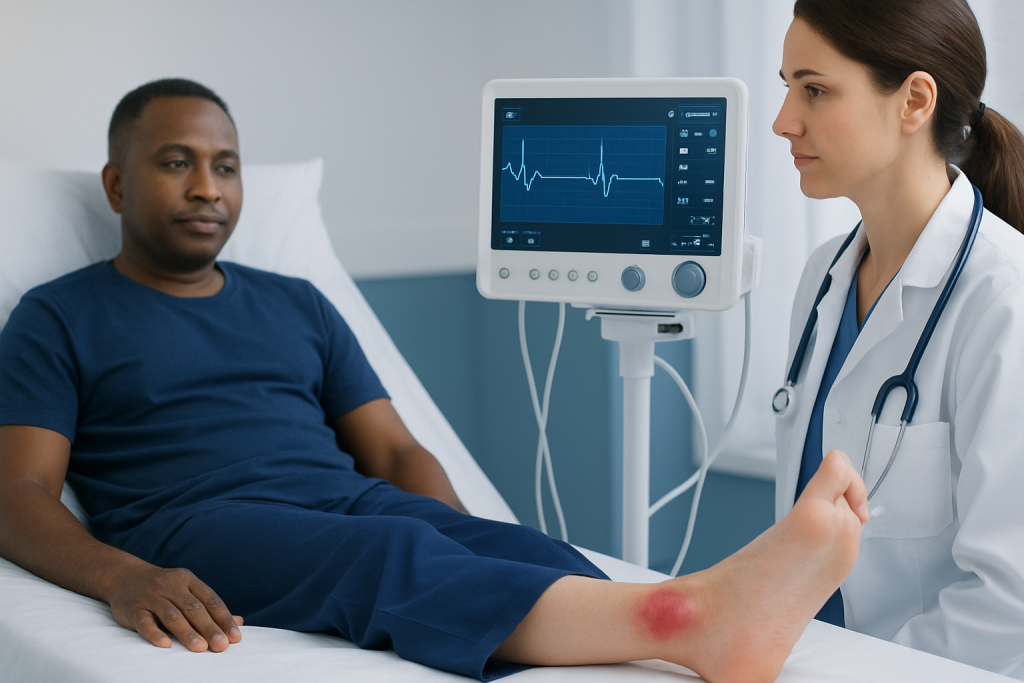
The most recognizable feature is a blister or group of blisters over the injured area. These blisters may be clear and filled with watery fluid, or they may look darker and blood-tinged if the deeper skin layers have been affected.
Before the blister appears, the skin often becomes tight, shiny, and very swollen. The area may feel tender or warm, and the skin can look stretched because the swelling has built up underneath it.
Other symptoms usually come from the fracture and the injury itself rather than the blister alone. These may include pain, difficulty bearing weight or using the limb, bruising, and reduced movement. Any numbness, coldness, or color change in the foot or hand should be treated as a separate urgent concern.
- Clear fluid-filled or blood-filled blisters
- Marked swelling around the fracture
- Tight, shiny skin
- Pain and tenderness
- Bruising or limited movement
Causes & Risk Factors
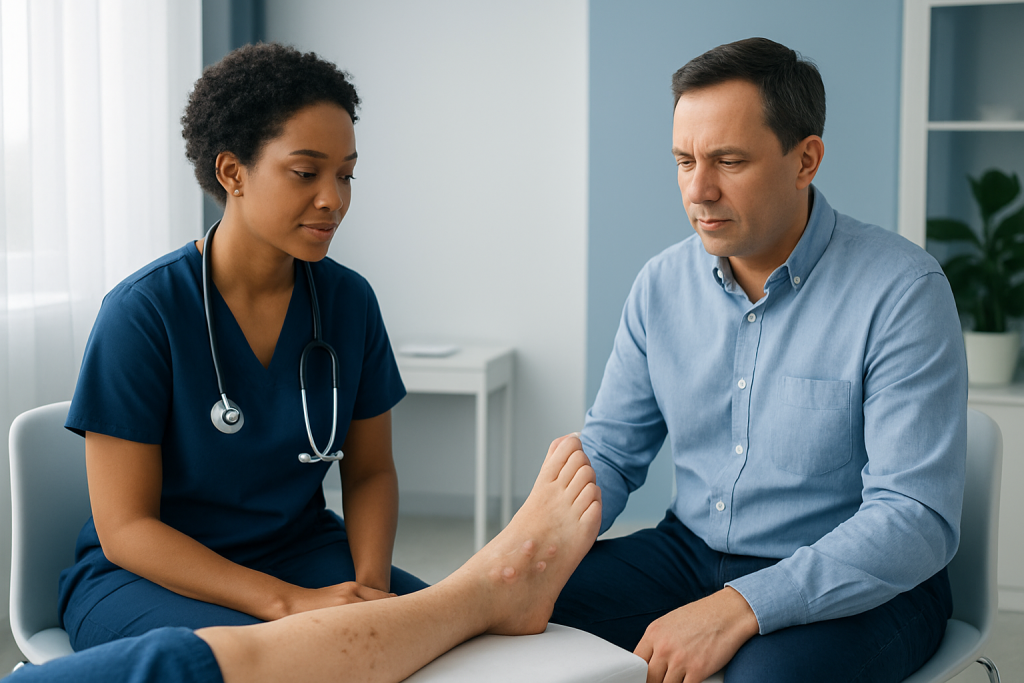
Fracture blisters develop when a fracture causes enough soft-tissue swelling to separate layers of the skin. The outer skin and the deeper layer beneath it are pulled apart by fluid pressure, and a blister forms in the weakened space.
They are more likely after higher-energy injuries, such as falls, sports trauma, or road traffic accidents, but they can also occur after less dramatic injuries if swelling is substantial. Areas with thin skin and less soft-tissue cushioning tend to be more vulnerable, which is why the ankle, tibia, wrist, and foot are common sites.
Certain factors may make blisters more likely or more troublesome. These include delayed elevation or immobilization, severe swelling, fractures close to the skin surface, and injuries that already compromise the skin. People with diabetes, circulation problems, smoking-related vascular disease, or fragile skin may need especially careful monitoring after an orthopedic injury.
Diagnosis
Fracture blisters are usually diagnosed by looking at the injured area during the medical examination. A clinician will assess the skin, the amount of swelling, the position of the limb, and signs that the bone injury may need urgent treatment.
Imaging such as X-rays, and sometimes CT scans, is used to define the fracture rather than the blister itself. The doctor is typically trying to answer two questions at the same time: what bone is broken, and how healthy is the overlying skin for casting, splinting, or surgery?
In some cases, the skin condition is rechecked over time. This is important because the appearance of the blister often changes as swelling settles, and treatment decisions may depend on whether the skin is improving or remains too fragile for an incision.
Treatment Options
Treatment focuses on two goals: protecting the skin and treating the fracture safely. The blister itself is usually managed conservatively at first, while the orthopedic team decides how best to stabilize the bone.
Doctors may recommend elevation, immobilization, and carefully applied dressings to reduce pressure and swelling. If surgery is needed, it may be delayed until the skin is in better condition, because operating through compromised skin can increase the chance of wound complications.
How the blister is handled can vary. Some clinicians leave intact blisters undisturbed and protect them with dressings, while others may use specific wound-care approaches depending on the blister type, size, and location. The right plan depends on the injury pattern, the patient’s overall health, and whether surgery is urgent.
- Elevation to help fluid drain away from the injured area
- Splinting or immobilization to limit movement
- Protective dressings over intact blisters
- Pain relief as advised by a clinician
- Delayed surgery when skin recovery is needed first
Patients should not try to drain, pop, or peel a fracture blister at home. Opening the blister can remove the skin’s natural barrier and may increase infection risk, especially when the area is already swollen or a cast is being considered.
Prevention & Self-care
Not every fracture blister can be prevented, because they are tied to the severity of the initial injury and the body’s swelling response. Still, early care can reduce stress on the skin and may limit how much the problem develops.
After a suspected fracture, the safest self-care is to rest the limb, keep it elevated when possible, and follow instructions about splinting or temporary immobilization. Ice may be recommended in some injuries, but it should be used only as advised and never placed directly on damaged skin.
If travel for care is involved, the injured area should be protected during the journey and reassessed promptly on arrival. For international patients, practical planning matters: bringing imaging, injury notes, and any medications helps the treating team understand the timeline of swelling and choose the most appropriate next step.
- Keep the limb elevated above heart level when resting
- Do not massage the swollen area
- Avoid tight wraps unless instructed by a clinician
- Watch for changes in skin color, temperature, or sensation
- Attend follow-up visits even if the blister appears to be settling
When to See a Doctor
Any suspected fracture should be assessed by a doctor, especially if there is deformity, inability to bear weight, or significant swelling. Fracture blisters themselves also need medical review, because they can influence the timing of fracture care.
Urgent assessment is especially important if the pain is worsening rather than gradually settling, if the fingers or toes become numb or cold, or if the skin looks pale, blue, or very tense. These can be signs that the injury is affecting circulation or nerve function.
Medical attention is also needed if the blister breaks and the area becomes more red, warm, swollen, or starts draining pus, or if fever develops. In patients preparing for surgery, the surgeon should be told immediately if new blisters appear, because the skin may need time and protective care before the procedure can safely proceed.
Recovery and Follow-up
Recovery from fracture blisters usually tracks the recovery of the swelling around the fracture. The blistered skin often improves gradually over days to weeks, but the exact timeline depends on the severity of the injury, the location of the fracture, and whether surgery is required.
Follow-up appointments are important because the treating team will want to check both the bone and the skin. Even if the blister itself seems minor, the overall plan may change as swelling settles and the skin becomes safer for definitive fracture treatment.
For patients traveling from abroad, good follow-up planning is especially helpful. Clear written instructions, photos of the wound if requested, and communication with the orthopedic team can make recovery smoother after returning home. At Acibadem Health Point, multidisciplinary specialists and JCI-accredited hospitals diagnose and treat fracture-related injuries for international patients within coordinated orthopedic care.
Living with a fracture blister during bone healing
It can be frustrating when a skin problem appears on top of an already difficult fracture, but fracture blisters are usually manageable with the right approach. The main priority is patience with the soft tissues, because the skin often needs to recover before the rest of the treatment can move forward safely.
Patients do best when they keep appointments, follow wound-care instructions carefully, and report any unexpected changes early. This approach helps the care team protect the skin, support bone healing, and reduce avoidable delays.
Frequently asked questions
01What are fracture blisters?
Fracture blisters are fluid-filled blisters that form on swollen skin near a broken bone. They happen because the injury causes significant swelling and separation within the skin layers.
02Do fracture blisters mean the bone break is worse?
Not necessarily. They usually reflect how much the soft tissues have swollen rather than the exact severity of the bone fracture itself, though they do show the surrounding skin needs careful attention.
03Should a fracture blister be popped or drained?
No, it should not be popped at home. Breaking the blister can increase infection risk and make skin care more complicated, especially if surgery or a cast is being planned.
04How long do fracture blisters take to heal?
Healing time varies with the injury and swelling, so there is no single timeline. The blistered skin often improves gradually as the swelling goes down, but follow-up is important because treatment of the fracture may depend on skin recovery.
05Can fracture blisters delay surgery?
Yes, they sometimes can. If the skin is fragile or actively blistered, a surgeon may wait until the tissue improves to reduce the chance of wound problems after the operation.
06Are fracture blisters an emergency?
They are not always an emergency on their own, but the injury around them may be urgent. Medical care should be sought promptly if there is deformity, numbness, coldness, severe pain, or any sign of infection.
This article is for general information only and is not a substitute for professional medical advice. Please consult a qualified doctor about your individual situation.
Joint and spine care in Turkey — expert assessment & treatment
JCI-accredited · board-certified surgeons · reply within 24h
Add us as a Preferred Source to see more of our trusted health content across Google Search, AI Overviews and Discover.