What Is Broken Talus Bone? A Complete Medical Guide

Key Takeaways
- A broken talus bone is a fracture of the talus, a bone that helps form the ankle and supports foot movement.
- Pain, swelling, bruising, and difficulty bearing weight are common warning signs.
- Imaging, usually X-rays and often CT scans, helps define the fracture and guide treatment.
- Some talus fractures need immobilization, while displaced or severe injuries may require surgery.
- Recovery may take several months and often includes physical therapy and careful follow-up.
A broken talus bone is a fracture of one of the key bones that connects the leg to the foot and helps the ankle move smoothly. It usually happens after a fall, twist, or high-impact injury and needs prompt medical assessment because healing and blood supply can be more complex than in many other foot fractures.
Overview
A broken talus bone is a fracture of the talus, a small but important bone located between the shin bones and the heel. It helps transfer body weight from the leg to the foot and plays a central role in ankle motion, which is why an injury to this bone can affect both walking and balance.
Talus fractures are less common than many other ankle or foot fractures, but they deserve careful attention. The bone has a delicate blood supply, and the joint surfaces around it are essential for smooth movement. For that reason, even a fracture that looks straightforward at first may need specialist evaluation to avoid long-term stiffness, arthritis, or healing problems.
People often wonder whether they can “walk it off” after a twisting injury or fall. With a suspected talus fracture, that is not a safe approach. Early diagnosis helps determine whether the bone is stable, displaced, or associated with other injuries in the ankle or foot.
Symptoms
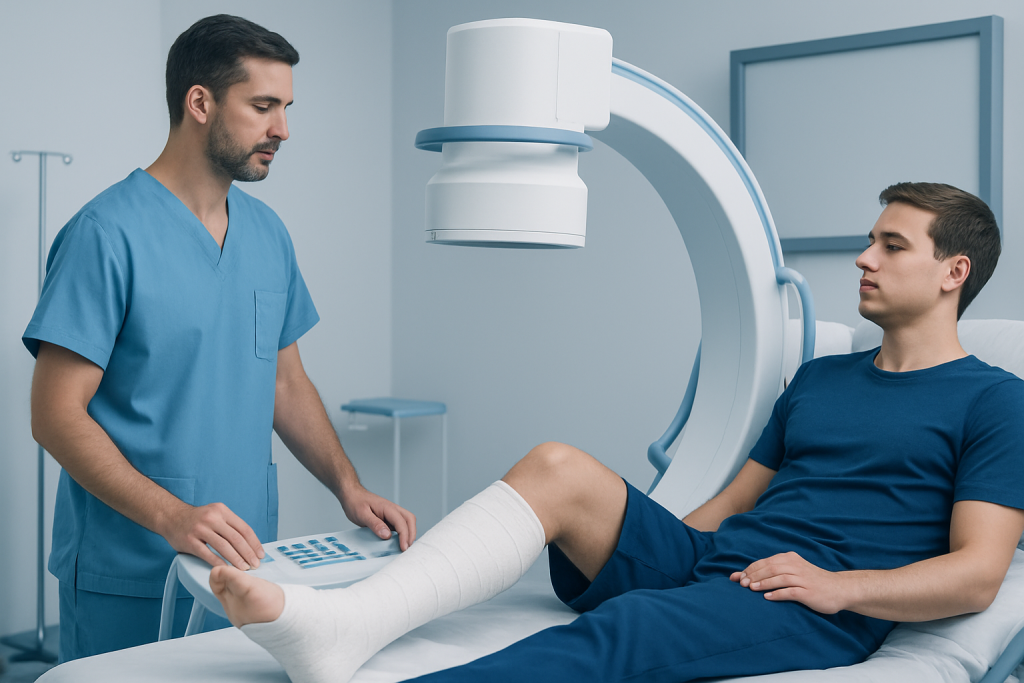
The first sign is usually pain deep in the ankle or just in front of the heel, especially after a fall, hard landing, or twisting injury. Swelling often develops quickly, and the area may feel tender to touch or uncomfortable with even small movements.
Many people find it difficult or impossible to bear weight. Bruising, stiffness, and a sense that the ankle is “not right” are also common. In more serious injuries, the foot may look deformed or the pain may be severe enough to prevent any movement at all.
- Sudden ankle or hindfoot pain after trauma
- Swelling around the ankle or top of the foot
- Bruising or color changes
- Difficulty standing or walking
- Reduced ankle motion
Symptoms can overlap with sprains and other fractures, which is one reason imaging is important. A person may have a talus fracture even if the ankle does not appear dramatically misshapen.
Causes & Risk Factors

Most broken talus bones happen after a significant force is applied to the foot or ankle. Common causes include falls from height, motor vehicle accidents, sports injuries, and forceful twisting of the ankle, especially when the foot is planted.
The talus can fracture in several ways. Some injuries involve a simple crack, while others create multiple fragments or shift the bone out of position. Fractures that affect the neck or body of the talus may be more complex and can involve the joint surfaces.
Risk increases with high-energy trauma, activities that involve jumping or landing, and situations where the foot is trapped or turned forcefully. Because the talus is protected deep within the ankle, many fractures are linked to more than one injury, including ligament damage or fractures in nearby bones.
Diagnosis
Diagnosis begins with a careful history and physical examination. The clinician will ask how the injury happened, where the pain is located, and whether weight-bearing is possible. They will also check the skin, blood flow, and nerve function to make sure no urgent complications are present.
X-rays are usually the first imaging test, but they do not always show the full extent of the injury. A CT scan is often helpful because it gives a more detailed view of the fracture pattern, joint alignment, and whether the bone fragments are displaced. In some situations, MRI may be considered later if persistent pain suggests associated soft-tissue or cartilage injury.
Accurate imaging matters because treatment choices depend heavily on whether the fracture is stable, displaced, or involving the joint surfaces. The more precisely the injury is mapped, the better the team can plan care and recovery.
Treatment Options
Treatment depends on the fracture type, how far the pieces have moved, and whether the joints are involved. Nondisplaced fractures may be treated without surgery using a cast or boot, rest, and strict protection from weight-bearing for a period recommended by the treating clinician.
When the bone fragments are displaced, unstable, or affecting the joint surface, surgery is often considered to restore alignment and reduce the risk of future stiffness or arthritis. Surgical methods may involve screws, plates, or other fixation devices chosen to match the fracture pattern.
After the initial treatment, recovery usually includes a gradual return to weight-bearing, monitoring for healing, and rehabilitation exercises. Physical therapy can help restore motion, strength, and confidence in walking. Because the talus has a limited blood supply, follow-up appointments are important even when symptoms start to improve.
- Immobilization with cast or boot for stable fractures
- Non-weight-bearing protection when advised
- Open reduction and internal fixation for displaced fractures
- Pain control and swelling management
- Physical therapy during recovery
In complex cases, especially for international patients who want coordinated evaluation, surgery, and rehabilitation planning in one place, Acibadem Health Point’s multidisciplinary specialists and JCI-accredited hospitals can diagnose and treat this condition.
Prevention & Self-care
Not every broken talus bone can be prevented, especially when the injury comes from a major accident. Still, the risk can be lowered by using proper footwear during sports, following safe landing techniques, and avoiding activities on uneven or slippery surfaces when fatigue is high.
For people recovering from a fracture, self-care is focused on protecting the bone while it heals. This usually means following weight-bearing instructions closely, keeping follow-up visits, and reporting any new pain, numbness, or swelling promptly. Elevating the foot when resting may help ease swelling, and using mobility aids as directed can reduce strain on the injury.
Recovery also tends to go more smoothly when the person resists the urge to test the ankle too early. A talus fracture can feel better before it is fully healed, so pacing activity based on medical guidance is often the safest approach.
When to See a Doctor
Anyone with a suspected talus fracture should seek medical assessment promptly, especially after a fall, crash, or twisting injury that causes ankle pain and difficulty bearing weight. Early evaluation is important because delays can make alignment, healing, and pain control more difficult.
Immediate medical attention is especially important if the foot looks deformed, numb, cold, pale, or increasingly swollen, or if there is an open wound near the injury. These can be signs of a more serious fracture or circulation problem.
People who have already been diagnosed should contact their clinician if pain worsens suddenly, the cast or boot feels too tight, or they develop new tingling, weakness, or color change in the foot. A clear follow-up plan matters, since some talus fractures need monitoring over time even after the initial treatment begins.
Frequently asked questions
01What is a broken talus bone?
It is a fracture of the talus, the bone that sits between the shin and heel and helps form the ankle joint. Because this bone is deep in the ankle and has an important blood supply, it needs careful medical evaluation.
02Can a talus fracture be mistaken for a sprain?
Yes. The pain, swelling, and trouble walking can look similar to an ankle sprain, which is why imaging is often needed after a significant injury. A person should not assume it is only a sprain if weight-bearing is difficult.
03How is a broken talus bone treated without surgery?
Stable, nondisplaced fractures may be managed with immobilization, rest, and avoiding weight on the foot for a period of time. The exact plan depends on the fracture pattern and how it is healing on follow-up scans.
04How long does recovery take?
Recovery time varies, but it is often measured in months rather than weeks. Healing depends on the severity of the fracture, whether surgery was needed, and how well the bone and surrounding joints recover.
05Can a talus fracture cause long-term problems?
It can, particularly if the fracture is displaced or affects the joint surfaces. Possible longer-term issues include stiffness, arthritis, or problems with bone healing, which is why follow-up care is important.
06When should someone go to urgent care or the emergency department?
They should seek urgent care if they cannot bear weight after an injury, if the ankle looks deformed, or if the foot becomes numb, cold, or pale. Open wounds, severe swelling, or rapidly worsening pain also need prompt attention.
This article is for general information only and is not a substitute for professional medical advice. Please consult a qualified doctor about your individual situation.
Joint and spine care in Turkey — expert assessment & treatment
JCI-accredited · board-certified surgeons · reply within 24h
Add us as a Preferred Source to see more of our trusted health content across Google Search, AI Overviews and Discover.