Veneers Turkey Packages: What’s Included, Prices and How to Compare

Key Takeaways
- A veneers Turkey package normally covers the in-person consultation, imaging, tooth preparation, temporary veneers, the final restorations and fitting, plus transfers, hotel nights and interpreting help.
- Prices are best treated as planning bands rather than firm quotes, because the material, the number of teeth and any preparatory dental work all change the final figure.
- Written, itemised treatment plans and clear exclusions matter more than a low headline price.
- Accreditation such as JCI, the treating dentist's qualifications and registration, and access to on-site specialists are practical comparison criteria.
- Most veneer journeys involve two visits or one longer stay; travel timing should allow for laboratory work and a review appointment before flying home.
- Aftercare arrangements in the UK — including who reviews the work and how remote follow-up is handled — should be agreed before treatment begins.
A veneers Turkey package is a bundled arrangement that usually combines the dental assessment, imaging, the veneers themselves and travel logistics such as airport transfers, hotel nights and interpreting support. This guide explains what is typically included, how prices are structured in bands rather than fixed quotes, and how UK patients can compare offers sensibly before committing.
What a veneers Turkey package actually is
A veneers Turkey package is a pre-arranged bundle that groups dental treatment with the practical elements of travelling for care, so that a patient coming from the United Kingdom receives one coordinated plan instead of arranging each part separately. Typically it covers the in-person dental assessment on arrival, necessary imaging, preparation of the teeth, temporary veneers, the laboratory-made final veneers and their fitting, alongside logistics such as airport transfers, a set number of hotel nights and interpreting support during appointments.
It is important to understand what a package is not. It is not a diagnosis, and it is not a promise about how many veneers a person needs or whether veneers are the most appropriate option at all. Veneers are one of several approaches to the appearance of front teeth; depending on the individual, a dentist may discuss whitening, orthodontics, composite bonding, crowns or gum treatment instead of or before veneers. Only a qualified dentist who has examined the mouth and reviewed radiographs can advise on suitability, and that conversation should happen before any figure is agreed.
Most packages begin remotely. Prospective patients usually send recent photographs of their smile and, where available, dental x-rays and a summary of their dental history. A dentist reviews these and outlines a provisional plan, which is then confirmed or revised at the first face-to-face appointment. Treating that first plan as provisional is realistic rather than pessimistic — clinical findings on the day, such as decay, an old restoration or gum inflammation, can reasonably change the recommendation.
What is usually included — and what often is not
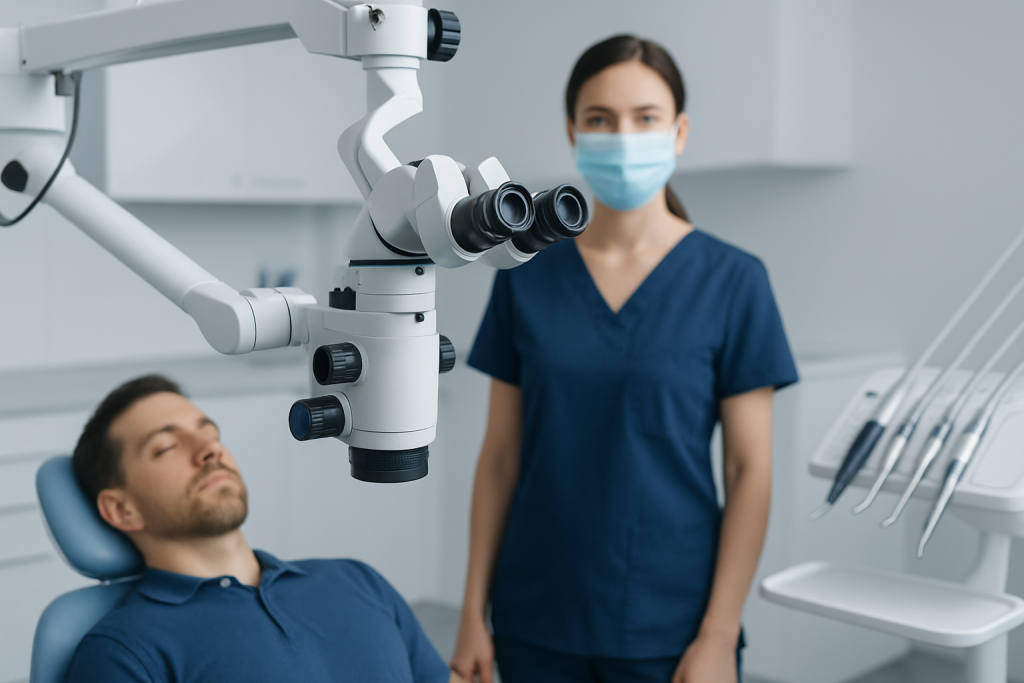
Inclusions vary between providers, which is precisely why comparing packages requires reading the itemised list rather than the headline. A written breakdown, sent by email before travel, is the single most useful document a patient can request.
- Commonly included: initial in-person examination; digital imaging or panoramic radiographs; digital scanning or impressions; smile design discussion; tooth preparation; temporary veneers; the agreed number of final veneers; fitting and bite adjustment; a review appointment before departure; airport–hotel–clinic transfers; a defined number of hotel nights; interpreter or English-speaking coordinator support.
- Frequently excluded: flights; additional hotel nights if the plan changes; treatment of decay, root canal treatment, extractions, gum therapy or implants identified during assessment; night guards; teeth whitening of the lower arch; travel insurance; and any follow-up carried out in the UK.
Preparatory dental work is the most common reason a quoted figure changes. If a tooth needs restoring or the gums need to settle before veneers can be placed, that treatment is generally priced separately and may also affect the timetable. Asking in advance how such findings are handled — whether they are quoted at the time, and whether the trip can be extended — avoids uncertainty later.
Guarantee or warranty terms also differ. Some clinics offer a stated period of cover on the restorations themselves, usually conditional on attending reviews and maintaining oral hygiene. Patients should read what the cover includes, what would void it, and whether returning to Turkey would be necessary to use it. No provider can promise a permanent or risk-free result, and cautious wording in a written policy is a sign of transparency rather than a drawback.
Understanding veneers Turkey package prices and cost bands

Realistic financial planning starts with accepting that a veneers Turkey package is priced in bands, not with a single universal figure. Costs are usually calculated per tooth and then bundled, so the total depends mainly on how many teeth are treated — commonly the visible upper teeth, sometimes both arches — and on the material chosen. A plan involving eight veneers sits in a very different band from one involving twenty.
Material is the second major variable. Composite veneers generally occupy the lowest band and are the least invasive but the least durable. Pressed ceramic and layered porcelain veneers sit in the mid to upper bands and are chosen for their appearance. Zirconia-based restorations and full crowns are priced separately again and are used for different clinical reasons, not simply as a cosmetic upgrade. Where a plan includes implants, root canal treatment or gum surgery, those items carry their own bands and should appear as distinct lines.
Broadly, patients researching from the UK will find that overall per-tooth pricing in Turkey is often lower than comparable private treatment at home, which is a large part of why medical travel is considered. That difference should be assessed against the cost of flights, extra nights, insurance and any follow-up needed once home — and against the value of continuity of care. A very low headline price that excludes imaging, temporaries or a review appointment may not be cheaper once completed.
Rather than seeking a fixed quote online, it is more useful to request an indicative planning range in writing after a remote review, together with a note of what would move the figure up or down. Currency movement, the exact number of units and any preparatory work mean that final costs are confirmed only after clinical assessment.
How to compare clinics: accreditation, credentials and planning
Comparison is easier when it is based on verifiable criteria rather than photographs. Accreditation is a practical starting point. Joint Commission International (JCI) accreditation is an internationally recognised standard covering patient safety, infection control, medication management and quality systems, and it can be checked independently. Alongside it, national health ministry licensing and, in Turkey, registration through the health tourism authorisation system indicate that a provider is formally permitted to treat international patients.
The individual clinician matters as much as the building. Reasonable questions include where the dentist qualified, how long they have practised restorative or prosthetic dentistry, whether they hold specialist training, and whether the same dentist will carry out every stage of the treatment. Patients should also ask which laboratory produces the veneers, whether it is on site, and what materials are used — the manufacturer and material type should be stated in the plan and, ideally, on a certificate provided afterwards.
- Is a written, itemised treatment plan provided before travel?
- Is a second opinion or video consultation available before committing?
- What happens clinically if a veneer chips, debonds or the bite feels wrong?
- Which hospital or emergency service supports the clinic if a medical issue arises?
- How are records shared, and will the patient receive imaging and material details to pass to their UK dentist?
Caution is warranted where a provider recommends a large number of veneers without examination, offers time-limited discounts to encourage a quick decision, or declines to put exclusions in writing. Preparing teeth for porcelain veneers involves removing enamel and is not reversible, so the decision deserves unhurried consideration and, where possible, a discussion with a dentist in the UK beforehand.
Planning the trip: timing, appointments and recovery
Veneer treatment is staged, and the schedule reflects laboratory time. Many packages are arranged either as a single stay of roughly five to seven days or as two shorter visits separated by a few weeks, with the first covering consultation, imaging and preparation with temporaries fitted, and the second covering try-in, adjustment and final bonding. The precise pattern varies by clinic and by case, so the itinerary should be confirmed in writing before flights are booked.
Appointments are typically spread across the stay with rest days in between while the laboratory works, and patients are usually able to move about the city normally. Most people experience some tenderness, gum sensitivity or sensitivity to hot and cold after preparation, and temporaries require care with hard and sticky foods. Anyone undergoing additional procedures such as extractions or implants should expect a different recovery pattern and should follow their dentist’s specific instructions.
Practical travel planning is part of the package discussion. UK passport holders should check current entry requirements for Turkey and ensure a passport valid well beyond the travel dates. Travel insurance that acknowledges planned treatment abroad, a flexible return flight, and a plan for who accompanies the patient are all sensible. Coordinators can usually advise on accommodation near the clinic, transfers and appointment sequencing, and can flag whether the proposed dates leave enough margin for a final review before departure.
Aftercare once home in the United Kingdom
Aftercare is the part of a package most often overlooked at the booking stage and most often needed later. Before flying home, patients should leave with a written treatment summary, details of the materials and laboratory used, copies of imaging, instructions on cleaning around the veneers, and a named contact for questions. Many providers offer remote follow-up by video or messaging in the weeks afterwards, and photographs sent from home can help the treating dentist judge whether an issue needs attention.
Routine ongoing care continues in the UK. Registering with a dentist at home — and telling them what has been done — allows for regular examinations, hygiene appointments and monitoring of the gums and the underlying teeth. Some UK dentists are willing to carry out small adjustments or re-cement a veneer; others prefer not to work on restorations they did not place. Clarifying this locally in advance is worthwhile, and any costs for UK follow-up are the patient’s responsibility unless a package states otherwise.
Longer-term maintenance is straightforward but not optional: careful brushing, cleaning between the teeth, attention to grinding or clenching (a night guard may be recommended), and avoiding using the front teeth to bite very hard items all help protect the work. Veneers do not make teeth immune to decay or gum disease, and the health of the tooth beneath remains the priority. Any persistent pain, swelling, bleeding gums, a loose veneer or a bite that feels uneven should be assessed by a dentist promptly rather than left.
When to speak to a patient coordinator
A patient coordinator is useful earlier than most people expect — ideally at the research stage, before any deposit is paid. Coordinators arrange the remote review of photographs and records, put questions to the dentist, explain what a package does and does not cover, organise video consultations or second opinions, and sequence appointments, transfers and accommodation around realistic travel dates. They can also arrange interpreting support and explain how medical records will be shared.
Contacting a coordinator is particularly sensible for anyone with a medical condition, a bleeding or clotting disorder, diabetes, a history of gum disease, or who takes regular medication including blood thinners or bisphosphonates, as these may influence planning and require input from a physician as well as a dentist. It is also the right step for patients who have had previous crowns, implants or orthodontic treatment, where existing work must be assessed before a cosmetic plan is finalised.
Acibadem Health Point coordinates care for international patients across Acıbadem Healthcare Group’s JCI-accredited hospitals and clinics, where multidisciplinary specialists assess suitability, plan treatment and arrange the practical side of a stay in Turkey. As with any provider, the appropriate next step is an individual assessment: general information of this kind supports planning, but decisions about veneers should always be made with a qualified dentist who has examined the patient.
Frequently asked questions
01What is usually included in a veneers package in Turkey?
Most packages include the in-person dental examination, imaging or scanning, tooth preparation, temporary veneers, the agreed number of final veneers, fitting and a review appointment, together with airport transfers, hotel nights and interpreting support. Flights, travel insurance, extra hotel nights and any preparatory dentistry such as fillings or gum treatment are commonly excluded. Always ask for an itemised written list of inclusions and exclusions before travelling.
02How much do veneers cost in Turkey compared with the UK?
Prices are best understood as bands rather than fixed figures, because the total depends on the number of teeth, the material chosen and any additional dental work required. Composite veneers sit at the lower end, layered porcelain and zirconia restorations at the higher end. Overall per-tooth pricing in Turkey is often lower than comparable private treatment in the UK, but a fair comparison should include flights, insurance, extra nights and any follow-up needed at home.
03How long do I need to stay in Turkey for veneers?
Many plans are arranged either as one stay of roughly five to seven days or as two shorter visits a few weeks apart, allowing time for laboratory work between preparation and final fitting. The exact schedule depends on the case and the clinic, so it should be confirmed in writing before flights are booked. Leaving a margin before the return flight allows for a final review and any adjustment.
04Why does JCI accreditation matter when choosing a clinic?
Joint Commission International accreditation is an internationally recognised standard covering patient safety, infection control, medication management and quality systems, and it can be verified independently. It does not guarantee an individual outcome, but it indicates that structured safety processes are in place. It is best used alongside checks on the treating dentist's qualifications, registration and experience.
05What aftercare will I need once I fly home?
Patients should leave with a written treatment summary, material and laboratory details, imaging and cleaning instructions, plus a named contact for remote follow-up. Routine examinations and hygiene appointments then continue with a dentist in the UK. Any persistent pain, swelling, bleeding gums, a loose veneer or an uneven bite should be assessed by a dentist promptly.
06Are veneers reversible?
Porcelain veneers usually require the removal of a layer of enamel, and enamel does not grow back, so this preparation is not reversible and the teeth will always need some form of covering afterwards. Some minimal-preparation or composite options remove less tooth structure but have different durability and appearance. A dentist should explain the trade-offs for the individual case before treatment begins.
07When should I contact a patient coordinator?
Ideally at the research stage, before paying any deposit, so that photographs and records can be reviewed remotely and questions put to the dentist. A coordinator can arrange a video consultation or second opinion, clarify what a package covers, and organise appointments, transfers and accommodation. It is especially advisable for anyone with a medical condition or who takes regular medication, as this may affect planning.
This article is for general information only and is not a substitute for professional medical advice. Please consult a qualified doctor about your individual situation.
Explore treatments in Turkey — costs, top hospitals & a free quote
JCI-accredited · board-certified surgeons · reply within 24h
Add us as a Preferred Source to see more of our trusted health content across Google Search, AI Overviews and Discover.