Ultrasound Scan Price: What Shapes Your Final Cost
An ultrasound scan price cannot be defined by one universal figure because the total charge depends on why the scan is needed, the body area examined, where it is performed, and what services are included. Asking for an itemized estimate in advance can help patients understand possible imaging, specialist reporting, consultation, and follow-up costs.
Ultrasound scan price: what patients are paying for
An ultrasound scan price reflects more than the few minutes spent obtaining images. It may include the appointment, use of imaging equipment, a sonographer or radiology technician, interpretation by a radiologist or other qualified clinician, a written report, and administrative services. The final amount can therefore differ between hospitals, diagnostic imaging centers, outpatient clinics, and public or private healthcare systems.
The most useful question before booking is not only “What does an ultrasound cost?” but “What exactly is included in the estimate?” Patients may wish to ask whether the price covers the requested examination, specialist interpretation, same-day reporting, any required consultation, and potential extra images. Insurance coverage, referral requirements, deductibles, co-payments, and authorization rules can also affect the out-of-pocket amount.
Cost should not be the only consideration. The appropriate scan is one that answers a defined clinical question and is performed by trained professionals using suitable equipment and reporting standards. A clinician can help determine whether ultrasound is the right first test or whether another imaging method is more appropriate.
How ultrasound works and why it is used
Ultrasound, also called sonography, creates images using high-frequency sound waves. A small handheld device called a transducer sends sound waves into the body and detects returning echoes. A computer converts those echoes into real-time images that a trained clinician can review.
Because standard ultrasound does not use ionizing radiation, it is commonly used in pregnancy and in many other settings. It can assess organs in the abdomen and pelvis, the thyroid, breasts, testes, muscles, tendons, joints, and superficial lumps. Doppler ultrasound is a related technique that evaluates blood flow in arteries and veins.
The test is often requested to investigate symptoms, monitor a known condition, guide a needle procedure, or provide additional detail after a physical examination or another test. For example, a Doppler study may be used when a clinician is evaluating possible deep vein thrombosis, while an abdominal scan can help assess several digestive or urinary concerns.
Which factors influence the ultrasound scan price

The body part being examined is a major factor. A focused scan of one small area may require less time than a detailed study of multiple abdominal or pelvic organs, a vascular mapping examination, or an obstetric scan with specific measurements. A scan requested for a straightforward question may also differ from one requiring extensive Doppler assessment or comparison with previous imaging.
Where the scan takes place can affect the total cost. Hospital-based imaging may have different facility charges from an independent imaging center, while an urgent or after-hours examination may involve additional resources. Prices can also vary by country, city, local regulations, and whether the service is publicly funded, privately insured, or self-paid.
Patients should also ask about charges that can be separate from image acquisition. These may include a medical consultation, radiologist interpretation, a formal written report, image copies, a follow-up appointment, or further imaging if the result is unclear. An estimate is most informative when it is itemized and states whether additional charges could apply.
- Type and extent of the ultrasound examination
- Use of Doppler or other specialized techniques
- Hospital, clinic, or dedicated imaging-center setting
- Urgency and availability outside usual hours
- Insurance benefits, referral rules, and prior authorization
- Specialist reporting and follow-up care
Who may need an ultrasound and how to prepare
Ultrasound is suitable for people of many ages when there is a clear medical reason for imaging. A doctor may recommend it for persistent abdominal or pelvic symptoms, a neck lump, breast symptoms, suspected gallbladder or kidney concerns, swelling in a limb, pregnancy-related assessment, or suspected tendon and soft-tissue injury. It may also be used to guide biopsies, fluid drainage, and certain injections.
Preparation depends on the examination. For some abdominal scans, patients may be asked not to eat for a period beforehand because food and gas can limit views of certain organs. For pelvic, bladder, or early pregnancy scans, a full bladder may improve the image. Other scans require little or no preparation. The imaging provider should give specific instructions in advance.
Patients should tell the care team about their symptoms, medications, recent imaging, and any possibility of pregnancy. Bringing a referral, insurance details where relevant, and previous reports can help the radiology team and the referring clinician compare findings accurately. Ultrasound is generally appropriate during pregnancy, but every examination should still have a clinical purpose.
What happens during an ultrasound scan
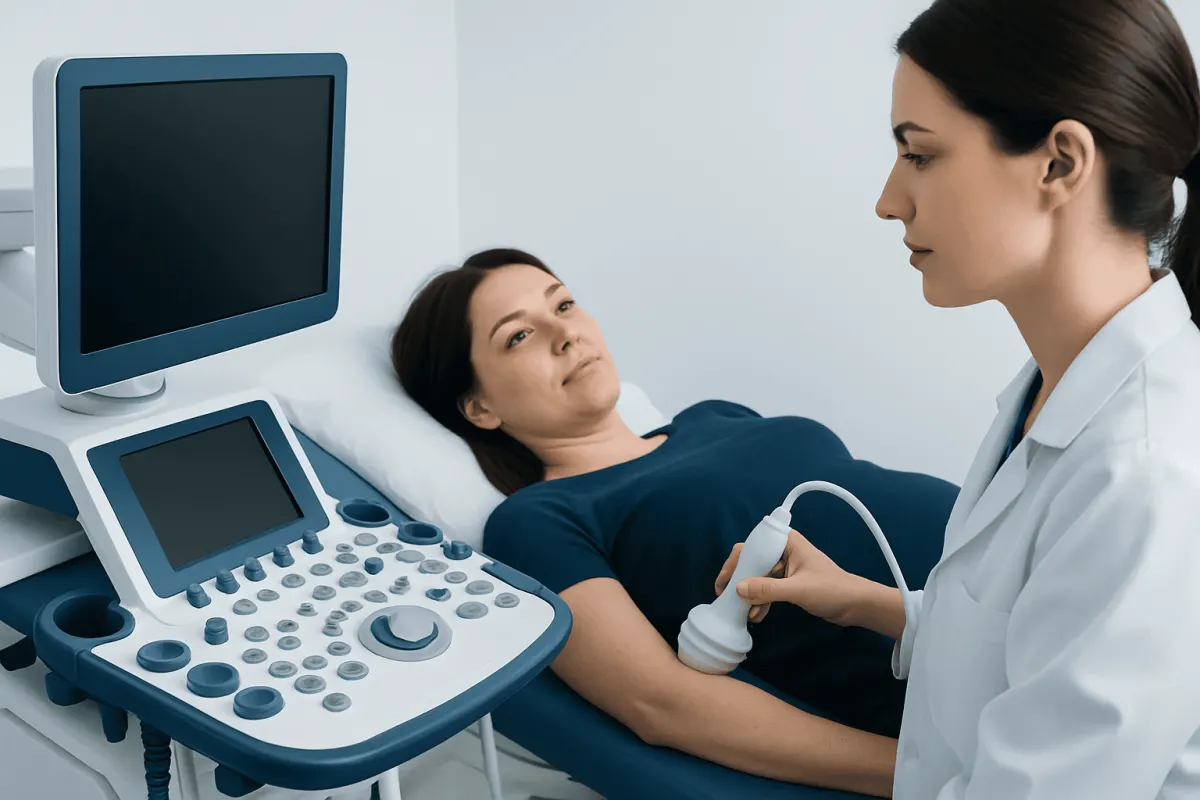
At the appointment, the patient may be asked to change into a gown and remove jewelry or clothing around the area being examined. They will usually lie on an examination couch. A clear water-based gel is applied to the skin to remove air between the transducer and the body and improve transmission of sound waves.
The sonographer moves the transducer over the area and may ask the patient to change position, hold their breath briefly, or describe where discomfort is felt. Mild pressure can be necessary to obtain clear pictures, especially during abdominal examinations. The scan length varies with the body area and complexity, but the imaging team can explain what to expect on the day.
Some pelvic and early pregnancy examinations may involve an internal transducer, with the patient’s informed consent. This can provide clearer images of structures close to the probe. Privacy, dignity, and the opportunity to ask questions are important throughout the procedure. In some circumstances, ultrasound can be part of broader diagnostic imaging planning when a clinician needs additional information.
Results, recovery, benefits and possible limitations
After a standard external ultrasound, the gel is wiped away and most people can eat, drink, work, drive, and continue normal activities immediately. There is typically no recovery period. The images are reviewed by a qualified professional, and the report is sent to the referring clinician or discussed according to the provider’s process.
Ultrasound offers important benefits: it is noninvasive, produces real-time images, does not use ionizing radiation, and can often be performed without sedation or recovery time. Doppler techniques can provide useful information about circulation, and ultrasound guidance can improve accuracy for some procedures.
Like all imaging tests, ultrasound has limitations. Image quality can be affected by bowel gas, body tissues, movement, the depth of the target area, and the location of the structure being examined. Some conditions are better assessed with CT, MRI, mammography, laboratory testing, or a specialist examination. An unclear or unexpected result does not automatically mean a serious problem; it may simply mean further assessment is needed.
Standard ultrasound is considered very safe. The main discomfort is usually temporary pressure from the probe or, for an internal examination, short-lived discomfort. Any recommendation for follow-up testing should be discussed with the clinician in the context of symptoms, examination findings, and medical history.
When to seek medical care and how to plan next steps
A routine ultrasound appointment should not delay urgent care. Prompt medical assessment is important for severe or worsening abdominal pain, chest pain, shortness of breath, fainting, sudden weakness or numbness, heavy vaginal bleeding, marked swelling and pain in one leg, high fever with significant illness, or pregnancy-related symptoms such as heavy bleeding or severe pain. Emergency services should be used when symptoms are severe or rapidly worsening.
For non-urgent symptoms, a primary care doctor or relevant specialist can decide whether ultrasound is indicated and what type will best answer the clinical question. This helps avoid unnecessary testing and makes the report more meaningful. Patients can ask how and when results will be communicated, as well as what follow-up may be needed if the scan identifies an abnormality.
Before confirming an appointment, patients may request a written estimate and check whether it includes the scan, report, and follow-up consultation. Acıbadem Health Point’s multidisciplinary specialists and JCI-accredited hospitals provide diagnostic assessment and treatment planning for international patients, including access to ultrasound examinations when clinically appropriate.
Frequently asked questions
01Why does the ultrasound scan price vary so much?
The ultrasound scan price can vary because examinations differ in complexity, body area, duration, use of Doppler imaging, and reporting requirements. The location and type of provider, insurance arrangement, and whether a consultation or urgent appointment is needed can also change the total amount. Asking for an itemized estimate helps clarify what is included.
02Does an ultrasound scan price usually include the radiologist report?
This depends on the provider and healthcare system. Some estimates include image acquisition and the formal interpretation, while others list the professional report separately. Patients should confirm whether the quoted amount includes the written report and how results will be sent to their doctor.
03Is ultrasound safe?
Standard diagnostic ultrasound uses sound waves rather than ionizing radiation and is generally considered safe when medically indicated and performed by trained professionals. It is widely used in pregnancy and for evaluating many organs and soft tissues. The clinician should explain why the scan is needed and how its findings may guide care.
04How long does an ultrasound scan take?
The length of an ultrasound appointment depends on the area being examined and the detail required. A focused examination may be relatively brief, while a more comprehensive abdominal, pelvic, vascular, or pregnancy assessment can take longer. The imaging provider can give a more specific timeframe when the scan is booked.
05Do patients need to prepare for an ultrasound?
Preparation is based on the type of ultrasound. An abdominal examination may require fasting, while a pelvic or bladder scan may require drinking water and avoiding urination beforehand. Patients should follow the instructions provided by the imaging center and ask if they are unsure.
06Can an ultrasound show cancer?
Ultrasound can identify a lump, mass, or other area that needs further assessment, but it cannot always determine whether a finding is cancerous. Depending on the result, a clinician may recommend additional imaging, blood tests, monitoring, or a biopsy. Results should be interpreted alongside symptoms, medical history, and other examinations.
This article is for general information only and is not a substitute for professional medical advice. Please consult a qualified doctor about your individual situation.
Explore treatments in Turkey — costs, top hospitals & a free quote
JCI-accredited · board-certified surgeons · reply within 24h
Add us as a Preferred Source to see more of our trusted health content across Google Search, AI Overviews and Discover.