Turkey Hairline Transplant: Healing and Growth Timeline

A Turkey hairline transplant uses a person’s own donor follicles to create a lower, fuller, or more natural-looking frontal hairline. It can provide lasting coverage when it is carefully planned, but results depend on the cause of hair loss, donor supply, surgical technique, and long-term follow-up.
Turkey Hairline Transplant: An Overview
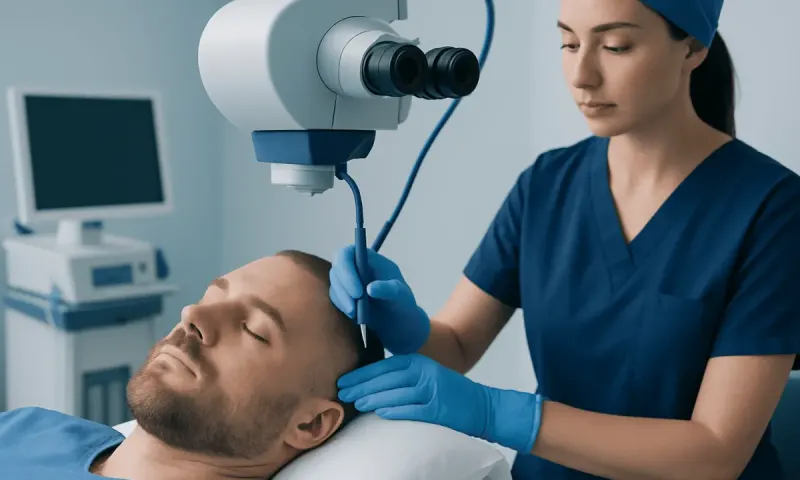
A Turkey hairline transplant is a surgical procedure that moves healthy hair follicles from a donor area, usually the back or sides of the scalp, to reshape a thinning, receding, or naturally high frontal hairline. Most people have brief skin healing and temporary shedding before growth becomes visible several months later. The quality and durability of the result depend more on correct diagnosis, donor supply, hairline design, surgical technique, and follow-up than on the country where it is performed.
The term may describe treatment for a receding hairline related to androgenetic hair loss, hairline asymmetry, selected scars, or a naturally high forehead. The procedure does not create new follicles; it redistributes existing follicles to an area where coverage is wanted. Because the frontal hairline frames the face, the surgeon must consider hair angle, direction, density, and the likelihood of future hair loss when planning treatment.
Planning a Natural Hairline: Candidacy, Benefits and Limits
Suitable candidates generally have a healthy donor area, realistic expectations, and a clearly assessed cause of hair loss. A consultation should include a medical history, scalp examination, review of medications, and discussion of family patterns of hair loss. Dermoscopy, blood tests, or other assessments may be appropriate when the cause is uncertain, particularly in people with sudden shedding, scalp inflammation, or patchy hair loss.
People with stable hair loss or a plan to manage progressive hair loss may be good candidates. Those with active scarring scalp conditions, untreated infection, significant inflammation, or rapidly changing hair loss may need diagnosis and treatment first. A transplant can improve framing and coverage, but it cannot safely provide unlimited density, and a mature, conservatively designed hairline usually gives the most durable-looking outcome over time.
How a Turkey Hairline Transplant Works: Step by Step

Planning begins by confirming that transplantation is appropriate and mapping a hairline that fits the person’s facial proportions, age, hair characteristics, and anticipated future hair loss. Follicular unit extraction (FUE) removes individual follicular units from the donor area and usually leaves tiny dot-like scars. Follicular unit transplantation (FUT) removes a narrow strip of donor scalp and may be appropriate in selected cases, although it leaves a linear scar.
- The clinician photographs the scalp, examines donor density, and agrees on a treatment plan.
- The hairline is marked while the person is awake so its shape and position can be reviewed.
- Local anaesthetic is used before follicles are removed from the donor area.
- Very small recipient sites are made at precise angles to imitate natural hair growth.
- Grafts are placed individually, with finer single-hair grafts commonly used at the leading edge.
The procedure usually takes several hours, depending on the number of grafts and the planned area. Afterward, the team provides instructions for washing, sleep position, activity, medication where needed, and follow-up. Some people need only one procedure, while others may consider an additional session later if hair loss progresses or more density is desired.
Recovery, Aftercare and Possible Risks
In the first few days, mild tightness, swelling, tenderness, crusting, or itching can occur around the donor and recipient areas. The grafts should be protected from rubbing, scratching, pressure, and unapproved hair products. Careful washing as instructed, avoiding smoking or nicotine, and following guidance on exercise and sun exposure can support uncomplicated healing.
Hair transplantation is a surgical procedure, so possible complications include bleeding, infection, prolonged numbness, scarring, inflammation of follicles, temporary shedding of nearby native hair, or uneven growth. Poor hairline design or incorrect graft direction can also make a result look unnatural. A well-executed transplant can create durable, natural-looking coverage, but no procedure can guarantee that every graft will grow or prevent ongoing loss of non-transplanted hair.
How long is recovery from a Turkey hair transplant?
Recovery from a Turkey hair transplant is usually measured in stages. Many people can return to quiet daily activities or desk-based work within several days to about a week, depending on swelling, appearance, travel plans, and the nature of their work. Crusting and visible redness often improve over the first one to two weeks, while strenuous exercise, swimming, and activities that risk rubbing the grafts may need to be delayed according to the treating clinician’s instructions.
Recovery from surgery is different from the timeline for hair growth. Transplanted hairs commonly shed within the first several weeks, which is an expected part of the cycle and does not necessarily mean graft failure. New growth often begins around three to four months, becomes more noticeable over subsequent months, and continues to mature for approximately nine to twelve months, sometimes longer. People travelling for treatment should arrange clear postoperative contact and a plan for follow-up at home.
How long do hairline transplants take to heal?
The small recipient sites along the hairline commonly close and form crusts within the first days, with most surface healing occurring over roughly seven to ten days. Mild pinkness, sensitivity, or reduced sensation can persist for longer, and the duration varies with skin type, procedure extent, individual healing, and aftercare. The donor area also needs time to settle, whether follicles were taken by FUE or FUT.
Hair-growth healing takes considerably longer than skin healing. The implanted shafts may fall out two to eight weeks after surgery, while the follicles remain under the skin and enter a resting phase. Early regrowth generally appears after a few months, and the final appearance of the hairline develops gradually as hairs lengthen, thicken, and blend with existing hair. The treating team should advise when normal grooming, hair colouring, hats, and sports can be resumed.
What happens 10 years after a hair transplant?
Transplanted follicles usually retain many of the characteristics of the donor area, so successfully growing transplanted hair can remain for many years. However, hair naturally changes with age, and no clinician can promise that every transplanted follicle will continue growing indefinitely. Long-term appearance is also influenced by the quality of the donor hair, scalp health, genetics, and the original surgical design.
The main long-term consideration is progression of hair loss in the surrounding, non-transplanted hair. If native hair continues to thin behind a low or dense transplanted hairline, the contrast can become noticeable. A responsible treatment plan anticipates this possibility through conservative design, ongoing assessment, and clinically appropriate medical treatment for hair loss when suitable. Some people may later choose another procedure, but donor hair is limited and should be used carefully.
What is the success rate of hair transplants in Turkey?
There is no single, independently verified national success rate for hair transplants in Turkey. Reported outcomes can differ because clinics may define success differently, such as graft survival, visible density, patient satisfaction, or the appearance of photographs. A headline percentage does not show whether a person had an accurate diagnosis, a suitable donor area, a safe procedure, or a hairline designed for long-term change.
Rather than relying on promotional claims, a person can ask who will perform and supervise each surgical stage, whether the facility is appropriately licensed, how donor supply is assessed, and what written aftercare is provided. It is also reasonable to ask about the clinician’s experience with hairline design, the expected limitations of the individual case, potential complications, and how concerns will be managed after travel. An in-person or detailed remote medical assessment should take place before making a final decision.
When to seek medical care
A medical assessment is important before transplantation for sudden or patchy hair loss, scalp pain, scaling, scarring, marked itching, or hair loss associated with illness or new medication. After a procedure, the person should contact the surgical team promptly for increasing pain, spreading redness, persistent swelling, fever, pus-like drainage, unexpected bleeding, or any concern about the healing scalp. Urgent symptoms should be assessed locally without delay.
For international patients, Acıbadem Health Point’s multidisciplinary specialists and JCI-accredited hospitals diagnose and treat hair-loss conditions and can support appropriate assessment and follow-up planning.
Frequently asked questions
01Is a hairline transplant the same as forehead reduction surgery?
No. A hairline transplant places donor follicles into the frontal scalp, while forehead reduction surgery removes a section of forehead skin and advances the scalp forward. The procedures have different scars, recovery needs, and suitability criteria, so assessment by an experienced clinician is important.
02Will transplanted hair shed after the procedure?
Temporary shedding of the transplanted hair shafts is common in the weeks after surgery. The follicles usually remain beneath the skin, then begin a new growth cycle over the following months. Ongoing follow-up helps distinguish expected shedding from a problem that needs review.
03Can a person have a hairline transplant while hair loss is still progressing?
It may be possible, but progressive hair loss requires especially careful planning. The clinician may recommend treatment to stabilise hair loss where appropriate and may design a more conservative hairline to reduce the chance of an unnatural appearance later.
04Does a hairline transplant hurt?
Local anaesthetic is normally used, so the person should not feel sharp pain during graft extraction or placement. There may be brief discomfort from numbing injections and some tenderness or tightness afterward, which the care team can help manage.
05Can women have a Turkey hairline transplant?
Yes, women may be candidates for hairline transplantation, including for naturally high hairlines or selected forms of hair loss. Because diffuse thinning, hormonal influences, traction, and scarring conditions can affect women differently, identifying the cause of hair loss first is particularly important.
06What should a person ask before booking a hair transplant abroad?
They should ask for a clear medical assessment, the name and role of the responsible physician, details of the planned technique, and realistic expectations for density and future hair loss. They should also confirm aftercare arrangements, access to medical records, and what support is available if a complication develops after returning home.
This article is for general information only and is not a substitute for professional medical advice. Please consult a qualified doctor about your individual situation.
Hair transplant in Turkey — costs, graft counts & a free assessment
JCI-accredited · board-certified surgeons · reply within 24h
Add us as a Preferred Source to see more of our trusted health content across Google Search, AI Overviews and Discover.