Tumor in the Neck Lymph Node: Diagnosis and Outlook
A tumor in the neck lymph node is an enlarged or abnormal lymph node that needs assessment to determine whether it is caused by infection, inflammation, lymphoma, or cancer that has spread from another area. Many neck lumps are not cancer, but a persistent, growing, or unexplained node should be evaluated promptly by a qualified clinician.
Overview: what does a tumor in the neck lymph node mean?
A tumor in the neck lymph node means that a lymph node in the neck is enlarged or has an abnormal appearance that may require further testing. Lymph nodes are small immune-system structures that filter lymph fluid and help the body respond to infection. Because they are active during immune responses, they can become temporarily enlarged for many non-cancerous reasons.
Sometimes, however, a node contains abnormal cells. These may be lymphoma cells, which begin in the lymphatic system, or cancer cells that have traveled from another site. In the neck, this can include cancers arising in the mouth, throat, voice box, thyroid, skin, or less commonly elsewhere in the body. Finding an abnormal node does not by itself identify the cause; imaging and tissue testing are often needed.
The evaluation is guided by age, medical history, symptoms, the location and behavior of the lump, and examination findings. Early assessment is particularly important when a neck mass lasts beyond a short illness, enlarges, feels firm or fixed, or occurs without an obvious infection.
What could be causing swollen lymph nodes in my neck?
Swollen lymph nodes in the neck are often reactive, meaning they have enlarged while responding to infection or inflammation. Common causes include colds, flu, sore throat, tonsillitis, dental infection, ear infection, sinus infection, and skin irritation or infection near the scalp or face. In these situations, nodes may feel tender and may reduce in size as the underlying condition improves.
Other possible causes include viral illnesses such as infectious mononucleosis, autoimmune conditions, certain medications, and less commonly tuberculosis or other persistent infections. A clinician may ask about recent illness, dental symptoms, travel, animal exposure, medicines, weight changes, fever, night sweats, and smoking or alcohol history.
Cancer is one possible cause, but it is not the most common explanation for every swollen node. Lymphoma can begin in lymph nodes, while metastatic cancer can reach neck nodes from a nearby head and neck site. Persistent enlarged nodes should be assessed because symptoms alone cannot reliably distinguish a benign reactive node from a cancerous one.
- Features that deserve medical review include a lump that lasts more than two to three weeks.
- Rapid growth, firmness, a painless fixed lump, or a node above the collarbone should also be checked.
- Associated symptoms such as unexplained weight loss, drenching night sweats, persistent fever, swallowing difficulty, voice change, or a mouth sore need timely assessment.
How doctors diagnose an abnormal neck lymph node

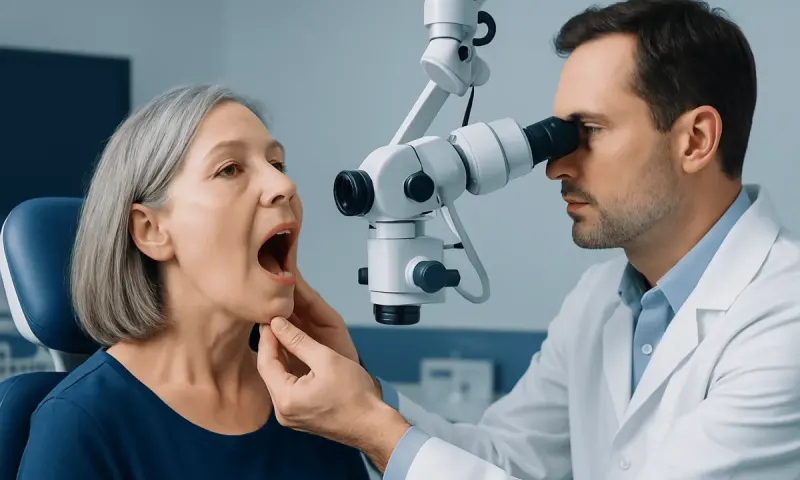
Diagnosis begins with a medical history and careful examination of the neck, mouth, throat, ears, skin, thyroid, and other relevant areas. The clinician considers the size, location, tenderness, mobility, and duration of the node, as well as symptoms that may point toward an infection or a possible primary cancer.
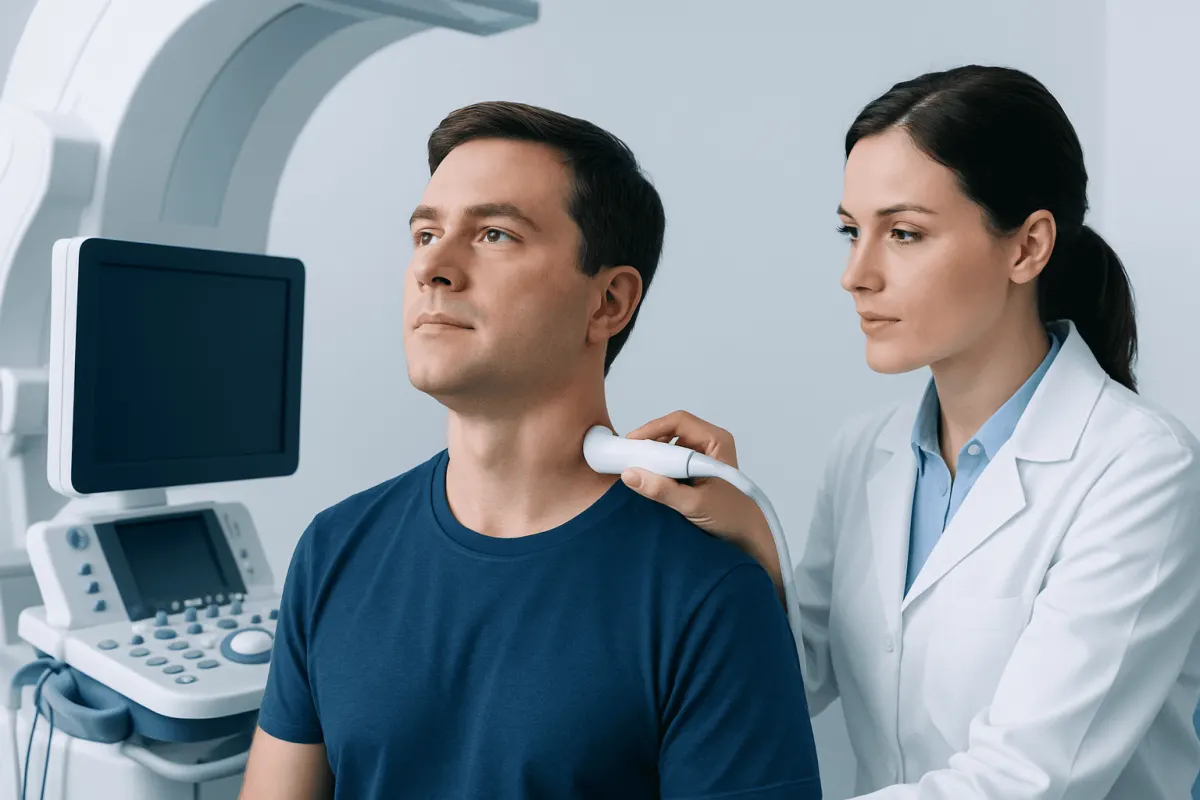
Tests may include blood tests and imaging. Ultrasound is often useful for examining neck lymph nodes and can guide a needle biopsy. CT, MRI, or PET-CT may be used when there is concern for cancer, to examine deeper structures, look for a primary tumor, and determine whether disease has spread. The right scan depends on the suspected diagnosis.
A tissue sample is usually required to confirm cancer. Fine-needle aspiration uses a thin needle to collect cells and is commonly an initial test. Core needle biopsy obtains a small tissue cylinder and may provide more detail. When lymphoma is suspected, an excisional biopsy, in which all or part of a lymph node is removed, may be needed because the node’s internal architecture helps pathologists classify the disease.
Pathology can identify whether cells are benign, represent lymphoma, or indicate metastatic cancer. Additional laboratory tests on the sample may help define the tumor type and guide treatment planning. If a cancer is found, staging tests describe its extent and support an individualized treatment discussion.
What percentage of lymph node biopsies are cancer?
There is no single reliable percentage of lymph node biopsies that are cancer because the answer depends heavily on who is being biopsied and why. Biopsies are generally recommended when a node has concerning features or remains unexplained, so the proportion of cancer diagnoses in biopsy studies is higher than it would be among all people with swollen lymph nodes.
Risk changes with age, the duration of swelling, the node’s location, imaging findings, and symptoms. In children and younger adults, reactive nodes from infection are common. In adults, especially those with a persistent neck mass and no clear infectious cause, clinicians take a more cautious approach because the chance of a significant diagnosis is higher.
A biopsy is not performed because cancer is certain. It is performed because examining cells or tissue is the most dependable way to clarify the cause and avoid unnecessary delay. The treating team can explain why a particular biopsy method is recommended and what information it is expected to provide.
What are the treatment options for lymph node cancer?
Treatment for cancer involving neck lymph nodes depends on whether the cancer began in the lymphatic system or spread from another organ. “Lymph node cancer” can refer to lymphoma, but it may also describe metastatic cancer in a lymph node. These conditions are treated differently, so an accurate pathology diagnosis is essential before treatment starts.
For lymphoma, treatment may involve active monitoring for selected slow-growing forms, chemotherapy, immunotherapy, targeted medicines, radiation therapy, or combinations of these approaches. Some patients with relapsed or high-risk disease may be considered for stem cell transplantation or cellular therapies in specialist settings. The subtype of lymphoma and its stage guide the plan.
When cancer has spread to neck nodes from a head and neck primary tumor, treatment may include surgery to remove involved nodes, often called neck dissection, radiation therapy, systemic treatment such as chemotherapy, immunotherapy or targeted therapy, or a combination. The treatment approach also depends on the primary site, tumor biology, stage, expected effects on speech and swallowing, and the patient’s preferences.
Supportive care is an important part of treatment. It can include nutritional guidance, dental review before head and neck radiation, speech and swallowing therapy, pain control, psychological support, and rehabilitation. Care is commonly planned by a multidisciplinary team involving oncology, ENT or head and neck surgery, radiology, pathology, radiation oncology, and other specialists as needed.
How long do people with cancer in lymph nodes in the neck typically live?
There is no single survival time for people with cancer in lymph nodes in the neck. Prognosis depends on the type of cancer, where it started, the number and location of involved lymph nodes, whether cancer is found elsewhere, tumor biology, response to treatment, general health, and access to appropriate care.
Some lymphomas are highly treatable and may be cured, while others can often be managed for long periods. Many head and neck cancers with regional lymph node involvement are treated with curative intent, particularly when disease has not spread to distant organs. In other circumstances, treatment may focus on controlling cancer, relieving symptoms, and maintaining quality of life.
Population survival statistics can be useful for understanding broad patterns, but they cannot predict an individual outcome. They may also reflect older treatment approaches and groups of patients with very different disease characteristics. Once pathology and staging are complete, the oncology team can discuss the likely goals of treatment and the factors most relevant to that individual.
When to seek medical care
Medical care should be sought for a new neck lump that persists beyond two to three weeks, grows, or appears without a clear explanation. An earlier appointment is appropriate for adults with a persistent neck mass, particularly if there is a history of tobacco use, heavy alcohol use, prior cancer, radiation exposure, or immune suppression.
Urgent medical attention is needed if swelling interferes with breathing or swallowing, or if there is rapidly increasing neck swelling. A clinician should also assess persistent hoarseness, throat pain, difficulty swallowing, unexplained weight loss, night sweats, ongoing fever, or sores in the mouth that do not heal.
People should avoid repeatedly pressing or squeezing the lump, as this can make it more tender and does not determine its cause. It is helpful to note when the swelling began, whether it is changing, recent infections, and accompanying symptoms. Acıbadem Health Point’s multidisciplinary specialists and JCI-accredited hospitals evaluate and treat conditions involving neck lymph nodes for international patients.
Frequently asked questions
01Can a neck lymph node be cancerous without pain?
Yes. Cancerous lymph nodes may be painless, but painless swelling does not automatically mean cancer. Many benign conditions can also cause painless enlarged nodes, so persistent or unexplained lumps should be assessed by a clinician.
02Can an infection cause a lump in only one side of the neck?
Yes. A localized infection involving the throat, teeth, ear, skin, or nearby tissues can cause one or more nodes on one side of the neck to swell. If the lump does not settle after the infection improves, grows, or has no clear infectious cause, medical review is important.
03Does a normal blood test rule out lymphoma or metastatic cancer?
No. Blood tests can provide useful information about infection, inflammation, blood cell counts, and organ function, but they cannot reliably rule out all cancers. Imaging and biopsy may be necessary when examination findings or symptoms remain concerning.
04Is a fine-needle biopsy painful?
Fine-needle aspiration is usually a brief outpatient procedure and commonly involves local numbing medicine when appropriate. Most people experience pressure or mild discomfort rather than significant pain, and temporary tenderness or bruising can occur afterward.
05Can swollen neck lymph nodes go away on their own?
Yes. Nodes enlarged because of a minor viral or bacterial infection often become smaller as the illness resolves, although they may take time to return fully to their previous size. A node that persists, enlarges, or is associated with concerning symptoms should be checked.
06Will a neck lymph node always need surgery?
No. Many enlarged nodes do not need surgery and can be monitored or treated by addressing an underlying infection or inflammatory condition. If cancer is found, surgery may be one option, but treatment may instead involve radiation, systemic therapy, or a combination depending on the diagnosis.
This article is for general information only and is not a substitute for professional medical advice. Please consult a qualified doctor about your individual situation.
Hair transplant in Turkey — costs, graft counts & a free assessment
JCI-accredited · board-certified surgeons · reply within 24h
Add us as a Preferred Source to see more of our trusted health content across Google Search, AI Overviews and Discover.