Mouth Tumor: Diagnosis, Outlook, and Treatment Options
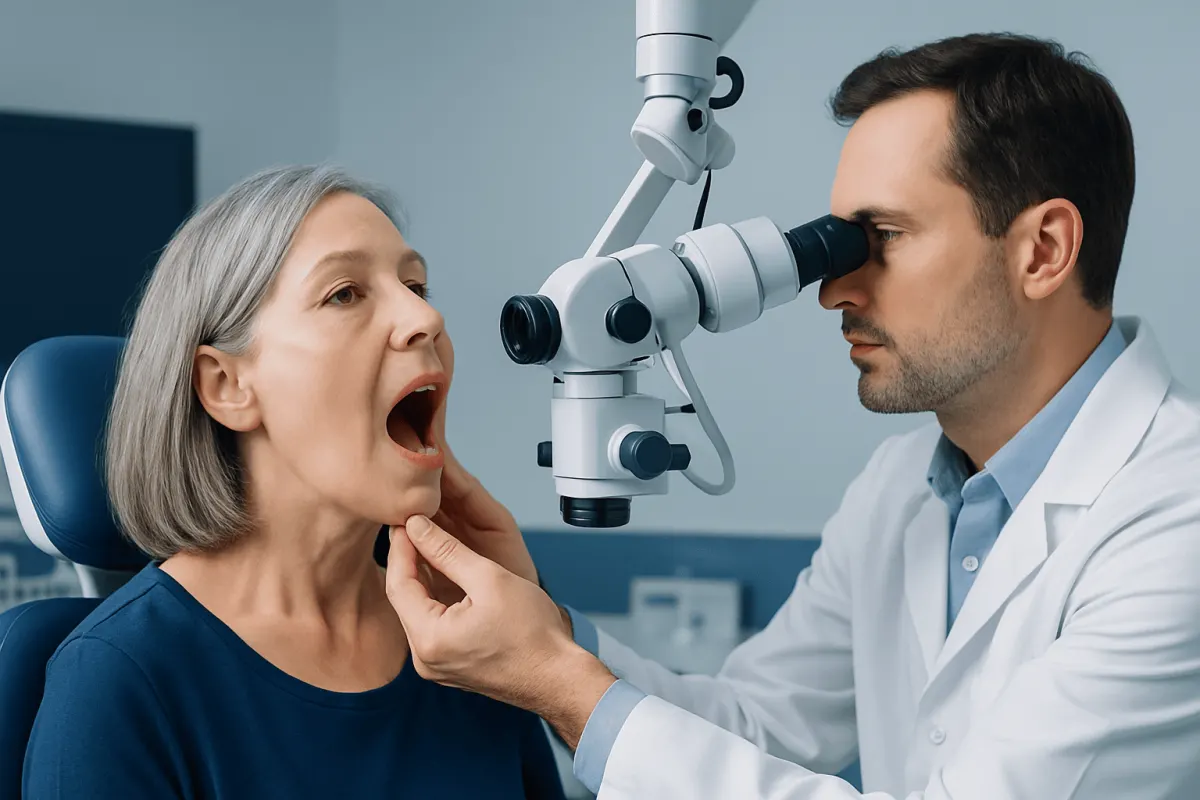
A mouth tumor is an unusual growth in the lips, tongue, gums, inner cheeks, floor or roof of the mouth. Many mouth growths are not cancer, but any sore, lump, or color change that persists for more than two weeks should be assessed by a dentist or doctor.
Mouth tumor overview
A mouth tumor is a growth or abnormal area of tissue in the oral cavity, including the lips, tongue, gums, inner lining of the cheeks, floor of the mouth, hard palate, and area behind the wisdom teeth. It may be benign (noncancerous), precancerous, or malignant (cancerous). A clinical examination and, when needed, a biopsy are the only reliable ways to determine its nature.
Oral cancers are most often squamous cell carcinomas, meaning they begin in the flat cells that line the mouth. They can sometimes look like an ordinary mouth ulcer, gum problem, or irritation at first. Early assessment is valuable because smaller, localized tumors are generally easier to treat and may require less extensive treatment.
A growth does not automatically mean cancer. Trauma from a sharp tooth or denture, infections, cysts, inflammatory conditions, and harmless fibrous growths can also cause changes in the mouth. However, a change that does not heal or resolve should be checked rather than self-treated for long periods.
Symptoms and changes that may suggest a mouth tumor
Symptoms vary with the location and cause of a mouth tumor. A common early sign is a sore or ulcer that remains for more than two weeks. Some people have little or no pain initially, which is why a persistent visible or felt change deserves professional evaluation even when it is not uncomfortable.
Possible symptoms include:
- A persistent mouth sore, thickened area, lump, or swelling
- A red, white, or mixed red-and-white patch
- Unexplained bleeding, numbness, burning, or persistent pain
- Difficulty chewing, swallowing, speaking, or moving the tongue or jaw
- A tooth becoming loose without an obvious dental cause or dentures no longer fitting properly
- A persistent sore throat, ear pain on one side, hoarseness, or a lump in the neck
These symptoms can occur with many noncancerous conditions, including dental infections and canker sores. A dentist, oral and maxillofacial specialist, ear, nose and throat specialist, or head and neck cancer clinician can identify whether urgent investigation is needed.
Causes and risk factors

There is not always one identifiable cause of a mouth tumor. For oral cancer, tobacco use is a major risk factor, including cigarettes, cigars, pipes, smokeless tobacco, and betel quid or areca nut products. Alcohol can also raise risk, and the combined use of tobacco and alcohol increases risk more than either exposure alone.
Other factors that may contribute include prolonged sun exposure to the lips, a past history of head and neck cancer, a weakened immune system, and certain nutritional or health factors. Human papillomavirus (HPV) is more strongly associated with cancers of the oropharynx, such as the tonsils and base of the tongue, than with cancers of the front part of the mouth, although an individual assessment is needed.
Dental irritation should be corrected, such as a broken tooth or poorly fitting denture, but it should not be assumed to be the explanation for a lesion that persists. Good oral hygiene and routine dental examinations can help identify concerning changes early, particularly for people with tobacco or alcohol exposure.
How a mouth tumor is diagnosed and staged
Assessment usually begins with a detailed history and inspection of the whole mouth, throat, jaw, and neck. The clinician may feel the lesion and lymph nodes in the neck, review tobacco and alcohol exposure, and examine the teeth and dentures. Referral may be made to an oral surgeon, ear, nose and throat specialist, or head and neck cancer team.
If a lesion is suspicious or does not settle, a biopsy is usually performed. This involves removing a small tissue sample, or sometimes the entire small lesion, for laboratory examination. Imaging tests such as CT, MRI, ultrasound, PET-CT, or chest imaging may be used after a Prostate Cancer Diagnosis: Tests and Next Steps" class="ahp-ilk">cancer diagnosis to assess the size of the tumor, nearby structures, lymph nodes, and possible spread.
Staging describes how advanced a confirmed cancer is. It considers the tumor’s size and depth, whether lymph nodes contain cancer, and whether cancer has spread to distant organs. Staging supports treatment planning, but it is only one part of an individual outlook; pathology findings, general health, and response to treatment also matter.
What are the treatment options for mouth cancer?
Treatment for mouth cancer is planned by a multidisciplinary team and depends on the tumor site, stage, pathology results, expected impact on speech and swallowing, and the person’s health and preferences. Early cancers may sometimes be treated with surgery or radiation therapy alone. More advanced cancers commonly require combined treatment.
Surgery aims to remove the tumor with a margin of healthy-looking tissue. Depending on the location, surgery may also include removal or sampling of lymph nodes in the neck. Reconstructive surgery may help restore appearance and function after a larger operation. Oral cancer treatment may also include rehabilitation with speech and language therapists, dietitians, dental specialists, and physiotherapists.
Radiation therapy uses targeted high-energy beams and may be the main treatment in selected cases or used after surgery when there is a higher risk of recurrence. Chemotherapy, targeted therapy, or immunotherapy may be used alongside radiation, before or after surgery in particular situations, or for recurrent or metastatic disease. The care team explains the likely benefits and possible side effects of each approach before treatment begins.
What toothpaste is best for cancer patients?
For cancer patients, the best toothpaste is usually a mild fluoride toothpaste that does not cause burning or irritation. A dentist or oncology team may recommend a low-abrasive, sodium lauryl sulfate-free product, particularly for people with mouth soreness, ulcers, or dry mouth during radiation therapy or systemic treatment.
Fluoride is important because cancer treatment, especially radiation involving the head and neck, can increase the risk of tooth decay through dry mouth and changes in oral bacteria. Some patients need prescription-strength fluoride or custom fluoride trays, but this should be decided with a dental professional because needs vary.
Very strong flavors, whitening formulas, alcohol-containing mouth rinses, and abrasive products may be uncomfortable when the mouth is sensitive. Gentle brushing with a soft toothbrush, regular rinsing with a clinician-approved bland solution, hydration, and prompt dental advice for pain or infection can help protect oral health during treatment.
What is the survival rate for people with Stage 2 mouth cancer?
There is no single survival rate that accurately predicts what will happen to every person with Stage 2 mouth cancer. Stage 2 usually indicates a localized tumor without distant spread, but the exact definition differs by site and includes details such as tumor size and depth of invasion. Outcomes are generally more favorable when disease is localized than when it has reached multiple lymph nodes or distant organs.
Published survival estimates are based on large groups treated in the past and cannot account fully for an individual’s tumor biology, surgical findings, treatment response, smoking status, age, other health conditions, and access to follow-up care. They also may use broad categories that do not exactly match an individual clinical stage.
The treating team is best placed to discuss prognosis after imaging, biopsy, and staging are complete. Asking about the treatment goal, whether the cancer appears localized, and which features most influence outlook can make these discussions clearer and more useful.
How do you know if oral cancer has spread?
Oral cancer spread cannot be confirmed by symptoms alone. Cancer may first spread to nearby lymph nodes in the neck, which can sometimes cause a new or enlarging neck lump. Other possible concerns include increasing difficulty swallowing, unexplained weight loss, persistent cough, breathlessness, bone pain, or persistent fatigue, but these symptoms have many possible causes and do not necessarily mean cancer has spread.
Doctors assess spread through a neck examination, imaging, and sometimes needle biopsy of a lymph node. CT, MRI, ultrasound, PET-CT, and chest imaging may be selected according to the primary tumor location and stage. These tests help determine whether cancer is confined to the mouth, has reached regional lymph nodes, or has spread elsewhere.
People previously treated for oral cancer should attend scheduled follow-up appointments and report new symptoms without waiting for the next visit. Ongoing monitoring can also identify treatment effects, dental problems, nutritional needs, and potential recurrence at an earlier stage.
When to seek medical care
A dentist or doctor should assess a mouth ulcer, lump, red or white patch, unexplained bleeding, or persistent pain that lasts longer than two weeks. Earlier review is especially important for people who use tobacco, drink alcohol regularly, have had a previous oral lesion or head and neck cancer, or notice a lump in the neck.
Urgent medical assessment is appropriate for trouble breathing, severe difficulty swallowing liquids, rapidly worsening swelling, uncontrolled bleeding, or signs of serious infection such as fever with facial or neck swelling. These symptoms can have causes other than cancer but should not be managed at home alone.
Acıbadem Health Point’s multidisciplinary specialists and JCI-accredited hospitals diagnose and treat mouth tumors for international patients, coordinating pathology, imaging, surgical care, oncology, dentistry, and rehabilitation when needed.
Frequently asked questions
01Is every mouth tumor cancerous?
No. Many mouth growths are benign or related to irritation, infection, inflammation, or cysts. However, a persistent or unexplained lesion should be examined, and a biopsy may be needed to determine whether cancer or a precancerous change is present.
02Can a mouth tumor be painless?
Yes. Some mouth tumors, including early oral cancers, may cause no pain. This is why a sore, patch, swelling, or lump that does not resolve within two weeks should be checked even if it is not painful.
03Can a dentist detect mouth cancer?
Dentists can identify suspicious changes during routine examinations and may refer a person for specialist assessment or biopsy. A definitive cancer diagnosis requires laboratory examination of tissue obtained through biopsy.
04How long does a mouth ulcer need to last before it is checked?
A mouth ulcer that lasts more than two weeks should be assessed by a dentist or doctor. Sooner assessment is sensible if it is growing, bleeding, very painful, associated with a neck lump, or causing trouble swallowing or speaking.
05Can oral cancer spread to the neck?
Yes. Oral cancer can spread to lymph nodes in the neck, which is why neck examination and imaging are often part of staging. A new or persistent neck lump should be evaluated promptly, although not all neck lumps are cancerous.
06Can mouth cancer return after treatment?
Mouth cancer can recur after treatment, which is why regular follow-up is important. Follow-up visits also help manage side effects, support nutrition and dental health, and identify new oral changes early.
This article is for general information only and is not a substitute for professional medical advice. Please consult a qualified doctor about your individual situation.
Persistent digestive symptoms? Get evaluated in Turkey
JCI-accredited · board-certified surgeons · reply within 24h
Add us as a Preferred Source to see more of our trusted health content across Google Search, AI Overviews and Discover.