The Thalamus Relays Signals, So Damage Affects Many Functions
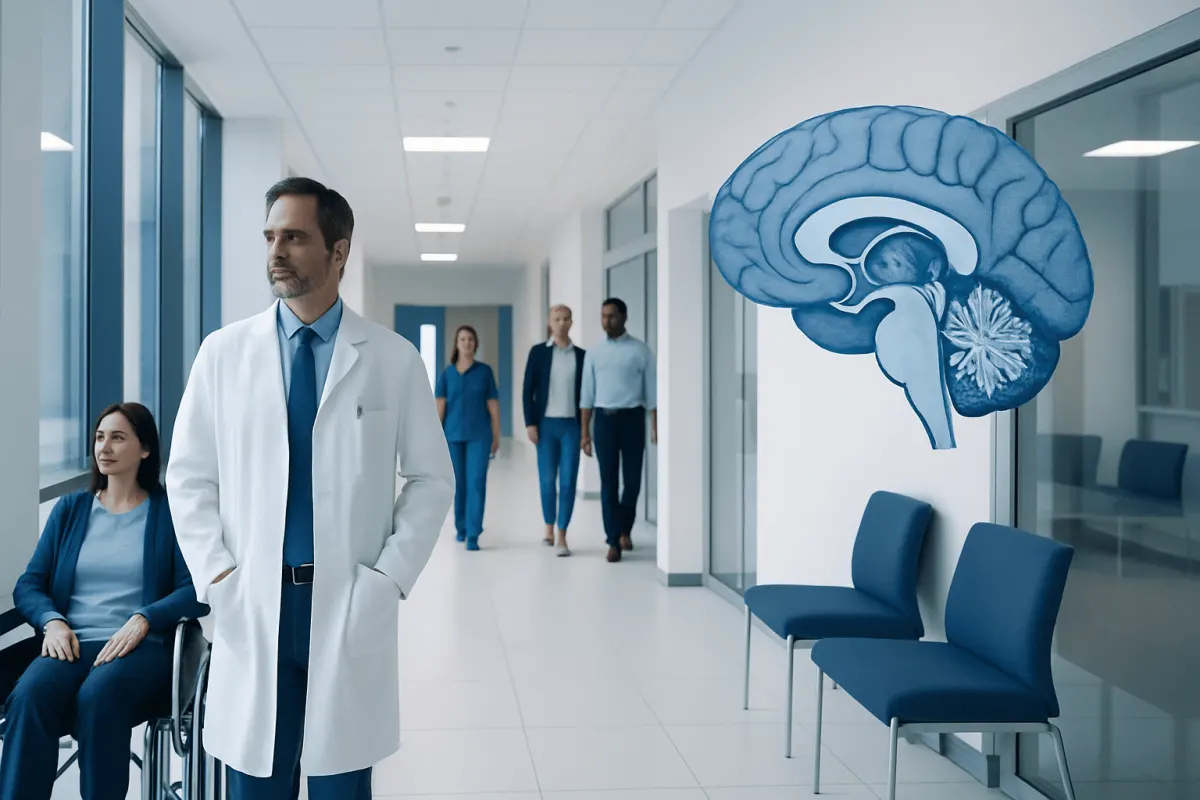
Ever wonder how a touch on your hand actually reaches your awareness? Deep in the center of your brain sits a small structure called the thalamus, and almost everything you feel passes through it. It helps route information between your body and the cerebral cortex.
Because it supports sensation, movement, alertness, sleep, memory, and attention, problems affecting the thalamus can cause a surprisingly wide range of symptoms.
Overview: what the thalamus does
You actually have two of them — the thalamus is a paired structure sitting deep in the center of the brain. Put simply, it receives, organizes, and passes information on to the brain areas that interpret it and decide how your body should respond. Small as it is, it’s central to everyday things: feeling touch, noticing sound, moving smoothly, staying awake, focusing your attention.
Most people first hear the word after a scan report, or when a doctor mentions stroke, tremor, pain, or changes in sensation. The simplest way to picture it? A busy communication hub. Many signals traveling from your body to your brain — and between brain regions — pass through the thalamus before they’re processed further.
The thalamus does not work alone. It is closely connected with the cerebral cortex, brainstem, cerebellum, and deeper structures involved in movement, emotion, and memory. Because of these broad connections, a problem in the thalamus can affect several functions at once rather than causing only one isolated symptom.
How the thalamus supports sensation, movement, and awareness

Handling sensory information is what the thalamus is best known for. Signals about touch, temperature, pain, and body position travel upward and are relayed through it to the cortex, where they become sensations you’re actually aware of. Hearing and vision rely on thalamic relay pathways too. Smell is the exception — it’s the main sense that doesn’t depend so directly on the thalamus in its earliest stages.
The thalamus also helps coordinate movement. It communicates with brain regions that plan and refine motion, including the basal ganglia and cerebellum. This is one reason why thalamic problems can sometimes lead to tremor, clumsiness, poor coordination, or slowed movement, even though the thalamus itself is not the primary movement center.
It also keeps you alert and supports your sleep-wake cycle. The thalamus filters which signals reach your conscious awareness, so your brain can focus on what matters and tune out background noise. These same circuits contribute to attention, arousal, and normal sleep patterns.
The thalamus is also involved in memory, thinking, and aspects of emotion because it connects with limbic and cortical networks. Depending on which thalamic region is affected, a person may notice changes in concentration, behavior, fatigue, or emotional processing in addition to physical symptoms.
Symptoms linked to thalamus problems

What you notice depends on which side — and which specific part — of the thalamus is affected. Some people develop symptoms suddenly, especially with a stroke or bleeding. Others notice gradual change over time, as can happen with a tumor, inflammation, or a degenerative neurological condition.
Common symptoms can include numbness, tingling, altered sensation, weakness, problems with balance, or difficulty coordinating movement. Some patients describe unusual pain after a thalamic injury, including burning, aching, or heightened sensitivity to touch. Vision or speech changes can also occur if connected pathways are involved.
Changes in consciousness, attention, sleep, or memory are also possible. In some cases, the person may feel unusually drowsy, confused, or less responsive. Depending on the underlying condition, headache, nausea, seizures, or emotional changes may appear as well.
- Loss or distortion of sensation on one side of the body
- Weakness or poor coordination
- Tremor or involuntary movements
- Persistent central pain after brain injury
- Visual or speech difficulties
- Drowsiness, confusion, or altered alertness
Causes and risk factors
The most common serious cause of sudden thalamic symptoms is stroke. A blocked or bleeding blood vessel can damage thalamic tissue and interrupt the signals it normally relays. This is why the thalamus is often discussed in the context of stroke and other urgent neurological events.
Other causes include brain tumors, infections, autoimmune inflammation, lack of oxygen to the brain, and head trauma. In some cases, metabolic problems or rare genetic disorders can affect thalamic function. The thalamus may also be involved secondarily in broader neurological diseases such as multiple sclerosis or Neurology Evaluation" class="ahp-ilk">movement disorders.
Risk factors depend on the underlying condition. For stroke, important risks include high blood pressure, diabetes, high cholesterol, smoking, atrial fibrillation, obesity, and older age. For tumors or inflammatory conditions, risk factors are less predictable and often require individual medical assessment.
Not every thalamic finding means a severe or progressive disease. Sometimes imaging shows an old small injury or a change that needs follow-up rather than emergency treatment. A neurologist or neurosurgeon can explain whether a finding is likely to be new, old, stable, or related to the symptoms a patient is having.
How doctors diagnose a thalamus problem
Diagnosis starts with a careful history and neurological examination. Doctors ask when symptoms began, whether they appeared suddenly or gradually, and whether there are related problems such as headache, fever, seizures, balance changes, or recent injury. The examination checks strength, sensation, coordination, eye movements, speech, memory, and alertness.
Brain imaging is usually the next step. CT may be used quickly in emergencies, especially to look for bleeding, while MRI often gives more detailed information about the thalamus and nearby structures. Depending on the suspected cause, additional tests may include blood work, vascular imaging, heart evaluation, electroencephalography for seizures, or lumbar puncture when infection or inflammation is suspected.
The goal is not only to confirm that the thalamus is involved but also to identify why. Treatment differs greatly between a stroke, a tumor, an infection, and an inflammatory disorder. For some patients, the diagnosis also involves evaluating related symptoms such as abnormal movements or chronic nerve-like pain.
If surgery or advanced intervention is being considered, doctors may discuss specialized imaging, neuroradiology review, or referral to teams experienced in brain tumor surgery or stroke treatment when these are relevant to the cause.
Treatment options and recovery
There’s no single treatment — it all comes down to the cause. In stroke, urgent care aims to restore blood flow when possible, or manage bleeding and prevent further injury. Tumors may call for monitoring, surgery, radiotherapy, or other oncology-based care. Infections need targeted antimicrobial treatment, while inflammatory disorders may need immune-modulating therapy.
Symptom management is also important. Pain after thalamic injury can be challenging and may require a tailored plan using medication, rehabilitation, and sometimes pain-focused neurological care. If movement symptoms are prominent, patients may be assessed for therapies that improve tremor or coordination. In selected situations involving severe movement symptoms, doctors may discuss advanced options such as deep brain stimulation.
Rehabilitation often plays a major part in recovery. Physical therapy can help strength, balance, and walking; occupational therapy supports daily tasks and hand function; speech and language therapy can help communication or swallowing when affected. Cognitive rehabilitation may also help attention, memory, and executive functioning after an injury.
No two recoveries look the same. Some people improve substantially over weeks to months — especially with early treatment and rehabilitation — while others have longer-lasting symptoms. That’s why follow-up matters: it lets your care team monitor progress, adjust treatment, and watch for complications like persistent pain, sleep problems, mood changes, or recurrent stroke risk.
Prevention, self-care, and living with a thalamus-related condition
There is no single way to prevent every thalamic disorder, but many important causes are linked to overall brain and vascular health. Managing blood pressure, blood sugar, and cholesterol; not smoking; staying physically active; and following medical advice for heart rhythm conditions can all reduce stroke risk. These steps also support healthy aging more broadly.
For patients recovering from a thalamic injury, self-care usually means following the rehabilitation plan consistently, taking medicines as prescribed, and reporting new or changing symptoms promptly. Good sleep habits, balanced nutrition, hydration, and gradual return to activity can support recovery. Family members may help by noticing subtle changes in memory, mood, or alertness that the patient may not recognize.
Living with sensory changes or central pain can be frustrating, but symptoms can often be managed with a structured plan and regular follow-up. It may help to keep a diary of pain, numbness, fatigue, or triggers so the medical team can better understand patterns. If everyday tasks remain difficult, adaptive strategies and rehabilitation tools can improve independence and safety.
When complex neurological or neurosurgical care is needed, multidisciplinary assessment matters. Acıbadem Health Point’s specialists in neurology, neuroradiology, rehabilitation, and neurosurgery at JCI-accredited hospitals evaluate and treat international patients with conditions affecting deep brain structures, including cases related to brain tumors and other neurological disorders.
When to seek medical care
Urgent medical care is needed for any sudden neurological symptom. This includes sudden numbness or weakness, facial drooping, trouble speaking, severe confusion, new vision loss, sudden imbalance, seizure, or a sudden severe headache. These may be signs of stroke, bleeding, or another emergency affecting the thalamus or nearby brain structures.
Prompt medical assessment is also important if symptoms develop gradually but continue to worsen. Persistent unexplained numbness, unusual pain, new tremor, repeated falls, increasing drowsiness, or changes in memory and behavior should not be ignored. Early evaluation can help identify treatable causes and prevent complications.
Even mild symptoms deserve a professional look if they’re new, one-sided, or come with other neurological changes. A doctor can decide whether you need urgent imaging, a specialist referral, or simple observation. And if stroke is suspected, call emergency services — don’t drive yourself.
Frequently asked questions
01What is the thalamus in simple terms?
The thalamus is a small structure deep inside the brain that helps pass information to the areas that interpret it. It is especially important for sensation, movement, attention, alertness, and sleep.
02What happens if the thalamus is damaged?
Damage to the thalamus can affect how the brain processes sensation and movement, and it may also change alertness, memory, or attention. Symptoms vary widely and can include numbness, weakness, pain, tremor, confusion, or balance problems.
03Can a thalamus problem cause pain?
Yes. Some people develop a type of central pain after injury to the thalamus, often after a stroke. The pain may feel burning, aching, or unusually intense in response to touch, and it should be assessed by a doctor.
04Is a thalamic stroke serious?
A thalamic stroke is a medical emergency because it involves sudden loss of blood flow or bleeding in a critical brain area. Outcomes vary, but early treatment improves the chance of limiting damage and starting rehabilitation quickly.
05How is a thalamus disorder diagnosed?
Doctors usually begin with a neurological examination and brain imaging such as CT or MRI. Additional tests may be needed to find the cause, including blood tests, vascular imaging, heart tests, or seizure evaluation.
06Can people recover after thalamus injury?
Many people improve with time, treatment, and rehabilitation, although recovery differs from person to person. Progress often depends on the cause, how quickly treatment begins, the size of the injury, and whether ongoing symptoms such as pain or weakness can be managed well.
This article is for general information only and is not a substitute for professional medical advice. Please consult a qualified doctor about your individual situation.
Explore treatments in Turkey — costs, top hospitals & a free quote
JCI-accredited · board-certified surgeons · reply within 24h
Add us as a Preferred Source to see more of our trusted health content across Google Search, AI Overviews and Discover.