Testis Cancer Prognosis: Outlook After Diagnosis
Testis cancer prognosis is generally very favorable, with many people cured even when cancer has spread beyond the testicle. An individual outlook depends mainly on the cancer type, stage, tumor-marker results, response to treatment and overall health.
Testis Cancer Prognosis: The Overall Outlook
Testis cancer prognosis is usually excellent because the disease is highly responsive to modern treatment. Many men are cured after treatment, including some whose cancer has spread to lymph nodes or other organs. The outlook is individual, however, and should be discussed with a specialist who can interpret the stage, pathology report, blood-test results and imaging findings together.
The term testis cancer is commonly used interchangeably with testicular cancer. Most cases begin in germ cells, which are the cells involved in sperm production. The two main groups are seminoma and non-seminoma; these can behave differently and may be managed somewhat differently. A small number of tumors are mixed, meaning they contain more than one cell type.
Prognosis is not determined by one result alone. Specialists consider whether cancer appears limited to the testicle, has reached nearby lymph nodes, or has spread farther away. They also assess tumor markers in the blood and how these change after surgery. These details help the care team recommend treatment that aims for cure while limiting unnecessary long-term effects.
What Shapes an Individual Prognosis?
Staging describes how far cancer has spread. In general, Stage 1 disease is confined to the testicle, Stage 2 involves nearby lymph nodes in the abdomen, and Stage 3 includes spread to more distant lymph nodes or organs and/or substantially elevated tumor markers. A higher stage can mean more intensive treatment is needed, but it does not mean treatment cannot be successful.
Blood markers such as alpha-fetoprotein (AFP), beta-human chorionic gonadotropin (beta-hCG) and lactate dehydrogenase (LDH) may support diagnosis, staging and follow-up. Not every tumor produces markers, so normal results do not rule out cancer. The pattern of markers after removal of the testicle can offer important information about whether cancer may remain elsewhere in the body.
Other factors include the tumor subtype, the size and location of involved lymph nodes, whether there is spread to the lungs, liver, brain or bones, and whether the cancer is newly diagnosed or has returned after treatment. Prognostic groupings are especially useful in metastatic germ-cell tumors, where they help guide the treatment plan without replacing individualized clinical judgement.
- Pathology confirms the cancer type and features within the removed testicle.
- CT scans and, in selected situations, other imaging tests look for spread.
- Post-treatment marker trends and imaging are important indicators of response.
- Fertility wishes, testosterone health and general wellbeing are included in treatment planning.
What to Do After Testicular Cancer Diagnosis?
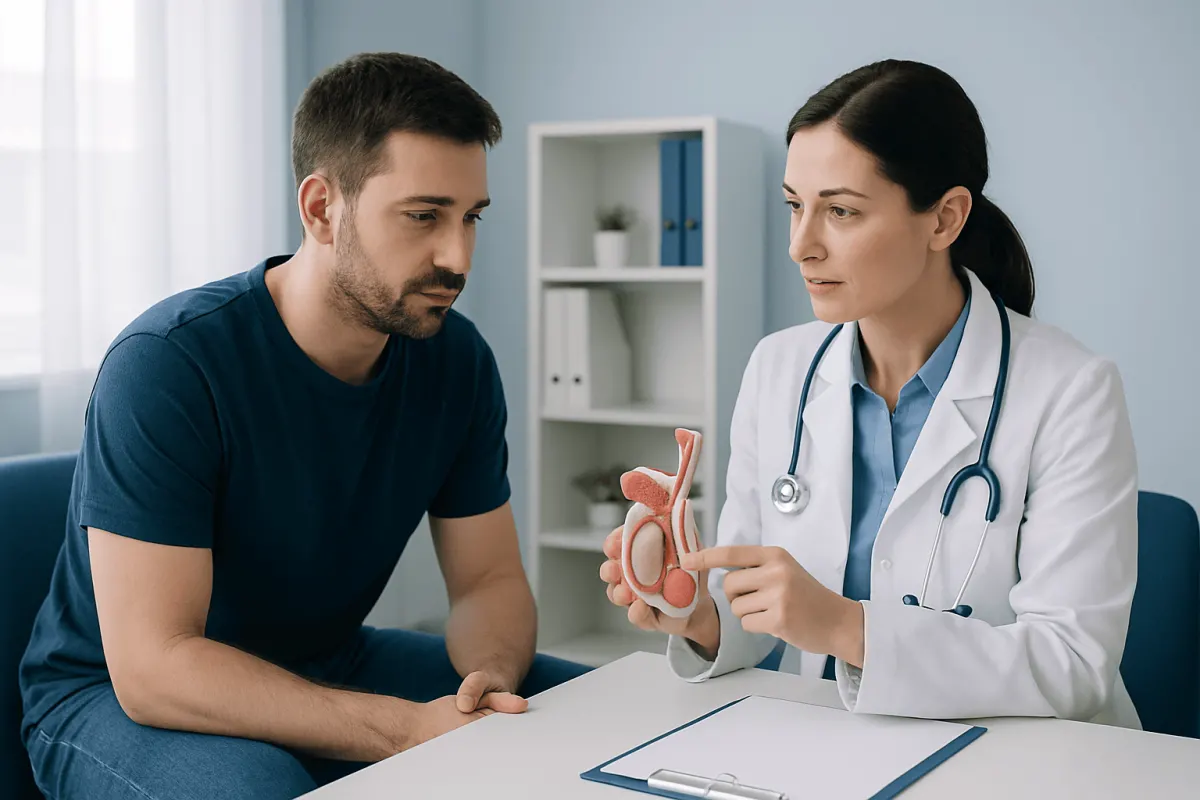
After a testicular cancer diagnosis, the next priority is prompt assessment by a urologist and oncology team experienced in germ-cell tumors. The usual first step is an operation called radical inguinal orchiectomy, in which the affected testicle is removed through a groin incision. This procedure treats the tumor in the testicle and gives the pathologist tissue needed to identify the exact cancer type.
Before treatment begins, the team generally arranges blood tests for tumor markers and imaging, often including CT scans of the chest, abdomen and pelvis. These tests help determine the stage. If chemotherapy could be needed, patients may be offered sperm banking before treatment, since chemotherapy and some surgical procedures can affect fertility.
It is helpful to bring questions and a support person to appointments, if desired. Patients can ask about the stage, tumor type, goals of treatment, expected side effects, fertility preservation, testosterone monitoring and the proposed surveillance schedule. A second opinion may also be reasonable, particularly for complex or advanced disease.
For international patients, Acıbadem Health Point’s multidisciplinary specialists at JCI-accredited hospitals can coordinate diagnosis and treatment planning for testicular cancer. Care should remain tailored to the person’s pathology, staging results and preferences.
Modern Treatment Approaches and Follow-Up
Treatment after orchiectomy depends on the cancer type and risk of recurrence. For some Stage 1 cancers, active surveillance is a safe option. This means regular appointments, tumor-marker tests and imaging rather than immediate additional treatment. It avoids overtreatment for people who may already be cured by surgery, while allowing recurrence to be detected early.
When additional treatment is recommended, options may include chemotherapy, surgery to remove affected lymph nodes in the abdomen, or radiotherapy for carefully selected seminoma cases. Chemotherapy is commonly used for metastatic germ-cell tumors and can also be used in some earlier-stage situations. Retroperitoneal lymph-node dissection may be appropriate for selected non-seminoma tumors or for residual masses after chemotherapy.
After treatment, follow-up is a central part of care. The schedule varies according to the cancer type, stage and treatment received, but typically includes physical examinations, tumor-marker blood tests and planned imaging at defined intervals. Follow-up aims to identify recurrence promptly, monitor recovery and address late effects such as reduced fertility, low testosterone, hearing changes, nerve symptoms or cardiovascular risk after certain treatments.
A prosthetic testicle can be discussed with the surgical team for anyone who would like to consider it. Most people continue to produce sufficient testosterone and sperm with one healthy testicle, although fertility and hormone testing can be arranged when there are concerns.
Can I Live a Long Life After Testicular Cancer?
Yes. Many people live a long, full life after testicular cancer, particularly when treatment is completed and recommended follow-up is maintained. Cure is common, and having one testicle removed does not usually prevent normal testosterone production, sexual activity or fathering children.
Long-term health matters after cancer treatment. People who have received chemotherapy, radiotherapy or extensive surgery may need monitoring for treatment-related effects over time. The exact risks depend on the therapies used and other health factors, so survivors should keep their primary doctor informed about their cancer history and attend scheduled follow-up visits.
Emotional recovery can take time even when the medical outlook is favorable. Concerns about body image, fertility, sexual health, recurrence and relationships are common and valid. Speaking openly with the care team, a counselor or a survivorship service can help people access practical and psychological support.
What Is the Survival Rate for Men With Stage 3 Testicular Cancer?
Stage 3 testicular cancer is advanced disease, but it remains highly treatable and often curable. Survival estimates vary because Stage 3 includes a wide range of situations: cancer may have spread only to distant lymph nodes or lungs, or it may involve organs such as the liver, brain or bones. Tumor-marker levels and whether the tumor is seminoma or non-seminoma also affect the expected outcome.
Rather than relying on a single percentage, specialists classify many metastatic germ-cell tumors into prognostic groups that help estimate the chance of cure and select treatment. Men with favorable-risk metastatic disease often have very good outcomes with first-line chemotherapy. Intermediate- and poor-risk disease needs more intensive specialist management, but treatment can still be effective.
For the most meaningful estimate, a cancer specialist should review the pathology report, marker levels, scan findings and response to initial treatment. Asking whether the cancer falls into a favorable, intermediate or poor prognostic group can help patients understand the reasoning behind their recommended plan.
Is Tiredness a Common Side Effect of Testicular Cancer?
Tiredness, also called fatigue, can occur in people with testicular cancer, although it is not among the most specific early signs of the disease. Fatigue may be related to stress, poor sleep, pain, anemia, infection, low mood, reduced activity or the effects of cancer treatment. Chemotherapy in particular can cause temporary fatigue that may fluctuate from day to day and improve gradually after treatment ends.
Persistent or worsening fatigue should be mentioned to the healthcare team. They may check for anemia, hormonal changes, nutritional concerns, infection, medication effects or emotional distress. It is especially important to seek prompt medical advice for fatigue accompanied by fever, shortness of breath, chest pain, confusion or an inability to manage normal daily activities.
During recovery, pacing activities, accepting help, maintaining gentle movement when advised, eating regularly and prioritizing sleep can be useful. There is no need to simply endure severe fatigue; symptom support is an important part of cancer care.
When to Seek Medical Care
Medical assessment should be arranged promptly for a new lump, swelling, heaviness, firmness or change in size or shape of a testicle. A dull ache in the lower abdomen or groin, a feeling of fluid or heaviness in the scrotum, or breast tenderness can also deserve evaluation. Many testicular changes are not cancer, but an examination and scrotal ultrasound can clarify the cause.
Sudden, severe testicular pain requires urgent medical attention because testicular torsion, in which blood flow to the testicle becomes impaired, must be treated quickly. Testicular cancer is often painless, so a painless lump should not be ignored.
People previously treated for testicular cancer should contact their care team between scheduled visits if they notice new symptoms, such as a persistent cough, unexplained back pain, abdominal swelling, weight loss, ongoing fatigue or a new lump. These symptoms have many possible causes, but timely review provides reassurance and appropriate investigation when needed.
Frequently asked questions
01Is testis cancer prognosis generally good?
Yes. Testis cancer is one of the most treatable cancers, and many people are cured with appropriate treatment. Prognosis varies according to the tumor type, stage, tumor markers and response to treatment.
02Can testicular cancer return after treatment?
It can return, which is why planned follow-up is important. Recurrence is often detected through tumor-marker testing, imaging or examination, and treatment options remain available if it occurs.
03Does removing one testicle lower testosterone?
One healthy testicle usually produces enough testosterone for normal sexual function and general health. If symptoms of low testosterone develop, blood testing and treatment advice can be provided by a doctor.
04Will testicular cancer treatment affect fertility?
Fertility may be affected by chemotherapy, radiotherapy, lymph-node surgery or pre-existing testicular problems. Sperm banking before treatment is often discussed, especially if chemotherapy or surgery beyond orchiectomy may be needed.
05How is testicular cancer followed after treatment?
Follow-up usually includes regular clinical appointments, blood tests for tumor markers and imaging at intervals based on the cancer type, stage and treatment received. The frequency typically decreases over time if there are no signs of recurrence.
06Can a testicular lump be something other than cancer?
Yes. Lumps and swelling can result from benign conditions such as cysts, infection, fluid collections or varicoceles. However, any new or persistent change in a testicle should be checked promptly by a healthcare professional.
This article is for general information only and is not a substitute for professional medical advice. Please consult a qualified doctor about your individual situation.
Oncology care in Turkey — second opinion and treatment plan
JCI-accredited · board-certified surgeons · reply within 24h
Add us as a Preferred Source to see more of our trusted health content across Google Search, AI Overviews and Discover.