Cancer of the Balls: Diagnosis, Treatment, and Outlook
Cancer of the balls, medically called Chemotherapy for Testicular Cancer: How It Works, Results and What to Expect" class="ahp-ilk">testicular cancer, is an uncommon cancer that often has an excellent outlook when diagnosed and treated promptly. A painless lump, swelling, or change in the feel of a testicle should be assessed by a doctor without delay.
Overview: What Does Cancer of the Balls Mean?
Cancer of the balls is the everyday term for testicular cancer, a cancer that develops in one or both testicles. The testicles are located in the scrotum and produce sperm and testosterone. Although the diagnosis can feel overwhelming, testicular cancer is often very responsive to modern treatment, including when it has spread beyond the testicle.
Most cases are germ cell tumors. These are broadly divided into seminomas and non-seminomas, which can grow and spread in different ways and may be managed differently. Less common tumors can arise from supporting cells in the testicle or, particularly later in life, from lymphoma affecting the testicle.
A prompt assessment matters because a lump cannot be reliably identified by touch alone. Testicular cancer care is guided by the exact tumor type, whether it has spread, blood test results called tumor markers, and the person’s general health and future fertility wishes.
Symptoms and Changes That Deserve Attention
The most common symptom is a new lump, firm area, enlargement, or change in the shape or consistency of one testicle. It is often painless. Some people instead notice a dull ache or feeling of heaviness in the scrotum or lower abdomen, or swelling caused by fluid around the testicle.
Other possible symptoms include discomfort in a testicle, breast tenderness or enlargement due to hormone changes, or a painless swollen testicle. These symptoms are not always caused by cancer. Infection, injury, a cyst, a hernia, and varicocele are among other possible explanations, but medical assessment is still important.
If cancer has spread, symptoms may relate to the area involved. For example, enlarged lymph nodes in the abdomen can cause back or abdominal pain, while spread to the chest can sometimes cause cough, chest discomfort, or shortness of breath. These symptoms have many more common causes, so they should be interpreted by a clinician rather than used for self-diagnosis.
Causes and Risk Factors

The exact cause of testicular cancer is not fully understood. It develops when cells acquire changes that allow them to grow abnormally. Most people diagnosed with it do not have a clear, preventable cause, and it is not usually linked to an injury, sexual activity, or everyday contact.
The best-established risk factor is an undescended testicle, also called cryptorchidism, even if it was corrected in childhood. Other factors associated with a higher risk include a previous testicular cancer, a close family history of the condition, and certain differences in testicular development or fertility. Having a risk factor does not mean that cancer will develop.
There is no proven screening test for testicular cancer in people without symptoms. Becoming familiar with what is normal for the testicles can help a person recognize a persistent new change. Routine self-examination is not required for everyone, but those with higher risk may wish to discuss individual monitoring advice with a urologist.
What Are the Risks of Testicular Cancer in Older Men?
Testicular cancer is more commonly diagnosed in younger and middle-aged adults than in older men, but it can occur at any age. A new testicular lump in an older man should never be dismissed because the likely causes and types of cancer may differ with age.
In later life, testicular lymphoma becomes relatively more important as a possible malignant cause of testicular enlargement. Lymphoma is a cancer of lymphocytes, a type of immune cell, and its evaluation and treatment are different from those for germ cell tumors. Germ cell testicular cancer can also occur in older adults.
Older people may have other medical conditions that affect the safest treatment plan, such as heart, lung, kidney, or nerve problems. Age alone does not determine treatment; specialists consider the cancer type and stage, physical fitness, other health needs, and the person’s goals when recommending care.
Diagnosis and Staging
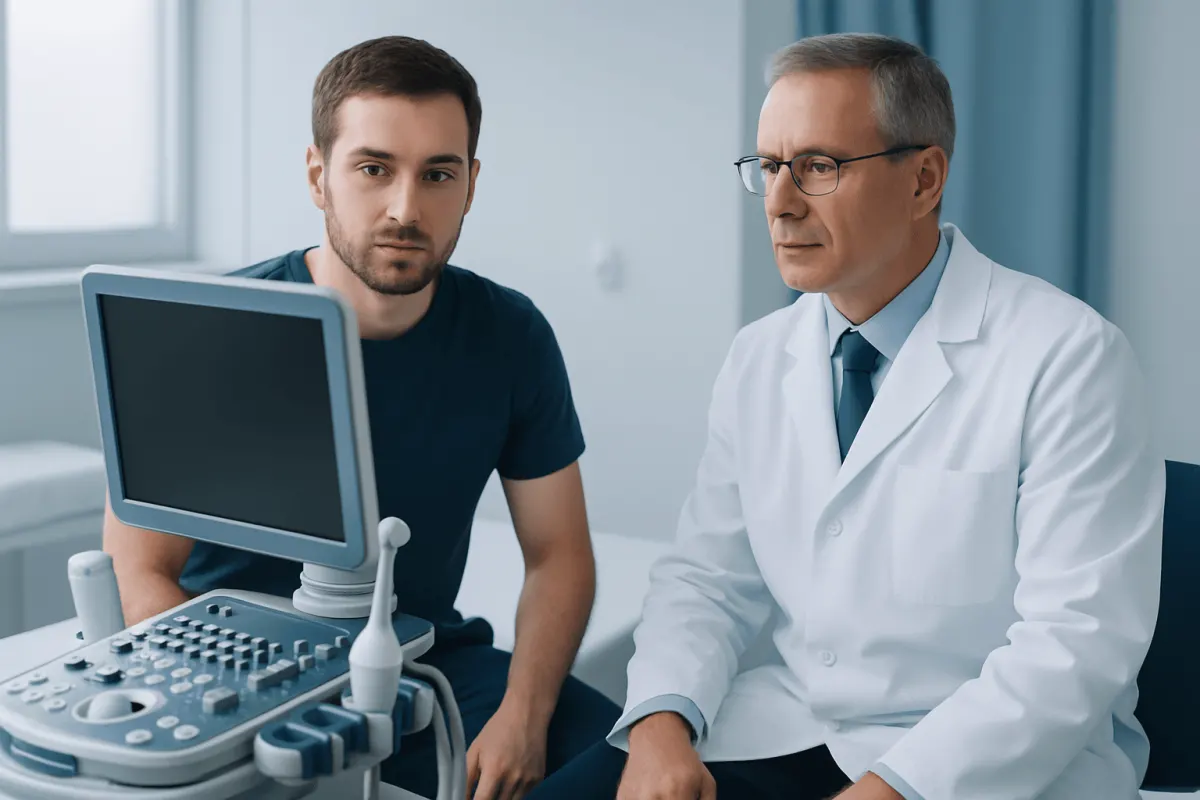
A clinician usually begins with a medical history and examination of the scrotum, abdomen, and lymph node areas. A scrotal ultrasound is the main imaging test used to examine a testicular mass. It can help distinguish a growth inside the testicle, which needs urgent evaluation, from many conditions outside the testicle that are more often benign.
Blood tests may measure tumor markers, including alpha-fetoprotein, beta-human chorionic gonadotropin, and lactate dehydrogenase. These markers can support diagnosis, help classify some tumors, and provide an important baseline for monitoring. Normal markers do not rule out testicular cancer.
When cancer is suspected, the usual diagnostic and initial treatment step is an operation to remove the affected testicle through an incision in the groin, called radical inguinal orchiectomy. A biopsy through the scrotal skin is generally avoided because it can alter lymphatic drainage. CT scans and, in selected situations, other tests are used after surgery to determine the stage and plan treatment.
How Quickly Does Testicle Cancer Spread?
Testicle cancer does not spread at one predictable rate. Its behavior depends mainly on the tumor type, its microscopic features, tumor marker results, and whether cancer cells have already reached lymph nodes or other organs. Some tumors are slow-growing, while some non-seminoma tumors can behave more quickly.
Testicular germ cell tumors often spread first to lymph nodes at the back of the abdomen. From there, they may spread to areas such as the lungs or, less commonly, other organs. Importantly, even metastatic testicular cancer can frequently be treated effectively with specialist care.
Because it is impossible to judge growth or spread by symptoms alone, a new testicular lump, enlargement, or persistent heaviness should be assessed promptly. Early investigation does not mean that cancer is assumed; it ensures that any serious cause is identified and managed without unnecessary delay.
What Is the Best Treatment for Testicular Cancer?
There is no single best treatment for every person with testicular cancer. The most appropriate plan depends on whether the tumor is seminoma or non-seminoma, the stage, tumor marker levels, pathology findings, and personal priorities such as fertility preservation. Removal of the affected testicle is usually the first treatment and also confirms the diagnosis.
For cancer confined to the testicle, careful active surveillance after surgery may be appropriate for some people. This means regular examinations, marker testing, and scans according to a structured schedule, with treatment given if there is evidence of recurrence. Depending on the individual risk profile, chemotherapy or radiotherapy may be considered in selected situations.
For cancer involving lymph nodes or distant organs, treatment may include chemotherapy, surgery to remove remaining lymph nodes or masses, and occasionally radiotherapy for certain seminomas. Chemotherapy uses medicines that circulate through the bloodstream to treat cancer cells, while radiotherapy uses targeted radiation and is not suitable for every tumor type or stage. A multidisciplinary team helps balance cancer control with possible long-term effects.
Before treatment that could affect sperm production, sperm banking may be offered when time and circumstances allow. A testicular prosthesis can also be discussed for those who would like one after orchiectomy.
What Are the After Effects of Testicular Cancer?
After effects vary according to the treatment received and whether one or both testicles are affected. Most people who have one testicle removed maintain adequate testosterone production from the remaining testicle. They can often continue to have erections, sexual desire, and the ability to father children, although fertility may be reduced in some individuals even before treatment begins.
Chemotherapy, radiotherapy, and further surgery can have short- and long-term effects that should be discussed before treatment. Depending on the approach, these may include fatigue, nausea, changes in blood counts, nerve symptoms, hearing changes, lung or kidney effects, bowel changes, infertility, or a small increased risk of later health problems. Follow-up care helps identify and manage these concerns.
Emotional effects are also important. Worry about recurrence, body image, sexual confidence, and fertility is common and deserves support. Follow-up may include physical examinations, tumor marker blood tests, and imaging. The schedule is individualized because recurrence risk is greatest during particular periods after treatment, depending on the cancer type and stage.
Acıbadem Health Point’s multidisciplinary specialists and JCI-accredited hospitals provide diagnostic assessment and treatment planning for international patients with testicular cancer.
When to Seek Medical Care
A person should arrange medical evaluation promptly for a new lump, persistent swelling, enlargement, hard area, heaviness, or unexplained change in either testicle. It is also sensible to seek advice for ongoing scrotal pain or a dull ache in the groin, lower abdomen, or back, especially if it does not settle.
Sudden severe testicular pain, particularly with nausea, vomiting, or a high-riding testicle, needs emergency assessment. This may be caused by testicular torsion, in which the blood supply can become twisted. Torsion is not the same as cancer, but it requires urgent treatment to protect the testicle.
People previously treated for testicular cancer should attend planned follow-up appointments and contact their care team about new or persistent symptoms. Prompt care is a practical step toward clear answers and, when needed, timely treatment.
Frequently asked questions
01Is a lump on the testicle always cancer?
No. Lumps and swelling can result from several non-cancerous conditions, including cysts, infection, fluid collections, or enlarged veins. However, a lump within a testicle should be assessed promptly with a clinical examination and usually an ultrasound.
02Can testicular cancer be cured?
Many cases of testicular cancer can be cured, including many that have spread beyond the testicle. The outlook depends on the tumor type, stage, tumor marker levels, response to treatment, and other individual factors.
03Does removal of one testicle affect masculinity or sex life?
Removing one testicle does not usually reduce masculinity, and the remaining testicle often produces enough testosterone for normal sexual function. Some people experience emotional or body-image concerns, and these can be discussed with the treatment team; a prosthesis is an option for some.
04Can a person have children after testicular cancer treatment?
Many people can father children after treatment, particularly when one healthy testicle remains. Fertility can be affected by the cancer itself or by chemotherapy, radiotherapy, or surgery, so sperm banking should be discussed before treatment where appropriate.
05Is testicular cancer painful?
It is often painless, especially when it first appears as a lump or enlargement. Some people have aching, heaviness, or discomfort, but severe sudden pain is more suggestive of another urgent condition such as torsion or infection.
06Can testicular cancer come back after treatment?
Yes, recurrence is possible, which is why structured follow-up is important. Surveillance appointments use a tailored combination of examinations, blood tests, and imaging to detect recurrence early and address treatment-related health needs.
This article is for general information only and is not a substitute for professional medical advice. Please consult a qualified doctor about your individual situation.
Oncology care in Turkey — second opinion and treatment plan
JCI-accredited · board-certified surgeons · reply within 24h
Add us as a Preferred Source to see more of our trusted health content across Google Search, AI Overviews and Discover.