

Stage 2 Internal Hemorrhoids: What You Need to Know
- 9 min read
- Published November 27, 2026
Key Takeaways
- Stage 2 internal hemorrhoids typically bulge out during a bowel movement and return inside without manual pushing.
- Bright red rectal bleeding, itching, mucus, and a feeling of incomplete emptying can occur, but pain is usually limited unless another problem is present.
- Constipation, straining, prolonged sitting on the toilet, low-fiber intake, and pregnancy can increase the risk.
- Diagnosis usually involves a history, physical exam, and sometimes anoscopy or other tests if bleeding needs further evaluation.
- Many people improve with fiber, fluids, gentle bowel habits, and simple office procedures such as banding if symptoms persist.
Stage 2 internal hemorrhoids are enlarged veins inside the rectum that may prolapse during bowel movements and then go back in on their own. They are common, usually manageable, and often improve with a mix of bowel-habit changes, self-care, and, when needed, office-based treatment.
Overview
Stage 2 internal hemorrhoids are swollen veins inside the rectum that slip downward during a bowel movement and then slide back in on their own. In practical terms, this means the tissue may protrude briefly, but it does not require a finger to push it back. For many people, the first clue is bright red bleeding on toilet paper or in the bowl, often accompanied by pressure, moisture, or mild irritation.
For someone deciding whether to seek care, the most useful point is this: stage 2 internal hemorrhoids are usually treatable, and they are often best managed before symptoms become more persistent or disruptive. They are common in adults and tend to fluctuate with bowel habits, pregnancy, weight changes, and periods of constipation or straining. Although the condition is not usually dangerous, rectal bleeding should still be assessed by a clinician so that the cause is confirmed rather than assumed.
Because people may travel for evaluation or treatment, it helps to think of hemorrhoid care as a stepwise process. A doctor first confirms that the bleeding is truly from hemorrhoids, then recommends the least invasive treatment that fits the person’s symptoms, schedule, and recovery needs. That approach is especially helpful for international patients who want a clear plan before they return home.
Symptoms
Stage 2 internal hemorrhoids do not always cause pain, which can make them easy to ignore. The most typical symptoms are fresh red bleeding after a bowel movement, a sense of fullness or pressure in the rectum, and occasional protrusion that appears during straining and then reduces on its own.
Some people notice itching, mild leakage of mucus, or a feeling that the bowel has not completely emptied. These symptoms can overlap with other digestive or anorectal conditions, so the exact pattern matters. Internal hemorrhoids are less likely to be very painful unless they become irritated, thrombosed, or associated with another issue such as an anal fissure.
Symptoms may come and go. A person might feel well for weeks and then notice bleeding again after constipation, a long flight, dehydration, or a change in routine. This stop-start pattern is one reason clinicians ask detailed questions about stool consistency, toilet habits, diet, and recent travel.
- Bright red blood on stool, tissue, or in the toilet
- Brief prolapse during bowel movements
- Rectal pressure or fullness
- Itching or mild irritation
- Mucus leakage or soiling
Causes & Risk Factors
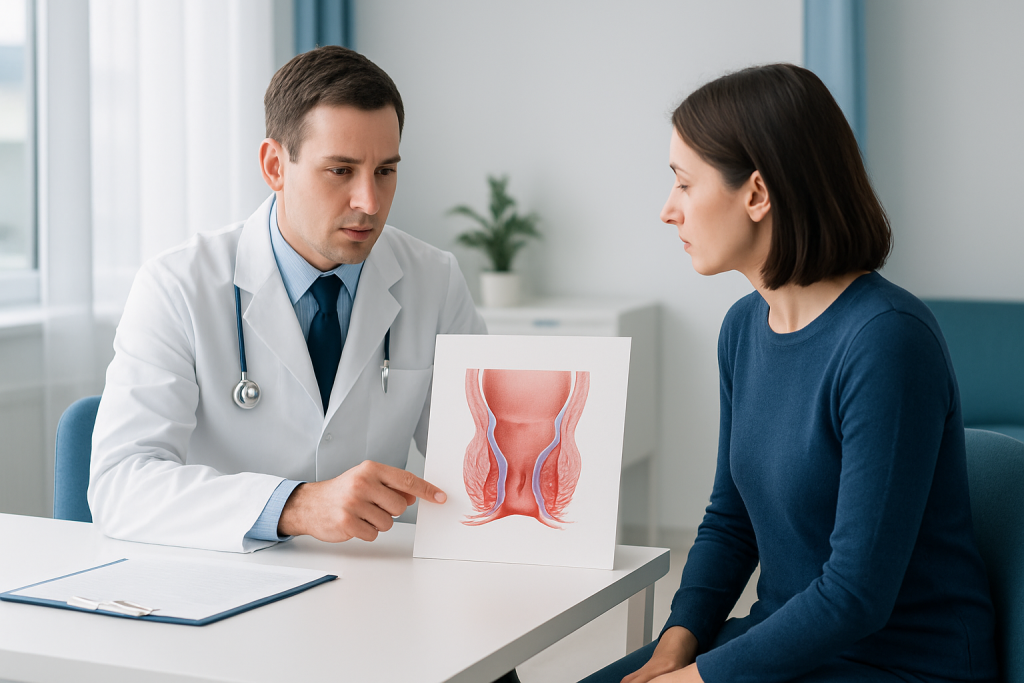
Internal hemorrhoids develop when pressure increases in the veins of the rectal cushion. Over time, that pressure can stretch and enlarge the tissue, making it easier for the hemorrhoid to bulge downward during bowel movements. Stage 2 disease reflects a point where the tissue is still self-reducing, but it has become loose enough to prolapse temporarily.
Several everyday factors can raise this pressure. Constipation and straining are major contributors, especially when stools are hard or infrequent. Prolonged sitting on the toilet, heavy lifting, chronic diarrhea, pregnancy, and low-fiber diets can also increase risk. In some people, family tendency, aging, and reduced supportive tissue play a role as well.
Travel can indirectly worsen symptoms. Long hours seated on planes or trains, changes in hydration, unfamiliar food, and stress-related bowel changes may all make hemorrhoids more noticeable. People with a prior history of hemorrhoids often recognize these triggers only after symptoms return.
- Constipation and straining
- Low dietary fiber intake
- Dehydration
- Prolonged toilet sitting
- Pregnancy and postpartum changes
- Chronic diarrhea or frequent bowel urgency
- Heavy lifting or repeated pressure increases
Diagnosis
Diagnosis starts with a conversation about symptoms, bowel habits, bleeding, and any factors that may have changed recently. A clinician may ask whether blood is bright red, how often it appears, whether tissue prolapses, and whether there is pain, weight loss, change in bowel frequency, or a family history of bowel disease. Those details help separate hemorrhoids from other causes of rectal bleeding.
A physical examination usually follows. Depending on the situation, the doctor may perform a gentle rectal exam and use an anoscope, a small instrument that allows direct viewing of the anal canal and lower rectum. Stage 2 internal hemorrhoids may be visible as enlarged, sometimes bleeding cushions.
Not every person with bleeding needs the same workup. In older adults, people with anemia, those with ongoing bleeding, or those with warning features may need additional tests such as colonoscopy to rule out other conditions. That is why self-diagnosis is not ideal: hemorrhoids are common, but they should not be assumed to be the only explanation for rectal bleeding.
Treatment Options
Many cases of stage 2 internal hemorrhoids improve with conservative treatment aimed at making bowel movements easier and reducing strain. The first line usually includes more fiber from food or a clinician-recommended supplement, adequate water intake, and a bowel routine that avoids sitting and pushing for long periods. Soft, formed stools are the goal.
If symptoms continue, office-based procedures can be very effective. Rubber band ligation is one of the most commonly used treatments for internal hemorrhoids and may be appropriate for stage 2 disease. Other options include sclerotherapy or infrared coagulation, depending on anatomy, symptom pattern, and clinician preference. These procedures are typically outpatient and are designed to reduce blood flow to the hemorrhoid so the tissue shrinks over time.
Surgery is usually reserved for larger, recurrent, or more severe hemorrhoids, or for cases that do not respond to simpler measures. For stage 2 internal hemorrhoids, surgery is not often the first choice. A doctor considers the person’s symptoms, lifestyle, other medical conditions, and travel plans when recommending a treatment path.
- Increase fiber gradually to reduce straining
- Stay hydrated to help stools remain soft
- Avoid long toilet sessions and delayed bowel urges
- Use office procedures if bleeding or prolapse continues
- Discuss all blood-thinning medicines with a doctor before treatment
Prevention & Self-care
Self-care for internal hemorrhoids is mostly about protecting the bowel from repeated pressure. A regular pattern of eating, hydration, and bathroom habits often makes the biggest difference. The idea is not to “push through” bowel movements, but to make them as smooth and predictable as possible.
Fiber works best when increased gradually, because too much too fast may cause bloating. Fruits, vegetables, legumes, and whole grains can help, and some people benefit from a supplement if daily intake is low. Gentle movement, such as walking, can also support bowel regularity. If sitting at a desk or on a long flight is unavoidable, periodic standing and walking may help reduce congestion.
Simple behavior changes matter as well. It is usually better to respond to the urge to defecate rather than delay it, and to avoid reading or scrolling on the toilet for extended periods. Warm baths may soothe irritation, but they do not treat the underlying vein swelling. For people recovering after banding or another office procedure, the clinician’s aftercare instructions should be followed closely, especially around activity, stool softening, and temporary bleeding.
- Eat a fiber-rich diet or ask about a supplement
- Drink enough fluids for comfortable stool passage
- Do not strain or hold your breath during bowel movements
- Limit toilet time
- Keep physical activity steady and regular
- Follow post-procedure instructions carefully if treated
When to See a Doctor
A doctor should evaluate any rectal bleeding, even when hemorrhoids seem likely. This is especially important if bleeding is new, frequent, or happening without obvious constipation or straining. A proper assessment can confirm the source and prevent other conditions from being missed.
Medical review is also important if symptoms are affecting daily comfort, if prolapse is becoming more frequent, or if home care is not helping after a reasonable period. People who are anemic, older, have a family history of colorectal cancer, or notice changes in bowel habits should seek prompt evaluation. Severe pain, fever, black stools, or significant weakness are not typical hemorrhoid features and deserve urgent attention.
For international patients, it can be helpful to plan care in a setting where diagnosis and treatment happen in one coordinated pathway. Acibadem Health Point’s multidisciplinary specialists and JCI-accredited hospitals can diagnose and treat hemorrhoidal disease for international patients, with attention to follow-up planning before travel home.
Living With Stage 2 Internal Hemorrhoids
Stage 2 internal hemorrhoids often improve when the daily pattern that feeds them is corrected. Many people do well once constipation is addressed and toilet habits become less stressful. Others need an office procedure to keep bleeding and prolapse from returning in cycles.
The condition can be frustrating, but it is usually manageable. The key is to avoid assuming that intermittent bleeding is “just hemorrhoids” without a medical check, then to follow a practical plan that fits the person’s routine. That plan may need small adjustments after travel, illness, pregnancy, or a change in work schedule.
With timely evaluation and the right mix of self-care and treatment, most people can return to comfortable bowel movements and fewer symptoms. A clinician can help decide whether conservative care is enough or whether a procedure would offer a better long-term result.
Frequently asked questions
01What does stage 2 internal hemorrhoids mean?
It means the hemorrhoid bulges into the anal canal or briefly comes out during a bowel movement, then goes back in on its own. The tissue is more advanced than stage 1 but does not usually require manual pushing back in.
02Do stage 2 internal hemorrhoids always bleed?
No, but bleeding is common. The blood is usually bright red and may appear on toilet paper, on stool, or in the bowl after a bowel movement.
03Are stage 2 internal hemorrhoids painful?
They are often not very painful because internal hemorrhoids sit above the pain-sensitive area. If there is significant pain, another problem such as an anal fissure, thrombosis, or infection should be considered.
04Can stage 2 internal hemorrhoids go away without treatment?
Symptoms may improve when constipation and straining are reduced, but the hemorrhoid tissue itself may still remain enlarged. Many people need ongoing bowel-habit changes, and some benefit from an office procedure if symptoms keep returning.
05What is the most common treatment for stage 2 internal hemorrhoids?
Treatment often starts with fiber, fluids, and better bowel habits. If that is not enough, office procedures such as rubber band ligation are commonly used for internal hemorrhoids.
06When should rectal bleeding be checked by a doctor?
Any new or unexplained rectal bleeding should be evaluated. It is especially important to seek care if the bleeding keeps happening, if there is anemia, weight loss, bowel habit change, or if the person is older or has a family history of bowel disease.
This article is for general information only and is not a substitute for professional medical advice. Please consult a qualified doctor about your individual situation.
Persistent digestive symptoms? Get evaluated in Turkey
JCI-accredited · board-certified surgeons · reply within 24h
Add us as a Preferred Source to see more of our trusted health content across Google Search, AI Overviews and Discover.



How can we help you today?
Meet an Acibadem specialist by secure video, before you travel.
Book a video visit