Red Dot on Nose: What You Need to Know

Key Takeaways
- A red dot on the nose is often linked to irritation, sun exposure, broken capillaries, or an inflammatory skin condition.
- Many causes are harmless, but a spot that grows, bleeds, crusts, or does not heal should be checked by a clinician.
- Gentle skin care and sun protection can help reduce repeat irritation and protect the nose area.
- Sudden swelling, pain, fever, or spreading redness may signal infection or another condition that needs prompt evaluation.
- If a red spot changes shape or color, or appears along with other symptoms, a medical review is the safest next step.
A red dot on the nose is often caused by minor irritation, visible blood vessels, or a common skin condition, and it is usually not serious. Because the nose is exposed to sun, friction, and dryness, small changes in skin color or texture are common, but some signs deserve medical assessment.
Overview
A red dot on the nose is usually a visible sign that the skin or tiny surface blood vessels in that area have become irritated or inflamed. In many cases, the cause is minor and temporary, such as rubbing, dryness, a pimple, a broken capillary, or sun exposure.
Because the nose sits in the center of the face and receives daily exposure to wind, sunlight, skincare products, and masks or glasses, it is a common place for small red marks to appear. Most of the time, the issue is benign, but a persistent or changing spot should not be ignored.
For people traveling for care, it helps to think in practical terms: is the spot a single isolated mark, or part of a wider pattern such as flushing, acne, scaling, or repeated bleeding? That first observation often helps a doctor decide whether the concern is cosmetic, inflammatory, or something that needs further testing.
Symptoms and What a Red Dot May Look Like
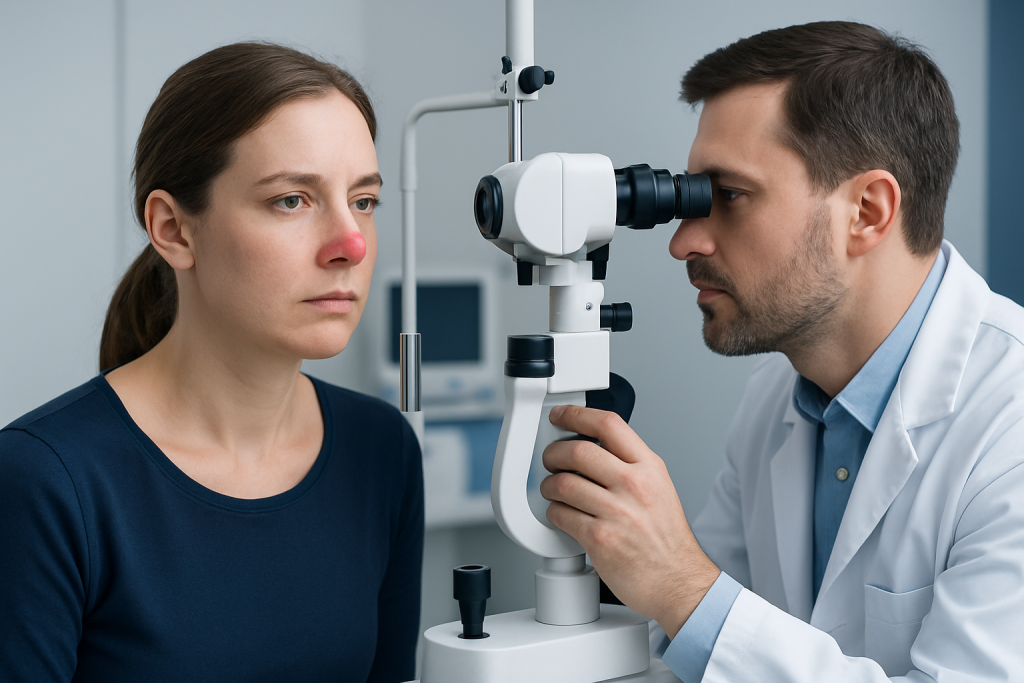
A red dot on the nose does not always look the same from person to person. It may be flat or slightly raised, bright red or pink, tender or completely painless, and it may stay in one place or come and go.
Other clues can help narrow down the cause. For example, a spot that feels rough and flaky may suggest irritation or sun damage, while one that is swollen and sore may be a pimple or infection. A tiny red mark that appears after rubbing or blowing the nose repeatedly may simply reflect broken surface vessels.
-
Flat, pinpoint red mark: may come from a broken capillary or minor trauma.
-
Raised red bump: may be acne, an inflamed follicle, or another skin lesion.
-
Red patch with scaling: may point to dermatitis, rosacea, or sun-related skin change.
-
Red spot that bleeds easily: deserves medical review, especially if it persists.
If redness is joined by warmth, swelling, crusting, or discharge, the skin may be more inflamed than it first appears. That combination can help a clinician distinguish a simple spot from a condition that needs treatment.
Causes and Risk Factors

There are several common reasons a red dot on the nose may appear. Local irritation is one of the most frequent, and it can be triggered by frequent nose blowing, wiping, mask friction, cosmetics, skin picking, or harsh cleansers that strip the skin barrier.
Another common explanation is a visible small blood vessel, sometimes called a broken capillary or spider-like vessel. These are often harmless, but they may become more noticeable after sun exposure, skin thinning, or repeated pressure on the area from glasses or face coverings.
Skin conditions can also show up on the nose. Rosacea often affects the central face and can cause redness, flushing, small bumps, and visible vessels. Acne can create a red bump on the nose, while contact dermatitis may follow a new product, fragrance, sunscreen, or topical treatment. Less commonly, a persistent red spot can reflect a precancerous or cancerous skin lesion, especially if it does not heal or begins to change.
Risk factors often overlap and include fair or sun-sensitive skin, long-term outdoor exposure, a history of rosacea or eczema, frequent nasal irritation, and use of products that dry or irritate the face. People who travel frequently or live in different climates may also notice flare-ups when skin is exposed to dry cabin air, stronger sun, or unfamiliar skin care products.
Diagnosis
Diagnosis usually starts with a careful look at the spot and a short discussion of when it appeared, whether it has changed, and whether it causes pain, itching, bleeding, or crusting. In many cases, a doctor can identify the likely cause by examining the skin and asking about recent triggers such as sunburn, new cosmetics, or repeated rubbing.
If the red dot is not typical, lasts for weeks, or has concerning features, the clinician may use a dermatoscope, which is a magnified lighted device that helps examine the skin in more detail. This can be especially useful for distinguishing a harmless vascular spot from another type of lesion.
Sometimes a biopsy is recommended if the diagnosis remains unclear or if the spot shows warning signs. For patients seeking care from abroad, it is helpful to bring photographs of how the spot looked at different times, a list of products used on the face, and any previous dermatology or ENT notes, since that information can make the consultation more efficient.
Treatment Options
Treatment depends entirely on the cause. A simple irritation spot may improve with stopping the trigger, switching to a gentle cleanser, moisturizing the skin barrier, and avoiding picking or scrubbing. If the issue is acne-related, a clinician may suggest an appropriate topical treatment; if it is rosacea or dermatitis, the plan may focus on calming inflammation and protecting the skin.
For a broken capillary or other visible vascular spot, treatment is often optional unless the person wants it removed for cosmetic reasons or the lesion is uncertain. In those cases, a dermatologist may discuss procedures such as laser treatment or other office-based methods, depending on the exact type of vessel or lesion.
If a bacterial infection is present, the priority is treating the infection and preventing spread. If the spot is suspicious for a precancerous or cancerous lesion, the treatment plan may include removal and pathology review. The right approach is chosen after confirming what the red dot actually is, rather than treating all red spots the same way.
Prevention and Self-care
Gentle daily care can reduce repeat redness on the nose. A mild, fragrance-free cleanser, a non-irritating moisturizer, and broad-spectrum sunscreen are the most practical basics for many people. Because the nose is especially sun-exposed, daily sun protection matters even on cloudy days or during short outdoor trips.
It also helps to avoid habits that keep the skin inflamed. Frequent rubbing, skin picking, harsh exfoliants, and alcohol-heavy products can all make the area look more red. If glasses rest on the bridge of the nose, adjusting the fit may reduce pressure and irritation.
-
Use lukewarm water instead of hot water when washing the face.
-
Choose non-comedogenic, fragrance-free skincare when possible.
-
Protect the nose from sun and wind with sunscreen and physical barriers when appropriate.
-
Track whether the spot changes after new products, travel, or weather shifts.
For international patients, consistent care between visits is especially useful. Keeping product labels, using a simple routine, and taking clear phone photos can make follow-up easier if the person sees different doctors in different countries.
When to See a Doctor
Medical evaluation is wise if the red dot on the nose lasts more than a few weeks, keeps returning, or looks different over time. A spot that bleeds easily, forms a crust, becomes painful, or steadily enlarges should be checked without delay.
Prompt attention is also appropriate if redness spreads across the nose or face, if there is fever, swelling, pus, or significant tenderness, or if the person has a weakened immune system. These features may point to infection or another condition that benefits from timely treatment.
It is also sensible to seek review if the spot appears after new medication, skincare, or a recent procedure and does not settle as expected. For patients who need evaluation during travel, Acibadem Health Point’s multidisciplinary specialists and JCI-accredited hospitals can diagnose and treat this condition for international patients in a coordinated setting.
Even when the cause turns out to be minor, a proper assessment can bring clarity and prevent unnecessary worry. When the skin gives mixed signals, a measured medical opinion is the most reliable next step.
Outlook
The outlook for a red dot on the nose is usually very good, especially when the cause is irritation, a small vessel change, or a mild inflammatory skin condition. Many spots settle with simple care once the trigger is removed and the skin is allowed to recover.
When the mark persists, changes, or behaves differently than expected, evaluation helps distinguish common problems from conditions that need treatment. That is the main reason clinicians pay attention to details such as size, texture, color, bleeding, and whether the spot is isolated or part of a broader pattern.
With sensible self-care and timely assessment when needed, most people can manage this concern without difficulty and with confidence about what is happening on the skin.
Frequently asked questions
01Is a red dot on the nose usually serious?
Most red dots on the nose are not serious and are related to irritation, broken capillaries, acne, or other common skin issues. The main concern is whether the spot is persistent, changing, bleeding, or painful, because those features need medical review.
02Can a red dot on the nose go away on its own?
Yes, some spots do fade on their own, especially if they were caused by rubbing, dryness, or a short-lived pimple. If it does not improve after a few weeks or keeps returning, a doctor should examine it.
03What is the difference between a pimple and a broken blood vessel?
A pimple is usually a raised, inflamed bump and may be tender or develop a white center. A broken blood vessel is often a flat red pinpoint or fine red line that does not feel like a pimple and may not change much over time.
04Can sun exposure cause a red dot on the nose?
Yes, sun exposure can irritate the skin and make small vessels more visible over time. It can also contribute to longer-term skin damage, which is why daily sunscreen is important for the nose and surrounding facial skin.
05Should someone try to pop or scratch the spot?
No, picking, scratching, or popping can worsen redness, cause infection, and make healing slower. Gentle skin care is safer until a clinician can identify the cause.
06When is a biopsy needed?
A biopsy may be suggested if the spot is unusual, does not heal, or looks suspicious on examination. It is a routine way to get a definite answer when visual inspection alone is not enough.
This article is for general information only and is not a substitute for professional medical advice. Please consult a qualified doctor about your individual situation.
Hair transplant in Turkey — costs, graft counts & a free assessment
JCI-accredited · board-certified surgeons · reply within 24h
Add us as a Preferred Source to see more of our trusted health content across Google Search, AI Overviews and Discover.