Seborrheic Dermatitis Hair Thinning: Causes, Symptoms, Diagnosis and Treatment

Key Takeaways
- Seborrheic dermatitis may cause temporary hair thinning, especially when the scalp is inflamed or frequently scratched.
- The condition often causes flakes, redness, itching, and greasy scale on the scalp and nearby skin.
- Doctors usually diagnose it by examining the skin and ruling out other causes of hair loss.
- Treatment focuses on controlling inflammation, yeast overgrowth, and scale with medicated shampoos or topical medicines.
- Gentle scalp care can reduce irritation and support recovery.
- Persistent shedding, patchy hair loss, or signs of infection should be reviewed by a doctor.
Seborrheic dermatitis can sometimes lead to hair thinning, usually because scalp inflammation, itching, and scratching disrupt normal hair shedding and growth. With the right diagnosis and treatment, symptoms are often manageable and hair typically recovers as the scalp calms.
Overview
Seborrheic dermatitis hair thinning can happen when an irritated, inflamed scalp creates an environment that is less favorable for normal hair growth. The condition itself does not usually destroy hair follicles, but the combination of itching, scratching, flaking, and ongoing inflammation can make hair look and feel thinner.
Seborrheic dermatitis is a common skin condition that tends to affect oily areas such as the scalp, eyebrows, sides of the nose, ears, and chest. On the scalp, it is often noticed as dandruff-like flaking with redness, greasy scale, and discomfort. For many people, the bigger concern is not just the visible flakes but the worry that the hair is coming out more than usual.
That concern is understandable. Hair thinning can be temporary, but it should still be taken seriously because several conditions can look similar, including psoriasis, fungal infections, telogen effluvium, and different forms of alopecia. A careful evaluation helps distinguish scalp inflammation from a separate hair-loss problem.
Symptoms
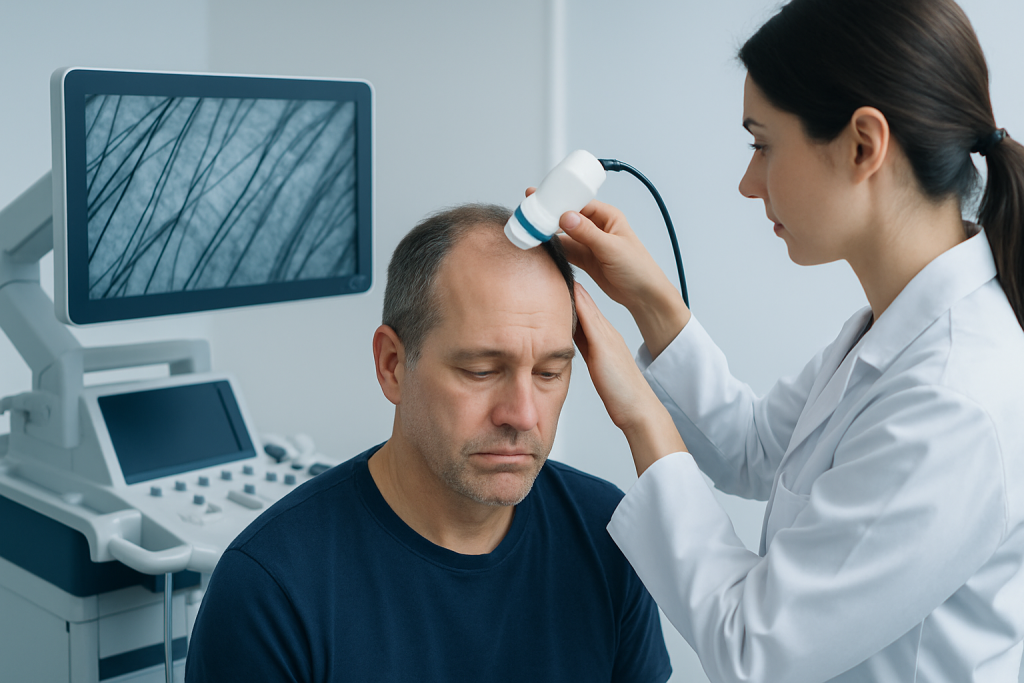
The most recognizable signs usually begin with the scalp. People may notice white or yellowish flakes, mild to moderate redness, greasy scale, and itching that ranges from occasional to persistent. Some people also describe a sore, tight, or “burning” feeling after washing or styling their hair.
Hair thinning linked to seborrheic dermatitis is often diffuse rather than patchy. In other words, the hair may seem less full overall, or more scalp may be visible through the hair, especially where scratching is frequent. Shedding can become more noticeable during washing, brushing, or on pillows and clothing.
Other areas may also be involved. Eyebrows, the hairline, behind the ears, and facial folds can show similar scaling or redness. When symptoms extend beyond the scalp, they can give useful clues that the issue is inflammatory rather than purely cosmetic.
- Flakes that come and go
- Red or irritated scalp skin
- Itching, burning, or tenderness
- More shedding during grooming
- Hair that appears less dense over time
Causes & Risk Factors

Seborrheic dermatitis does not have a single cause. It is thought to develop from a mix of skin oil production, sensitivity to a normal skin yeast called Malassezia, and an individual’s inflammatory response. When these factors combine, the scalp can become irritated and flaky.
Several patterns are commonly seen in people who develop the condition. It may flare during periods of stress, season changes, or when skin care products are harsh or irritating. People with neurologic conditions, certain immune-related problems, or a family history of similar scalp issues may also be more likely to experience it.
Risk factors for more noticeable hair thinning include frequent scratching, delayed treatment, and overlapping scalp conditions. Hair care habits that pull or stress the hair can make shedding seem worse, even when the main problem is inflammation. Because multiple causes can coexist, doctors often look at the whole picture rather than focusing on one symptom alone.
- Oily scalp skin or heavy scale buildup
- Stress and disrupted routines
- Cold, dry weather in some people
- Harsh shampoos or styling products
- Underlying skin or immune-related conditions
Diagnosis
Diagnosis usually starts with a close look at the scalp and a discussion of symptoms, timing, hair care habits, and any past skin problems. In many cases, a clinician can identify seborrheic dermatitis by its typical pattern of flaking, redness, and distribution on oily areas of the skin.
If hair thinning is part of the picture, the doctor may also ask whether shedding is gradual or sudden, whether there are bald patches, and whether the eyebrows, beard, or other body areas are involved. These details help separate inflammatory scalp disease from other forms of hair loss. A gentle scalp examination may be enough, but additional tests are sometimes useful.
When the diagnosis is not clear, a doctor may consider a fungal test, dermoscopy, or a scalp biopsy in selected cases. Blood tests are not always necessary, but they may be ordered if another cause of shedding is suspected. The goal is not just to name the condition, but to make sure nothing more significant is being missed.
Treatment Options
Treatment is aimed at calming inflammation, reducing yeast overgrowth, and loosening scale so the scalp can recover. Medicated shampoos are often the first step. Depending on the ingredients, they may help control flaking, itching, and redness when used as directed by a doctor.
Topical treatments may also be recommended, especially when the scalp is quite inflamed. These can include anti-inflammatory medicines or antifungal preparations chosen according to the severity of symptoms and the areas involved. For people with stubborn or widespread symptoms, a dermatologist may adjust treatment over time so the scalp is treated without over-irritation.
Hair thinning from seborrheic dermatitis often improves once the scalp settles, but regrowth takes time. The hair cycle moves slowly, so visible recovery may lag behind symptom relief. A practical treatment plan usually combines medical therapy with patient-friendly scalp care that can be maintained across travel, work, and daily life.
- Medicated shampoos for flaking and inflammation
- Topical antifungal or anti-inflammatory treatments
- Short, supervised treatment plans for flares when appropriate
- Adjustments to hair care products and washing routines
Prevention & Self-care
People often do better when they treat the scalp gently and consistently. Regular washing with a doctor-recommended shampoo can help reduce buildup, while overly aggressive scrubbing may worsen irritation. The aim is to keep the scalp comfortable rather than strip it clean.
Self-care also means avoiding habits that intensify inflammation. Heavy styling products, repeated heat exposure, tight hairstyles, and scratching can all contribute to more breakage and shedding. If a person is traveling for treatment or follow-up care, it helps to bring the exact products recommended by the clinician and continue the routine without major changes.
Stress management, enough sleep, and attention to overall skin health can support symptom control, though they do not replace medical treatment. For people coming from another country, it is useful to keep a simple symptom diary with photos of the scalp, because flares can be easier to assess when changes are tracked over time.
- Wash the scalp regularly with gentle, appropriate products
- Avoid scratching, picking, or forceful brushing
- Choose non-irritating hair products when possible
- Limit tight styles and high heat
- Track flares and treatment response
When to See a Doctor
A doctor should evaluate scalp symptoms when flaking and itching keep returning, when over-the-counter measures are not helping, or when hair thinning seems to be increasing. Early assessment is especially useful if the scalp is painful, the redness is spreading, or the pattern of hair loss is unusual for seborrheic dermatitis.
Medical review is also important if there are signs that another condition may be present. Patchy bald spots, broken hairs, swelling, crusting, drainage, fever, or sudden shedding deserve prompt attention. These signs can point to a different diagnosis or to an infection that needs specific treatment.
For international patients, a specialist can help coordinate diagnosis, treatment planning, and follow-up in a way that fits travel schedules. At Acibadem Health Point, multidisciplinary specialists and JCI-accredited hospitals diagnose and treat seborrheic dermatitis and related scalp concerns for international patients.
Living With Seborrheic Dermatitis Hair Thinning
When seborrheic dermatitis affects the scalp, the visible flakes can be frustrating and the hair thinning can feel personal. In practice, the condition is usually manageable, and many people improve once the inflammation is brought under control. The main task is to treat the scalp steadily, not to chase every flare with harsh products or frequent changes.
Recovery is often a step-by-step process. Symptoms may settle before the hair looks full again, and that gap can be discouraging if a person is watching their hair closely. A doctor can help set realistic expectations, especially when there are multiple causes of shedding or when treatment has to be adjusted after a trip, a work change, or a move between countries.
With accurate diagnosis, consistent care, and follow-up when needed, seborrheic dermatitis hair thinning can often be managed without long-term harm to the hair follicles. The most useful next step is usually a calm, structured assessment rather than guessing at the cause or relying on one-size-fits-all treatments.
Frequently asked questions
01Can seborrheic dermatitis really cause hair thinning?
Yes, it can contribute to temporary hair thinning, mainly through scalp inflammation, itching, and repeated scratching. It usually does not permanently damage hair follicles, so hair often improves when the scalp condition is treated.
02Is the hair loss from seborrheic dermatitis permanent?
In most cases, it is not permanent. Once inflammation and scale are controlled, the scalp can recover and hair may gradually regain fullness, although regrowth takes time.
03How is seborrheic dermatitis different from dandruff?
Dandruff is often considered a milder form of seborrheic dermatitis limited mainly to flaking on the scalp. Seborrheic dermatitis can include more redness, irritation, and involvement of other oily skin areas.
04Do medicated shampoos help with hair thinning?
They can help indirectly by reducing the scalp inflammation that contributes to shedding and breakage. They do not make hair regrow instantly, but they may create a healthier environment for normal growth to resume.
05When should someone worry that it is not seborrheic dermatitis?
If hair loss is patchy, sudden, painful, or accompanied by swelling, pus, fever, or broken hairs, another cause may be present. A doctor should assess these symptoms because treatment depends on the correct diagnosis.
06Can stress make seborrheic dermatitis worse?
Stress can trigger or intensify flares in some people, although it is rarely the only cause. Managing stress may help reduce flare frequency, but it should be paired with medical treatment and gentle scalp care.
This article is for general information only and is not a substitute for professional medical advice. Please consult a qualified doctor about your individual situation.
Hair transplant in Turkey — costs, graft counts & a free assessment
JCI-accredited · board-certified surgeons · reply within 24h
Add us as a Preferred Source to see more of our trusted health content across Google Search, AI Overviews and Discover.