What Is Psoriasis in Ear? A Complete Medical Guide

Key Takeaways
- Psoriasis in the ear can affect the outer ear, behind the ear, or the ear canal.
- Common signs include itching, dryness, flaking, redness, and a feeling of blockage.
- It can be confused with eczema, seborrheic dermatitis, or infection, so medical assessment matters.
- Treatment usually focuses on calming inflammation, softening scale, and protecting the delicate ear skin.
- People should not place creams, oils, or cotton swabs deep into the ear without medical advice.
Psoriasis in the ear is a chronic inflammatory skin condition that can affect the outer ear, ear canal, or the skin around the ear. It may cause itching, flaking, redness, and discomfort, but with the right diagnosis and treatment it can usually be managed well.
Overview
Psoriasis in the ear is a form of psoriasis that affects the thin, sensitive skin of the outer ear, the folds around the ear, and sometimes the ear canal. It is a chronic inflammatory skin condition, not an infection, and it can appear on its own or alongside scalp psoriasis and plaques elsewhere on the body.
For many people, the first clue is not pain but persistent itching or dry, flaky skin that keeps returning. Because the ear is a narrow, delicate area, even a small amount of scale or swelling can feel very noticeable. The condition is usually manageable, but it benefits from the right diagnosis because several other skin problems can look similar.
In a person who is planning care from abroad, ear symptoms can be especially disruptive because they may affect sleep, hearing comfort, and daily concentration during travel. A clear evaluation before or after a trip can help distinguish psoriasis from infection or wax-related problems and guide safer treatment choices.
Symptoms
Ear psoriasis can look different from one person to another, but common features include dry, white or silvery flaking, red or pink patches, itching, and skin that feels tight or sore. Some people also notice a buildup of scale in the ear folds or at the entrance to the ear canal.
When the ear canal is involved, symptoms may include a blocked sensation, mild muffled hearing, irritation after touching the ear, or discomfort when wearing hearing aids or earbuds. The skin may crack if it becomes very dry, and scratching can make the area inflamed or more prone to secondary irritation.
Psoriasis in the ear often appears together with signs elsewhere, such as dandruff-like scaling on the scalp, plaques on the elbows or knees, or changes in the nails. A person may also notice that symptoms come and go in flare-ups rather than staying constant.
- Itching in or around the ear
- Dry, scaly, or flaky skin
- Redness and irritation
- Crusting at the ear opening
- Feeling of fullness or blockage
Causes & Risk Factors

Psoriasis develops when the immune system signals skin cells to grow and shed too quickly. This creates the thickened, inflamed patches that are typical of the condition. The ear becomes involved for the same reason as other skin sites, but its thin skin and constant exposure to friction can make symptoms feel more intense.
There is usually a genetic tendency, although a person may never know exactly why the condition started or why it flares at a particular time. Common triggers include stress, skin injury, infection, cold weather, alcohol excess, smoking, and some medications. For the ear specifically, irritation from headphones, hearing devices, frequent cleaning, or scratching can worsen symptoms.
Risk may be higher in people who already have psoriasis on the scalp or other parts of the body, because the disease often involves more than one site. Ear symptoms may also be noticed more often in people with oily skin or overlapping seborrheic dermatitis, which can make the picture more confusing without a clinician’s exam.
It is helpful to remember that psoriasis is not contagious. A person cannot catch it from another person, and good hygiene alone does not prevent it, although gentle skin care can reduce irritation.
Diagnosis
Diagnosis usually begins with a careful history and a physical examination of the ear, scalp, and other skin areas. A clinician will look at the pattern of scaling, redness, and irritation and ask about symptoms such as itching, pain, discharge, hearing changes, and previous skin conditions.
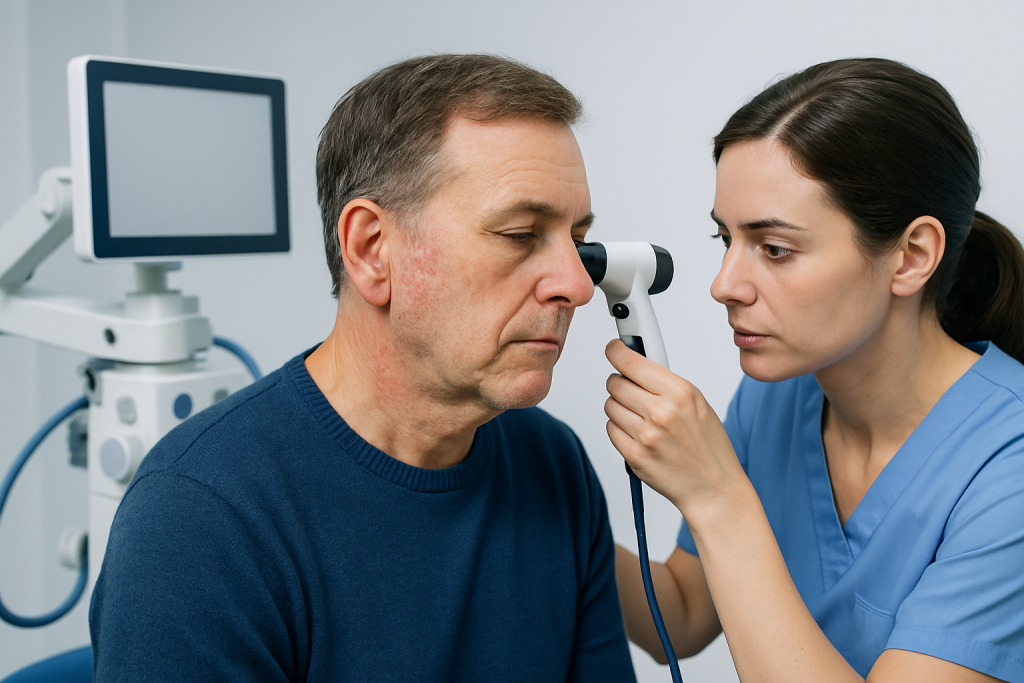
Because ear psoriasis can resemble eczema, seborrheic dermatitis, fungal infection, or contact dermatitis, the clinician may need to consider other causes before confirming the diagnosis. If the ear canal is affected, an ENT specialist may use an otoscope to inspect the canal and eardrum more closely. In some cases, a dermatologist may also help confirm the type of inflammatory skin disease.
Most people do not need complex testing. However, if the appearance is unusual, if there is persistent discharge, or if symptoms do not improve as expected, the doctor may recommend further evaluation or occasionally a skin sample. The goal is to avoid treating the wrong condition, especially in a sensitive area like the ear.
Treatment Options
Treatment for psoriasis in the ear is usually tailored to the location and severity of the symptoms. The aim is to calm inflammation, reduce scaling, and protect the skin without irritating the ear canal. Because this area is delicate, treatment should be chosen carefully and guided by a clinician rather than by home remedies alone.
Topical treatments are commonly used for the outer ear and skin around the ear. These may include anti-inflammatory creams or ointments, moisturizing emollients, or other prescription medicines selected for sensitive skin. If scale is thick, a doctor may advise gentle softening measures before applying treatment. For the ear canal, only products specifically recommended for that location should be used.
When psoriasis is more widespread or difficult to control, treatment may also address psoriasis elsewhere on the body. That can include prescription options such as stronger topical therapies or, in selected cases, systemic or biologic treatments under specialist supervision. A clinician will weigh the benefits against possible risks, especially if the person is traveling, has other medical conditions, or needs follow-up across borders.
If symptoms are mainly due to irritation, the treatment plan may focus on removing triggers and restoring the skin barrier. This is particularly important when hearing aids, earbuds, helmets, or frequent ear cleaning are contributing to the problem. A practical plan often works better than trying many over-the-counter products at once.
Prevention & Self-care
People cannot always prevent psoriasis flares, but they can often reduce irritation and keep the ear more comfortable. Gentle skin care matters more than aggressive cleaning. The ear should be washed softly, then patted dry, rather than scrubbed.
It is best to avoid putting cotton swabs deep into the ear canal, because they can push debris inward and damage already irritated skin. Oils, wax-removing drops, and over-the-counter skin products should not be used inside the ear unless a clinician has said they are safe for that specific situation. If a person wears hearing aids or earbuds, regular cleaning and proper fit can help reduce friction.
Stress management, good sleep, and attention to known triggers can also make a difference. Some people find that scalp treatment helps ear symptoms as well, since the scalp and ears are often affected together. When traveling for care, it is useful to bring a current list of medicines, avoid starting multiple new products at once, and follow the treating doctor’s instructions closely after returning home.
- Use fragrance-free moisturizers on the outer ear if advised
- Avoid scratching, picking, or frequent probing
- Keep hearing devices clean and well fitted
- Manage scalp psoriasis if it is present
- Seek advice before using drops or creams in the canal
When to See a Doctor
A medical review is a good idea when ear scaling or itching keeps returning, lasts more than a short time, or interferes with hearing, sleep, or daily comfort. It is especially important to be seen if the area becomes painful, swollen, or starts to ooze, because those signs may point to another condition that needs different care.
A doctor should also evaluate symptoms that do not improve with gentle self-care, or when a person is unsure whether the problem is psoriasis, eczema, or an infection. This is particularly relevant before long travel, when an untreated ear problem can become harder to manage away from home.
If psoriasis is already known in other parts of the body and the ear becomes involved, the person should mention it during the visit. For international patients, Acibadem Health Point’s multidisciplinary specialists and JCI-accredited hospitals can diagnose and treat this condition with coordinated ENT and dermatology input when appropriate.
Prompt assessment does not mean the situation is severe; it simply helps confirm the cause and choose the safest treatment for this sensitive area. With the right plan, most people can keep symptoms controlled and reduce flare-ups over time.
Frequently asked questions
01What is psoriasis in the ear?
Psoriasis in the ear is a chronic inflammatory skin condition that affects the outer ear, the folds around the ear, or sometimes the ear canal. It causes skin cells to grow and shed too quickly, leading to itching, redness, and scaling. It is not contagious.
02How can ear psoriasis be told apart from eczema or infection?
The appearance can overlap, so a clinician usually looks at the full pattern, including the scalp and other skin areas. Eczema and infections may cause similar itching or scaling, but discharge, odor, pain, or a different rash pattern can point in another direction. An ENT or dermatologist can help confirm the cause.
03Can psoriasis in the ear affect hearing?
It can sometimes create a blocked feeling or mild muffled hearing if scale builds up in the ear canal. It does not usually damage hearing directly, but any persistent hearing change should be checked. Removing the cause safely is important, especially if the person uses hearing aids or earbuds.
04What should someone avoid putting in the ear?
People should avoid cotton swabs, harsh cleaners, and non-prescribed creams or oils inside the ear canal. These can irritate delicate skin or worsen symptoms. A doctor should guide any treatment used near or in the canal.
05Does ear psoriasis go away completely?
Psoriasis is usually a long-term condition that can flare and settle over time. Many people do very well with the right treatment and self-care, even if they still have occasional flare-ups. The goal is control, comfort, and early treatment when symptoms return.
06When is specialist care helpful?
Specialist care is helpful when symptoms are recurrent, hard to distinguish from another condition, or affecting hearing and comfort. An ENT specialist can examine the ear canal, while a dermatologist can help manage psoriasis more broadly. Coordinated care is often useful when the condition affects more than one area.
This article is for general information only and is not a substitute for professional medical advice. Please consult a qualified doctor about your individual situation.
Hair transplant in Turkey — costs, graft counts & a free assessment
JCI-accredited · board-certified surgeons · reply within 24h
Add us as a Preferred Source to see more of our trusted health content across Google Search, AI Overviews and Discover.