Mole Removal Cream: Uses, Dosage and Side Effects

Key Takeaways
- Most over-the-counter mole removal creams are not recommended for true moles.
- A changing, bleeding, itchy, or irregular mole should be checked by a doctor before any home treatment.
- Using caustic or unregulated products can cause burns, scarring, infection, and delayed diagnosis.
- Dermatologists usually remove concerning or bothersome moles with medical procedures, not creams.
- Sun protection and regular skin checks help support long-term skin health.
Mole removal cream is often searched for as a simple at-home solution, but it is not a safe or reliable way to remove most moles. Because a mole can sometimes resemble or hide a serious skin condition, professional evaluation is the safest first step before any treatment is tried.
Overview
For people hoping to treat a raised spot quickly, mole removal cream can sound appealing. In medical practice, however, most true moles are not safely removed with creams. A mole is a growth made up of pigment-producing cells, and its appearance can overlap with other skin lesions that need a proper diagnosis first.
That distinction matters. What a person believes is a harmless mole may occasionally be a wart, seborrheic keratosis, skin tag, or even a suspicious pigmented lesion. Because the skin cannot be accurately diagnosed by appearance alone in every case, the safest approach is to have a clinician examine the spot before trying to remove it at home.
In international patient care, this is especially important when someone is deciding whether to travel for treatment. A brief dermatology consultation can clarify whether the lesion is suitable for observation, biopsy, or removal, and it can prevent unnecessary skin damage from self-treatment.
Symptoms and When a Mole Needs Attention
Most moles are harmless. They often appear as small brown, tan, pink, or skin-colored spots that remain stable for years. Many people seek removal for cosmetic reasons, irritation from shaving or clothing, or because the mole sits in a noticeable area such as the face or neck.
Some changes should never be treated as a routine cosmetic issue. A mole that becomes uneven in shape, develops irregular borders, changes in color, grows rapidly, itches persistently, bleeds without injury, crusts, or looks different from a person’s other moles deserves medical review. These features do not automatically mean cancer, but they do mean the lesion should be assessed before any product is applied.
It is also worth remembering that not every raised or dark spot is a mole. People sometimes use the word mole for skin tags, warts, cherry angiomas, or seborrheic keratoses. Each has different treatment options, and some respond poorly or dangerously to acidic or caustic creams.
Causes and Risk Factors

Moles develop when pigment cells cluster together in one area of the skin. Genetics, sun exposure, and natural skin pigmentation can all influence how many moles a person develops over time. New moles are more likely to appear in childhood, adolescence, and early adulthood, though some can develop later.
Certain factors make careful evaluation especially important. People with many moles, very fair skin, a history of sunburns, or a personal or family history of skin cancer may need regular skin checks. A mole that stands out from the rest, or one that looks unusual in the context of a person’s own skin pattern, should not be self-treated.
Home creams marketed for mole removal are often unregulated or meant for other skin concerns, not for true moles. Some contain strong acids or plant-based products that can irritate the skin without fully removing the lesion underneath, which can create both cosmetic and medical problems.
Diagnosis
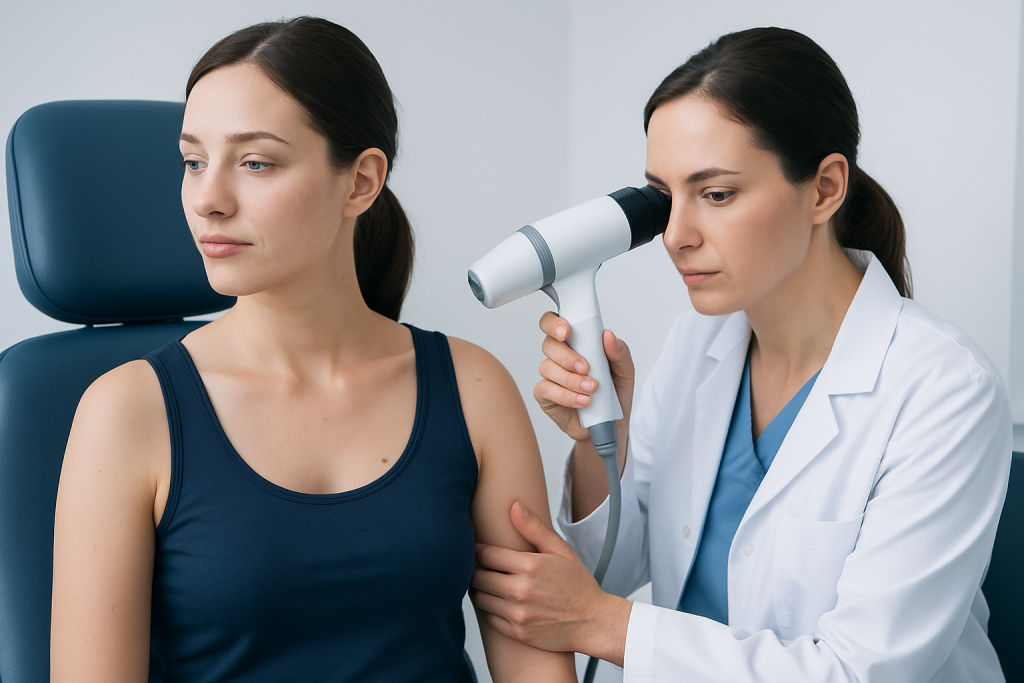
Before any treatment, a clinician usually starts with a skin examination. A dermatologist may ask when the spot first appeared, whether it has changed, and whether it causes symptoms such as pain, itching, or bleeding. The clinician may compare the lesion with the person’s other moles and look for warning signs that suggest closer evaluation is needed.
In some cases, a dermatoscope is used to look at the pigment patterns and structure of the lesion in more detail. If the spot appears suspicious or uncertain, a biopsy may be recommended. That means taking a small tissue sample or removing the entire lesion so it can be examined under a microscope.
This step is one reason self-treatment is discouraged. If a person uses a mole removal cream first, the skin surface may become irritated or altered, making it harder for a doctor to assess the lesion accurately. In a few cases, this can delay the diagnosis of a condition that should have been evaluated earlier.
Treatment Options
There is no standard, medically endorsed dosage for mole removal cream because most true moles are not treated with cream at all. If a product is marketed for at-home mole removal, it should be approached cautiously, as many such products are not appropriate for pigmented lesions and may not be proven safe or effective.
When a mole needs removal, doctors usually choose a procedure based on the type of lesion, its location, and whether cancer needs to be ruled out. Common medical options include surgical excision, shave removal in selected cases, or biopsy followed by further treatment if needed. These procedures are performed under local anesthesia and are designed to remove tissue safely while preserving diagnostic information.
For benign spots that do not require removal, the best treatment may be observation only. Cosmetic concerns can also be discussed with a dermatologist, who can explain whether removal is likely to leave a scar and whether the benefit is worth that trade-off. For people traveling for care, a consultation can also help plan timing, wound care, and follow-up after returning home.
It is important to avoid products that burn, freeze, or peel the skin unless they have been specifically recommended for a diagnosed condition. Using such products on a mole may lead to infection, pigment loss, deeper scarring, or incomplete removal.
Side Effects and Possible Risks
The side effects of mole removal cream are usually the reason dermatologists advise against it. Common problems include redness, stinging, blistering, open sores, temporary or permanent darkening of the skin, and scarring. Some people also develop contact dermatitis or a chemical burn, especially if the product is left on too long or used on sensitive areas.
Another risk is incomplete treatment. A cream may damage the top layer of skin while leaving part of the lesion behind. This can make the area look improved for a short time while the underlying problem remains. If the lesion was not a simple mole, the delay may be medically important.
Signs of a complication include increasing pain, spreading redness, pus, fever, or a wound that does not heal. If any of these occur, the product should be stopped and the area should be checked by a qualified clinician.
Prevention and Self-care
People cannot prevent every mole from forming, but they can protect their skin and reduce avoidable irritation. Daily sun protection, including shade, protective clothing, and a broad-spectrum sunscreen, supports overall skin health and helps lower long-term ultraviolet damage. Regular self-checks also help people notice new or changing lesions early.
A useful self-care habit is to take a simple baseline photo of a mole that a clinician has already judged to be benign. Comparing images over time can make changes easier to spot. If a lesion becomes asymmetrical, develops a new color, or starts behaving differently, it is better to schedule an exam than to apply a home product.
After any medically supervised removal, following wound-care instructions matters. Keeping the area clean, avoiding picking, and attending follow-up visits can reduce scarring and help healing. For patients who return to another country after treatment, clear written instructions and a contact plan are especially helpful.
When to See a Doctor
A doctor should evaluate any mole that is changing, bleeding, painful, itchy, or visually different from surrounding spots. Medical review is also appropriate when a person is unsure whether the lesion is truly a mole. If the spot is on the face, scalp, hands, or another area where scarring matters, planning removal with a specialist is usually worthwhile.
It is also sensible to seek care before using any at-home mole removal cream, especially if the product promises rapid removal, skin peeling, or “natural” cauterization. These claims do not guarantee safety. A short appointment with a dermatologist can prevent unnecessary harm and, when needed, can speed the path to the right treatment.
Acibadem Health Point’s multidisciplinary specialists and JCI-accredited hospitals diagnose and treat skin lesions for international patients, including cases where a mole needs careful evaluation before removal. That kind of coordinated review can make a decision easier, particularly when a patient is arranging care from abroad.
Frequently Asked Questions
- Can mole removal cream safely remove a mole?
Most true moles should not be removed with cream. These products can burn the skin, leave scars, and mask a lesion that needs medical assessment. - Is there a recommended dosage for mole removal cream?
There is no medically standard dosage for true moles because creams are generally not recommended for them. If a product is being considered, a clinician should first confirm what the spot actually is. - What happens if a mole removal cream is used on the wrong lesion?
The skin may become irritated or damaged, and the underlying condition may remain untreated. In some cases, this can delay diagnosis and proper care. - How do dermatologists remove moles?
Depending on the lesion, they may use excision, shave removal, or biopsy. The method is chosen to protect the skin and preserve diagnostic accuracy. - When should a mole be checked urgently?
A mole that changes in size, shape, color, sensation, or starts bleeding should be assessed promptly. Any lesion that looks unusual or different from a person’s other moles deserves attention. - Can a mole grow back after removal?
If tissue remains, a mole can sometimes recur. A dermatologist can explain whether the lesion was fully removed and whether follow-up is needed.
Frequently asked questions
01Can mole removal cream safely remove a mole?
Most true moles should not be removed with cream. These products can burn the skin, leave scars, and mask a lesion that needs medical assessment.
02Is there a recommended dosage for mole removal cream?
There is no medically standard dosage for true moles because creams are generally not recommended for them. If a product is being considered, a clinician should first confirm what the spot actually is.
03What happens if a mole removal cream is used on the wrong lesion?
The skin may become irritated or damaged, and the underlying condition may remain untreated. In some cases, this can delay diagnosis and proper care.
04How do dermatologists remove moles?
Depending on the lesion, they may use excision, shave removal, or biopsy. The method is chosen to protect the skin and preserve diagnostic accuracy.
05When should a mole be checked urgently?
A mole that changes in size, shape, color, sensation, or starts bleeding should be assessed promptly. Any lesion that looks unusual or different from a person’s other moles deserves attention.
06Can a mole grow back after removal?
If tissue remains, a mole can sometimes recur. A dermatologist can explain whether the lesion was fully removed and whether follow-up is needed.
This article is for general information only and is not a substitute for professional medical advice. Please consult a qualified doctor about your individual situation.
Oncology care in Turkey — second opinion and treatment plan
JCI-accredited · board-certified surgeons · reply within 24h
Add us as a Preferred Source to see more of our trusted health content across Google Search, AI Overviews and Discover.