

Pulled Abdomen Symptoms: Signs, Causes and When to See a Doctor
- 9 min read
- Published November 27, 2026
Key Takeaways
- Pulled abdomen symptoms often include pain that is worse with movement, coughing, laughing, or changing position.
- A strained abdominal muscle usually causes localized tenderness rather than deep internal pain.
- Hernia, appendicitis, gallbladder problems, and other conditions can mimic a pulled abdominal muscle.
- Most mild strains improve with rest, gentle activity modification, and symptom relief measures.
- Medical review is important if pain is severe, persistent, associated with fever, vomiting, swelling, or a bulge.
A pulled abdomen usually refers to a strained abdominal muscle, which can cause localized pain, tenderness, and discomfort that worsens with movement, coughing, or twisting. While many cases improve with rest and conservative care, some abdominal pain has a different cause and needs medical evaluation.
Overview
When people say they have a “pulled abdomen,” they are usually describing a strained abdominal muscle. The phrase is not a formal diagnosis, but it is a common and practical way to describe pain that begins after lifting, twisting, intense exercise, coughing, or a sudden awkward movement.
The key question is whether the discomfort behaves like a muscle injury or something deeper inside the abdomen. Pulled abdomen symptoms are often sharp or sore in one area, and they tend to worsen when the abdominal wall is used, such as during coughing, getting out of bed, or turning the torso. That pattern is helpful, but it is not enough to rule out other causes on its own.
For someone traveling for care or deciding whether to seek treatment abroad, the first step is the same: notice the pattern of pain, any visible swelling or bulge, and whether the discomfort is stable, improving, or becoming more intense. A doctor can usually sort out a muscle strain from a more serious abdominal condition by asking the right questions and examining the area carefully.
Symptoms
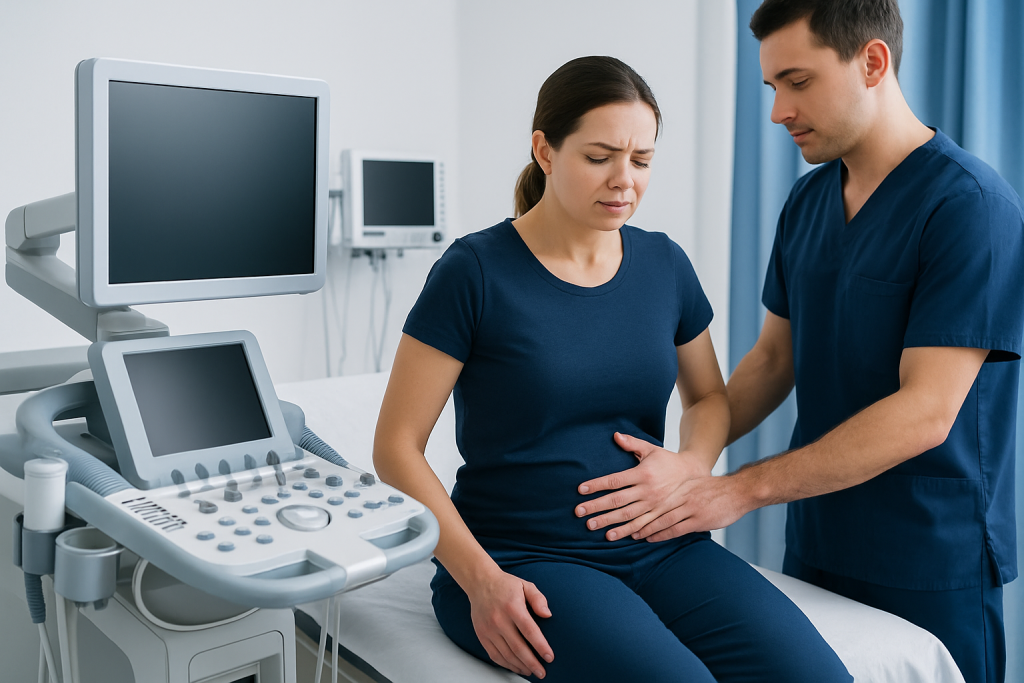
The most typical pulled abdomen symptoms are localized pain and tenderness. The area may feel sore to the touch and uncomfortable during everyday actions that tighten the abdominal wall. Many people notice that standing up straight, coughing, sneezing, laughing, or doing core movements makes the pain more obvious.
Some strains also create a pulling or tight sensation in the lower abdomen or along one side of the stomach wall. The pain may begin suddenly during activity or appear later the same day. In mild cases, it may feel like a bruise or a cramp; in more significant strains, movement can become clearly limited.
- Pain that is worse with movement, twisting, or bending
- Tenderness when pressing on one specific area
- Tightness or spasm in the abdominal wall
- Discomfort with coughing, laughing, or sneezing
- Occasional mild swelling or muscle guarding
A muscle strain usually does not cause fever, persistent vomiting, fainting, blood in the stool, or severe pain spreading across the whole abdomen. If those features are present, another cause should be considered promptly.
Causes & Risk Factors

Abdominal muscle strains happen when the muscle fibers are overstretched or torn to some degree. This can occur during sports, heavy lifting, sudden trunk rotation, sit-ups, coughing fits, pregnancy-related strain, or even forceful movements during daily activities. People may not always remember one dramatic moment; sometimes the discomfort appears after repeated smaller stresses.
Several factors can make a strain more likely. Weak core conditioning, returning too quickly to exercise after a break, poor lifting mechanics, and sudden increases in training intensity all place extra demand on the abdominal wall. A prior injury can also make the area more vulnerable to re-injury.
It is also important to remember that not every “pulled abdomen” is a muscle problem. A hernia, appendicitis, gallbladder inflammation, kidney stones, stomach or bowel issues, and gynecologic conditions can cause abdominal pain that may initially feel similar. That is why the context of the pain matters as much as the pain itself.
Diagnosis
Doctors usually begin with a detailed history and a physical examination. They may ask what the person was doing when the pain started, whether the pain changes with movement, whether there is nausea or fever, and whether any bulge, swelling, or bruising is present. These clues often help distinguish a muscle strain from pain coming from inside the abdomen.
During the exam, a clinician may gently press on the painful area and ask the person to tense the abdominal muscles, cough, or lift the head slightly. Pain that becomes more noticeable when the abdominal wall contracts can support a muscle strain, although it does not confirm it by itself.
If the picture is not straightforward, further testing may be recommended. Depending on the symptoms, this can include blood tests, urine testing, or imaging such as ultrasound or CT scan. The goal is not to overtest every sore muscle, but to make sure a more serious condition is not being missed when the pattern does not fit a simple strain.
Treatment Options
Most uncomplicated abdominal strains are managed conservatively. Resting the injured area, avoiding movements that trigger pain, and gradually returning to normal activity are usually the main steps. The abdomen heals best when it is not repeatedly stressed before the discomfort settles.
Cold packs may be helpful early on if there is a recent injury and local tenderness, while gentle heat may feel more comfortable later for muscle tightness. Over-the-counter pain relievers may be used by some people, but they should be chosen carefully and only if appropriate for the person’s medical history. A doctor or pharmacist can help with safe general guidance, especially for people who have stomach ulcers, kidney disease, liver disease, bleeding concerns, or take blood thinners.
Physical therapy or guided exercise may be useful if strains recur or if core weakness is contributing to the problem. In rare cases, pain that seems like a strain is actually due to a hernia or another condition that needs a different treatment approach. That is one reason persistent or unusual symptoms deserve a proper medical review rather than self-diagnosis alone.
Prevention & Self-care
Self-care works best when it reduces strain without causing long periods of inactivity. Short rest from provoking movements is reasonable, but complete immobilization is usually unnecessary for a mild muscle injury. As pain improves, people often do better with a gradual return to walking, daily tasks, and eventually exercise.
Prevention focuses on how the body is loaded. Warming up before sports, strengthening the core, using safe lifting technique, and increasing workout intensity step by step can all reduce the chance of another strain. For people who cough often, treating the cough may also help protect the abdominal wall from repeated stress.
- Use proper lifting form and avoid sudden twisting while carrying weight
- Build core strength progressively rather than jumping into intense routines
- Listen to early warning pain instead of “pushing through” it
- Support recovery with sleep, hydration, and balanced nutrition
- Seek advice before resuming intense sport after a prior strain
For international patients coordinating care from another country, it can help to keep notes about when the pain began, what worsens it, and whether any swelling or digestive symptoms appeared. Those details make a remote consultation or in-person assessment more efficient and more accurate.
When to See a Doctor
A medical evaluation is wise if the pain is severe, does not improve over several days, or keeps returning. It is especially important to be checked if the discomfort is not clearly linked to a movement or exercise, because internal abdominal conditions can sometimes start as vague soreness.
Urgent care is appropriate if abdominal pain comes with fever, vomiting, a new bulge, a hard or swollen abdomen, inability to pass stool or gas, fainting, chest pain, or pain that moves to the right lower abdomen or becomes rapidly worse. Pain after trauma, such as a fall or direct blow, also deserves prompt assessment.
If symptoms interfere with daily life or if there is uncertainty about whether the problem is a strain or a hernia, doctors can help clarify the cause and recommend the right next step. Acibadem Health Point’s multidisciplinary specialists and JCI-accredited hospitals diagnose and treat this condition for international patients with coordinated care and clear follow-up planning.
Living With a Suspected Abdominal Strain
Most people recover well once the affected muscle is protected and the body is given time to heal. The main challenge is often not the strain itself, but recognizing when the pain is following a simple course and when it is behaving differently. Monitoring the trend over time is often more useful than focusing on a single painful moment.
If travel, work, or exercise plans are involved, a staged return is usually safer than an abrupt one. That may mean shortening a trip schedule, avoiding heavy luggage, or postponing sports until daily movements are comfortable again. A sensible recovery plan can prevent a short-lived injury from becoming a recurring problem.
People who are unsure whether their symptoms fit a pulled abdominal muscle should not hesitate to ask a clinician. A careful exam can provide reassurance when the issue is minor, or it can uncover a condition that needs timely treatment.
Frequently asked questions
01What does a pulled abdomen feel like?
It often feels like a localized sore, tight, or sharp pain in one area of the abdominal wall. The discomfort usually gets worse when the person coughs, twists, bends, or uses the core muscles. Many people can point to one tender spot rather than describing a deep, diffuse ache.
02How can someone tell the difference between a muscle strain and a hernia?
A muscle strain usually causes pain that is linked to movement and tenderness in the muscle itself. A hernia may cause a bulge or pressure sensation that becomes more noticeable with lifting, straining, or coughing. Because the two can overlap, a doctor should evaluate any bulge or persistent pain.
03How long does a pulled abdominal muscle take to heal?
Mild strains often improve gradually over days to a few weeks, while more significant injuries can take longer. Healing time depends on how severe the strain is and whether the area is repeatedly stressed. If pain is not improving, medical review is sensible.
04Should exercise stop completely after abdominal strain symptoms begin?
Usually, high-intensity exercise and movements that trigger pain should be paused at first. Light activity that does not worsen symptoms may be acceptable as recovery begins. A gradual return is generally safer than restarting all at once.
05Can coughing cause pulled abdomen symptoms?
Yes. Repeated coughing can strain the abdominal muscles, especially if the cough is strong or prolonged. If the pain started after a cough illness, it still deserves attention if it is severe, persistent, or accompanied by swelling.
06When is abdominal pain not likely to be a simple strain?
Pain is less likely to be a simple strain if it comes with fever, vomiting, a hard belly, fainting, a growing bulge, or pain that keeps worsening. Pain that is deep, generalized, or unrelated to movement also needs a medical assessment. These features suggest that something other than a muscle injury may be involved.
This article is for general information only and is not a substitute for professional medical advice. Please consult a qualified doctor about your individual situation.
Persistent digestive symptoms? Get evaluated in Turkey
JCI-accredited · board-certified surgeons · reply within 24h
Add us as a Preferred Source to see more of our trusted health content across Google Search, AI Overviews and Discover.



How can we help you today?
Meet an Acibadem specialist by secure video, before you travel.
Book a video visit