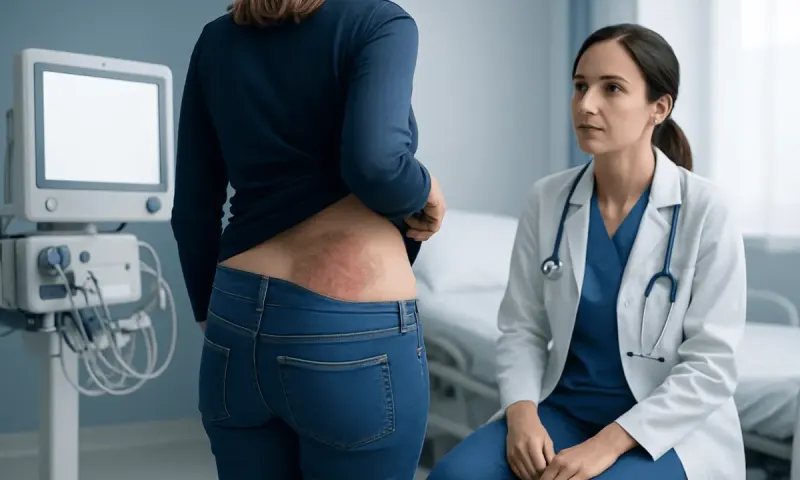
Psoriasis, Eczema, and Dermatitis: Key Differences

Psoriasis, eczema, and dermatitis can all cause red, dry, itchy, or scaly skin, but they have different underlying causes and patterns. Psoriasis is a long-term immune-mediated condition, while dermatitis means skin inflammation and eczema commonly refers to a group of inflammatory skin conditions, especially atopic dermatitis.
Overview: How Are Psoriasis, Eczema, and Dermatitis Different?
What’s the difference between psoriasis eczema and dermatitis? Psoriasis is a chronic immune-mediated disease that causes skin cells to build up too quickly, usually forming sharply outlined, scaly patches. Dermatitis is the medical term for skin inflammation, while eczema is a commonly used term for a group of inflammatory skin conditions, most often atopic dermatitis.
Because all three can cause redness, dryness, scaling, and itching, it can be difficult to tell them apart without a clinical examination. However, the location of the rash, the appearance of scales or blisters, the degree of itch, personal history, and possible triggers can provide important clues.
These conditions are not contagious. They may be long-lasting and may flare and settle over time, but effective treatment and consistent skin care can greatly improve comfort, sleep, appearance, and daily quality of life.
Skin Clues: Comparing Symptoms and Typical Patterns
Psoriasis often appears as raised, well-defined plaques covered with dry, silvery-white scale. On lighter skin, plaques may look red or pink; on deeper skin tones, they may appear violet, gray, dark brown, or darker than surrounding skin. Plaque psoriasis commonly affects the elbows, knees, scalp, lower back, and the area around the navel, although it can occur almost anywhere.
Itching can occur with psoriasis, but some people notice burning, soreness, cracking, or tenderness instead. Nail changes, such as pitting, thickening, separation from the nail bed, or discoloration, can support a diagnosis of psoriasis. Some people with psoriasis also develop painful, swollen, or stiff joints, known as psoriatic arthritis.
Eczema, particularly atopic dermatitis, is often intensely itchy. The skin may be dry, rough, sensitive, cracked, or discolored. During an active flare, eczema can become swollen and develop tiny fluid-filled bumps, weeping, or crusting. In infants it often affects the face and outer limbs; in older children and adults, it commonly develops in the creases of the elbows and knees, hands, neck, eyelids, or around the wrists and ankles.
Other forms of dermatitis have recognizable patterns. Contact dermatitis usually develops where skin touches an irritant or allergen, such as a cosmetic, metal, fragrance, cleaning product, rubber, or plant. Seborrheic dermatitis often causes greasy flakes or scale on the scalp, eyebrows, sides of the nose, chest, or upper back.
What Causes Each Condition?

Psoriasis develops through an interaction between the immune system, genes, and environmental influences. The immune system becomes overactive in the skin, accelerating the normal production of skin cells. It is not caused by poor hygiene and cannot be passed from one person to another through touch.
Factors that may trigger or worsen psoriasis in susceptible people include infections, skin injury, emotional stress, smoking, heavier alcohol use, some medicines, and cold or dry weather. A flare can happen even when no obvious trigger is identified. Family history may increase the likelihood of developing psoriasis.
Atopic dermatitis is linked with a weakened skin barrier and an overresponsive immune system. When the skin barrier does not retain moisture effectively, irritants and allergens can enter more easily. It often occurs in people or families with a history of asthma, hay fever, food allergy, or other allergic conditions, though not everyone with eczema has these conditions.
Contact dermatitis has a more direct relationship with exposure. Irritant contact dermatitis may result from repeated contact with soaps, detergents, solvents, saliva, or frequent handwashing. Allergic contact dermatitis occurs when the immune system reacts to a particular substance after prior sensitization. Identifying the exact trigger can be an important part of long-term management.
How Doctors Diagnose a Rash
A doctor, often a dermatologist, can diagnose many cases of psoriasis, eczema, or dermatitis by discussing symptoms and examining the skin, scalp, nails, and sometimes joints. Helpful details include when the rash began, whether it itches or hurts, where it first appeared, what seems to worsen it, and which products or treatments have been used.
The clinician may ask about allergies, asthma, recent illnesses, family history, work exposures, medicines, and skin-care routines. Photographs taken during earlier flares can be useful, especially if the skin is clearer at the appointment.
Further tests are not always needed. However, a skin scraping may help rule out a fungal infection, while patch testing can identify allergic contact dermatitis. In some cases, a small skin biopsy is used to distinguish psoriasis, eczema, or another skin condition when the appearance is uncertain.
It is important not to assume every scaly rash is psoriasis or eczema. Fungal infections, medication reactions, bacterial infections, scabies, lupus-related rashes, and other conditions can resemble them. A correct diagnosis helps avoid treatment that could be ineffective or unsuitable.
Treatment Options and Everyday Skin Care
Treatment is tailored to the diagnosis, the location and extent of skin involvement, symptom severity, age, medical history, and personal preferences. For mild eczema or dermatitis, regular use of fragrance-free moisturizers, gentle cleansing, and avoiding known irritants are central measures. A clinician may recommend short courses of anti-inflammatory creams or ointments during flares, along with other non-steroid topical medicines when appropriate.
For contact dermatitis, the most effective step is avoiding the responsible irritant or allergen whenever possible. Protective gloves, barrier measures, fragrance-free products, and changes in workplace or household routines may help. If patch testing identifies an allergy, patients can receive guidance on products and exposures to avoid.
Psoriasis treatment may include medicated topical preparations, light therapy supervised by a healthcare professional, oral medicines, or injectable biologic therapies for more extensive or difficult-to-control disease. Treatment plans may also address scalp involvement, nail changes, or joint symptoms. People should use prescribed medicines as directed and discuss side effects or concerns with their clinician.
There is no single treatment that suits everyone, and it can take time to find a routine that offers good control. Acıbadem Health Point’s multidisciplinary specialists and JCI-accredited hospitals diagnose and treat psoriasis and inflammatory skin conditions for international patients, with care plans based on individual clinical needs.
Prevention and Self-Care During Flares
Although psoriasis, atopic dermatitis, and some forms of dermatitis cannot always be prevented, daily skin care can reduce discomfort and help limit flares. Applying a plain, fragrance-free moisturizer soon after bathing can support the skin barrier. Short, lukewarm showers or baths are usually gentler than prolonged hot bathing, which can dry and irritate the skin.
People with eczema or dermatitis may benefit from choosing mild, fragrance-free cleansers and laundry products, wearing soft breathable fabrics, and avoiding scratching when possible. Keeping nails short may reduce skin damage caused by scratching. Cool compresses, moisturizers, and prescribed treatments may help relieve itch.
For psoriasis, keeping the skin moisturized can reduce cracking and scale. Avoiding skin injury where possible, not smoking, moderating alcohol intake, managing stress, and discussing infections or medication changes with a doctor may also be helpful. These steps do not replace medical treatment but can support it.
- Keep a simple symptom diary to identify possible triggers, products, foods, weather changes, or stress-related patterns.
- Do not share prescribed creams or use another person’s medication without medical advice.
- Seek guidance before trying strong over-the-counter products, herbal remedies, or extensive dietary restrictions.
- Continue follow-up care, even when the skin improves, if a clinician has recommended it.
When to Seek Medical Care
Medical assessment is recommended for a new rash that does not improve with gentle skin care, a recurrent rash, or symptoms that interfere with sleep, work, school, or daily activities. A clinician should also review a rash that is spreading, painful, very itchy, affecting the face or genitals, or associated with nail changes.
Prompt medical care is important if the skin becomes warm, increasingly painful, swollen, or produces pus, as these may be signs of infection. Fever, feeling unwell, rapidly spreading redness, widespread blistering, or skin peeling should be assessed urgently.
People with psoriasis should speak with a doctor if they develop persistent joint pain, morning stiffness, swollen fingers or toes, heel pain, or reduced movement. Early evaluation of possible psoriatic arthritis can help protect joint function.
Children with persistent eczema, adults with suspected workplace contact dermatitis, and anyone whose rash has not responded as expected may benefit from evaluation by a dermatologist. Seeking care is a practical step toward confirming the diagnosis and finding a safer, more effective plan.
Frequently asked questions
01Is eczema the same as dermatitis?
Eczema and dermatitis are closely related terms, but they are not always used in exactly the same way. Dermatitis means inflammation of the skin, while eczema commonly refers to a group of itchy inflammatory conditions, especially atopic dermatitis. In everyday practice, the terms are sometimes used interchangeably.
02Can a person have psoriasis and eczema at the same time?
Yes, it is possible, although it is less common than having one condition alone. Psoriasis and eczema can have overlapping features, and a person may also have more than one type of dermatitis. A dermatologist can help distinguish the conditions and guide treatment.
03Which is itchier: psoriasis or eczema?
Eczema is often associated with more intense itch, which can be severe enough to disturb sleep. Psoriasis can also itch, burn, sting, or feel sore, especially when plaques crack or occur in sensitive areas. Symptom severity varies widely from person to person.
04Can stress cause psoriasis or eczema?
Stress does not directly cause these conditions, but it can trigger or worsen flares in some people. Stress may also make itching feel more difficult to manage and can disrupt sleep. Stress-management strategies can be a useful part of an overall care plan.
05Are psoriasis, eczema, and dermatitis contagious?
No. Psoriasis, eczema, and dermatitis are not contagious and cannot be caught through ordinary contact, sharing towels, or being near someone who has a rash. However, some skin infections can be contagious and may resemble inflammatory skin conditions, so an uncertain rash should be evaluated.
06Should a rash be treated with over-the-counter creams?
A plain fragrance-free moisturizer is generally a reasonable first skin-care measure for dry, irritated skin. However, medicated creams may not be suitable for every rash or body area, particularly the face, eyelids, groin, or skin of young children. A doctor or pharmacist can advise on appropriate options and when an examination is needed.
This article is for general information only and is not a substitute for professional medical advice. Please consult a qualified doctor about your individual situation.
Hair transplant in Turkey — costs, graft counts & a free assessment
JCI-accredited · board-certified surgeons · reply within 24h
Add us as a Preferred Source to see more of our trusted health content across Google Search, AI Overviews and Discover.