Psoriasis on Lips: Symptoms and Diagnosis
Psoriasis on lips is uncommon, but psoriasis can affect the skin around the mouth and, less often, the lip border itself. Because dry, peeling, cracked, or inflamed lips can also result from eczema, irritation, allergy, or infection, an accurate medical assessment is important before treatment.
Overview: Can Psoriasis Affect the Lips?
Psoriasis on lips is possible, although it is considered uncommon. Psoriasis is an immune-mediated inflammatory condition that speeds up skin-cell turnover. It typically causes well-defined, red or discolored, scaly patches on areas such as the scalp, elbows, knees, or lower back. Around the mouth, it may cause dry, flaky, sore patches on the surrounding skin, at the corners of the mouth, or near the border where the outer lip meets the facial skin.
The moist inner surface of the mouth does not usually develop the classic thick scale seen on other areas of the body. For this reason, a person who has peeling, cracking, or soreness on the lips should not assume that psoriasis is the cause, even if they already have psoriasis elsewhere. A clinician may use the term cheilitis, meaning inflammation of the lips, while determining the underlying reason.
Lip symptoms can be uncomfortable and may affect eating, speaking, smiling, and confidence. In many cases, symptoms can be improved with gentle skin care and treatment tailored to the correct diagnosis. Identifying triggers and avoiding unnecessary irritation are important parts of care.
What Psoriasis on or Around the Lips May Look Like
Psoriasis around the mouth may appear as persistent pink, red, brown, purple, or darker discolored patches, depending on a person’s natural skin tone. The skin may feel dry, rough, tight, itchy, tender, or burning. Fine white or silvery scaling can occur on the outer lip border or nearby facial skin, though scale may be subtle because the area is frequently exposed to saliva, food, and lip products.
Some people notice cracking or splitting, especially during cold or dry weather. Cracks at the mouth corners are called angular cheilitis. Although this may occur alongside psoriasis, it can also be related to saliva collecting in the corners, yeast overgrowth, nutritional issues, dentures, or irritation. Therefore, cracks at the mouth corners do not by themselves confirm psoriasis.
Symptoms may occur at the same time as psoriasis plaques in more typical locations. Clues supporting psoriasis can include a personal or family history of the condition, recurring well-defined patches, scalp scaling, nail changes such as pitting or separation, or joint pain and stiffness. However, these features are not enough to diagnose a lip condition without an examination.
- Persistent dryness, peeling, or fine scaling
- Redness or color change around the lip border
- Itching, soreness, stinging, or a tight feeling
- Small cracks, especially in dry conditions
- Symptoms that recur with flares of psoriasis elsewhere
Why Lip Symptoms Can Be Difficult to Diagnose

The lips are exposed daily to saliva, toothpaste, cosmetics, food, weather, and friction. These exposures can cause or worsen inflammation, making psoriasis on lips easy to confuse with other conditions. Lip licking can create a cycle of temporary moisture followed by further dryness and irritation. Flavored, fragranced, medicated, or long-wearing lip products may also trigger contact irritation or an allergic reaction.
Common alternatives to psoriasis include irritant or allergic contact cheilitis, atopic eczema, seborrheic dermatitis, perioral dermatitis, cold sores caused by herpes simplex virus, bacterial infection, and fungal infection. In some cases, doctors also consider actinic cheilitis, a sun-related change that is more likely to affect the lower lip and requires assessment because it can occasionally develop into skin cancer.
A person can have more than one issue at once. For example, someone with psoriasis may develop irritant cheilitis from a new lip balm, or a crack at the mouth corner may become infected. This is why treatments that help psoriasis elsewhere should not automatically be used on the lips without professional advice.
Causes, Triggers and Risk Factors
Psoriasis is not contagious and is not caused by poor hygiene. It is linked to immune-system activity, genetic susceptibility, and environmental influences. People with psoriasis may have periods of relative calm followed by flares. Stress, skin injury, infections, smoking, alcohol use, and certain medicines can contribute to flares in some individuals, though triggers vary widely from person to person.
When the lip area is involved, local irritation may be particularly important. Cold wind, low humidity, sun exposure, frequent wiping, lip licking, biting, cosmetic products, toothpaste ingredients, and spicy or acidic foods can worsen an already sensitive area. A flare may also follow chapping or a minor injury to the skin, a response sometimes referred to as the Koebner phenomenon in psoriasis.
Keeping a brief symptom and product diary can help identify patterns. It may be useful to note new toothpaste, mouthwash, lipstick, lip balm, dental products, foods, medications, weather changes, and psoriasis activity elsewhere on the body. A diary cannot diagnose the cause, but it can give a clinician useful information during an appointment.
How Doctors Diagnose Lip Psoriasis
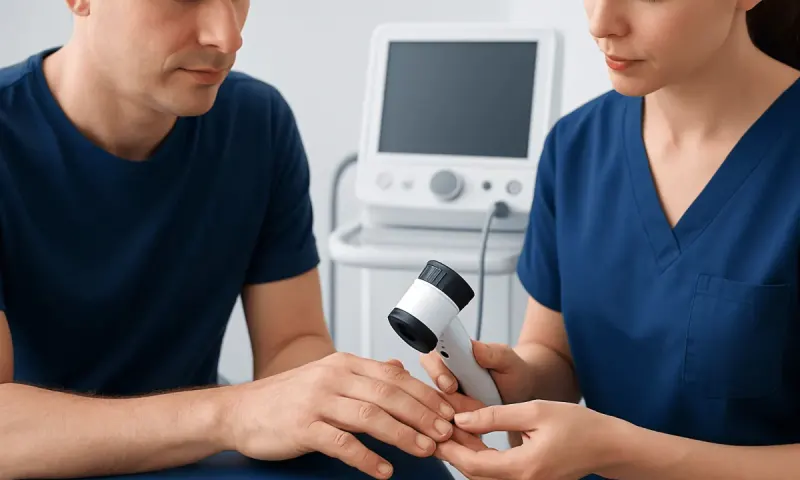
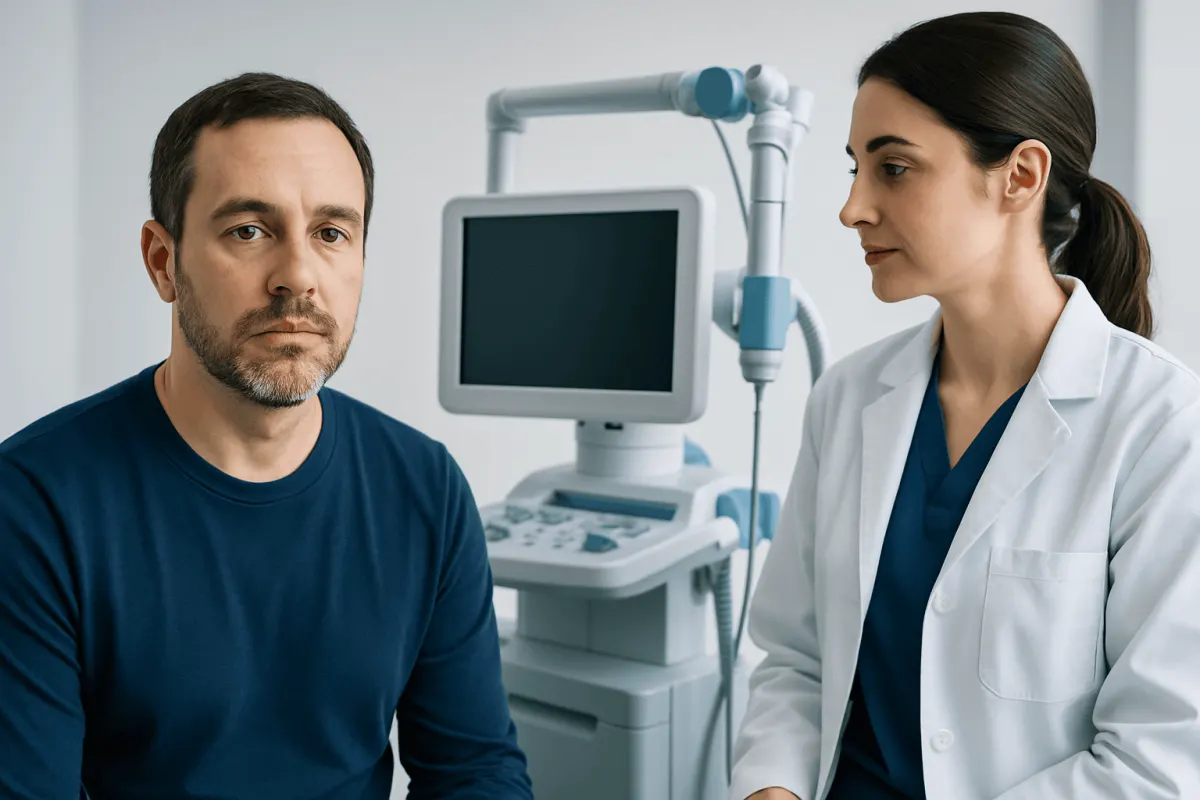
A dermatologist or other qualified clinician usually begins with a medical history and close examination of the lips, surrounding skin, scalp, nails, and other body areas. They may ask when the symptoms began, whether they come and go, what products are used on the lips, and whether there is a history of psoriasis, eczema, allergies, or cold sores.
Many cases can be assessed clinically, especially if a person has clear psoriasis plaques elsewhere. If the diagnosis remains uncertain, the clinician may recommend stopping suspected irritants for a period, performing patch testing for contact allergy, taking a swab when infection is suspected, or considering other investigations. A small skin biopsy is occasionally needed, but clinicians try to avoid invasive testing on the lips unless it is necessary.
It is particularly important to evaluate a patch that persists in one location, becomes thickened, bleeds easily, forms a crust or ulcer, or does not respond as expected. These changes are not necessarily serious, but they need assessment to rule out conditions that require a different approach.
Treatment Options and Everyday Lip Care
Treatment depends on the confirmed cause, severity, and whether psoriasis affects other areas of the body. For mild dryness or irritation, a clinician may advise a bland, fragrance-free emollient or protective ointment. This can reduce water loss and protect the lip barrier from wind, saliva, and friction. Products containing fragrance, flavoring, essential oils, menthol, camphor, or strong active ingredients may be best avoided until the cause is clear.
When psoriasis is diagnosed, a doctor may prescribe a short course of a carefully chosen anti-inflammatory topical medicine. The lips and facial skin absorb medicines more readily than thicker body skin, so stronger topical corticosteroids or long-term unsupervised use can cause side effects, including thinning of the skin. In selected situations, clinicians may consider non-steroidal anti-inflammatory topical treatments, such as calcineurin inhibitors, which are prescribed according to individual needs and local guidance.
If psoriasis is moderate to severe elsewhere on the body, treating the overall condition with phototherapy, oral medication, or biologic therapy may also improve facial symptoms. These options are not usually started for isolated lip dryness alone. Treatment should be individualized after a clinician has excluded infection, allergy, and other causes of cheilitis.
Helpful self-care includes applying a simple protective balm regularly, drinking fluids as needed, limiting lip licking, using a gentle toothpaste if sensitivity is suspected, and protecting the face and lips from sun and harsh weather. It is best not to pick at flakes or use exfoliating scrubs, as friction can increase inflammation. Acıbadem Health Point’s multidisciplinary specialists and JCI-accredited hospitals can assess skin conditions and coordinate care for international patients.
When to Seek Medical Care
A person should arrange a medical review if lip dryness, scaling, pain, swelling, or cracking lasts longer than two to three weeks, keeps returning, or does not improve after avoiding likely irritants and using a bland moisturizer. Assessment is also appropriate when symptoms interfere with eating, drinking, speaking, sleep, or everyday comfort.
Prompt medical care is advisable for a lip lesion that is one-sided and persistent, bleeding, ulcerated, rapidly changing, markedly swollen, or associated with a lump. A clinician should also assess fever, spreading redness, pus, severe pain, widespread rash, eye symptoms, or signs of an allergic reaction such as sudden swelling of the lips, tongue, or throat. Sudden swelling with breathing or swallowing difficulty requires emergency care.
People with known psoriasis should contact their doctor if facial or lip symptoms appear for the first time, if a prescribed medicine causes burning or worsening, or if they develop joint pain, prolonged morning stiffness, or swollen fingers or toes. Early review helps ensure that treatment remains safe for this sensitive area.
Frequently asked questions
01Is psoriasis on lips common?
True psoriasis affecting the lip surface is uncommon. Psoriasis can occur on the skin around the mouth, but lip dryness and scaling are more often caused by irritation, eczema, allergy, or another form of cheilitis. A clinician can help distinguish between these possibilities.
02Can psoriasis on lips be contagious?
No. Psoriasis is an immune-mediated inflammatory condition and cannot be passed from one person to another through kissing, sharing cups, or close contact. However, some infections that can affect the lips, such as cold sores, are contagious, which is one reason diagnosis matters.
03Can lip balm make psoriasis on lips worse?
Some lip products may worsen irritation, particularly those with fragrance, flavorings, essential oils, menthol, or medicated ingredients. A simple fragrance-free ointment or balm is often less irritating. If symptoms begin after a new product, stopping it and discussing the reaction with a clinician is sensible.
04Should a person use steroid cream on the lips?
Steroid medicines may be used on or near the lips in some situations, but only under medical guidance. The skin in this area is thin and sensitive, and the wrong strength or prolonged use can cause unwanted effects. A doctor can recommend the safest option and duration.
05How can someone tell lip psoriasis from a cold sore?
Cold sores commonly begin with tingling, burning, or itching and may develop into clusters of small fluid-filled blisters that crust over. Psoriasis more often causes persistent dry, scaly, inflamed patches rather than blisters. Because appearances can overlap, especially early on, medical assessment is useful if symptoms are recurrent or unclear.
06Can psoriasis on lips go away?
Symptoms may improve significantly with accurate diagnosis, trigger avoidance, gentle skin care, and appropriate treatment. Psoriasis tends to be a long-term condition with periods of flare and remission, so symptoms can recur. Ongoing follow-up can help adjust treatment if the condition changes.
This article is for general information only and is not a substitute for professional medical advice. Please consult a qualified doctor about your individual situation.
Hair transplant in Turkey — costs, graft counts & a free assessment
JCI-accredited · board-certified surgeons · reply within 24h
Add us as a Preferred Source to see more of our trusted health content across Google Search, AI Overviews and Discover.