Proton Therapy Before and After Treatment: Expected Changes
Proton therapy before and after results are best understood as a treatment journey rather than an immediate visible change. It may control or shrink a tumor while helping reduce radiation exposure to selected nearby healthy tissues, but outcomes depend on the cancer, its location, previous treatment and the person’s overall health.
Proton Therapy Before and After: What Changes to Expect
Proton therapy before and after experiences differ widely. Before treatment, people usually undergo detailed imaging, planning and preparation; during treatment, they attend carefully positioned radiation sessions; after treatment, they continue follow-up scans and appointments to assess both tumor response and recovery.
A realistic result is not always an immediate disappearance of a tumor on a scan. Some tumors shrink gradually, some remain visible but become inactive or stable, and others are treated to lower the chance of recurrence after surgery or chemotherapy. In some situations, radiation is intended to relieve symptoms or slow cancer growth rather than cure it.
The value of proton therapy is primarily its ability to deposit radiation dose in a planned target and reduce dose beyond that target. Whether this leads to fewer side effects or better long-term outcomes depends on the tumor site, the radiation plan and the individual clinical situation. A specialist team can explain which goals are realistic for each person.
How Proton Therapy Works
Proton therapy, also called proton beam therapy, is an external radiation treatment for cancer and selected noncancerous tumors. It delivers positively charged particles called protons toward the tumor. Unlike conventional photon radiation, which continues to deliver some dose after passing through the target, protons can be planned to release most of their energy at a particular depth.
This physical property may help clinicians limit radiation exposure to certain healthy tissues located behind or very close to a tumor. It can be especially relevant when tumors lie near important structures, such as the brain, spinal cord, eyes, heart, lungs or bowel. However, proton therapy is not automatically the best radiation option for every diagnosis.
Planning is highly individualized. Radiation oncologists, medical physicists and dosimetrists use imaging and specialized software to compare plans and choose an approach that balances tumor control with protection of normal tissue. For an overview of the technique and treatment planning, see proton therapy.
Who May Be a Candidate?

Candidacy depends on the cancer’s type, location, size and stage, as well as whether it has spread. The team also considers prior radiation treatment, surgery and systemic therapy, a person’s age, anatomy and ability to lie still for treatment. Proton therapy may be considered when a standard radiation plan could expose nearby critical organs to a higher dose than is desirable.
It is commonly evaluated for selected childhood cancers and for some tumors of the brain, head and neck, eye, spine, chest, abdomen, pelvis and prostate. It may also be an option for certain recurrent tumors in people who have previously received radiation, although re-irradiation requires particularly careful assessment.
Being referred for proton therapy does not mean that conventional radiation is unsuitable or unsafe. Modern photon-based radiation techniques are highly effective for many cancers. The most appropriate choice comes from a personalized comparison of expected benefits, limitations, logistics and alternative treatments.
- Pathology reports and staging information help confirm the diagnosis and treatment intent.
- CT, MRI, PET or other imaging may define the target and nearby organs.
- A multidisciplinary review may include surgery, chemotherapy, immunotherapy or other treatments alongside radiation.
What Happens Before, During and After Treatment?
Before treatment begins, the person attends a simulation appointment. They are positioned in the same way planned for every session, and a CT scan is usually taken for radiation planning. A custom mask, headrest, body mold or other support may be made to help keep the body still and reproducible. Small skin marks may sometimes be used for alignment.
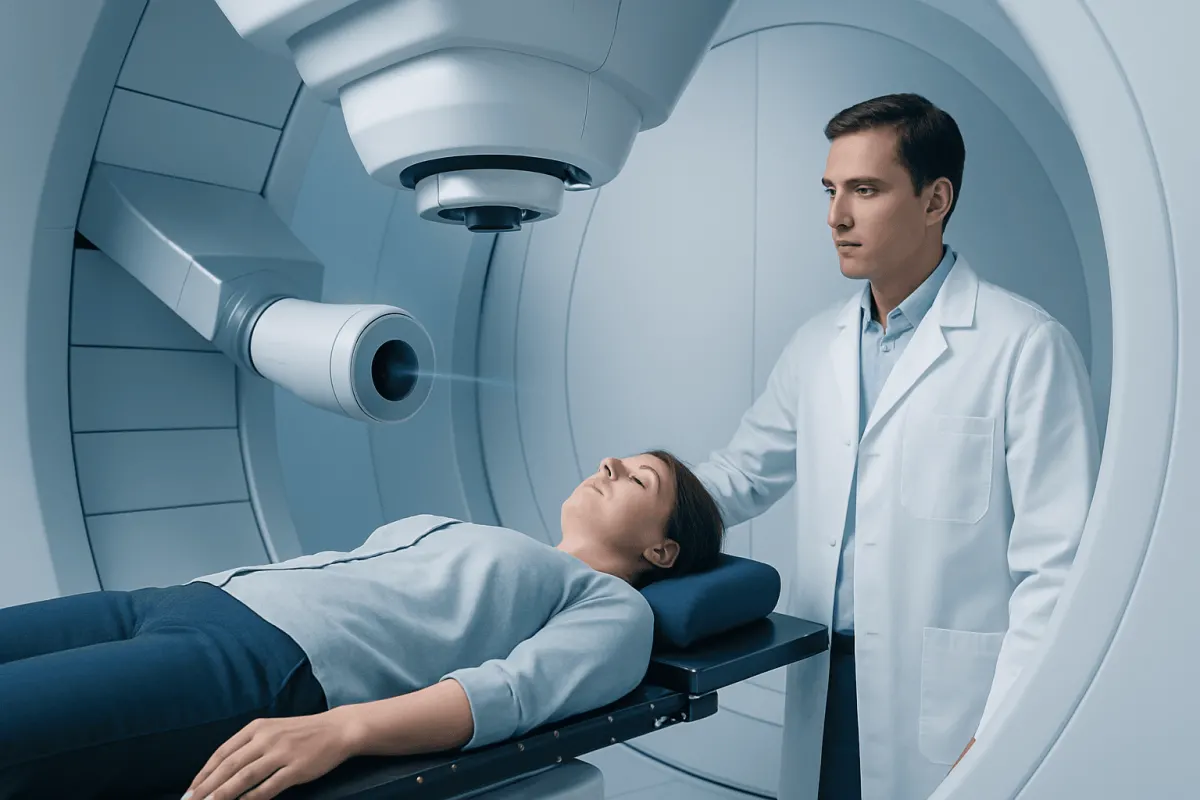
During each treatment visit, therapists place the person on the treatment table and use imaging to confirm position. The machine may move around the body, but the person does not feel the proton beam itself. The radiation delivery commonly lasts only minutes, while positioning and safety checks take additional time. Treatment may be given daily on weekdays for several weeks, but shorter or longer courses can be appropriate.
After the final session, follow-up does not end. The radiation oncology team provides a personalized aftercare plan and coordinates with other cancer specialists. Follow-up imaging may be scheduled weeks or months later because inflammation, healing and tumor response can make scans difficult to interpret immediately after radiation.
Recovery Timeline and Realistic Before-and-After Examples
Most people continue many everyday activities during proton therapy, although fatigue may increase over the course of treatment. Side effects often build gradually because normal tissues respond over time. Recovery is therefore usually measured in weeks to months, rather than in the days immediately after the last session.
For example, a person treated for a head and neck tumor may begin with few symptoms, then develop mouth soreness, taste changes, dry mouth or swallowing discomfort during later weeks. These effects can improve after treatment, but some may last longer depending on the dose and areas treated. A person treated for prostate cancer may notice temporary urinary or bowel irritation, while someone treated near the chest may experience tiredness and local skin changes.
On follow-up scans, a treated tumor may become smaller, remain similar in size or temporarily appear changed because of treatment-related swelling. Clinicians interpret imaging together with symptoms, examination findings and, when relevant, laboratory tests. The timing of response varies by tumor biology, so comparing one person’s experience with another’s can be misleading.
Meaningful before-and-after outcomes can also include preserving function, reducing symptoms, avoiding unnecessary radiation to sensitive structures or enabling treatment when prior radiation limits options. These outcomes are important, even when they are not immediately visible.
Benefits, Risks and Side Effects
The potential benefit of proton therapy is improved dose distribution for selected tumors. By reducing dose to some surrounding tissue, it may reduce the likelihood of certain side effects in appropriate cases. This can be particularly important for children, whose developing tissues may be more sensitive to radiation, and for tumors close to critical organs.
Proton therapy still delivers radiation, so it can cause side effects. Early effects may include fatigue, temporary skin redness or sensitivity in the treated area, hair loss within the radiation field, nausea, appetite changes, or irritation of nearby organs. The exact pattern depends much more on the treatment location than on the name of the radiation technique.
Late effects can occur months or years later and may include scarring, hormonal changes, nerve effects, organ-specific changes or, rarely, a new cancer related to radiation exposure. The care team discusses relevant risks before treatment and uses planning methods designed to keep them as low as reasonably achievable. Reporting new or worsening symptoms promptly helps clinicians provide supportive care.
Self-Care, Follow-Up and When to Seek Medical Care
During and after treatment, people should follow their radiation team’s advice about skin care, nutrition, hydration, activity and prescribed medicines. Rest can help with fatigue, but gentle activity may be appropriate for many people. It is important not to apply creams, supplements or alternative products to the treatment area without checking with the clinical team.
Regular follow-up appointments are essential. They allow clinicians to monitor response, manage side effects, identify late effects and coordinate ongoing cancer care. Keeping a symptom record can help a person describe changes in energy, pain, eating, bowel or bladder habits, skin reactions and emotional wellbeing.
Medical care should be sought promptly for severe or rapidly worsening pain, fever, shortness of breath, chest pain, confusion, new weakness, uncontrolled vomiting, significant bleeding, inability to drink fluids, or symptoms that feel urgent. For non-urgent but persistent side effects, contacting the radiation oncology team is the safest first step rather than waiting for the next scheduled appointment.
Acıbadem Health Point’s multidisciplinary specialists and JCI-accredited hospitals evaluate and treat international patients who may be candidates for proton therapy, with care plans based on the individual diagnosis and treatment goals.
Frequently asked questions
01How soon will proton therapy results show on a scan?
The timing depends on the tumor type and location. Some changes can be seen within weeks, while others take several months or longer. Early scans may also reflect inflammation or healing, so the oncology team interprets them cautiously.
02Is proton therapy painful?
The proton beam cannot usually be felt during treatment. Lying still and maintaining the treatment position may be uncomfortable for some people, but the procedure itself is not painful. Side effects, if they occur, generally develop gradually during or after the treatment course.
03Does proton therapy have fewer side effects than standard radiation?
It may reduce radiation dose to selected nearby healthy tissues, which can lower certain risks in appropriate cases. It does not eliminate side effects, and the advantage varies by tumor site and treatment plan. A direct comparison of personalized radiation plans is often needed.
04Can a tumor look bigger after proton therapy?
Yes, a treated area can sometimes look larger or different on an early scan because of inflammation, swelling or tissue changes. This does not necessarily mean the cancer has grown. Follow-up imaging over time and clinical assessment help clarify the response.
05Can someone work during proton therapy?
Some people are able to work or maintain usual routines, especially early in treatment. Others need reduced hours or time away because of fatigue, travel demands or site-specific side effects. The treating team can advise based on the planned treatment area and expected effects.
06Will proton therapy cure cancer?
Proton therapy may be used with curative intent for some cancers, but no radiation method can guarantee a cure. The likelihood of cancer control depends on the diagnosis, stage, tumor biology and whether other treatments are needed. The oncologist can explain the goals and expected outcomes for the individual situation.
This article is for general information only and is not a substitute for professional medical advice. Please consult a qualified doctor about your individual situation.
Joint and spine care in Turkey — expert assessment & treatment
JCI-accredited · board-certified surgeons · reply within 24h
Add us as a Preferred Source to see more of our trusted health content across Google Search, AI Overviews and Discover.