Prostate Blood Test: Understanding PSA Results
A prostate blood test usually measures prostate-specific antigen (PSA), a protein produced by prostate cells. It is a quick blood draw with no significant recovery time, but its result must be interpreted alongside age, symptoms, medical history, examination findings, and sometimes further tests.
Overview: What Is a Prostate Blood Test?
A prostate blood test usually refers to a prostate-specific antigen (PSA) test. PSA is a protein made by normal and abnormal prostate cells. A small amount normally enters the bloodstream, where it can be measured with a routine blood sample. The test may be used to assess prostate-related symptoms, help estimate the likelihood of certain prostate conditions, monitor known prostate disease, or follow treatment.
The PSA test is not a direct test for cancer. PSA levels can increase with non-cancerous conditions, particularly benign prostatic hyperplasia (BPH), which is an age-related enlargement of the prostate, and prostatitis, which is inflammation or infection of the gland. PSA can also be affected by recent activities or procedures. For this reason, a result is most useful when considered in context rather than viewed as a definite diagnosis.
Whether PSA testing is suitable depends on the person’s age, symptoms, family history, ancestry, general health, and preferences. Some people have the test because of urinary symptoms, while others discuss it as part of prostate cancer screening. A clinician can explain the potential benefits and limitations, including the possibility of false-positive findings and investigations that may not ultimately be needed.
Procedure and Recovery
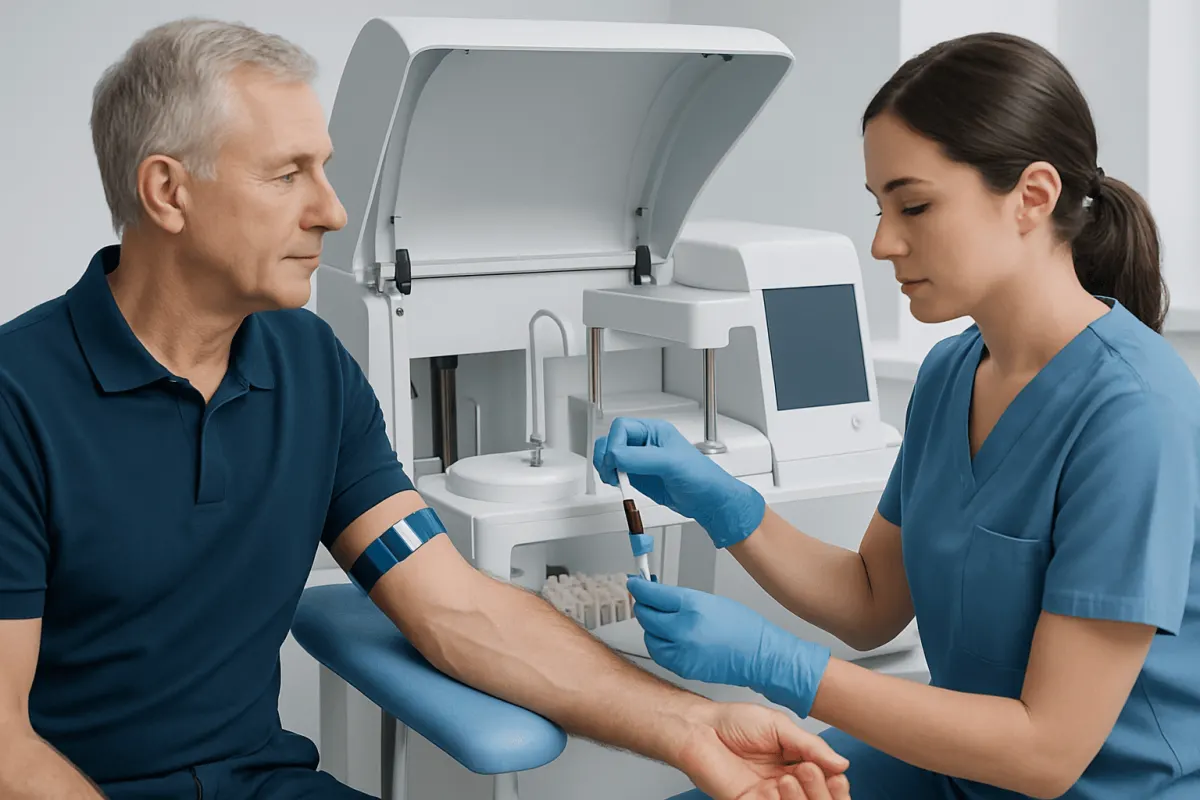
The procedure is similar to any standard blood test. A healthcare professional places a small needle into a vein, usually in the arm, and collects a blood sample into a tube. The collection itself commonly takes only a few minutes. The sample is then sent to a laboratory to measure total PSA and, in some situations, other PSA-related measures such as free PSA.
There is usually no special recovery period after a prostate blood test. Most people can eat, drink, work, travel, drive, and continue their usual activities right away. Mild tenderness or a small bruise at the needle site can occur and generally settles without treatment. Applying gentle pressure after the blood draw may help reduce bruising.
Patients should tell the healthcare professional if they take medicines that affect blood clotting or if they have previously felt faint during blood tests. It is also important to share all regular medicines and supplements with the clinician, because some treatments for an enlarged prostate can lower PSA and influence how the result is interpreted.
Preparing for the Test

What not to do before a prostate blood test?
Preparation instructions vary slightly between laboratories and clinicians, but people are often advised to avoid ejaculation for around 24 to 48 hours before a PSA test because it may temporarily increase PSA. It may also be sensible to avoid prolonged cycling or other activity that puts sustained pressure on the perineal area shortly before testing, particularly if the clinician has recommended this. Following the specific instructions provided by the testing service is most important.
A PSA test does not usually require fasting. However, a person should tell the clinician about urinary symptoms, a recent urinary tract infection, fever, pelvic pain, catheter use, cystoscopy, prostate biopsy, or recent prostate procedures. These situations can affect PSA results, and the clinician may recommend treating an infection first or delaying the blood test until the prostate has had time to settle.
People should not stop prescribed medicines on their own before the test. In particular, medicines such as finasteride or dutasteride, sometimes used for prostate enlargement or hair loss, can reduce PSA values. The laboratory result remains useful when the prescribing clinician knows about the medication and can interpret the number appropriately.
Understanding PSA Results
PSA is generally reported in nanograms per millilitre (ng/mL). There is no single PSA number that is normal or abnormal for every person. PSA tends to rise gradually with age as the prostate naturally enlarges, and laboratories may use different reference ranges. A result also needs to be compared with previous PSA values where available, since a change over time may be relevant.
What is an average PSA score for a 70 year old?
There is no one average PSA score that defines prostate health at age 70. Some age-adjusted reference approaches use an upper value around 6.5 ng/mL for people aged 70 to 79, but this is not a universal cutoff and does not mean lower values always rule out cancer or higher values always indicate it. Many healthy people in this age group have PSA levels below that figure, while benign prostate enlargement may produce a higher result.
Clinicians consider the individual’s age, prostate size, symptoms, family history, previous PSA levels, medications, and examination findings. They may also consider the percentage of free PSA, PSA density, or a risk calculator. A single mildly raised result is often repeated under more controlled conditions before decisions about further investigation are made.
Can a Blood Test Show Signs of Prostate Cancer?
Will a blood test show signs of prostate cancer?
A prostate blood test can show a raised PSA level, which may be a sign that further assessment is appropriate, but it cannot confirm prostate cancer by itself. Some prostate cancers do not cause a high PSA level, and many people with raised PSA do not have cancer. Benign prostate enlargement, inflammation, infection, urinary retention, and recent manipulation of the prostate are among the common non-cancer causes of PSA elevation.
If the PSA result is higher than expected or has increased over time, the clinician may first repeat the test. Depending on the situation, further assessment may include a discussion of symptoms and family history, a digital rectal examination, urine testing to look for infection, or a multiparametric MRI scan of the prostate. MRI can help identify areas that may need closer assessment and can guide decisions about biopsy.
A prostate biopsy is the test used to confirm or exclude prostate cancer when it is clinically indicated. It involves taking small tissue samples from the prostate for laboratory examination. The decision to proceed with biopsy should be individualized, balancing PSA findings, MRI results, overall health, and the person’s values and preferences.
Why PSA May Be Raised and What Happens Next
A raised PSA result should be viewed as a finding to investigate rather than a diagnosis. Benign prostatic hyperplasia can raise PSA because a larger prostate may produce more PSA. Prostatitis and urinary infections may also raise it, sometimes substantially. Temporary increases may follow ejaculation, urinary retention, catheterization, some urological procedures, or inflammation caused by another condition.
When a result needs follow-up, the clinician may recommend repeating the PSA test after avoiding temporary influences or after an infection has been treated. Repeating the test can help account for normal biological variation and laboratory variation. The timing of a repeat test depends on the PSA value, symptoms, whether infection is suspected, and the person’s wider clinical picture.
If further assessment is needed, referral to a urologist may be recommended. Urologists assess conditions affecting the urinary tract and male reproductive system, including prostate enlargement and prostate cancer. At Acıbadem Health Point, multidisciplinary specialists in JCI-accredited hospitals can assess prostate concerns and discuss appropriate diagnostic and treatment pathways for international patients.
Using PSA Testing Wisely
PSA testing can be valuable when it is used thoughtfully. It may help detect prostate cancer before symptoms develop, but it may also identify slow-growing cancers that would never cause harm. Finding these cancers can lead to repeated monitoring, biopsies, anxiety, or treatment side effects. Shared decision-making helps people understand these possible outcomes before choosing screening.
People with a father, brother, or son diagnosed with prostate cancer, especially at a younger age, may have a higher risk and may wish to discuss PSA testing earlier with a doctor. Black men may also have a higher risk of developing and dying from prostate cancer in some populations. Individual risk assessment is more useful than relying on age alone.
Healthy habits such as regular physical activity, a balanced diet, maintaining a weight that supports general health, and not smoking are beneficial for overall wellbeing. However, no lifestyle measure can reliably prevent all prostate conditions or replace appropriate medical assessment. New urinary symptoms should not be dismissed simply because a previous PSA result was normal.
When to Seek Medical Care
A person should arrange a medical appointment for persistent urinary changes, such as difficulty starting urination, a weak flow, needing to urinate frequently, waking often at night to pass urine, burning during urination, or pelvic discomfort. These symptoms are common and are often caused by non-cancerous conditions, but they deserve assessment so that infection, prostate enlargement, and other causes can be considered.
Prompt medical care is important for an inability to pass urine, fever or chills with urinary symptoms, severe lower abdominal pain, or visible blood in the urine. A PSA result that is raised or changing should also be discussed with the clinician who ordered it, but the result alone is usually not an emergency. The next step is typically a careful review and a plan for any repeat testing or referral that may be needed.
Frequently asked questions
01How long does it take to get prostate blood test results back?
Many laboratories return PSA test results within one to a few working days, although timing can vary by laboratory, country, and healthcare setting. The clinician may contact the patient once the result has been reviewed alongside their history and any previous PSA tests. More complex PSA-related testing may take longer.
02Do I need to fast before a prostate blood test?
Fasting is not usually needed for a PSA blood test. A person should still follow any instructions from the clinic, especially if other blood tests are being taken at the same appointment. It is helpful to drink water unless the clinician has advised otherwise.
03Can cycling affect a PSA test?
Prolonged cycling may temporarily affect PSA in some people, possibly because of pressure on the prostate area. Some clinicians recommend avoiding it for a day or two before testing, particularly if a previous result was borderline or elevated. The patient should follow the instructions given by their healthcare team.
04Does a high PSA mean prostate cancer?
No. A high PSA can occur with benign prostate enlargement, prostatitis, urinary infection, urinary retention, recent ejaculation, or recent procedures involving the urinary tract. Further assessment may include repeating the PSA test, MRI, or biopsy depending on the overall level of risk.
05Can prostatitis raise PSA?
Yes. Inflammation or infection of the prostate can increase PSA, sometimes for several weeks. A clinician may treat a confirmed infection or allow symptoms to settle before repeating the test. PSA should be interpreted carefully when there are signs of infection or inflammation.
06What happens if my PSA level is high?
The clinician will review the result alongside age, symptoms, medicines, family history, prostate examination findings, and prior PSA values. A repeat blood test may be the next step, especially if there could be a temporary reason for the increase. If concern remains, referral to a urologist and further testing, such as MRI or biopsy, may be discussed.
This article is for general information only and is not a substitute for professional medical advice. Please consult a qualified doctor about your individual situation.
Oncology care in Turkey — second opinion and treatment plan
JCI-accredited · board-certified surgeons · reply within 24h
Add us as a Preferred Source to see more of our trusted health content across Google Search, AI Overviews and Discover.