

Plantar Fasciitis: Symptoms, Causes and Treatment
- 9 min read
- Published November 7, 2026
Key Takeaways
- Plantar fascia symptoms often include heel pain, arch pain, and stiffness after rest.
- Pain is commonly strongest with the first steps in the morning or after sitting.
- Diagnosis is usually based on history and physical examination, with imaging used when needed.
- Most people improve with stretching, supportive footwear, activity changes, and time.
- A doctor should evaluate persistent pain, swelling, numbness, or difficulty bearing weight.
Plantar fascia problems often cause pain that is most noticeable in the heel or arch, especially with the first steps after rest. Understanding the pattern of symptoms can help a doctor confirm the cause and choose the right treatment approach.
Overview
The plantar fascia is a thick band of tissue that runs along the bottom of the foot, helping support the arch and absorb shock during walking and standing. When it becomes irritated or strained, the result is often a very specific pain pattern that people notice in daily movement rather than at rest.
Symptoms plantar fascia conditions are often described as a sharp or tight pain near the heel, sometimes spreading into the arch. Many people first notice the discomfort when they get out of bed, stand up after sitting, or begin walking after a long pause. That start-up pain can ease as the foot warms up, then return after long periods of activity or standing.
For international patients planning care abroad, recognizing this pattern early can be helpful. A clear symptom history gives the orthopedic team a strong starting point, whether the goal is confirming a straightforward overuse injury or ruling out another foot or ankle problem that can feel similar.
Symptoms
The most common symptom is pain at the underside of the heel, often near the inner side of the foot. Some people feel it more in the arch, especially if the tissue is under repeated strain. The pain may be sharp, burning, or aching, and it can be mild at first before becoming more persistent.
A classic feature is the first-step pain that appears after sleep or rest. The tissue tightens when the foot is still, so the first few steps can feel especially uncomfortable. After a period of movement, the pain may lessen, only to return after long walks, standing on hard floors, or climbing stairs.
Other symptoms can include:
- Stiffness in the sole of the foot
- Tenderness when pressing the heel or arch
- Pain after exercise rather than during the activity itself
- Discomfort when walking barefoot on hard surfaces
- A feeling that the foot needs to “warm up” before it moves comfortably
Symptoms can vary from person to person. Some individuals have one foot affected, while others feel it in both feet. If the pain changes character, becomes severe, or is accompanied by swelling or numbness, a clinician should evaluate it rather than assuming it is only plantar fascia irritation.
Causes & Risk Factors

Plantar fascia symptoms usually develop when the tissue is repeatedly stressed faster than it can recover. This may happen from prolonged standing, increased walking or running, unsupportive shoes, or sudden changes in activity. Tight calf muscles and limited ankle flexibility can also increase the pull on the plantar fascia with each step.
Certain factors make the condition more likely. These can include foot shape differences such as a high arch or flat foot, age-related changes in tissue elasticity, excess body weight, and jobs or travel routines that require many hours on hard surfaces. Some people also notice symptoms after starting a new exercise program or increasing mileage too quickly.
Risk is not limited to athletes. Travelers who spend long days moving through airports, sightseeing on uneven ground, or wearing unfamiliar footwear may notice the first signs during a trip. The same is true for people who alternate between long periods of sitting and sudden bursts of walking, which can make the first steps feel unusually painful.
Diagnosis
Diagnosis often begins with a detailed conversation about where the pain is felt, when it started, and what makes it better or worse. The pattern of first-step pain and tenderness along the heel or arch is often enough to point strongly toward a plantar fascia problem.
During the examination, a doctor may press on the bottom of the foot, check ankle movement, and assess the way the person walks. They may also look for signs that suggest a different cause of pain, such as a stress fracture, nerve irritation, tendon problem, or inflammatory joint condition.
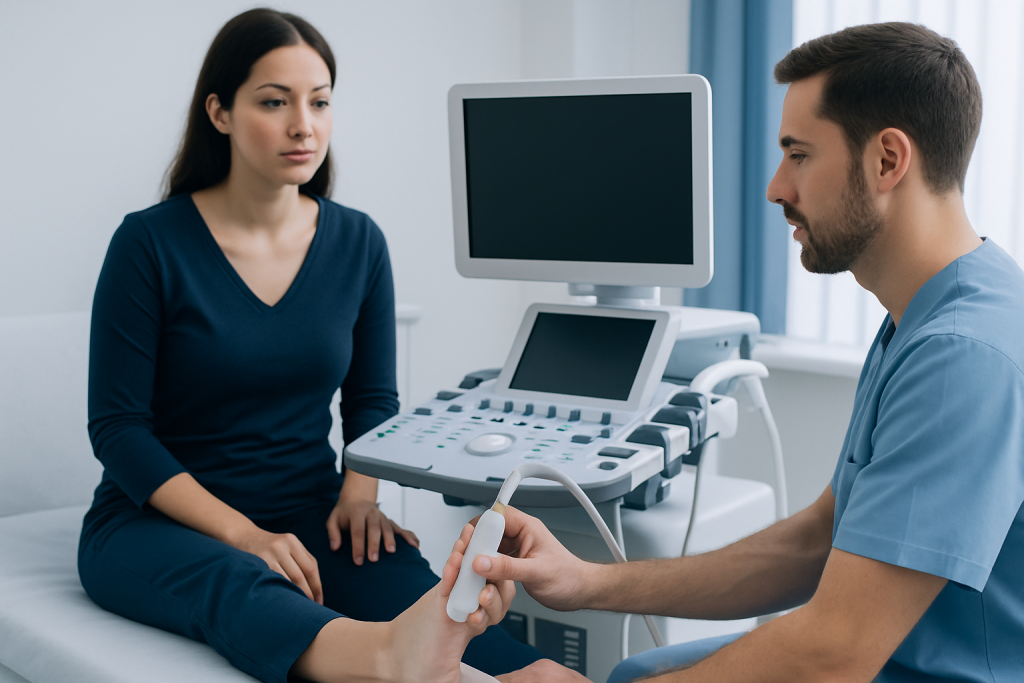
Imaging tests are not always necessary, but they may be useful if the symptoms are unusual, severe, long-lasting, or not improving as expected. Ultrasound can help assess the tissue, while X-rays or other studies may be used to rule out other conditions. For patients traveling internationally, this stepwise approach can help keep the workup focused and efficient.
Treatment Options
Treatment usually starts with simple measures that reduce strain and allow the tissue to settle. Resting the foot from aggravating activities, using supportive shoes, and changing repetitive movement patterns can make a meaningful difference. Many people improve without procedures when the condition is identified early.
Stretching is often central to care. Calf stretches and plantar fascia stretches may reduce tightness and improve foot mechanics over time. A doctor or physical therapist may also recommend strengthening exercises for the foot and lower leg, especially if limited mobility or poor support is contributing to the pain.
Other non-surgical options may include:
- Arch support or orthotic inserts
- Night splints to keep the foot gently stretched during sleep
- Physical therapy for flexibility, strength, and gait changes
- Short-term use of anti-inflammatory medicines when appropriate
- Activity modification rather than complete inactivity
If symptoms continue despite conservative care, a specialist may discuss additional treatments. These can vary depending on the person’s overall health, activity level, and how long the pain has been present. Surgery is uncommon and is generally considered only after careful evaluation and when other options have not helped.
Prevention & Self-care
Daily habits can have a big effect on whether the plantar fascia settles down or stays irritated. Supportive shoes with cushioning and arch stability are often more helpful than thin, unsupportive footwear. For people who walk a lot during work or travel, changing into comfortable shoes before long outings can reduce repeated strain.
Gentle stretching before and after activity may also help. Calf stretches, foot stretches, and gradual warm-up routines can prepare the tissues for movement. When pain flares, reducing high-impact exercise, avoiding barefoot walking on hard floors, and choosing lower-impact activities for a while may prevent the cycle from worsening.
Practical self-care can also include pacing long days, taking short movement breaks, and maintaining a healthy body weight when appropriate. These steps are not quick fixes, but they support the foot’s recovery and may reduce the chance of recurrence. A therapist can tailor strategies for someone recovering while traveling or returning home after treatment.
When to See a Doctor
Medical evaluation is a good idea if heel or arch pain lasts more than a few weeks, keeps returning, or begins to interfere with walking, work, or sleep. Persistent first-step pain is a common reason to seek care, especially when home measures are not bringing relief.
A doctor should also assess the foot if there is marked swelling, redness, numbness, tingling, a sudden injury, or difficulty putting weight on the foot. These features can point to a different problem that needs a more specific diagnosis. People with diabetes, circulation problems, or nerve conditions should be especially careful about ongoing foot pain and have it checked sooner rather than later.
For patients traveling from another country, it can be helpful to bring a list of symptoms, footwear changes, recent activity increases, and any imaging or treatment already tried. Acibadem Health Point’s multidisciplinary specialists and JCI-accredited hospitals diagnose and treat plantar fascia-related conditions for international patients, helping coordinate assessment, treatment, and follow-up in a structured way.
Living With the Condition
Most plantar fascia symptoms improve gradually, but recovery can be uneven. It is common for the foot to feel better for a few days and then flare again after a long walk or a busy day on hard floors. That pattern does not necessarily mean treatment has failed; it often means the tissue is still sensitive and needs more time and consistent support.
Patients often do best when they combine several small changes rather than relying on one remedy alone. Footwear, stretching, activity pacing, and follow-up all work together. For international patients, planning recovery around travel schedules is important, because long flights, unfamiliar walking routes, and luggage handling can all stress the foot during healing.
With the right diagnosis and a practical care plan, many people return to their normal routines without ongoing pain. The key is not to ignore the early signs, especially when heel pain is beginning to shape how someone stands, walks, or starts the day.
Frequently asked questions
01What are the most common symptoms of plantar fascia problems?
The most common symptoms are pain in the heel or arch and stiffness after rest. Many people notice the pain most when taking the first steps in the morning or after sitting for a while. The discomfort may ease with movement and return later in the day.
02Is plantar fascia pain always in the heel?
Not always. Although heel pain is very common, some people feel the discomfort more in the arch or along the bottom of the foot. The exact location can vary depending on where the tissue is most irritated.
03Can plantar fascia symptoms go away on their own?
They sometimes improve with rest, supportive footwear, and stretching, but recovery may take time. If symptoms are persistent or getting worse, a doctor should evaluate them to confirm the cause and guide treatment. Early care often helps prevent the pain from becoming more stubborn.
04What can make plantar fascia pain worse?
Long periods of standing, walking on hard surfaces, unsupportive shoes, and sudden increases in activity can all worsen symptoms. Barefoot walking on hard floors can also increase strain. Tight calf muscles and limited ankle flexibility may add to the problem.
05How do doctors confirm it is plantar fascia-related pain?
Doctors usually start with the symptom pattern and a physical examination. They may press on the heel and arch, check how the foot moves, and look for other causes if the pain is unusual. Imaging is sometimes used if the diagnosis is unclear or symptoms are not improving.
06When should someone seek care urgently?
Urgent evaluation is appropriate if there is a sudden injury, severe swelling, redness, numbness, or inability to bear weight. These signs can suggest another condition that needs prompt attention. A doctor should also see ongoing pain that is not improving with basic self-care.
This article is for general information only and is not a substitute for professional medical advice. Please consult a qualified doctor about your individual situation.
Joint and spine care in Turkey — expert assessment & treatment
JCI-accredited · board-certified surgeons · reply within 24h
Add us as a Preferred Source to see more of our trusted health content across Google Search, AI Overviews and Discover.


How can we help you today?
Meet an Acibadem specialist by secure video, before you travel.
Book a video visit