

Ulna Bone: Anatomy, Function and Injuries
- 8 min read
- Published November 28, 2026
Key Takeaways
- The ulna runs along the inner side of the forearm and works with the radius to support arm movement.
- Pain, swelling, bruising, or limited motion after a fall or impact can suggest an ulna injury.
- Ulna fractures may be treated with immobilization, but some injuries need surgery to restore alignment and function.
- Diagnosis usually involves a physical examination and imaging such as X-rays, with follow-up when healing needs monitoring.
- Rehabilitation is important after treatment to help restore strength, flexibility, and daily function.
The ulna is one of the two long bones in the forearm and plays a key role in elbow and wrist movement. Understanding its anatomy, common injuries, and Pain Treatment Options: When to Start With Therapy and When to Consider Surgery" class="ahp-ilk">treatment options can help patients seek timely, appropriate care.
Overview
The ulna is one of the two long bones in the forearm, paired with the radius to form the structure that allows the hand to turn, lift, carry, and stabilize. It runs on the side of the forearm closest to the body when the palm faces forward, and it contributes to both elbow support and forearm motion.
Although people often think of the forearm as a simple bridge between the elbow and wrist, the ulna does much of the quiet mechanical work. It helps the elbow hinge, provides attachment points for muscles and ligaments, and acts as a stable partner to the radius during rotation of the hand and wrist.
When the ulna is injured, symptoms may range from mild discomfort to obvious deformity, depending on the cause and severity. For international patients considering care abroad, understanding the bone’s role can make medical conversations clearer, especially when planning imaging, treatment, and recovery before returning home.
Symptoms

Ulna problems often announce themselves through pain along the inner side of the forearm, near the elbow, or close to the wrist. The discomfort may appear suddenly after a fall, twist, or direct hit, or it may build gradually if the issue is related to overuse or inflammation around the bone.
Other common signs can include swelling, tenderness to touch, bruising, stiffness, weakness, or difficulty rotating the forearm. In a fracture, the arm may look crooked, movement may feel unstable, or the person may avoid using the hand because certain positions increase pain.
Depending on the location of the problem, symptoms can affect everyday tasks in different ways:
- gripping a cup, opening a door, or turning a key may feel difficult
- elbow bending or straightening may be painful
- wrist rotation, such as turning the palm up or down, may be limited
- numbness or tingling may occur if nearby nerves are irritated
Causes & Risk Factors
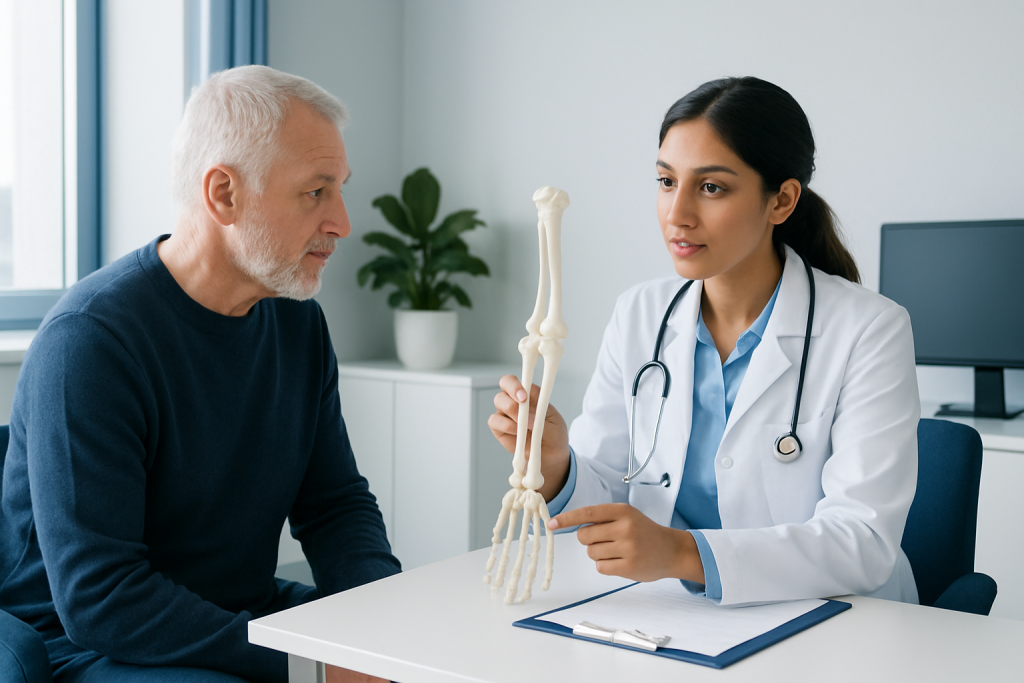
The most common cause of a significant ulna injury is trauma, especially a fall onto an outstretched hand, a sports collision, or a direct blow to the forearm. In some cases, the ulna is injured together with the radius, elbow ligaments, or the wrist joint, which can make the overall pattern more complex than the bone injury alone.
Repeated stress can also contribute to pain around the ulna. Activities that involve frequent forearm rotation, forceful gripping, or load-bearing through the hands may irritate the area, especially when technique, training volume, or rest periods are not well balanced.
Risk factors can include participation in contact sports, cycling accidents, falls in older adults, reduced bone strength, and previous forearm or elbow injuries. Children may also sustain ulna injuries during play or sports, and their treatment plans often need to account for growth plates and future bone development.
Diagnosis
Doctors usually begin with a careful history of how the injury happened, followed by an examination of pain points, range of motion, and any visible changes in the arm. They may also check circulation, nerve function, and joint stability to make sure the injury has not affected nearby structures.
X-rays are the most common first test for suspected ulna fractures or alignment problems. Depending on the situation, additional imaging such as CT scans or MRI may be recommended to look more closely at joint involvement, subtle fracture lines, soft-tissue injury, or healing progress.
For international patients, diagnostic planning matters because the treatment team may need to decide whether care can safely continue after travel or whether the arm should be stabilized and monitored more closely before a long journey. Clear imaging and written follow-up instructions can be especially helpful when care continues in another country.
Treatment Options
Treatment depends on the type of ulna problem, how far the bone has shifted, and whether nearby joints, ligaments, or nerves are involved. Small, stable fractures or minor injuries may be managed with rest, immobilization, and careful follow-up, while displaced fractures often need more active treatment.
Common non-surgical care may include a splint or cast, pain relief recommended by the doctor, and temporary limits on lifting or twisting the arm. Once the bone begins to heal, rehabilitation may be introduced to help restore motion and reduce stiffness in the elbow, forearm, and wrist.
Surgery may be considered when the bone is significantly out of alignment, when the fracture is unstable, or when there is associated joint injury. The exact procedure depends on the pattern of injury and may involve plates, screws, or other fixation methods to hold the bone in the correct position while it heals.
After treatment, follow-up visits are important to confirm that healing is progressing as expected and to adjust activity levels. For patients traveling for care, a well-organized discharge plan can help coordinate local rehabilitation or later review once they return home.
Prevention & Self-care
Not every ulna injury can be prevented, but practical steps can lower risk. Using protective gear during sports, improving balance and fall prevention at home, and allowing enough recovery between training sessions can all help reduce strain and injury likelihood.
Self-care for minor forearm discomfort should be gentle and cautious. Resting the arm, avoiding painful motions, and following a clinician’s advice on cold or warm compresses may help, but persistent or severe pain should not be managed as if it were only a simple sprain.
Simple habits may support recovery and overall arm health:
- follow immobilization instructions exactly if a splint or cast is prescribed
- keep follow-up appointments, even if symptoms begin to improve
- do not return to sports or heavy lifting before medical clearance
- ask about safe exercises for stiffness once healing allows
For patients receiving Herniated Disc Treatment Abroad: Injection, Rehab, or Surgery?" class="ahp-ilk">treatment abroad, keeping copies of imaging reports, operative notes, and rehabilitation instructions can make the transition back to home-country care much smoother.
When to See a Doctor
Medical evaluation is appropriate after any significant forearm injury, especially if there is swelling, deformity, severe pain, or difficulty using the hand. Prompt assessment is also important when symptoms do not improve, when the arm feels unstable, or when the injury followed a fall or impact strong enough to cause a fracture.
Emergency care is generally needed if the hand becomes numb, pale, cold, or weak, or if pain is intense and rapidly worsening. These signs can suggest circulation or nerve problems that should be checked without delay.
People with ongoing forearm pain, repeated injuries, or recovery that seems slower than expected should also speak with a qualified doctor. In orthopedics, timely diagnosis often makes treatment simpler and helps protect long-term movement and function. Acibadem Health Point’s multidisciplinary specialists and JCI-accredited hospitals diagnose and treat ulna-related injuries for international patients, with coordinated care that supports both treatment and follow-up planning.
Frequently asked questions
01What is the ulna bone responsible for?
The ulna helps form the forearm, supports the elbow, and works with the radius so the hand can rotate and the arm can move efficiently. It also provides attachment points for muscles and ligaments that stabilize the forearm.
02How can someone tell if the ulna is fractured?
A fracture may cause localized pain, swelling, bruising, tenderness, and difficulty turning the forearm or using the hand. A doctor usually confirms the diagnosis with an examination and X-rays.
03Does every ulna fracture need surgery?
No. Some fractures are stable and heal well with a splint or cast, while others need surgery if the bone is displaced or the joint is involved. The treatment choice depends on the exact injury pattern.
04How long does ulna recovery usually take?
Recovery varies with the type of injury, the patient’s age, and whether surgery was needed. Healing often takes weeks to months, and rehabilitation may continue after the bone has started to mend.
05Can someone travel after an ulna injury?
Sometimes travel is possible, but it depends on pain, swelling, stability, and whether the injury has been properly immobilized. A doctor should advise whether it is safe to travel and whether follow-up care is needed before departure.
06What should be avoided during healing?
Heavy lifting, sports, forceful twisting, and removing a cast or splint without medical advice should be avoided. It is also important not to return to full activity until a doctor confirms that healing is adequate.
This article is for general information only and is not a substitute for professional medical advice. Please consult a qualified doctor about your individual situation.
Joint and spine care in Turkey — expert assessment & treatment
JCI-accredited · board-certified surgeons · reply within 24h
Add us as a Preferred Source to see more of our trusted health content across Google Search, AI Overviews and Discover.


How can we help you today?
Meet an Acibadem specialist by secure video, before you travel.
Book a video visit