PCOS and Thinning Hair Treatment: Options, Effectiveness and Recovery

Key Takeaways
- PCOS-related hair thinning is usually managed by treating both the hormones behind it and the hair follicles themselves.
- Regrowth is gradual; most treatments need several months before changes become noticeable.
- A clinician may combine lifestyle changes, medical therapy, and scalp-directed treatments depending on symptoms and future pregnancy plans.
- Blood tests can help rule out other common causes of hair loss such as thyroid problems, iron deficiency, or elevated androgen levels.
- Early evaluation is helpful because hair follicles respond better when thinning is treated before it becomes advanced.
PCOS can cause diffuse thinning at the crown or widening of the part line, often linked to hormone changes and insulin resistance. Treatment works best when it addresses both the hair changes and the underlying PCOS pattern, with a plan tailored to fertility goals and overall health.
Overview
For many people with PCOS, thinning hair is one of the most emotionally noticeable symptoms. The most useful pcos and thinning hair treatment usually is not a single product, but a plan that addresses the hormone pattern of PCOS, supports healthy hair growth, and checks for other possible causes of shedding.
PCOS can affect hair in a pattern similar to female pattern hair loss, often showing up as a widening part, reduced volume at the crown, or shorter, finer hairs along the top of the scalp. The goal of treatment is typically to slow further loss, improve the environment around the hair follicles, and, when possible, encourage regrowth.
Because PCOS is a whole-body condition, the best approach often looks beyond the scalp. A clinician may also consider menstrual changes, acne, weight changes, fertility plans, blood sugar balance, and signs of excess androgen. That broader view matters, especially for Myomectomy Recovery for International Patients: The Usual Travel Timeline" class="ahp-ilk">international patients who may arrive seeking hair treatment but discover that a coordinated endocrine and dermatology assessment gives the clearest path forward.
Symptoms and Hair Loss Pattern
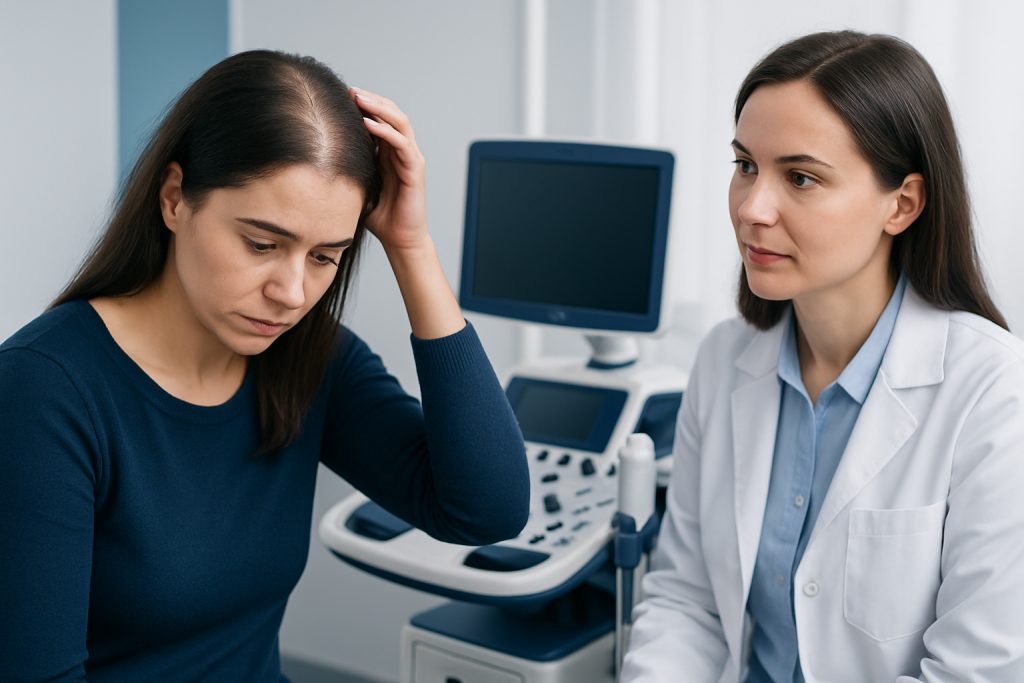
PCOS-related hair thinning often develops gradually rather than all at once. People may notice their ponytail feels smaller, the part line looks wider, or the scalp is easier to see under bright light. Some also report more hair left in the brush or shower drain, although shedding alone does not always mean permanent loss.
The pattern can overlap with other types of hair loss, which is why a careful clinical history matters. Hair loss that appears suddenly, causes smooth bald patches, or comes with scalp redness or scaling may point to a different issue and deserves separate evaluation.
Common clues that hair thinning may be related to PCOS include:
- Gradual thinning at the crown or along the top of the head
- More noticeable widening of the middle part
- Hair strands that seem finer or shorter over time
- Other PCOS signs such as irregular periods, acne, or increased facial/body hair
Even when the pattern seems typical, a doctor may still look for overlapping contributors such as stress, recent illness, iron deficiency, thyroid disease, or certain medications.
Causes and Risk Factors
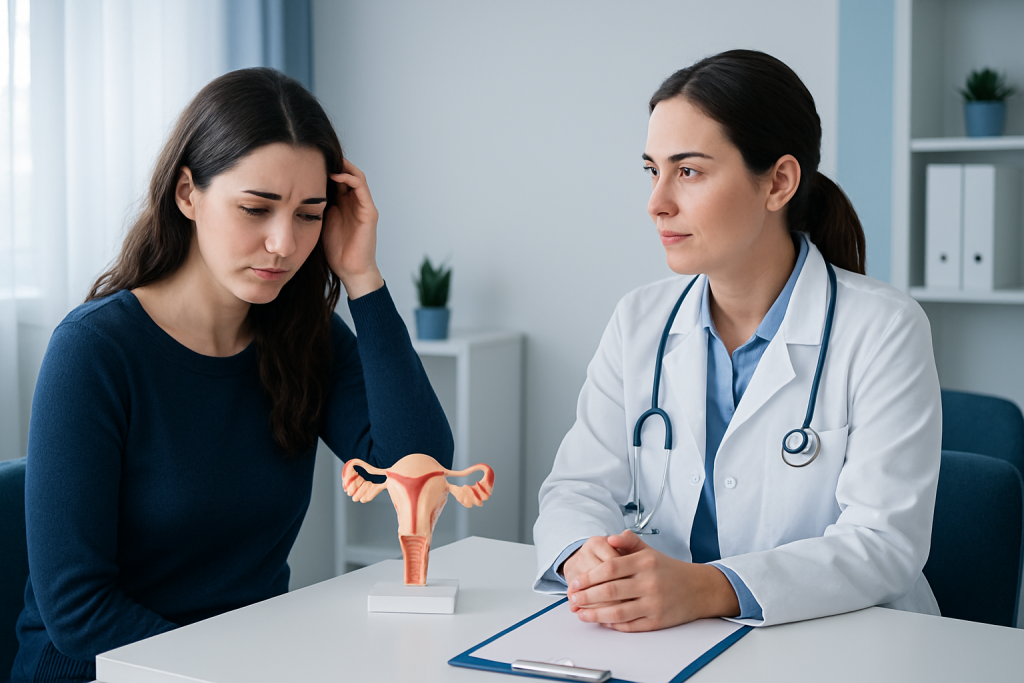
Hair follicles are sensitive to hormone changes. In PCOS, higher androgen activity can shorten the growth phase of hair and make strands grow back thinner over time. Insulin resistance, which is common in PCOS, may also influence hormone balance and scalp biology in ways that worsen shedding or thinning.
Not everyone with PCOS develops noticeable hair loss, and the severity can vary. Genetics play a major role in how sensitive hair follicles are to androgens, so family history of female pattern hair loss can increase the chance that PCOS-related thinning becomes visible.
Other factors may amplify the problem, including significant weight changes, poor nutrition, chronic stress, low ferritin or iron stores, thyroid disorders, postpartum hormonal shifts, and repeated use of tight hairstyles or harsh chemical treatments. In practice, treatment is most effective when these contributors are identified rather than assuming PCOS is the only cause.
Diagnosis
Diagnosis usually begins with a conversation about the hair changes themselves: when they started, whether shedding is sudden or gradual, and whether there are other PCOS symptoms. A dermatologist, gynecologist, or endocrinologist may examine the scalp and look at the distribution of thinning to distinguish pattern hair loss from other forms of alopecia.
Blood tests are commonly used to rule out look-alike conditions and to clarify the hormonal picture. Depending on the person’s history, a clinician may check androgen levels, thyroid function, ferritin or iron status, blood sugar markers, and other hormone-related tests. In some cases, a scalp biopsy or dermoscopy may be recommended if the diagnosis is uncertain.
For patients traveling from another country, bringing previous lab results, medication lists, and any hair photos from earlier months can be especially helpful. It allows the care team to compare changes over time and avoid repeating tests that have already been done recently.
Treatment Options
The most effective pcos and thinning hair treatment often combines medical therapy with scalp-directed care and, when appropriate, lifestyle support. Because results take time, the first target is usually to stabilize ongoing loss before expecting visible regrowth.
Topical treatment is commonly used for female pattern thinning. A clinician may recommend a scalp-applied medication that helps support hair growth, often as part of a longer plan rather than a stand-alone fix. For some patients, hormone-focused medicines that reduce androgen effects may be considered, especially when acne or excess hair growth also suggest androgen excess. These choices depend on overall health, pregnancy intentions, and the risk-benefit discussion with a doctor.
Some people benefit from therapies that support the scalp environment or stimulate follicles, such as low-level light devices or in-clinic procedures selected by a dermatologist. Nutritional correction is important if tests show deficiency, but supplements are most useful when there is a documented need rather than as a blanket solution. If hair loss is driven partly by insulin resistance or weight-related metabolic changes, a wider PCOS management plan may help hair treatment work better over time.
It is also important to set realistic expectations. Hair follicles that are still active may improve, but areas with long-standing thinning can respond more slowly or incompletely. For that reason, many treatment plans are adjusted over several months based on shedding, density, tolerance, and whether the person is planning pregnancy.
Effectiveness and Recovery Timeline
Hair recovery is usually measured in months, not days. In the first phase, treatment aims to reduce ongoing shedding and prevent further miniaturization of hair follicles. Only later does visible thickening typically become easier to see, especially along the part line and crown.
Some people notice early changes such as less hair in the shower or a healthier scalp feel before they see new volume. Others need a longer period before improvement becomes obvious. If treatment is stopped too early, the process may look ineffective even when it was beginning to help.
Recovery depends on several factors: how long the thinning has been present, how much follicle miniaturization has already occurred, whether androgen levels are controlled, and whether other deficiencies or scalp conditions are present. A clinician may use follow-up visits, scalp photos, or trichoscopy to judge whether the current plan should be continued, adjusted, or combined with another option.
Prevention and Self-care
Self-care does not replace medical treatment, but it can make the scalp and follicles less vulnerable. Gentle hair handling, balanced nutrition, and consistent follow-up for PCOS all support the broader treatment plan. Many people find that small, sustainable changes are easier to maintain than dramatic overhauls.
Helpful habits may include avoiding traction from very tight braids or ponytails, limiting harsh bleaching or heat styling, and using mild hair care products when the scalp is sensitive. If iron, vitamin D, or other nutrient gaps are identified, correcting them under medical guidance can support general hair health.
Because PCOS is linked with metabolic health, lifestyle steps that improve insulin sensitivity may also be relevant. These may include regular physical activity, a balanced eating pattern, and weight management when needed. The purpose is not cosmetic pressure; it is to support hormone balance, menstrual health, and hair treatment response together.
For people who have to travel for care, organizing follow-up before departure can be reassuring. It helps make sure that lab monitoring, medication adjustments, and progress checks continue smoothly after returning home.
When to See a Doctor
Medical review is a good idea when hair thinning is ongoing, becoming more visible, or affecting confidence and daily life. It is especially important if hair loss comes with irregular periods, new acne, increased facial hair, or signs that PCOS may not yet have been evaluated.
Prompt assessment is also wise if the hair loss is sudden, patchy, associated with scalp pain or scaling, or accompanied by fatigue, weight change, or other systemic symptoms. These patterns may suggest a cause other than PCOS, and they deserve timely attention.
A doctor can help determine whether the person needs dermatology care, hormone testing, fertility-focused counseling, or broader endocrine evaluation. In Acibadem Health Point’s network, multidisciplinary specialists and JCI-accredited hospitals work together to diagnose and treat this condition for international patients, which can be helpful when both hair concerns and PCOS management need to be addressed in one plan.
Living With PCOS-Related Hair Thinning
Hair thinning can feel personal, but it is a medical issue with several practical treatment paths. Many patients do better when they think of treatment as a process: confirm the cause, choose a plan that fits fertility goals and overall health, and reassess regularly rather than chasing quick fixes.
It can also help to document progress with monthly photos in the same lighting and hairstyle. Small changes are easier to spot that way, and the images give the care team a clearer picture of what is improving and what still needs attention.
With the right combination of medical support and realistic expectations, many people are able to slow the thinning and regain some fullness. The earlier the cause is evaluated, the more options are usually available.
Frequently asked questions
01What is the best treatment for PCOS-related thinning hair?
The best treatment depends on the person’s hormone profile, scalp findings, and pregnancy plans. Doctors often combine a hair-growth treatment with PCOS management so the follicles are supported from both sides.
02How long does it take to see improvement?
Most people need several months before visible changes appear. Early signs may include less shedding, followed later by gradual thickening.
03Can hair grow back after PCOS hair loss?
Hair can improve if the follicles are still active and the underlying cause is treated. Regrowth is often partial rather than instant, and early treatment usually gives better results.
04Do supplements help with PCOS hair loss?
Supplements are most helpful when a blood test shows a deficiency, such as low iron stores. They are not a substitute for treating hormone-related hair loss when PCOS is the main driver.
05Is PCOS hair loss the same as male pattern baldness?
The pattern can look similar because both involve hormone-sensitive thinning on the scalp. In women with PCOS, the underlying cause is usually a combination of androgen activity, genetics, and metabolic factors.
06Should someone stop treatment if they are trying to conceive?
Some hair treatments may not be suitable during pregnancy or while trying to conceive, so treatment should be reviewed with a doctor. A clinician can adjust the plan so hair care and fertility goals remain aligned.
This article is for general information only and is not a substitute for professional medical advice. Please consult a qualified doctor about your individual situation.
Hair transplant in Turkey — costs, graft counts & a free assessment
JCI-accredited · board-certified surgeons · reply within 24h
Add us as a Preferred Source to see more of our trusted health content across Google Search, AI Overviews and Discover.