Panthenol Spray After Hair Transplant When to Start: Procedure, Benefits, Risks and Recovery

Key Takeaways
- The safest time to start panthenol spray after a hair transplant is the one given by the surgeon, since healing varies by procedure and graft placement.
- Panthenol is often used to support scalp comfort and hydration, but it does not speed graft growth on its own.
- Sprays should be applied gently so the new grafts are not disturbed during the early healing phase.
- Any redness, swelling, crusting, or itching should be discussed with the treating team if it becomes severe or persistent.
- Patients traveling for surgery should leave with clear written instructions for washing, spraying, and follow-up care.
- A gradual, surgeon-guided routine is usually better than adding extra products too early.
Panthenol spray can be part of some hair transplant recovery plans, but the right time to start depends on the technique used, scalp healing, and the surgeon’s instructions. This guide explains how panthenol spray is used, its possible benefits and risks, and what patients can expect during recovery.
Overview
For many patients, the first question after surgery is not about the final result but about the first few days: when can panthenol spray after hair transplant when to start safely? In most cases, the answer is simple but important—patients should begin only when the transplant team says the scalp is ready, because the early healing period is when the new grafts are most delicate.
Panthenol is a provitamin used in skin and hair-care products for its moisturizing and soothing properties. After a hair transplant, some clinics recommend it as part of the post-procedure routine to keep the scalp comfortable, reduce dryness, and support gentle cleansing. Even so, it is not a universal requirement, and its use should always fit the specific instructions given for the patient’s technique, such as FUE or FUT.
International patients often receive a detailed plan before leaving the clinic, because aftercare continues at home, sometimes in another country. The best outcome usually comes from a simple, carefully timed routine rather than adding several products at once. That is why the starting point for panthenol spray should be based on the surgeon’s protocol and the condition of the scalp, not on a general online timeline.
Symptoms During Early Healing
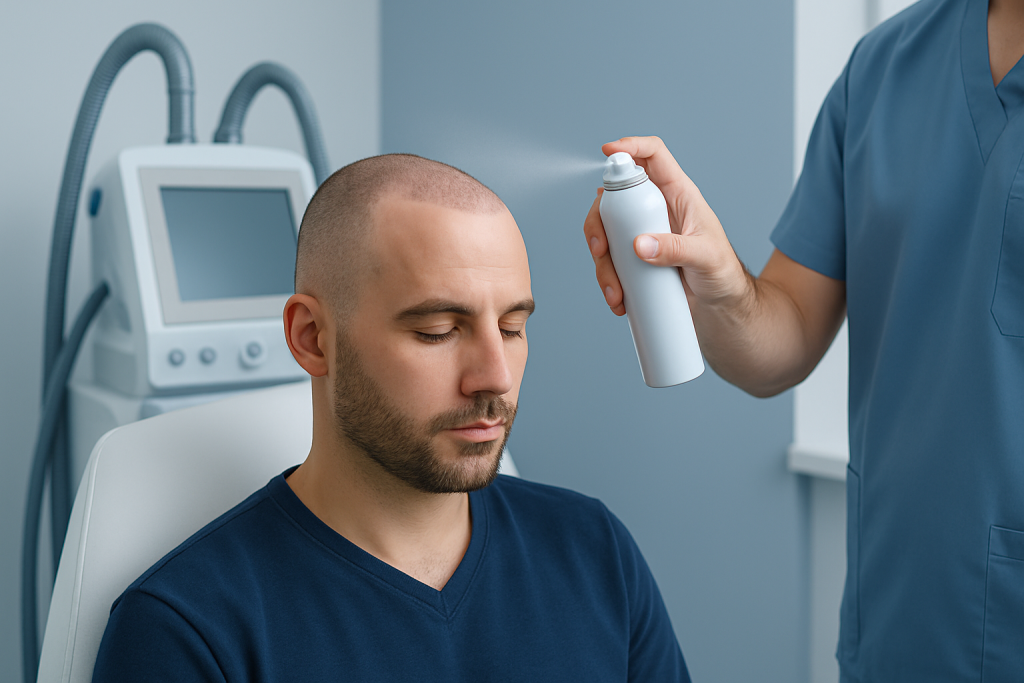
After a transplant, the scalp commonly goes through a predictable healing process. Mild redness, tightness, tenderness, crusting around grafts, and temporary swelling are all expected in the early days. Itching can also appear as the skin recovers, especially as the tiny scabs begin to loosen.
Panthenol spray may be suggested because it can help the scalp feel less dry and more comfortable. Some patients find that a light spray routine makes it easier to manage tension and flaking, provided the product is applied exactly as directed. The goal is comfort and hydration, not forceful cleaning or repeated touching of the grafts.
It is important to separate normal healing from warning signs. Increasing pain, thick discharge, fever, foul odor, or a sudden change in the appearance of grafts should be reported to the care team. A soothing spray should never be used as a substitute for medical advice when something does not look or feel right.
Causes & Risk Factors: Why Timing Matters
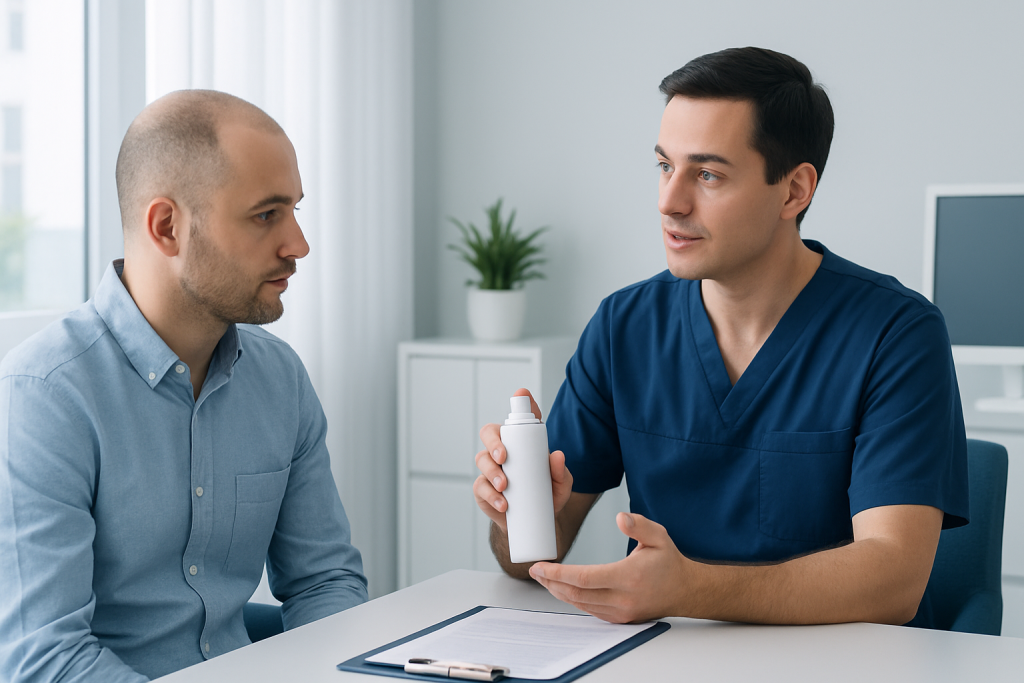
The temptation to “help” the grafts with extra care is understandable, especially for patients who have traveled for treatment and want to do everything correctly. Still, the most useful recovery approach is often the simplest one: follow the written instructions, protect the grafts, and ask before changing the routine. This is particularly important during the first week, when washing and spraying methods can make a meaningful difference.
A panthenol product may also vary by formula. Some sprays are designed for scalp use, while others are packaged for cosmetic purposes and may contain ingredients that are not ideal immediately after surgery. Patients should use only a surgeon-approved product and avoid assuming that all “panthenol sprays” are equivalent.
Diagnosis and Post-Procedure Assessment
Patients should think of diagnosis in this setting as a recovery check rather than a single appointment. The team’s job is to confirm that the scalp is ready for each step of care, from the first gentle wash to the introduction of soothing sprays. That staged approach helps protect the transplant while keeping recovery manageable.
If the scalp appears unusually inflamed or if there is concern about infection or contact irritation, the plan may be adjusted. In those situations, it is better to pause the product and seek guidance than to continue in hopes that the issue will settle on its own.
Treatment Options and How Panthenol Spray Fits In
For patients who return home soon after surgery, treatment options also include practical support: written aftercare plans, remote monitoring, and a local doctor who can be contacted if unexpected symptoms appear. This is especially valuable when travel makes in-person visits less convenient. A good plan is one that the patient can realistically follow every day.
Frequently asked questions
01When should panthenol spray be started after a hair transplant?
The safest answer is the one given by the surgeon, because the timing depends on how the scalp is healing and which transplant technique was used. In some patients it may be started only after the first washing routine, while others may need to wait longer. The key is not to begin it before the grafts are stable enough.
02What does panthenol spray do for the scalp after surgery?
Panthenol spray is mainly used to soothe and moisturize the scalp. It may help with dryness, tightness, and comfort during the healing period. It does not replace proper wound care or improve graft survival by itself.
03Can panthenol spray damage the grafts?
Used too early or applied too forcefully, any spray could disturb grafts. The main risk is not the ingredient alone but the way it is applied and whether the scalp is ready for it. Gentle use, with surgeon approval, helps reduce that risk.
04Is panthenol spray necessary for every hair transplant patient?
No, it is not necessary for everyone. Some surgeons include it in aftercare, while others prefer a different routine or no spray at all. The best choice depends on the patient’s healing pattern and the clinic’s protocol.
05What should patients avoid during early recovery?
They should avoid rubbing the grafts, using unapproved products, exposing the scalp to strong sun, and following advice from unverified sources instead of the surgical team. Early recovery is a time for simplicity and caution. Any product, including a spray, should fit the prescribed plan.
06When should a patient contact the doctor after a transplant?
The doctor should be contacted if there is worsening pain, heavy redness, pus, fever, bad odor, or anything that seems unusual compared with expected healing. Patients should also reach out if they are unsure whether a spray or wash is being used correctly. Quick clarification can prevent unnecessary worry and help recovery stay on track.
This article is for general information only and is not a substitute for professional medical advice. Please consult a qualified doctor about your individual situation.
Hair transplant in Turkey — costs, graft counts & a free assessment
JCI-accredited · board-certified surgeons · reply within 24h
Add us as a Preferred Source to see more of our trusted health content across Google Search, AI Overviews and Discover.