Hair Transplant for Norwood 6: Procedure, Benefits, Risks and Recovery

Key Takeaways
- Norwood 6 means advanced male-pattern hair loss, with a large area of thinning or baldness on the top of the scalp.
- A transplant may improve appearance, but it cannot restore the density of a full youthful hairline in every case.
- The donor area often determines whether surgery is feasible and how many grafts can be moved safely.
- Recovery is usually gradual, with early shedding before new growth begins.
- A specialist consultation is essential to compare surgical and non-surgical options and to set realistic goals.
A hair transplant for Norwood 6 can be an option for some men with advanced pattern hair loss, but success depends heavily on donor hair quality, scalp laxity, and realistic planning. This article explains the procedure, possible benefits, limitations, risks, and recovery so patients can make an informed decision.
Overview
For someone considering a hair transplant for Norwood 6, the first question is usually straightforward: can it help? The answer is sometimes yes, but the best outcome depends less on the label “Norwood 6” and more on the person’s donor hair supply, scalp characteristics, age, hair texture, and expectations. In advanced hair loss, surgery is usually about strategic improvement rather than complete restoration.
Norwood 6 refers to a later stage of male-pattern hair loss, where the frontal hairline, mid-scalp, and crown have lost substantial coverage. Because the bald area is broad, a surgeon must decide where grafts will create the most visible benefit. That often means prioritizing the front and mid-scalp first, while leaving some areas less dense or untreated if donor hair is limited.
Patients traveling for care often find that the consultation is the most important part of the journey. Before any procedure is planned, a qualified specialist should examine the scalp, estimate donor capacity, discuss whether additional sessions may be needed, and explain what kind of improvement is realistic. A careful plan is especially important when care is being arranged from another country, because the patient may have limited time for in-person follow-up.
What Norwood 6 Hair Loss Means
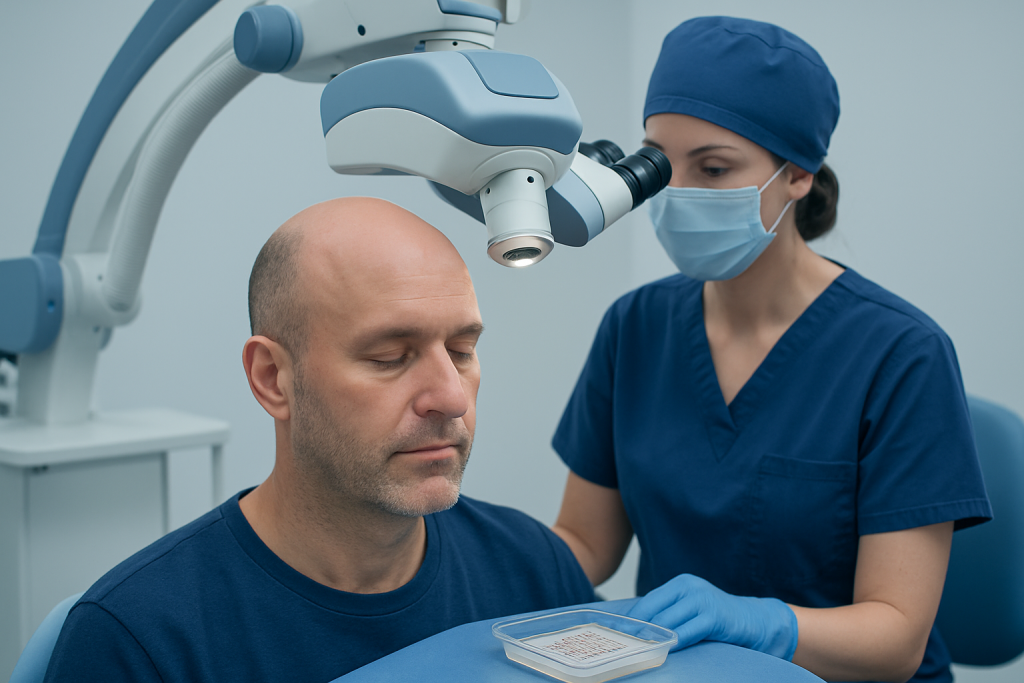
The Norwood scale is a widely used way to describe male-pattern baldness. Norwood 6 represents advanced recession and loss across the top of the scalp, often with only a narrow bridge of hair remaining on the sides or back. The pattern is usually driven by genetic sensitivity to androgens, especially dihydrotestosterone, which gradually shortens the hair growth cycle in susceptible follicles.
At this stage, the visual impact can be more than cosmetic. Some people feel that older styling no longer helps, hats become a daily habit, and confidence drops in social or professional settings. Others adapt well and simply want a subtle improvement. Those personal goals matter, because the same operation can be very satisfying for one patient and disappointing for another if expectations are mismatched.
It is also important to understand that hair loss may still progress after surgery. A transplant moves permanent follicles from the donor area, but it does not stop untreated native hair from thinning. For that reason, planning should consider the long-term pattern, not just the current appearance in the mirror.
Who May Be a Good Candidate

Not every person with Norwood 6 hair loss is a good surgical candidate. The most important factor is usually donor supply. Hair taken from the back and sides of the scalp is typically more resistant to pattern loss, but there is only a finite amount available. If donor hair is sparse, miniaturized, or unstable, the surgeon may recommend postponing surgery or choosing another approach.
Good candidates generally have realistic expectations, stable overall health, and a clear understanding that density will be improved, not fully recreated. A patient who expects a teenage hairline or extremely thick coverage over a very large bald area may be disappointed, even if the procedure is technically successful. Hair and scalp characteristics such as curl, caliber, and color contrast can also affect the final visual effect.
Age and progression matter too. Some younger patients with advanced loss are not ideal candidates because ongoing baldness can change the pattern after surgery. In those cases, a specialist may suggest medical stabilization first, then reassess whether surgery should be done later. In international patients, this stepwise approach can prevent avoidable travel for a procedure that may not yet be the best choice.
How the Procedure Is Planned
Planning is the part that often determines the result more than the day of surgery itself. The surgeon typically evaluates the donor area, measures scalp laxity, studies hair direction, and estimates how many grafts can be harvested without causing a depleted look at the back of the head. For Norwood 6, that calculation is especially important because the recipient area is large.
Two main harvesting methods are used in modern hair restoration: follicular unit transplantation (FUT) and follicular unit extraction (FUE). FUT removes a thin strip of scalp from the donor area and divides it into grafts, while FUE removes individual follicular units. Each method has advantages and trade-offs, and the best choice depends on donor characteristics, hairstyle preferences, scarring considerations, and the surgeon’s experience.
The recipient plan is usually drawn with long-term priorities in mind. Many surgeons place grafts to frame the face first, because the frontal area is the most visible and often provides the greatest cosmetic change. The crown can be addressed as donor supply allows, but it may require more grafts than patients expect. A transparent conversation at this stage helps patients understand what can be achieved in one procedure and what may need staged treatment.
Benefits and Realistic Outcomes
The main benefit of a hair transplant for Norwood 6 is improved appearance using the patient’s own hair. When well planned, the result can soften the contrast between bald and hair-bearing areas, restore a more natural-looking frame to the face, and make styling easier. Many patients appreciate that transplanted hair continues to grow and can usually be washed, cut, and styled like native hair.
For advanced hair loss, however, realistic outcomes matter more than dramatic promises. The goal is often to create an appearance of meaningful coverage from normal viewing distances rather than full density across the entire scalp. A conservative design can look more natural than an aggressive one that uses too many grafts in the front and leaves the crown unnaturally thin.
Some patients also value the psychological benefit of regaining control over their appearance. That can be especially relevant for people traveling abroad for treatment, because they may want a result that looks natural in daily life, not just in clinic photos. The best outcome is usually one that balances aesthetics, graft conservation, and future hair-loss planning.
Risks, Limitations, and Possible Side Effects
Hair transplantation is generally considered safe when performed by qualified clinicians, but it still has risks. Temporary swelling, soreness, tightness, and redness are common in the early healing period. Small crusts may form around the grafts, and temporary shedding of transplanted hairs often occurs before new growth begins. These effects are usually expected parts of recovery rather than signs of failure.
More important limitations exist in advanced baldness. Donor hair is finite, so coverage must be rationed. If too many grafts are placed too densely into a very large area, the donor region may look overharvested or the new hair may still appear thin. There is also a chance of uneven growth, scarring, infection, numbness, or poor survival of some grafts.
Another practical issue is ongoing loss of native hair around the transplanted area. If medical therapy is not considered, a patient may notice thinning continue behind or beside the grafts over time. That does not mean the transplant failed, but it does mean the overall look may change. Clear preoperative counseling helps patients understand these limitations before they commit to surgery.
Recovery and the Hair Growth Timeline
Recovery after hair transplant surgery is usually gradual rather than dramatic. In the first days, the scalp may feel tender and appear red or swollen. Most patients are given instructions on sleeping position, washing, and avoiding friction so the grafts can settle safely. Gentle care matters in this period, especially for patients who are returning home soon after treatment.
It is common for transplanted hairs to shed within the first few weeks. This can be unsettling if a patient is not expecting it, but it is often a normal phase. New growth generally begins later, and the visible improvement comes slowly over months as follicles cycle back into active growth. Final assessment is usually not meaningful until enough time has passed for maturation of the hair shaft and coverage pattern.
Travel plans should take recovery into account. A patient coming from abroad may need a follow-up schedule that includes remote check-ins, local wound care, and a clear plan for urgent questions. Good clinics explain what can be managed at home, what should trigger contact with the surgical team, and when an in-person review would be advisable.
Prevention, Self-Care, and Non-Surgical Support
Although advanced pattern hair loss cannot always be prevented, the overall plan can be strengthened with self-care and non-surgical support. Many specialists discuss medical therapy to help slow further shedding and protect existing hair. This may be especially relevant in Norwood 6, where preserving surrounding hair can improve the visual harmony of the transplant.
Simple habits also support scalp and hair health. Patients are usually advised to avoid smoking before and after surgery, follow cleansing instructions carefully, and protect the scalp from sun exposure during healing. Balanced nutrition, good sleep, and prompt treatment of scalp inflammation can also support recovery, even if they do not reverse genetic hair loss on their own.
- Follow the surgeon’s aftercare instructions exactly.
- Ask whether ongoing medical therapy is appropriate for long-term maintenance.
- Avoid scratching, rubbing, or wearing tight headwear too early.
- Plan enough recovery time before travel, work, or social events.
For international patients, practical preparation matters as much as medical preparation. Bring a written aftercare plan, confirm how to reach the clinic after returning home, and arrange a local doctor if the surgical team recommends follow-up support. These steps make recovery smoother and reduce uncertainty.
When to See a Doctor
A consultation is worthwhile when hair loss is progressing, when styling no longer hides thinning, or when a person wants to know whether surgery is feasible. For Norwood 6, the key question is not simply whether a transplant can be done, but whether it can be done responsibly with the available donor hair and with the patient’s long-term pattern in mind.
Medical review is also important if hair loss is sudden, patchy, associated with itching or scaling, or accompanied by other symptoms. Those patterns may suggest causes other than classic male-pattern baldness and deserve a proper diagnosis before any cosmetic procedure is discussed. A specialist should also assess whether scalp disease, medication use, or general health factors are influencing shedding.
If a patient is considering treatment abroad, it is sensible to choose a clinic that provides structured evaluation, clear surgical planning, and support after the procedure. Acibadem Health Point’s multidisciplinary specialists and JCI-accredited hospitals diagnose and treat hair loss conditions for international patients, with care designed to be coordinated before, during, and after travel.
Frequently asked questions
01Can a hair transplant work for Norwood 6?
It can work for some patients, but results depend mainly on donor hair supply and the amount of coverage needed. In advanced hair loss, the goal is usually improvement rather than full restoration.
02How many grafts are needed for Norwood 6?
The number varies widely based on scalp size, hair characteristics, and the surgeon’s plan. A specialist can estimate graft needs only after examining the donor area and the pattern of loss.
03Is FUT or FUE better for advanced hair loss?
Neither method is automatically better for everyone. The right choice depends on donor quality, scarring considerations, hairstyle preferences, and the surgeon’s judgment.
04Will transplanted hair fall out after surgery?
The transplanted hairs often shed temporarily in the first weeks, which is usually normal. New growth typically starts later, and the hairs that grow in are expected to be long-lasting because they come from the donor area.
05Can the crown be restored in Norwood 6?
The crown can sometimes be treated, but it often requires many grafts and may not be the first priority if donor hair is limited. Many surgeons focus on the front and mid-scalp first because those areas have the greatest visual impact.
06Do patients need medication after a transplant?
Some patients are advised to use medical therapy to help slow ongoing hair loss and protect existing hair. A doctor should decide whether this is appropriate based on the person’s pattern of loss and health profile.
This article is for general information only and is not a substitute for professional medical advice. Please consult a qualified doctor about your individual situation.
Hair transplant in Turkey — costs, graft counts & a free assessment
JCI-accredited · board-certified surgeons · reply within 24h
Add us as a Preferred Source to see more of our trusted health content across Google Search, AI Overviews and Discover.