Pain in Calf Muscle: Causes, Relief and When to Worry

Key Takeaways
- Pain in the calf muscle is commonly linked to muscle strain, cramp, or overuse, especially after activity.
- Swelling, warmth, redness, or one-sided pain can point to a more serious cause and should not be ignored.
- Most mild calf discomfort improves with rest, gentle movement, stretching, and basic self-care.
- A doctor may use examination, blood tests, or imaging to rule out blood clots, tendon injury, or circulation issues.
- Urgent medical care is important if calf pain occurs with shortness of breath, sudden swelling, or trouble walking.
Pain in the calf muscle is often caused by overuse, cramping, or a muscle strain, but it can also signal a circulation problem or another condition that needs medical attention. Understanding the pattern of pain, associated symptoms, and warning signs helps patients choose the right next step with confidence.
Overview
Pain in the calf muscle usually starts with a practical question: did the muscle simply get overworked, or is something else going on? In many people, the answer is a common one such as a strain, a cramp, or muscle tightness after exercise, long standing, or an unusual walk or run. In other situations, calf pain can be related to the Achilles tendon, a nerve, a blood vessel, or a more general medical problem.
The calf is not one single muscle but a group of muscles at the back of the lower leg that help with walking, standing on tiptoe, and pushing off during movement. Because these muscles are used constantly, small changes in activity, footwear, hydration, or posture can lead to discomfort. The pattern of the pain, along with any swelling, redness, weakness, or trouble bearing weight, often gives the best clue to the cause.
For international patients who are deciding whether to seek care abroad, calf pain is one of those symptoms that benefits from careful triage. A short telehealth discussion or in-person assessment can help separate a routine strain from a condition that needs prompt treatment, such as a blood clot or a significant tear. That early distinction can prevent unnecessary travel while still ensuring timely care when needed.
Symptoms
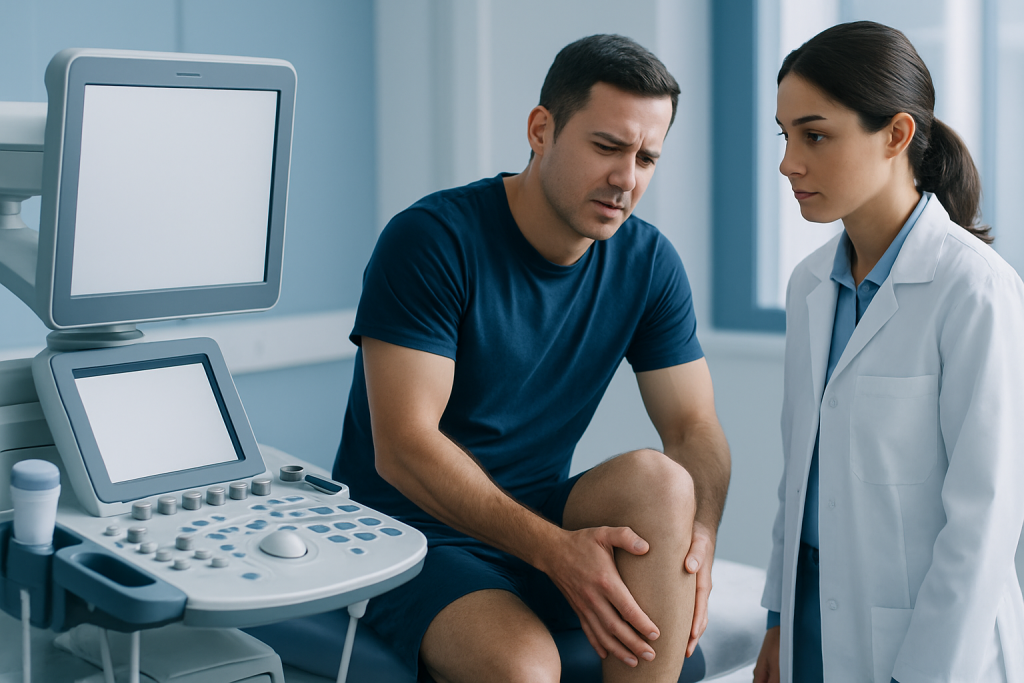
Calf pain can feel different depending on the cause. Some people describe a sudden grabbing or tightening in the muscle, while others notice a dull ache that worsens with walking, climbing stairs, or standing for long periods. A cramp may come on abruptly and then ease, whereas a strain often hurts more when the calf is stretched or used.
Symptoms that may accompany simple muscle-related pain include tenderness to touch, mild stiffness, or soreness after exercise. The discomfort may be one-sided or in both calves, and it may improve with rest. If the pain is linked to overuse, the person may still be able to walk, although they may do so more slowly or carefully.
Certain features suggest that the cause could be more serious and deserve prompt evaluation. These include visible swelling in one leg, warmth, redness, increasing pain, marked weakness, numbness, a hard or tight calf, or pain that starts without a clear reason. Sudden shortness of breath, chest discomfort, or coughing up blood alongside calf pain needs urgent medical attention.
- Common pattern: soreness after activity or a brief cramp that settles
- Concerning pattern: one-sided swelling, warmth, or redness
- Urgent pattern: calf pain with breathlessness or chest symptoms
Causes & Risk Factors

The most frequent cause of calf muscle pain is simple muscle overload. This can happen after walking farther than usual, increasing exercise intensity too quickly, wearing unsupportive shoes, or spending a long time standing. Dehydration and muscle fatigue can also make cramping more likely, especially in warm weather or after intense physical activity.
Calf discomfort may also come from a muscle strain, which means the muscle fibers have been stretched or partially torn. Strains often follow a sudden movement, sprint, jump, slip, or awkward step. Another nearby structure, the Achilles tendon, can become irritated or injured and cause pain that is felt in the lower calf or just above the heel.
Not all calf pain comes from the muscle itself. Blood clots in the deep veins of the leg, poor circulation, nerve irritation from the back, Baker’s cysts behind the knee, and certain medication effects can all cause lower leg symptoms. Risk is higher in people with recent surgery, long travel, prolonged immobility, pregnancy, estrogen-containing medicines, smoking, prior clotting problems, or a history of vascular disease.
Because the list of causes is broad, the story behind the pain matters. A runner with soreness after a training increase is very different from a traveler who developed one swollen calf after a long flight. The same symptom can have very different meaning depending on timing, location, and accompanying signs.
Diagnosis
Diagnosis begins with a careful history and physical examination. A clinician will usually ask when the pain started, whether it appeared suddenly or gradually, what makes it worse, and whether there was recent exercise, travel, injury, or illness. They will also look for swelling, tenderness, warmth, changes in color, and any limitation in walking or ankle movement.
When the cause seems straightforward, such as a mild strain or cramp, no advanced testing may be needed. However, if the examination raises concern for a blood clot, infection, significant tear, or circulation problem, additional tests may be recommended. These can include blood work, ultrasound of the leg veins, or imaging of the muscle or tendon depending on the suspected cause.
For patients seeking care from another country, it helps to bring a clear timeline of symptoms, a list of medicines, and any recent travel or surgery details. If prior scans or reports are available, they can save time and reduce duplicate testing. A precise history often matters as much as the test itself, because calf pain is frequently diagnosed by combining the symptom pattern with the physical findings.
Treatment Options
Treatment depends on the cause. Mild muscle soreness or a simple strain often improves with rest from the activity that triggered it, gentle walking as tolerated, and gradual return to exercise. Ice may be useful in the first day or two after a strain, while some people find warmth helpful later for stiffness. Supportive footwear and temporary reduction in load can also help the calf recover.
For cramps, attention to hydration, fatigue, and muscle conditioning may reduce recurrence. Gentle stretching can ease a cramp when it happens, and regular calf stretching may help some people who experience repeated tightness. If a medicine is thought to be contributing, a doctor may review whether an adjustment is appropriate, but patients should not stop prescription medicines on their own.
More specific treatment is needed when the cause is a blood clot, tendon injury, infection, or another medical condition. Those situations may involve anticoagulation, immobilization, physical therapy, or other targeted care. The key point is that calf pain is not treated the same way in every person; treatment should follow the cause, not just the symptom.
In an international-care setting, this step often includes coordinating imaging, specialist review, and follow-up planning before travel home. Acibadem Health Point’s multidisciplinary specialists and JCI-accredited hospitals diagnose and treat this condition for international patients, with the goal of making the next steps clear and well organized.
Prevention & Self-care
Many episodes of calf pain can be reduced with simple habits. A gradual increase in exercise intensity gives the muscles time to adapt, while a proper warm-up before activity and a cool-down afterward may lower the chance of strain. Calf stretching, balanced strengthening, and comfortable shoes with enough support are also useful for people who are on their feet often.
For those prone to cramps, consistent hydration and attention to electrolytes during heavy sweating or illness may help, although supplements are not necessary for everyone. People who travel for long periods can reduce stiffness by standing, walking, and moving the ankles regularly when possible. After surgery or during extended immobility, following medical advice about movement and clot prevention is especially important.
Self-care is appropriate when symptoms are mild and improving, but it should be paired with observation. A calf that is slowly getting better after a clear overuse episode is reassuring. A calf that becomes more swollen, more painful, or more tender over time needs reassessment rather than continued home treatment alone.
- Increase activity gradually, especially after a break from exercise
- Use supportive footwear and avoid sudden changes in training surface or intensity
- Stretch and move regularly during long travel or long work shifts
- Seek reassessment if symptoms do not improve as expected
When to See a Doctor
Medical evaluation is recommended when calf pain is severe, persistent, unexplained, or affecting normal walking. It is also wise to seek care if the pain follows an injury with bruising, a popping sensation, or sudden weakness, since these can suggest a more significant muscle or tendon injury. A clinician can determine whether imaging or a specialist referral is appropriate.
Prompt assessment is especially important if the pain is one-sided and accompanied by swelling, redness, warmth, or a firm feeling in the leg. Those symptoms can be seen with a blood clot and should not be watched at home for long. The same is true if calf pain occurs after recent surgery, long travel, or a period of immobilization.
Emergency care is needed if calf pain comes with shortness of breath, chest pain, fainting, or coughing up blood. These symptoms may indicate a clot that has traveled to the lungs. Even when the final diagnosis is benign, it is always better to rule out a serious cause early than to assume that all calf pain is harmless.
For patients arranging care from abroad, timely review is particularly valuable because the right diagnosis can guide whether they need local treatment before traveling or can safely continue recovery at home. Clear communication about symptom onset, travel history, and any changes in the leg can make the consultation more efficient and reassuring.
Related Questions Patients Often Ask
Many people want to know whether calf pain means a pulled muscle, poor circulation, or a blood clot. The answer depends on the details. A pain that appears after exercise and improves with rest is often muscle-related, while pain with swelling or warmth deserves closer attention.
Another common concern is whether walking is safe. In mild muscle strain or cramping, gentle movement is often helpful, but activity should not be forced through sharp pain. If walking becomes difficult, or if the calf feels tight, hot, or increasingly swollen, a medical review is the safer choice.
Patients also ask how long calf pain should last. Minor soreness may improve over several days, while a more noticeable strain can take longer. Pain that is not improving, or that is getting worse instead of better, should be checked by a doctor even if it started as a seemingly simple problem.
Frequently asked questions
01What is the most common cause of pain in the calf muscle?
The most common cause is a muscle-related problem such as overuse, cramping, or a mild strain. These often happen after exercise, long standing, or sudden changes in activity. The exact cause is usually clearer when the timing and associated symptoms are reviewed together.
02When is calf pain a sign of something serious?
Calf pain is more concerning when it is one-sided, swollen, warm, red, or comes on without a clear reason. It is also more urgent if it happens with shortness of breath, chest pain, or fainting. Those symptoms can point to a blood clot and need prompt medical assessment.
03Can I treat calf muscle pain at home?
Mild calf pain that follows exercise or a minor strain often improves with rest, gentle movement, stretching, and supportive footwear. Home care is reasonable if symptoms are mild and steadily getting better. If pain worsens, becomes swollen, or limits walking, a doctor should evaluate it.
04Should I keep walking if my calf hurts?
Gentle walking is often fine for mild soreness or a simple cramp, as long as it does not worsen the pain. Sharp pain, limping, or a feeling of instability means the muscle may need more rest. If the calf is swollen, hot, or tender, medical advice is safer than pushing through it.
05What tests might a doctor order for calf pain?
The doctor may begin with a physical examination and ask about recent travel, injury, exercise, or surgery. If there is concern for a clot or another deeper problem, they may order blood tests or an ultrasound of the leg veins. Imaging may also be used if a muscle or tendon injury is suspected.
06How can calf pain be prevented during travel?
During long travel, it helps to move the ankles, stand up when possible, and avoid sitting still for extended periods. Staying hydrated and following any clot-prevention advice from a doctor is also important, especially for people with higher risk. If there is new one-sided swelling or pain after travel, it should be checked promptly.
This article is for general information only and is not a substitute for professional medical advice. Please consult a qualified doctor about your individual situation.
Joint and spine care in Turkey — expert assessment & treatment
JCI-accredited · board-certified surgeons · reply within 24h
Add us as a Preferred Source to see more of our trusted health content across Google Search, AI Overviews and Discover.