Best Yoga Poses for Back Pain: Causes, Relief and When to Worry

Key Takeaways
- Gentle yoga can help many types of non-urgent back pain by easing stiffness and improving mobility.
- The safest poses usually focus on lengthening, breathing, and core support rather than deep twisting or strong backbends.
- Sudden pain, numbness, weakness, fever, or pain after an injury should be evaluated by a doctor.
- People with disc problems, osteoporosis, pregnancy-related back pain, or sciatica may need modified poses.
- Yoga works best when paired with good posture, regular movement, and a plan tailored to the cause of pain.
The best yoga poses for back pain are usually gentle, controlled movements that improve flexibility, support posture, and reduce muscle tension without forcing the spine. The right approach depends on the cause of the pain, so it is important to know which poses may help and which symptoms need medical attention.
Overview
For many people, the best yoga poses for back pain are not dramatic stretches but simple positions that help the body relax, move more freely, and feel supported. When practiced carefully, yoga may ease muscle tightness, improve spinal mobility, and make everyday activities such as sitting, walking, and bending more comfortable.
Back pain is a broad symptom, though, not a single diagnosis. A pose that feels soothing for one person can aggravate another if the pain comes from a strained muscle, an irritated nerve, a worn joint, or a disc problem. That is why the most useful yoga routine is one that matches the person’s symptoms, fitness level, and medical history.
For international patients deciding whether to travel for care, it can help to think of yoga as one part of a larger plan. It may support recovery, but it does not replace a medical assessment when pain is severe, persistent, or linked to other warning signs.
Symptoms

Back pain can appear in different ways, and the pattern often offers clues about what may be going on. Some people notice a dull ache across the lower back after long hours of sitting. Others feel sharp pain when they bend, turn, cough, or get up from bed. Muscle tightness, stiffness after rest, and a sense that the back “locks up” are also common.
When the pain spreads into the buttock, thigh, or leg, a nerve may be involved. That does not always mean a serious problem, but it does mean a person should be cautious with movement and avoid forcing any stretch. Yoga should feel controlled and steady, not painful or unstable.
Symptoms that need prompt medical attention include numbness, weakness, trouble walking, loss of bladder or bowel control, fever, unexplained weight loss, or pain after a fall or accident. These are not situations to manage with stretching alone.
- Localized aching or stiffness
- Pain with bending or twisting
- Pain that improves with gentle movement
- Radiating pain into the leg
- Tingling, numbness, or weakness
Causes & Risk Factors
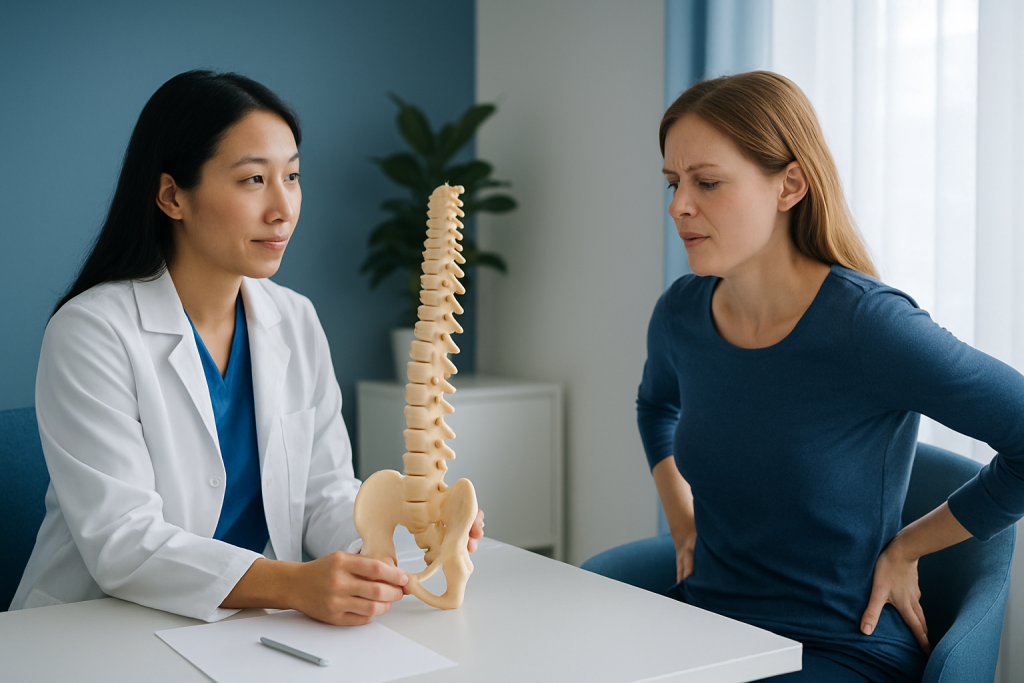
Back pain often develops from a mix of mechanical stress and daily habits. Sitting for long periods, poor lifting technique, weak core muscles, tight hip flexors, and repetitive strain can all contribute. In many cases, the issue is not one major injury but a build-up of small stresses over time.
Common causes include muscle strain, joint irritation, degenerative changes in the spine, herniated discs, and posture-related overuse. Stress can also increase muscle tension, which is one reason some people feel their back pain worsen during busy or emotionally demanding periods.
Certain groups are more likely to need medical guidance before starting yoga. These include people with osteoporosis, recent surgery, inflammatory arthritis, significant sciatica, spinal stenosis, or pregnancy-related back pain. Older adults and anyone with balance concerns should also choose modified poses and stable support.
Risk often rises when movement is either too little or too aggressive. A back that has been still all day may object to sudden deep stretching, while an already irritated spine may dislike fast transitions, forceful twisting, or repeated forward bending.
Diagnosis
Before choosing yoga as a main strategy, a clinician may ask where the pain is located, when it started, what makes it better or worse, and whether any symptoms travel down the leg. A physical examination can help assess posture, movement, muscle strength, nerve function, and areas of tenderness.
Most back pain does not need immediate imaging. X-rays, MRI, or other scans are usually considered when there are warning signs, a significant injury, severe or persistent symptoms, or concern for a specific condition such as a disc problem or fracture. The goal is to identify the cause, not to order tests automatically.
For patients planning care from another country, an accurate diagnosis is especially important because it guides what kind of movement is safe. A routine “back pain yoga” sequence may not be suitable if the pain is coming from a compressed nerve, inflamed joint, or fragile bone.
Treatment Options
The most helpful treatment depends on the cause of pain, but many people benefit from a combination of movement, education, and symptom relief. Gentle yoga may be part of that plan when it is introduced carefully and adapted to the person’s condition. The focus should be on comfort, control, and gradual progress rather than stretching as far as possible.
Commonly helpful poses for general, non-urgent back discomfort include child’s pose with support, cat-cow, knees-to-chest, bridge pose, sphinx pose, and supported reclined twists. These can encourage mobility and reduce stiffness when performed slowly and without strain. A chair, wall, pillow, or folded blanket can make many of them safer and easier.
People often ask which poses are “best,” but the better question is which pose is best for a specific back. For example, a person with tight muscles may feel relief from gentle extension, while someone with disc-related pain may need to avoid deep forward bending or strong twisting. A physical therapist, orthopedist, or rehabilitation specialist can help personalize the sequence.
Other treatment options may include short-term pain relief measures, targeted exercise, physical therapy, posture training, weight management when relevant, and treatment of the underlying cause. If pain persists despite conservative care, a doctor may discuss further evaluation or specialist referral.
- Child’s pose: can ease tension when supported by a pillow or block
- Cat-cow: gently mobilizes the spine
- Bridge pose: may strengthen glutes and support the lower back
- Sphinx pose: offers mild back extension without forcing the lumbar spine
- Knees-to-chest: can reduce stiffness for some people
Prevention & Self-care
Back pain often responds well to steady habits. Regular walking, core strengthening, and breaks from prolonged sitting can help keep the spine from becoming too stiff. When yoga is part of the routine, shorter sessions done more often are usually safer than an occasional intense stretch.
Breathing also matters. Slow nasal breathing can reduce guarding and help the body relax into movement. Before trying a pose, it is sensible to warm up gently, move within a comfortable range, and stop if pain becomes sharp, shoots down the leg, or lingers afterward.
Basic self-care can make yoga more effective. Supporting the knees with a cushion, avoiding long holds in painful positions, and choosing firm surfaces rather than unstable ones can all improve comfort. People recovering from travel or long flights may also benefit from walking, hydration, and gradual re-entry into exercise after sitting for many hours.
It is wise to avoid self-treating with advanced yoga videos if the cause of pain is unclear. A short, customized plan from a clinician or qualified therapist is often more useful than following a generic routine online.
When to See a Doctor
Medical assessment is important when back pain does not improve, keeps returning, or begins to limit daily life. A doctor should also be consulted if pain follows an injury, wakes the person at night consistently, or spreads with numbness, tingling, or weakness. These symptoms may suggest a problem that needs more than stretching.
Immediate evaluation is especially important if there is fever, unexplained weight loss, major trauma, a history of cancer, or changes in bladder or bowel function. In those situations, yoga should be paused until a clinician has assessed the cause.
For people traveling for care, a specialist review can clarify whether yoga is appropriate as a main strategy, a recovery tool, or something to postpone. Acibadem Health Point’s multidisciplinary specialists and JCI-accredited hospitals diagnose and treat back pain for international patients, with care plans that can include medical evaluation, rehabilitation, and safe movement guidance.
In short, yoga can be a helpful ally for many common back pain patterns, but it works best when matched to the person rather than copied from a one-size-fits-all routine.
How to Practice the Safest Poses
Safe yoga for back pain usually begins with a simple question: does the body feel more open, or more guarded, after the pose? If the answer is guarded, the pose may be too deep, too long, or not suitable for the underlying problem. The safest choices are the ones that reduce discomfort during the movement and leave the back feeling calm afterward.
People new to yoga should start with brief sessions and use props freely. A folded blanket under the knees, a bolster under the chest, or a chair for support can prevent strain and help the spine stay neutral. This is especially useful for older adults, those with limited flexibility, and anyone returning to exercise after a flare-up.
It can also help to avoid comparing one side of the body with the other. Back pain often changes how a person moves, so one side may feel tighter or weaker. That is normal, and it is one reason slow, balanced practice is preferable to aggressive stretching.
- Move slowly and breathe steadily
- Stop if pain increases sharply
- Use props to reduce strain
- Avoid deep twisting if symptoms radiate
- Get professional advice if pain is recurrent or unexplained
Living Well With Back Pain Over Time
Back pain management often works best as a long-term habit rather than a single fix. People who combine gentle movement, ergonomic changes, and good sleep positioning usually do better than those who rest completely for long periods. Over time, the goal is to make the back more resilient, not merely to quiet a flare-up.
Yoga can fit into that plan when it is chosen thoughtfully. Some people use it as a morning mobility routine, while others prefer a few restorative poses after work or before bed. Either way, consistency matters more than intensity.
When pain is influenced by work travel, long flights, or frequent sitting, planning ahead can make a real difference. Small movement breaks, lumbar support, and a short set of approved poses can help maintain comfort between medical visits or during recovery at home.
Frequently asked questions
01What are the best yoga poses for back pain?
For many people, the most helpful poses are gentle and supported, such as cat-cow, child’s pose, sphinx pose, bridge pose, and knees-to-chest. The best choice depends on the cause of pain, so a pose that helps one person may not suit another.
02Can yoga make back pain worse?
Yes, if the pose is too deep, too fast, or not appropriate for the underlying problem. Pain that shoots down the leg, worsens sharply, or lasts after practice is a sign to stop and seek guidance.
03Is yoga good for lower back pain?
Yoga can help some types of lower back pain, especially when stiffness and muscle tension are part of the problem. It should be gentle, gradual, and paired with proper assessment if symptoms are persistent or severe.
04Which yoga poses should be avoided with back pain?
Deep forward folds, forceful twists, and strong backbends may not be appropriate for everyone with back pain. People with disc issues, osteoporosis, or nerve symptoms should get individualized advice before trying them.
05How often should someone do yoga for back pain?
Short, regular sessions are usually better than occasional intense stretching. A clinician or physical therapist can suggest a frequency that matches the person’s condition and fitness level.
06When is back pain more than a muscle problem?
Back pain may be more than a muscle strain if it comes with numbness, weakness, fever, injury, unexplained weight loss, or bowel or bladder changes. These symptoms warrant medical evaluation rather than self-treatment alone.
This article is for general information only and is not a substitute for professional medical advice. Please consult a qualified doctor about your individual situation.
Medical weight-loss options in Turkey — costs & eligibility
JCI-accredited · board-certified surgeons · reply within 24h
Add us as a Preferred Source to see more of our trusted health content across Google Search, AI Overviews and Discover.