Pain at Back of Knees When Walking: Possible Causes and When to Seek Care
Pain at the back of the knees when walking can occur when muscles, tendons, joints, or blood vessels behind the knee are irritated or affected. It is often related to overuse or joint conditions, but sudden pain with swelling, warmth, or breathlessness needs prompt medical assessment.
Overview: Why Does the Back of the Knee Hurt When Walking?
Pain at back of knees when walking can develop when structures that bend, stabilize, or pass behind the knee become irritated. These include the hamstring and calf tendons, small muscles, joint lining, cartilage, and blood vessels. The discomfort may be felt in one knee or both, and may range from a mild pulling sensation to aching, stiffness, or sharper pain.
In many cases, symptoms follow a recent increase in walking, climbing stairs, exercise, or standing. However, pain behind the knee can also be linked with Pain Relief, and Mobility Care" class="ahp-ilk">osteoarthritis, a fluid-filled Baker’s cyst, or less commonly a blood clot in a deep leg vein. The pattern of symptoms matters: pain that begins gradually during activity is different from sudden pain with a swollen calf.
A careful clinical assessment can distinguish a musculoskeletal cause from a condition that needs more urgent treatment. Until the cause is clear, it is sensible to avoid pushing through significant pain or continuing activities that make symptoms worse.
Symptoms That Can Help Identify the Cause
Posterior knee pain is not always felt in exactly the same location. Some people notice pain in the crease behind the knee, while others feel it higher in the back of the thigh, lower in the calf, or deep inside the joint. It may occur only while walking, after longer activity, when bending the knee, or after sitting with the knee bent.
Associated symptoms can provide useful clues. Stiffness and pain after rest may suggest joint degeneration or inflammation. A soft, tight fullness behind the knee may occur with a Baker’s cyst. Tenderness after a sudden stretch, sprint, or uphill walk may indicate a muscle or tendon strain.
- Swelling in or behind the knee
- Clicking, catching, locking, or a sense that the knee may give way
- Reduced ability to fully bend or straighten the knee
- Bruising or localized tenderness after an injury
- Calf swelling, warmth, redness, or pain that is new or worsening
- Numbness, coldness, color change, or weakness in the foot
Symptoms alone cannot reliably confirm a diagnosis. They are best considered alongside a person’s activity level, medical history, examination findings, and, when needed, imaging or blood-flow tests.
Common Musculoskeletal and Joint-Related Causes

Overuse is a frequent cause of pain at the back of the knee when walking. A rapid increase in distance, speed, hills, uneven surfaces, or training intensity can place extra load on the hamstrings, calf muscles, and tendons around the knee. Poorly supportive footwear, reduced flexibility, and inadequate recovery can contribute.
A hamstring or calf strain may cause soreness, tightness, or a pulling feeling, particularly when taking longer strides or walking uphill. Tendon irritation can cause pain that gradually builds with repeated activity. Minor strains commonly improve with relative rest and gradual rehabilitation, although severe pain, bruising, or difficulty bearing weight should be assessed.
Joint conditions can also refer pain to the back of the knee. Osteoarthritis may cause stiffness, activity-related aching, swelling, and reduced movement as cartilage and other joint tissues change over time. Meniscus injuries, which involve the cartilage-like cushioning within the knee, can cause pain, swelling, catching, or locking after a twist or squat.
Inflammation within the knee may lead to excess joint fluid. This fluid can move toward the back of the knee and form a Baker’s cyst, also called a popliteal cyst. The cyst may create a sensation of tightness or a visible bulge, especially when the knee is straight.
Other Causes That Need Consideration
A Baker’s cyst is usually related to another knee problem, such as arthritis, inflammatory joint disease, or a meniscus tear. It may cause little discomfort, but a larger cyst can make walking or fully bending the knee uncomfortable. If it leaks or ruptures, fluid can travel into the calf and cause sudden swelling and pain that can resemble a blood clot.
Circulation-related conditions are less common but important to recognize. Deep vein thrombosis (DVT) is a blood clot in a deep vein, often in the leg. It can cause one-sided calf or leg swelling, warmth, tenderness, redness or darker skin color, and pain that may be felt behind the knee. Risk may be higher after surgery, prolonged immobility or travel, serious illness, pregnancy or the postpartum period, smoking, certain medications, or a previous clot.
In some people, pain when walking is caused by reduced blood flow through leg arteries. This more often produces cramping, fatigue, or tightness in the calf during a predictable amount of walking that improves with rest. Nerve irritation from the lower back or local nerve compression can also contribute to pain, tingling, or weakness.
Because several conditions can produce similar symptoms, a new lump, sudden calf swelling, or persistent pain should not be self-diagnosed as a simple strain.
How Doctors Assess Pain Behind the Knee
A clinician will usually ask when symptoms began, whether there was an injury or recent change in activity, and what movements make the pain better or worse. Medical history is also important, including arthritis, circulation problems, recent surgery or travel, medications, and previous blood clots.
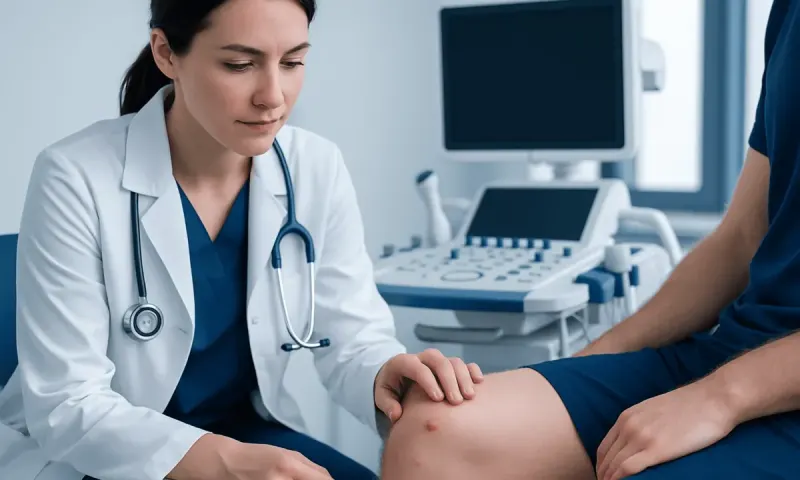
The physical examination may assess walking pattern, knee alignment, range of movement, swelling, tenderness, muscle strength, and joint stability. The clinician may compare both legs and check pulses, skin temperature, sensation, and signs of impaired circulation. This helps determine whether the concern is primarily joint-, muscle-, tendon-, nerve-, or blood-vessel-related.
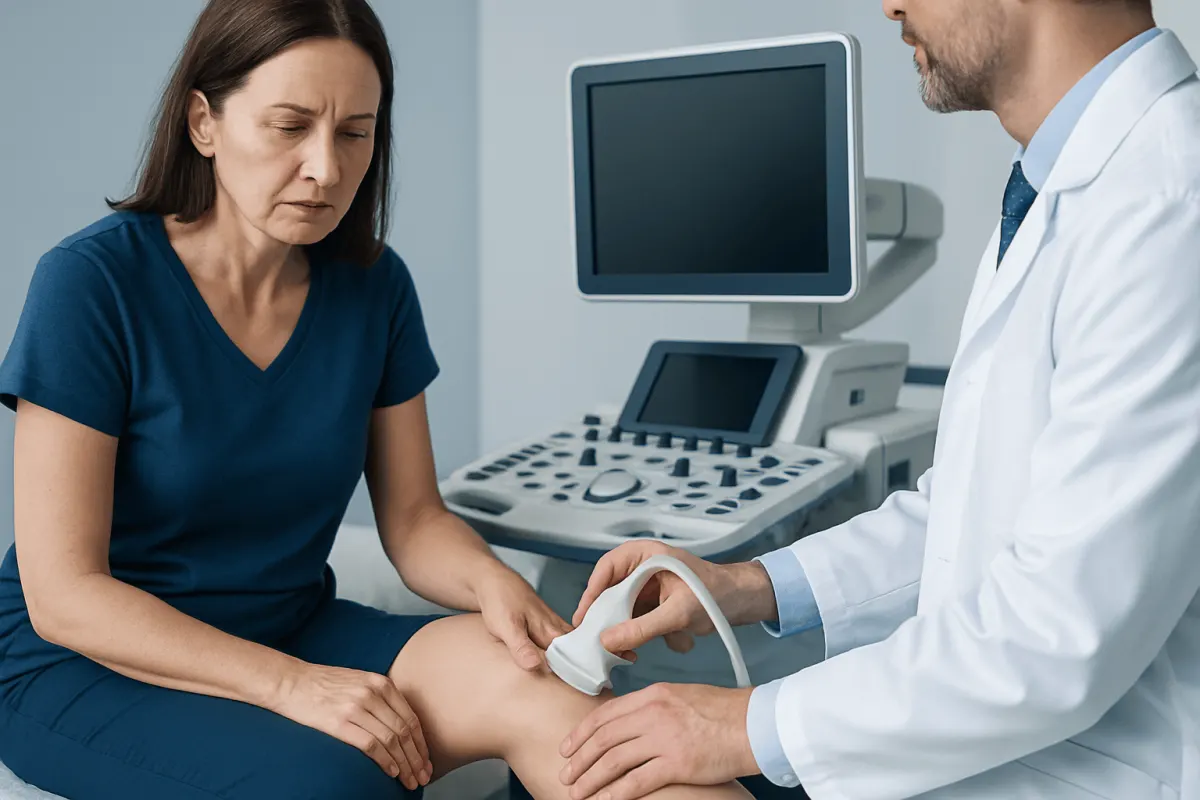
Imaging is not always needed for mild, improving symptoms. An X-ray can help evaluate bony changes and arthritis. Ultrasound can assess a Baker’s cyst, soft-tissue swelling, and blood flow in the veins when DVT is a concern. Magnetic resonance imaging (MRI) may be useful when a meniscus tear, ligament injury, or deeper soft-tissue problem is suspected.
Prompt evaluation is especially important when symptoms are severe, unexplained, associated with significant swelling, or do not improve with appropriate self-care. Early diagnosis supports treatment that is suited to the underlying cause rather than symptoms alone.
Treatment and Safe Self-Care
Treatment depends on the cause, severity, and effect on daily life. For an uncomplicated overuse injury, a short period of relative rest may help. This means reducing or modifying painful activities while maintaining gentle movement within a comfortable range. Applying a cold pack wrapped in cloth for short periods may ease soreness or swelling after activity.
When symptoms begin to settle, gradual strengthening and flexibility work can support recovery. A physiotherapist can tailor exercises for hamstring, calf, hip, and knee strength, walking mechanics, balance, and a progressive return to activity. Physical therapy and rehabilitation may be particularly useful for recurring pain, weakness, or reduced confidence with walking.
Supportive shoes, a gradual walking plan, and avoiding sudden jumps in distance or hill walking may reduce repeated strain. Some people may be able to use over-the-counter pain relief, but this should be discussed with a pharmacist or doctor when there are kidney, heart, liver, stomach, bleeding, pregnancy, or medication considerations. Medication should not be used to mask severe or worsening symptoms during activity.
Management of arthritis, a meniscus injury, or a symptomatic Baker’s cyst may include targeted rehabilitation, anti-inflammatory approaches when appropriate, or procedures in selected cases. If DVT is diagnosed, urgent medical treatment is needed to prevent complications; it should not be managed with massage, vigorous exercise, or home remedies.
When to Seek Medical Care
Medical care should be arranged if pain at the back of the knee lasts more than a few days despite reducing aggravating activity, repeatedly returns, interferes with walking, or follows a notable injury. Assessment is also appropriate for a new swelling or lump behind the knee, persistent stiffness, locking, instability, or inability to fully bend or straighten the knee.
Urgent medical assessment is needed for sudden swelling of one leg or calf, redness or warmth, severe tenderness, or unexplained pain behind the knee, particularly after recent travel, surgery, immobilization, or if there is a history of blood clots. These features can be consistent with DVT and require timely testing.
Emergency care is needed if leg symptoms occur with chest pain, shortness of breath, coughing up blood, fainting, or a rapid heartbeat. Immediate care is also appropriate after major injury, if the foot becomes pale, blue, cold, numb, or weak, or if there is fever with a hot, markedly swollen knee.
Acıbadem Health Point’s multidisciplinary specialists and JCI-accredited hospitals can assess knee and vascular symptoms for international patients, using appropriate clinical examination and diagnostic testing to guide care.
Frequently asked questions
01Why do the backs of both knees hurt when walking?
Pain behind both knees may be related to overuse, muscle tightness, walking technique, footwear, or joint conditions such as osteoarthritis. Bilateral symptoms are less typical of an acute blood clot, but persistent pain still deserves medical assessment, especially if there is swelling or reduced mobility.
02Can a Baker’s cyst cause pain when walking?
Yes. A Baker’s cyst can create pressure or tightness behind the knee, which may be more noticeable during walking, bending, or fully straightening the leg. Because it often develops due to another knee condition, a clinician may assess the underlying joint problem as well.
03Is pain behind the knee a sign of a blood clot?
It can be, but many other conditions can cause similar pain. A blood clot should be considered urgently when there is new one-sided leg or calf swelling, warmth, redness, tenderness, or risk factors such as recent surgery, immobility, or a previous clot.
04Should a person walk through pain at the back of the knee?
Mild discomfort that improves quickly may be managed by reducing activity and gradually returning as symptoms settle. Significant, sharp, worsening, or persistent pain should not be pushed through, as this can aggravate an injury or delay diagnosis of another condition.
05What exercises help pain behind the knee?
The right exercises depend on the cause. Gentle range-of-motion work and progressive strengthening of the calf, hamstrings, hips, and quadriceps may help some overuse-related problems, but exercises should be selected by a qualified clinician if pain is significant, recurrent, or associated with swelling.
06When is pain at the back of the knee an emergency?
Emergency care is needed for pain with chest pain, shortness of breath, coughing up blood, fainting, or sudden severe one-sided leg swelling. Urgent assessment is also needed if the foot becomes cold, pale, blue, numb, or weak, or if a hot swollen knee occurs with fever.
This article is for general information only and is not a substitute for professional medical advice. Please consult a qualified doctor about your individual situation.
Joint and spine care in Turkey — expert assessment & treatment
JCI-accredited · board-certified surgeons · reply within 24h
Add us as a Preferred Source to see more of our trusted health content across Google Search, AI Overviews and Discover.