Normatec Boots: Uses and Benefits
Key Takeaways
- Normatec boots use air pressure cycles to gently compress the legs and then release them.
- They are commonly used in recovery settings to ease heaviness, swelling, and post-exercise soreness.
- They are not a substitute for medical treatment when swelling or pain is caused by a health condition.
- People with circulation problems, blood clots, wounds, or uncontrolled heart failure should ask a doctor before use.
- Correct fit, session length, and medical screening matter for safe use.
Normatec boots are a form of pneumatic compression used to support recovery in people with tired, heavy, or swollen legs, as well as some athletes and rehabilitation patients. They may help improve comfort after long periods of standing, travel, exercise, or certain medical procedures when used appropriately under medical guidance.
Overview
Normatec boots are wearable compression devices that apply a sequence of gentle, air-filled pressure waves to the legs. They are used in sports recovery, rehabilitation programs, and some wellness settings to help the legs feel less heavy after strenuous activity, prolonged standing, or travel.
For many people, the appeal is practical: the devices can feel like a structured rest period for tired legs. The boots are designed to encourage fluid movement through the limbs rather than leaving the legs compressed in one fixed position. In a rehabilitation context, that may complement other recovery steps such as walking, stretching, hydration, and physical therapy.
It is important to view Normatec boots as a supportive tool, not a diagnosis or cure. When swelling, pain, or numbness is new, one-sided, persistent, or associated with other symptoms, a clinician should evaluate the cause before compression is used.
How They Work
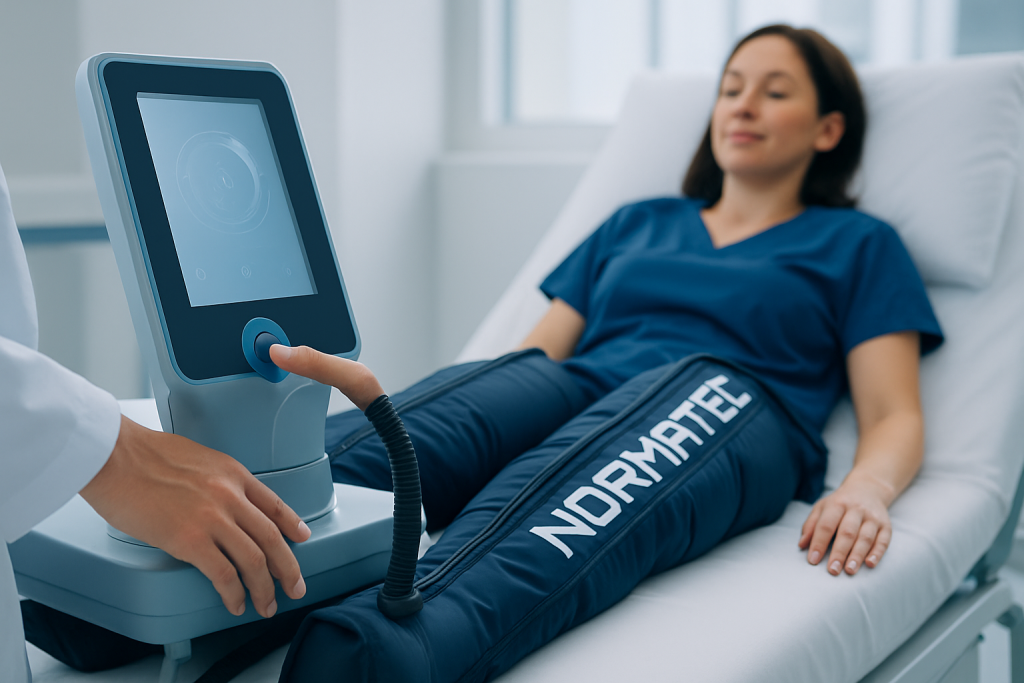
Normatec boots belong to a broader category of pneumatic compression devices. They typically wrap around the feet, calves, and thighs, then use chambers that inflate and deflate in a set pattern. The pressure moves upward in waves, creating a massage-like compression effect.
This cycling action is intended to support circulation of venous blood and lymphatic fluid. In simple terms, it helps fluid move out of the lower limbs and back toward the body’s central circulation. Some users notice a sensation of lightness or reduced tightness afterward, especially after exercise or long periods of sitting.
The experience should generally feel firm but comfortable. If the pressure is painful, causes numbness, or leaves the skin discolored, the fit or settings should be reviewed before the device is used again.
Common Uses and Who May Benefit
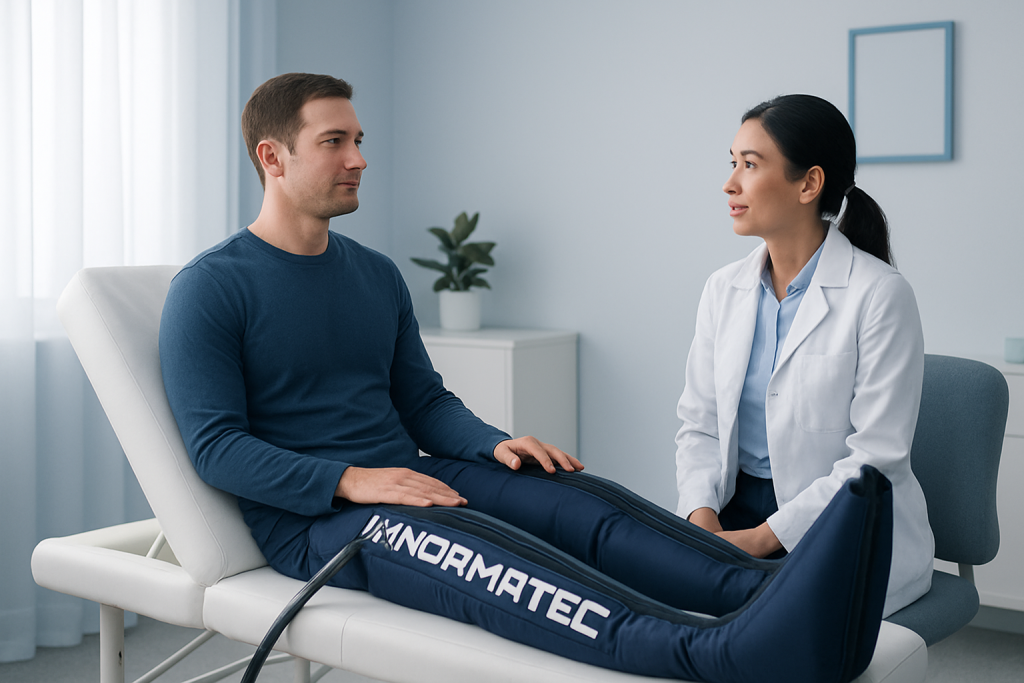
Normatec boots are most often used by athletes, physically active people, and patients in rehabilitation programs who want noninvasive recovery support. They are sometimes used after intense training sessions, competitions, or physically demanding workdays when the legs feel fatigued or congested.
They may also be considered in supervised recovery plans for people dealing with temporary swelling after certain procedures or prolonged inactivity, provided a healthcare professional confirms compression is appropriate. Travelers who spend many hours sitting may ask about them as part of a broader leg-care routine, though movement breaks and hydration remain essential.
- Post-exercise muscle fatigue
- Leg heaviness after standing or sitting for long periods
- Mild swelling when a clinician has ruled out a more serious cause
- Rehabilitation recovery plans that include circulation support
Because swelling and discomfort can have many causes, benefit depends on context. What feels like ordinary exercise soreness may sometimes be something different, which is why screening matters before starting any compression routine.
Causes & Risk Factors: When Compression Is and Is Not Appropriate
People often ask whether Normatec boots are safe for everyone who feels tired legs. The answer is no; the same pressure that feels helpful in one person may be inappropriate in another. Medical review is especially important if there is a history of blood clots, peripheral artery disease, severe varicose vein problems, skin infection, open wounds, or unexplained leg swelling.
Compression devices can also require caution in people with significant heart, kidney, or liver disease, because fluid shifts may affect symptoms. A person recovering from surgery, an injury, or a medical procedure should follow the guidance of the treating team, since the timing and type of compression can vary.
Risk factors that may prompt extra caution include recent immobility, recent long-haul travel, pregnancy, active cancer treatment, and previous circulation problems. In these situations, a doctor can help decide whether Normatec boots are suitable, whether a different compression approach is needed, or whether the swelling should be investigated first.
Diagnosis and Medical Assessment Before Use
Normatec boots themselves do not require a medical diagnosis, but safe use often starts with a quick assessment of the symptoms they are meant to address. A clinician may ask when the swelling began, whether it affects one or both legs, whether there is pain or redness, and whether there has been recent surgery, travel, or injury.
Depending on the situation, the evaluation may include a physical examination and, if needed, tests to rule out clotting problems, circulation issues, or other causes of leg swelling. This step is important because compression is not the right first response for every leg symptom.
For international patients arranging care from abroad, this initial review can be especially useful. It helps determine whether compression can be part of a recovery plan before travel, after arrival, or during follow-up once the person returns home.
Treatment Options and How Normatec Boots Fit In
Normatec boots are best understood as one part of a broader recovery strategy. They may be used alongside rest, elevation, hydration, walking or guided movement, and, when needed, physical therapy or post-procedure rehabilitation instructions. The goal is to support comfort and fluid movement, not to replace medical treatment.
Healthcare professionals may suggest different compression approaches depending on the reason for symptoms. Some people benefit from simple compression stockings, others from intermittent pneumatic compression, and others from no compression at all. The right choice depends on the underlying condition, skin health, blood flow, and the person’s daily routine.
In a supervised rehabilitation setting, the device may be used in short sessions and then reassessed. This allows the care team to monitor how the legs respond and adjust the plan if the person develops discomfort, persistent swelling, or unexpected symptoms.
Prevention & Self-care
Not every heavy-legged feeling requires a device. For many people, a reliable self-care plan starts with regular movement breaks, adequate fluid intake, and avoiding long periods of uninterrupted sitting or standing. These habits can reduce the chance that legs feel overly tense at the end of the day.
When someone already uses Normatec boots, safe self-care includes checking the fit each time, following the recommended session length, and using the device on clean, dry skin. It is also sensible to stop use and seek advice if there is new pain, warmth, rash, numbness, or a change in leg color.
- Walk briefly after long flights or desk sessions
- Elevate the legs when resting, if advised
- Stay hydrated, especially after exercise or travel
- Do not use compression over wounds unless a clinician specifically instructs it
- Ask about compatibility if there is any circulation, heart, or clotting concern
For patients recovering away from home, clear aftercare instructions are especially valuable. Knowing when to use compression, when to rest, and when to contact the care team can make recovery feel more manageable across time zones and travel plans.
When to See a Doctor
A healthcare professional should evaluate leg swelling or pain that is sudden, one-sided, worsening, or linked with shortness of breath, chest discomfort, fever, redness, or warmth. These symptoms may point to a condition that needs prompt assessment rather than self-care.
Medical advice is also appropriate before using Normatec boots if there is known heart disease, kidney disease, peripheral artery disease, a history of blood clots, active cancer treatment, pregnancy, or recent surgery. The same applies if the person has fragile skin, an open wound, infection, or unexplained numbness.
Acibadem Health Point works with multidisciplinary specialists and JCI-accredited hospitals to diagnose and treat conditions that may affect recovery and compression safety for international patients. A doctor can help decide whether Normatec boots are appropriate and how they should fit into a larger rehabilitation plan.
Frequently asked questions
01What are Normatec boots used for?
Normatec boots are used to apply intermittent compression to the legs, which may help with recovery after exercise, long periods of standing, or certain rehabilitation plans. They are intended to support comfort and fluid movement, not to treat the cause of swelling on their own.
02Do Normatec boots help with swollen legs?
They may help some people feel less heavy or swollen when the swelling is mild and a clinician has said compression is appropriate. However, new or one-sided swelling should be checked by a doctor first because it can signal a more serious problem.
03Are Normatec boots safe for everyone?
No. People with blood clots, circulation problems, uncontrolled heart failure, open wounds, infection, or certain other conditions may need to avoid them or use them only under medical supervision. A healthcare professional should review the person’s history before starting compression therapy.
04Can Normatec boots replace physical therapy or medical treatment?
They cannot replace physical therapy, diagnosis, or treatment. They may be one supportive tool in a broader plan that includes movement, recovery exercises, and medical follow-up when needed.
05How long should someone use Normatec boots?
Session length should follow the product guidance and, when relevant, the clinician’s instructions. Longer use is not always better, especially if the device causes discomfort or if the person has a medical condition that changes compression safety.
06Should someone wear them after surgery or after a long flight?
Only if a doctor or surgical team has confirmed that compression is appropriate for that situation. After surgery or travel, swelling can have different causes, so the timing and type of compression should be personalized.
This article is for general information only and is not a substitute for professional medical advice. Please consult a qualified doctor about your individual situation.
Explore treatments in Turkey — costs, top hospitals & a free quote
JCI-accredited · board-certified surgeons · reply within 24h
Add us as a Preferred Source to see more of our trusted health content across Google Search, AI Overviews and Discover.