Nail Psoriasis Can Look Like a Fungal Infection but Is Not

You look down at your thumbnail and see tiny dents, like someone pressed a pin into it. Or a nail that has turned yellow-brown, thickened, started to crumble, or lifted away from the skin beneath. Many people assume this is a fungus. Often it is not.
Nail psoriasis is a form of psoriasis that affects the fingernails or toenails. It is not contagious. But it can be uncomfortable, it can get in the way of everyday tasks, and it may show up alongside skin psoriasis or psoriatic arthritis.
Overview: what nail psoriasis is
Nail psoriasis is psoriasis that affects the fingernails or toenails. It happens when the inflammatory process linked to psoriasis involves the nail matrix, nail bed, or surrounding skin, causing visible and sometimes uncomfortable changes in the nail. Common signs include tiny pits in the nail surface, yellow-brown discoloration, thickening, crumbling, and the nail lifting away from the skin underneath.
This is not an infection, and you cannot pass it to anyone. Still, it is often mistaken for a fungal nail problem, because some of the changes look much the same. Nail psoriasis may affect appearance alone, or it may also make the nails tender, harder to trim, or less useful for everyday tasks such as buttoning clothes, typing, or walking comfortably if the toenails are involved.
Nail changes matter for another reason: in some people they go hand in hand with joint disease. Changes in the nails may be seen in people who have skin psoriasis, and they are also more common in people with psoriatic arthritis. So your nails are not just a cosmetic issue. They tell your doctor something about the bigger picture.
How nail psoriasis can look and feel
The appearance of nail psoriasis varies from person to person. One of the most recognizable findings is pitting, which looks like small dents on the nail surface. Other people notice an “oil drop” or salmon-colored patch under the nail, white areas, ridges, or a roughened surface. The nail may become thicker than usual, brittle, or crumbly at the tip.
Another common feature is onycholysis, which means the nail separates from the nail bed. When this happens, a white or yellow area may appear where the nail has lifted. Debris can collect underneath, making the nail feel uneven or uncomfortable. In toenails, thickening and lifting can create pressure inside shoes and make walking painful.
What you see and what you feel do not always line up. Some people have very noticeable nail changes with little discomfort, while others have pain, tenderness, or embarrassment about the appearance of their nails. If the surrounding skin is also inflamed, redness and scaling may be present around the nail folds, especially in people with broader psoriasis involvement.
- Pitting or small dents in the nail
- Yellow, brown, or salmon-colored spots under the nail
- Thickening, ridging, or rough texture
- Crumbling or brittle nail edges
- Nail lifting from the nail bed
- Discomfort, tenderness, or difficulty with daily activities
Why it happens and who is at risk

Nail psoriasis develops because of inflammation driven by the immune system. In psoriasis, the body’s immune signals accelerate skin cell turnover and cause inflammation in affected tissues. When these changes involve the structures that produce and support the nail, the nail grows abnormally or separates from the tissue beneath it.
People who already have psoriasis elsewhere on the body are at higher risk of nail involvement, especially if the scalp, hands, feet, or skin near the nails is affected. Nail psoriasis is also more frequent in people who have joint symptoms related to psoriatic arthritis. A family history of psoriasis can increase overall susceptibility, reflecting the role of genetics in the condition.
Trauma can also play a part. Repeated pressure, picking, biting, aggressive manicures, or friction from tight footwear may worsen nail symptoms or trigger changes in vulnerable nails. Stress, smoking, and some general psoriasis triggers may contribute to flare-ups as well, although not every person has the same pattern. And to be clear: this has nothing to do with poor hygiene.
How doctors diagnose nail psoriasis
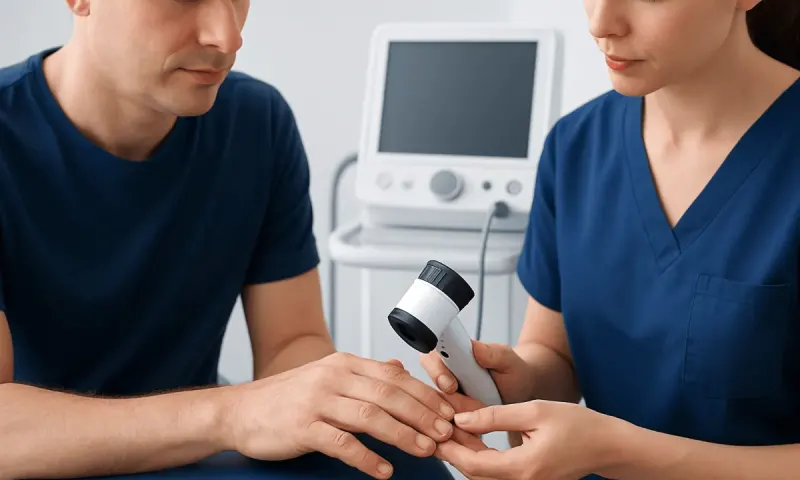
Diagnosis usually begins with a careful history and physical examination. A doctor will look closely at the nails, the skin, and sometimes the joints to understand whether the nail findings fit psoriasis. The pattern of pitting, discoloration, thickening, or lifting can strongly suggest the diagnosis, especially if a person also has skin plaques or a personal or family history of psoriasis.
Because fungal nail infections can look similar, doctors may recommend tests to rule them out. This may involve clipping a small piece of nail or taking debris from beneath the nail for laboratory examination. Telling the two apart matters, because the treatments are different — and sometimes you have both at once.
When joint symptoms such as morning stiffness, swelling, or pain are present, further evaluation may be needed to assess for psoriatic arthritis. In selected cases, imaging and specialist review can help. Dermatologists often lead diagnosis and treatment, but rheumatologists may also be involved when nail disease is linked to joint inflammation.
Treatment options for nail psoriasis
Treatment depends on how many nails are affected, how severe the changes are, whether there is pain or functional difficulty, and whether skin or joint psoriasis is also present. Mild disease may be treated with prescription topical medicines applied to the nail folds, nail plate, or skin under the free edge of the nail. Because nails grow slowly, improvement often takes time, and treatment usually needs patience and regular use.
For more persistent or limited but troublesome nails, doctors may consider medication injections placed around or under the nail area. In selected cases, phototherapy or laser-based approaches may be used, though nail response can be variable. When nail disease is severe or occurs together with extensive skin psoriasis or psoriatic arthritis, systemic treatment may be the most appropriate option. This can include oral medicines or biological therapy that targets specific parts of the immune system.
Doctors also address contributing issues such as fungal co-infection, pain from shoe pressure, or inflammation around the nails. If there are signs of broader joint disease, coordinated care may include rheumatology assessment. In complex cases, multidisciplinary specialists at Acıbadem Health Point’s JCI-accredited hospitals diagnose and treat nail psoriasis for international patients with individualized care plans.
No single treatment suits everyone, and nails rarely clear overnight. What we aim for is less inflammation, better-looking and more comfortable nails, hands and feet that work as they should, and steady control of any skin or joint disease alongside it.
Daily nail care, prevention, and self-care
Although nail psoriasis cannot always be prevented, careful nail habits can reduce irritation and help protect affected nails. Keeping nails short may lower the risk of catching, splitting, or additional lifting. Gentle trimming and filing are usually better than cutting nails very aggressively, and people should avoid digging under the nail to clean it, since this can worsen separation from the nail bed.
Protecting the hands and feet from repeated trauma is also helpful. Gloves may be useful for wet work or cleaning, and well-fitting shoes can reduce pressure on thickened or tender toenails. Nail biting, picking, harsh manicures, and artificial nail procedures may aggravate symptoms in some people. Moisturizing the hands, nails, and cuticles regularly can support the surrounding skin.
People with psoriasis often benefit from general trigger management, such as following prescribed treatment, managing stress, not smoking, and seeking medical advice when flares begin. If a person suspects infection, increasing pain, or worsening separation of the nail, self-treatment alone is usually not enough. A doctor can help confirm the cause and adjust treatment safely.
When to seek medical care
See a doctor if the nail changes are new, spreading, painful, or getting in the way of daily life. This is especially important when the nails become very thick, start to crumble, or lift away from the nail bed, because these changes can sometimes also occur with fungal infection or other nail disorders.
A person should also seek care if they have nail symptoms together with joint pain, swollen fingers or toes, stiffness in the morning, or a history of psoriasis elsewhere on the body. These features can suggest psoriatic arthritis and deserve timely evaluation. Early treatment may help control symptoms and protect long-term function.
Urgent medical attention is appropriate if there is significant redness, warmth, drainage, severe pain, or concern about infection after injury. While nail psoriasis itself is not contagious, damaged nails can sometimes become secondarily infected, particularly if the surrounding skin is broken.
Frequently asked questions
01Can nail psoriasis happen without skin psoriasis?
Yes. Nail psoriasis can appear in people who do not have obvious skin plaques at the same time. However, many people with nail involvement either already have psoriasis elsewhere or develop other signs later, so medical review is useful.
02Is nail psoriasis the same as a fungal nail infection?
No. Nail psoriasis is an inflammatory condition, while fungal infection is caused by organisms growing in the nail. The two can look alike, and sometimes they occur together, which is why a doctor may test nail clippings or debris.
03Does nail psoriasis go away on its own?
It may improve at times, but it often follows a pattern of flares and partial remission rather than disappearing completely. Because nails grow slowly, even effective treatment can take months to show clear results.
04Can nail psoriasis be painful?
Yes. Some people have little discomfort, but others feel tenderness, pressure, or pain, especially when the nails thicken or lift from the nail bed. Toenail involvement may make walking or wearing shoes uncomfortable.
05What makes nail psoriasis worse?
Repeated trauma, picking, biting, harsh manicures, and pressure from tight shoes can worsen symptoms. In some people, broader psoriasis triggers such as stress or smoking may also contribute to flare-ups.
06Are there cosmetic products that are safe to use?
Many people can use gentle nail polish and basic nail care products, but harsh removers, acrylic nails, and aggressive salon procedures may irritate the nails. It is best to keep nail care simple and ask a dermatologist if there is active lifting, pain, or inflammation.
This article is for general information only and is not a substitute for professional medical advice. Please consult a qualified doctor about your individual situation.
Joint and spine care in Turkey — expert assessment & treatment
JCI-accredited · board-certified surgeons · reply within 24h
Add us as a Preferred Source to see more of our trusted health content across Google Search, AI Overviews and Discover.