Muscle Twitching at Rest: What You Need to Know

Key Takeaways
- Muscle twitching at rest is usually brief, involuntary muscle movement and often has a benign cause.
- Common triggers include stress, poor sleep, dehydration, excess caffeine, and muscle overuse.
- Persistent twitching with weakness, numbness, cramps, or muscle wasting deserves medical review.
- Doctors may use a history, exam, and sometimes blood tests or nerve studies to look for the cause.
- Healthy habits can reduce many everyday triggers, but ongoing or worsening symptoms should be assessed.
Muscle twitching at rest is often harmless and can happen after stress, fatigue, caffeine, or exercise. In some cases, it may point to a nutrient imbalance, medication effect, or a nerve or muscle condition that should be checked by a doctor.
Overview
Muscle twitching at rest means a muscle moves on its own when the body is otherwise relaxed. It may look like a small ripple under the skin, last a few seconds, and then disappear. For many people, it is an occasional and harmless event rather than a sign of serious disease.
That said, the context matters. A twitch that appears after a busy week, a hard workout, or several cups of coffee usually points to an everyday trigger. Twitching that keeps returning, spreads to multiple areas, or appears with weakness or numbness deserves a medical conversation because it can sometimes reflect an electrolyte issue, a thyroid problem, a nerve irritation, or another health condition.
For people traveling for care, the challenge is often not the twitch itself but deciding whether it is worth a specialist visit. A clear symptom history, including when it started, how often it happens, and what seems to make it better or worse, helps doctors guide next steps efficiently.
Symptoms
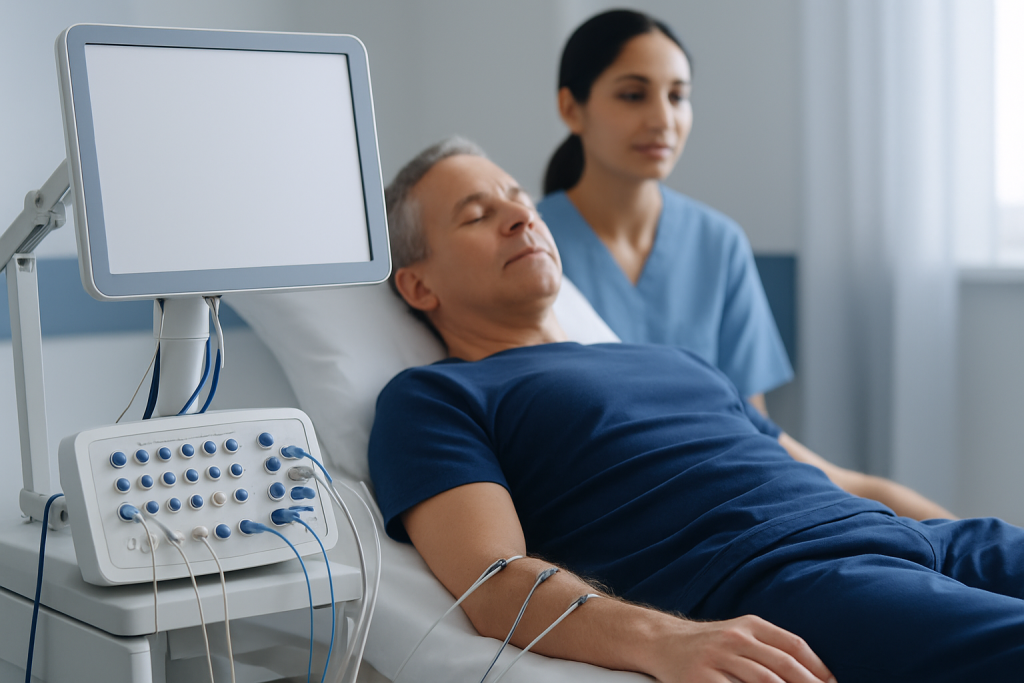
Muscle twitching is often described by patients as fluttering, trembling, jumping, or “pulsing” under the skin. It can affect the eyelids, calves, arms, hands, or other muscles. Some people notice a single area, while others have occasional twitches in different parts of the body.
By itself, a twitch is not usually painful. It may be more noticeable when the body is still, such as while lying in bed or sitting quietly, because movement can mask it. Some people notice related sensations such as mild tightness, fatigue, or a brief cramp.
- Common features include brief, involuntary movement
- Episodes may come and go over days or weeks
- Twitching may be more noticeable at rest or before sleep
- Symptoms that pair with weakness, numbness, or shrinking muscle need evaluation
It is also useful to track whether the twitching is local or widespread. A small, isolated eyelid twitch after poor sleep is quite different from persistent twitching in several muscle groups, especially if it changes strength, coordination, or sensation.
Causes & Risk Factors

Most muscle twitching at rest is linked to temporary irritation of a muscle or the nerves that supply it. Common triggers include stress, anxiety, caffeine, dehydration, strenuous exercise, and sleep deprivation. Even long periods of sitting, repetitive movement, or a recent increase in physical activity can make muscles more “twitchy.”
Other causes are less everyday but still important. Low levels of certain minerals, including magnesium, potassium, or calcium, may contribute. Thyroid disorders, some medications, nicotine, and alcohol use can also play a role. In some cases, twitching is associated with nerve compression, peripheral nerve disorders, or muscle disease.
Risk is higher when several triggers occur together. For example, someone who is under stress, sleeping poorly, and exercising heavily while drinking more caffeine than usual may notice recurring fasciculations. In international patients, travel itself can add jet lag, dehydration, and disrupted routines, all of which may make twitching more noticeable without indicating a dangerous condition.
Diagnosis
Doctors usually begin with a careful history and physical examination. They will ask where the twitching happens, how long it has been present, whether it is constant or intermittent, and whether there are related symptoms such as weakness, cramps, pain, numbness, or changes in speech or walking.
When a cause is not obvious, a clinician may order blood tests to look for electrolyte imbalances, thyroid function problems, vitamin deficiencies, or other metabolic issues. If the pattern suggests nerve involvement, additional testing such as electromyography or nerve conduction studies may be considered. These tests help distinguish benign twitching from conditions that affect the nerves or muscles.
The goal is not to test every person broadly, but to match the workup to the symptom pattern. A reassuring examination and normal basic tests often point toward a benign explanation. If symptoms are persistent, progressive, or accompanied by other neurological changes, a neurologist or another appropriate specialist may be involved.
Treatment Options
Treatment depends on the cause. If twitching is related to lifestyle factors, the main approach is to correct the trigger rather than suppress the symptom. Improving sleep, reducing caffeine, staying well hydrated, and easing back after intense exercise can all help. If a medication is suspected, the prescribing doctor may review whether an alternative is appropriate.
When an underlying condition is found, treatment targets that issue. For example, correcting a nutrient deficiency, managing thyroid disease, or addressing a compressed nerve may reduce twitching. If anxiety or stress is part of the picture, supportive strategies such as breathing exercises, counseling, or a structured relaxation routine may also help.
In selected cases, doctors may recommend follow-up rather than immediate treatment, especially when the examination is normal and there are no warning signs. This conservative approach is common because many twitching episodes settle with time once the trigger is removed.
Prevention & Self-care
Simple habits often make the biggest difference. Regular sleep, balanced meals, steady hydration, and moderation with caffeine can lower the chance of recurrent muscle twitching at rest. Warm-up and cool-down routines may also be useful after exercise, especially for people who train intensely or return to activity after a break.
Stress management matters as well. Muscle tension and nervous-system arousal can make twitches more obvious, so routine movement, stretching, mindfulness, or other calming practices may help. Keeping a symptom log can be practical: note the time of day, muscle involved, recent exercise, caffeine intake, sleep quality, and any new medications.
- Drink fluids regularly, especially after travel, heat exposure, or exercise
- Limit stimulant intake if twitching seems to follow coffee, energy drinks, or nicotine
- Prioritize sleep consistency, even across time zones
- Do not start supplements in high amounts without medical advice
Self-care is best viewed as support, not a substitute for evaluation when symptoms persist. If the twitching is frequent enough to disrupt rest, or if it starts after a new medication or illness, medical review is sensible.
When to See a Doctor
A doctor should evaluate twitching that lasts for several weeks, keeps returning, or becomes more widespread. It is especially important to seek assessment if the twitching comes with weakness, muscle wasting, numbness, trouble speaking, swallowing problems, loss of balance, or severe cramps. These features do not automatically mean a serious disorder, but they do warrant a closer look.
Medical attention is also appropriate if twitching starts after a new medicine, follows an illness, or appears alongside signs of dehydration or a possible electrolyte problem. A prompt appointment is useful when the symptom pattern is changing rather than fading.
For international patients, it can be helpful to bring a concise symptom timeline, medication list, and any prior test results. If travel for care is being considered, Acibadem Health Point’s multidisciplinary specialists and JCI-accredited hospitals can evaluate muscle twitching at rest and related neurological symptoms for international patients in a coordinated setting.
Urgent care is rarely needed for twitching alone, but it is important to seek immediate medical help if symptoms develop suddenly with severe weakness, confusion, chest pain, or breathing difficulty.
Living With Muscle Twitching: Practical Perspective
Many people become more aware of muscle twitching once they notice it, and that awareness can make the symptom feel more frequent than it is. In reality, brief fasciculations often come and go, particularly when the body is tired or under strain. A calm, organized approach usually works better than repeated checking or self-diagnosis.
If the twitching is mild and the examination is reassuring, doctors often focus on reducing triggers and monitoring over time. If symptoms continue, second opinions or specialist review may be appropriate, especially when a patient is balancing care across countries or wants a clear explanation before traveling home.
The most useful question is not only “Why is this happening?” but also “What other symptoms are present?” That broader view helps separate everyday muscle irritability from conditions that need targeted treatment.
Frequently asked questions
01Is muscle twitching at rest usually serious?
Most of the time, it is not serious and is linked to common triggers such as stress, fatigue, caffeine, or exercise. The pattern matters more than the twitch itself, especially if it is brief and not associated with other symptoms. Persistent or changing twitching should still be discussed with a doctor.
02Can dehydration cause muscle twitching?
Yes, dehydration can contribute to muscle irritability and twitching, especially after heat exposure, exercise, or travel. Restoring fluids may help when dehydration is part of the cause. If symptoms continue despite good hydration, another explanation should be considered.
03Should someone worry about magnesium when muscles twitch?
Low magnesium can be one possible contributor, but it is not the only one. It is best not to assume a deficiency without medical advice, because twitching can happen for many reasons. A doctor can decide whether testing or a supplement is appropriate.
04Does twitching at rest mean a nerve disease?
Not usually. Many benign triggers can cause fasciculations, and isolated twitching is common. A nerve or muscle disorder becomes more likely when twitching is persistent and accompanied by weakness, numbness, cramping, or visible muscle loss.
05Can anxiety make muscles twitch?
Yes, anxiety and stress can make muscle twitching more noticeable or more frequent. This does not mean the symptom is “all in the head”; stress affects the nervous system and muscle tension. If relaxation and sleep improvements do not help, a medical review is still worthwhile.
06When is a specialist referral useful?
A referral is useful when the cause is unclear, symptoms are persistent, or there are signs of nerve involvement. A neurologist can help determine whether the twitching is benign or part of a broader condition. This is especially helpful when a patient needs coordinated evaluation before returning to another country.
This article is for general information only and is not a substitute for professional medical advice. Please consult a qualified doctor about your individual situation.
Explore treatments in Turkey — costs, top hospitals & a free quote
JCI-accredited · board-certified surgeons · reply within 24h
Add us as a Preferred Source to see more of our trusted health content across Google Search, AI Overviews and Discover.